











Vintage Soviet Watches Guide
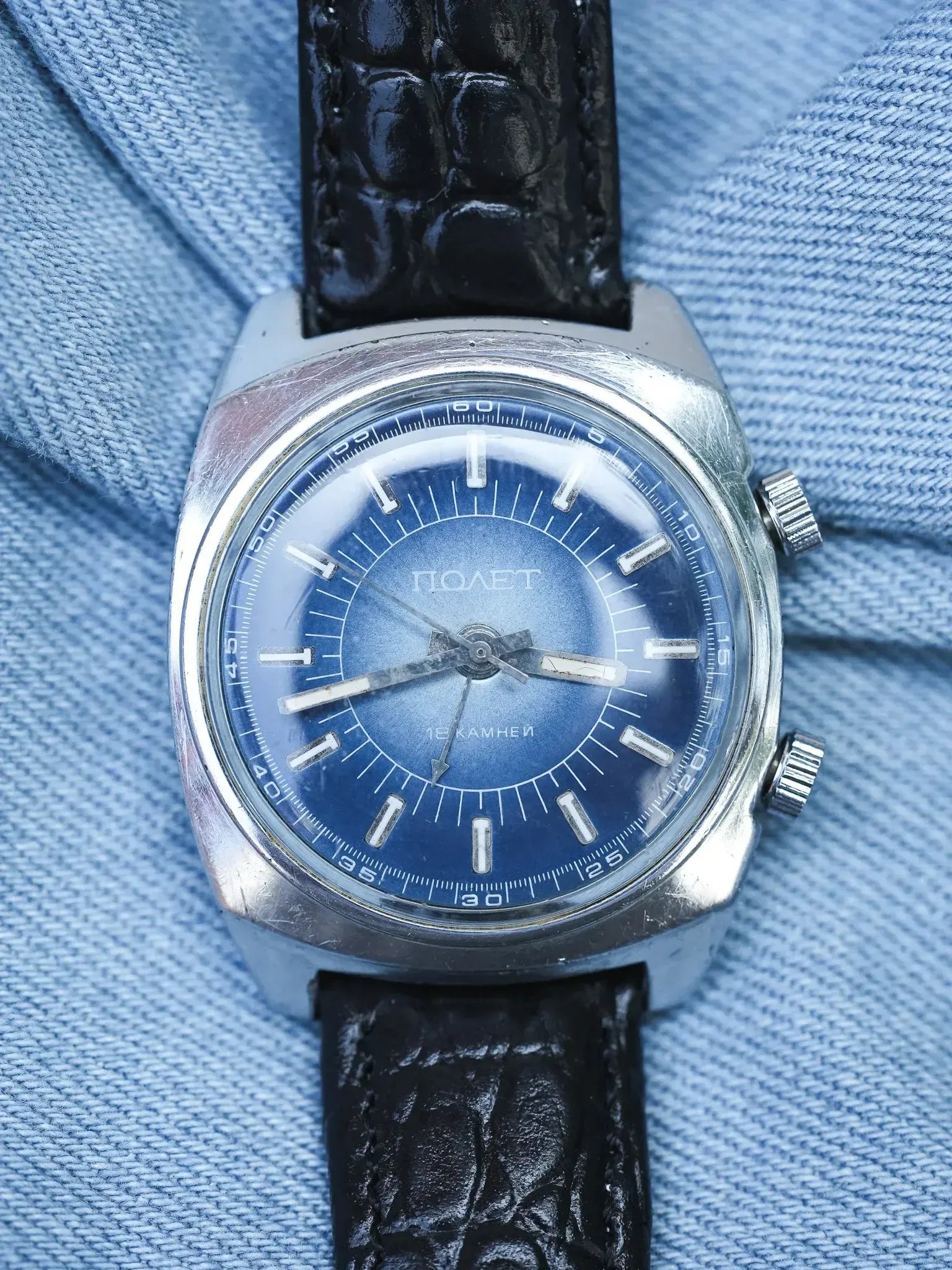
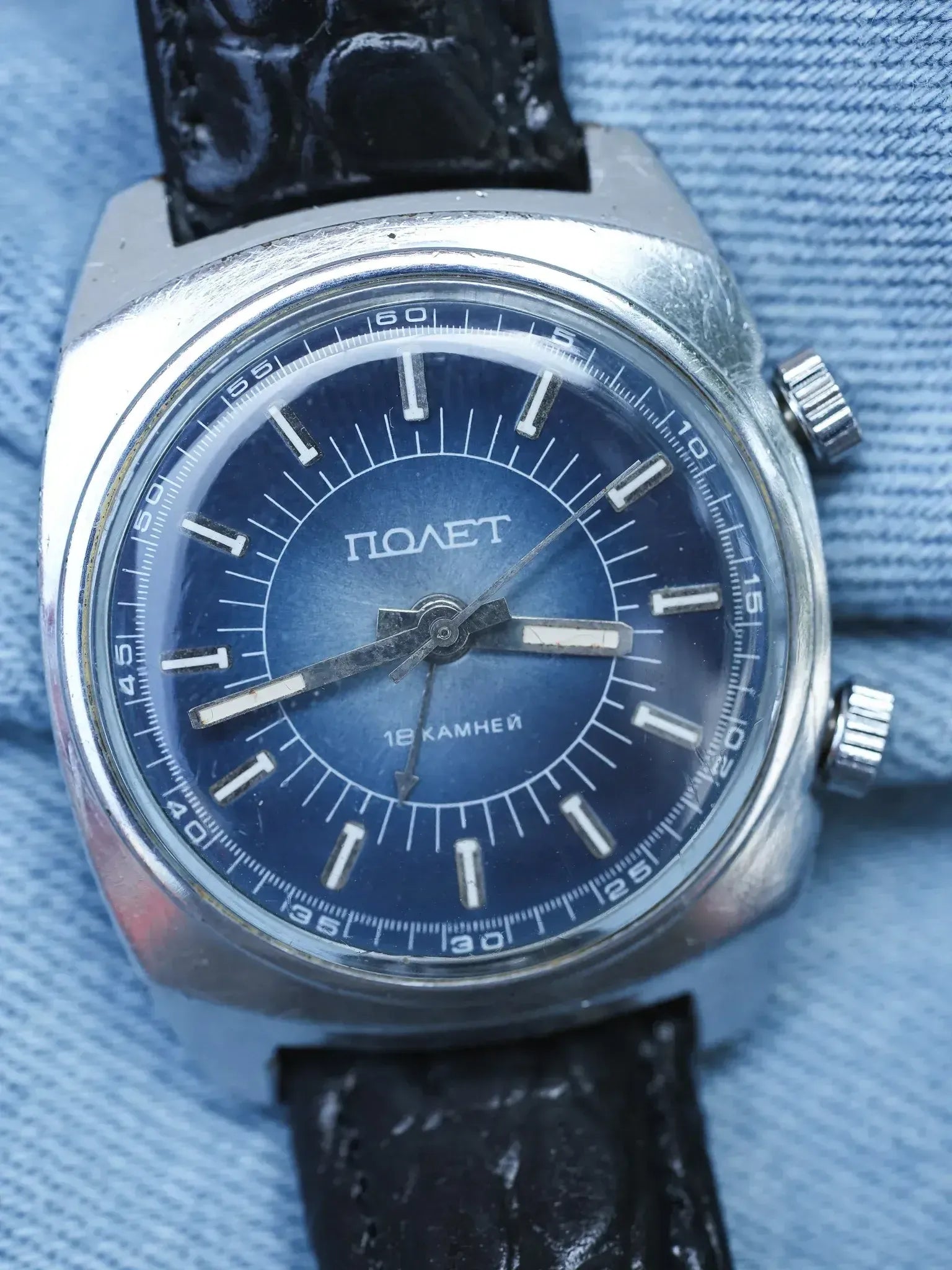
Poljot, Raketa, Vostok, Slava, Pobeda, Luch, Chaika — the USSR produced millions of mechanical watches between the 1940s and 1991 in state-run manufactures in Moscow, Chistopol, Saint Petersburg, and Minsk. Watches that accompanied Gagarin into space, the submarines of the Soviet navy, and explorers of the North Pole. Discover our complete guide.
Read the guide
Soviet Watchmaking: A State Industry in the Service of the Nation
The history of Soviet watchmaking begins in 1930, when the government of the USSR decided to create a national watchmaking industry. Until then, Russia did not produce watches — it imported them from Switzerland, France, and Germany. Stalin tasked a Soviet engineer with purchasing machinery and expertise abroad. In 1930, the government acquired all the equipment of two American watch factories — Dueber-Hampden (Canton, Ohio) and Ansonia Clock (New York) — machinery, tooling, patents, and even certain American technicians to train Soviet workers. These machines were installed in Moscow in what would become the First Moscow Watch Factory (1st MWF — "Первый Государственный Часовой Завод" / 1ГЧЗ).
From this factory would emerge all the great Soviet watch brands. In 1942, during the siege of Moscow, part of the production was evacuated to Chistopol in Tatarstan — this was the birth of the future Vostok. In 1945, the Petrodvorets factory near Saint Petersburg (founded by Peter the Great in 1721 as atelier for precious stone cutting) began producing watches — it would become Raketa. In 1953, a factory opened in Minsk in Belarus — it would produce Luch and Zarja. In the 1980s, the Soviet watch industry produced around 50 million watches per year — the Raketa factory alone made 5 million.
What distinguishes Soviet watchmaking from Swiss or Japanese watchmaking is its purpose: Soviet watches were not luxury objects or fashion accessories — they were functional instruments designed to withstand extreme conditions (Arctic cold, high altitude, underwater depths, vibrations) and distributed to the population, the military, and cosmonauts. This logic of military and scientific engineering explains the recognized robustness of Soviet movements — and their unique utilitarian design.
Soviet Manufactures in Detail
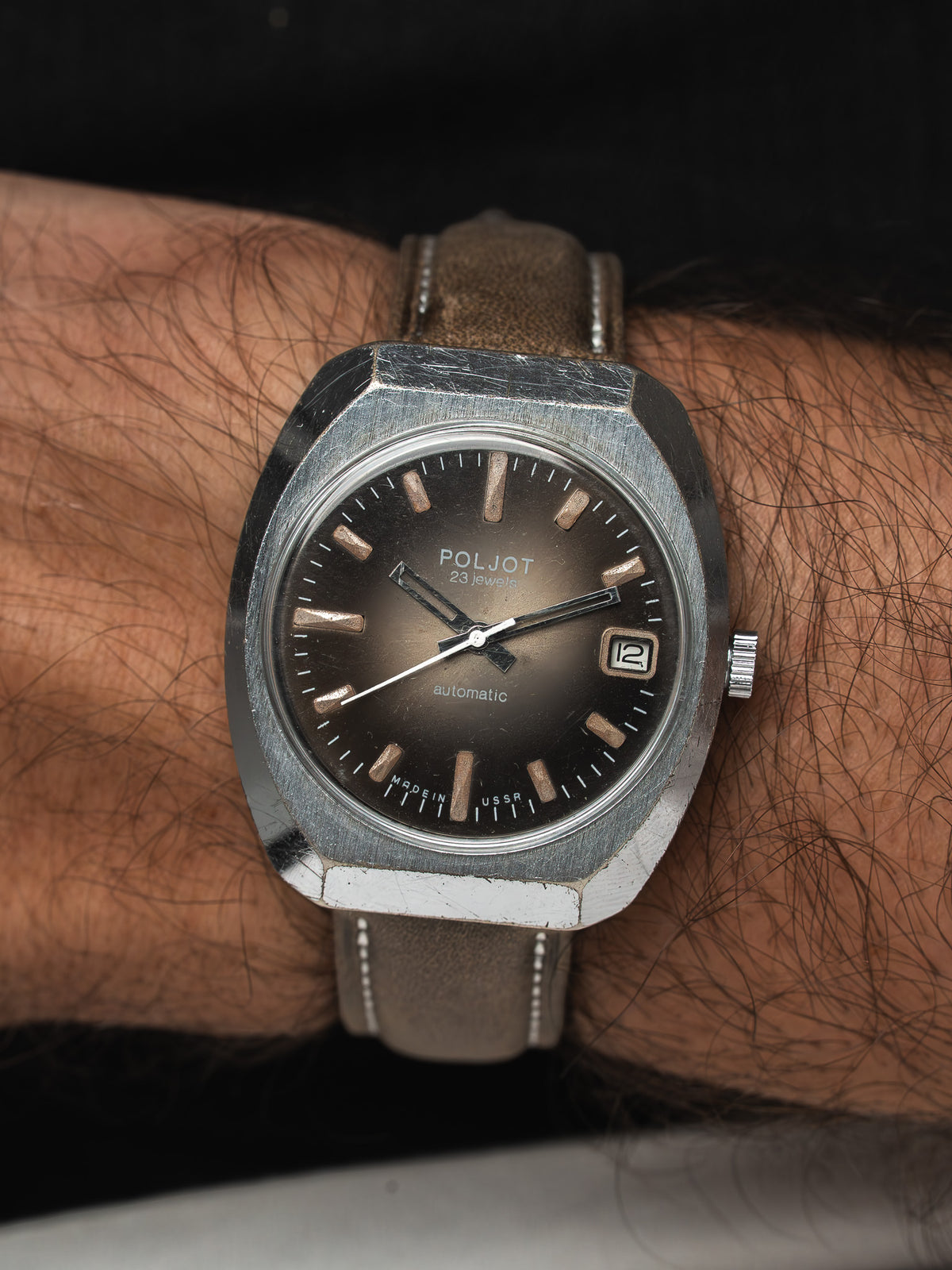
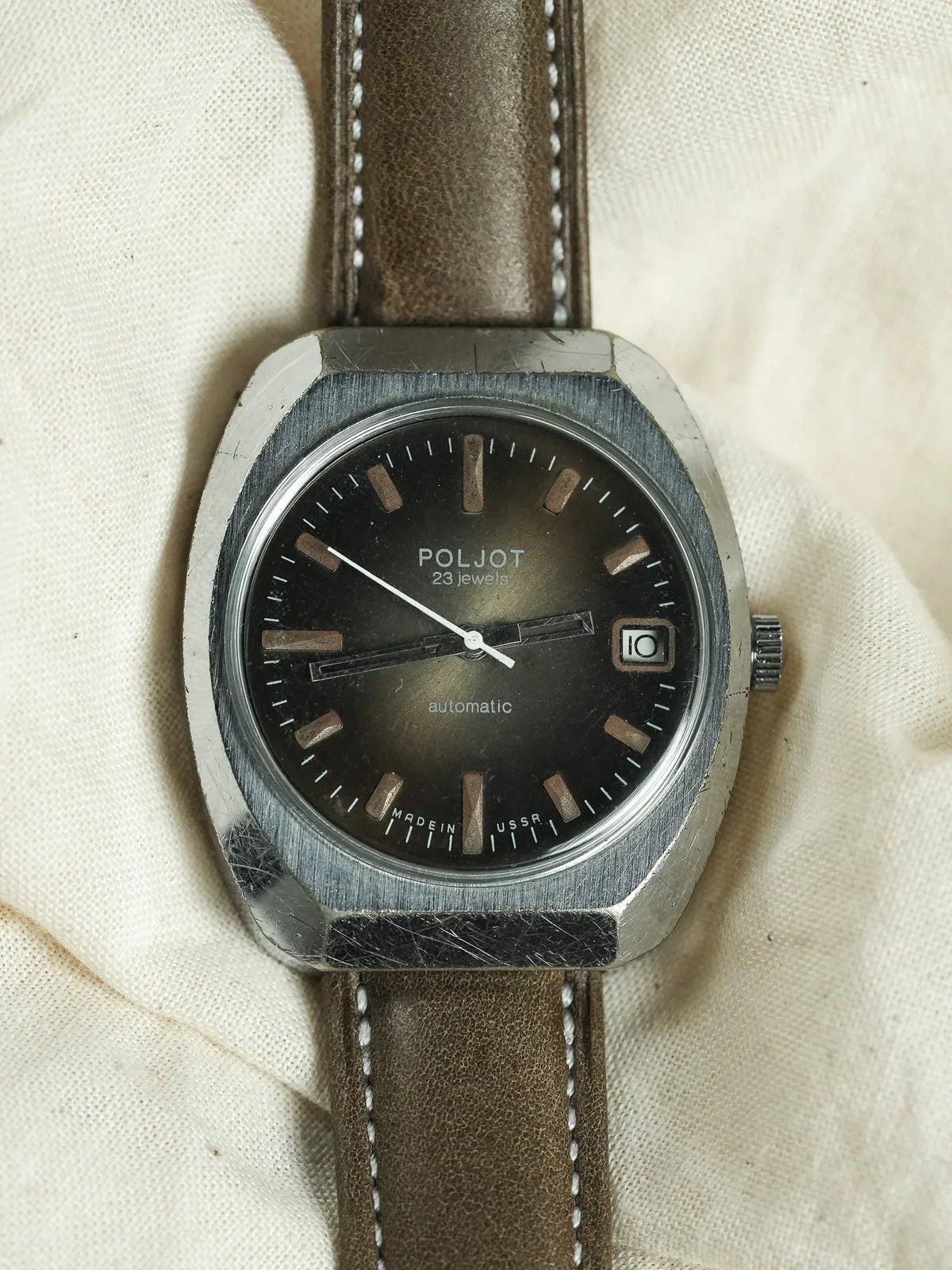
First Moscow Watch Factory → Poljot
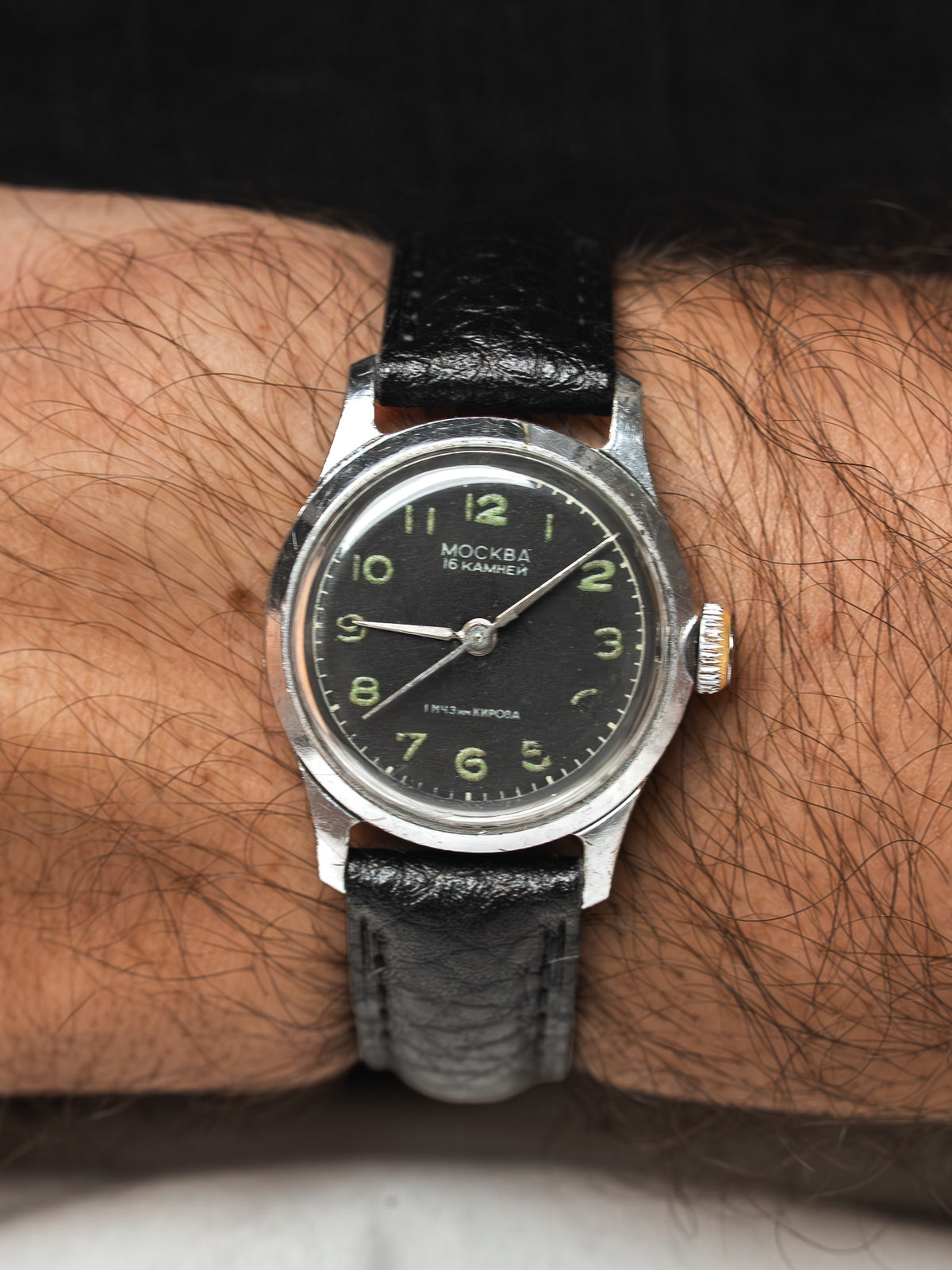
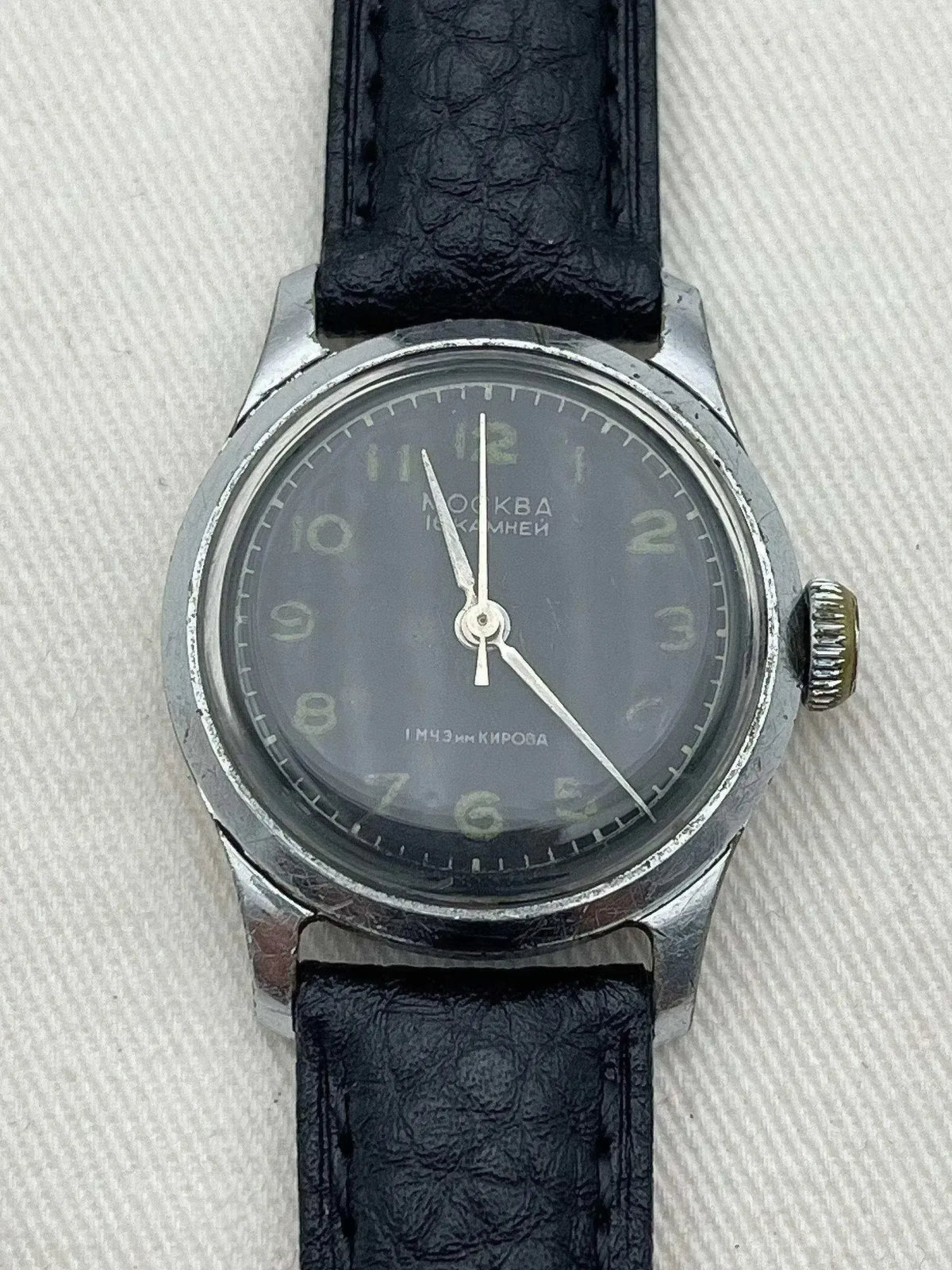
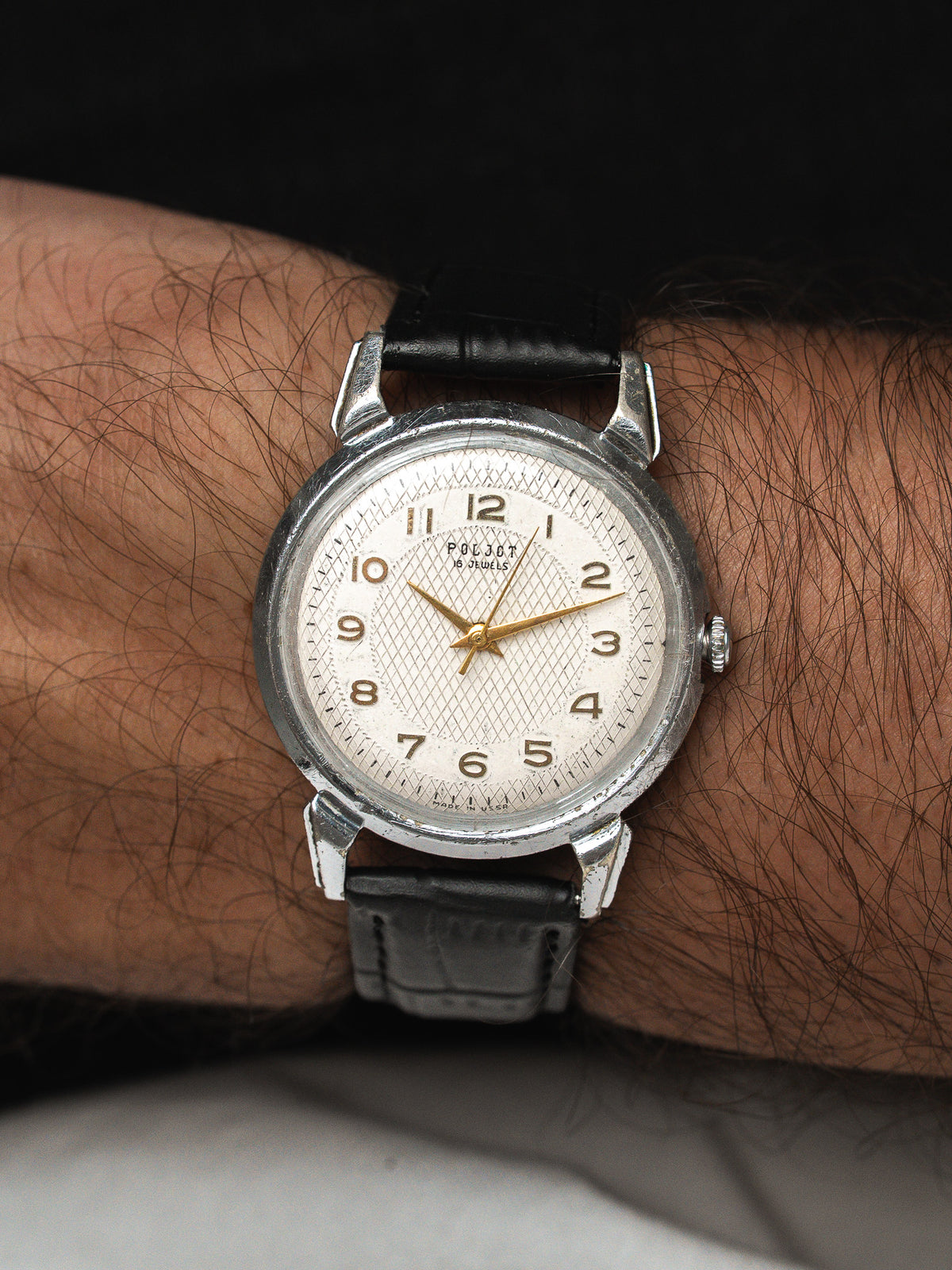
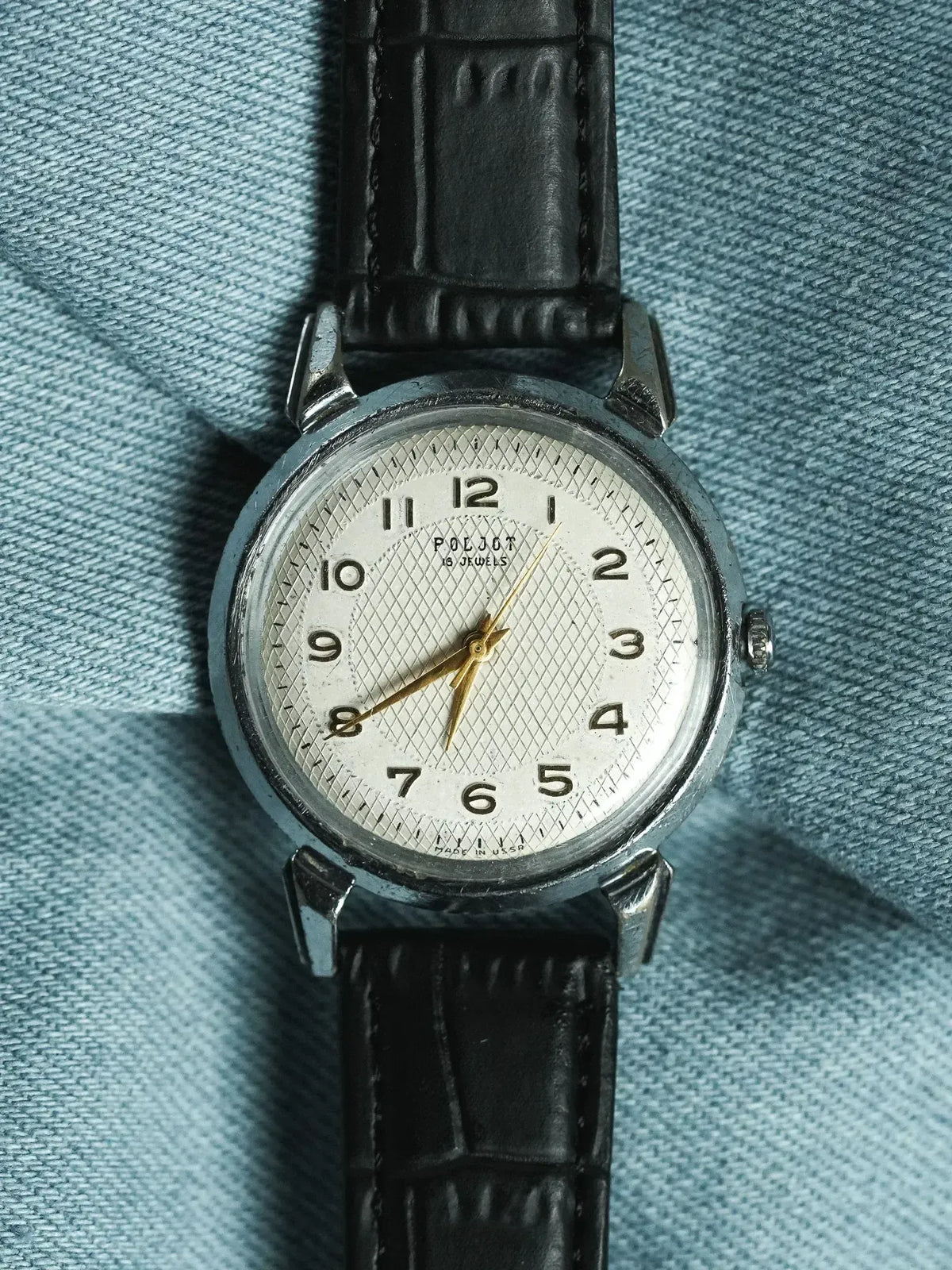
The First Moscow Watch Factory (1st MWF) is the founding manufacture of Soviet watchmaking. Created in 1930 with American machinery, it first produced watches under the Kirovskie and Pobeda brands
. In 1961, after Yuri Gagarin's historic flight (he wore a Sturmanskie produced by this factory), the manufacture adopted the name Poljot — which means "flight" in Russian.Reference models and calibres:
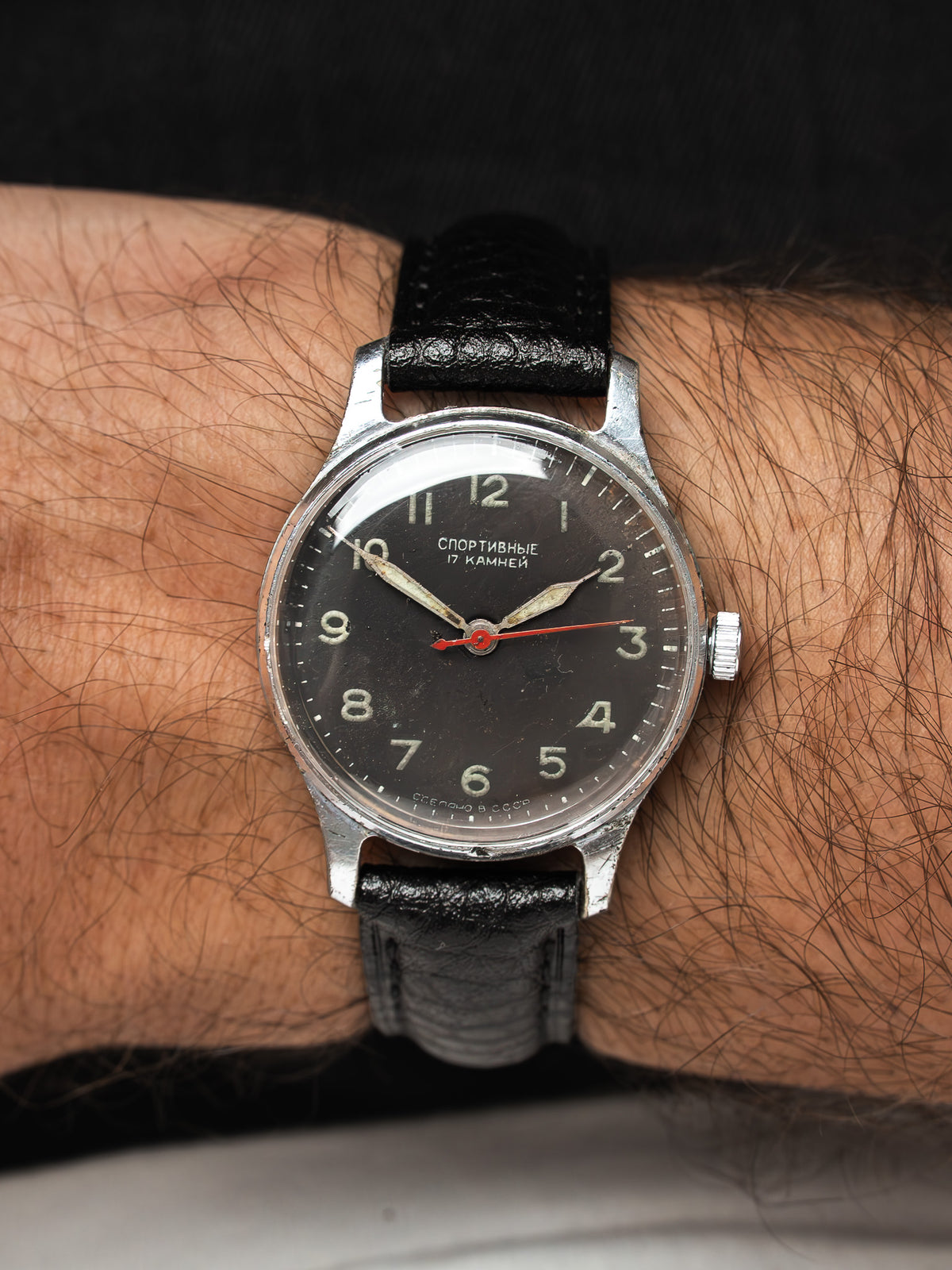
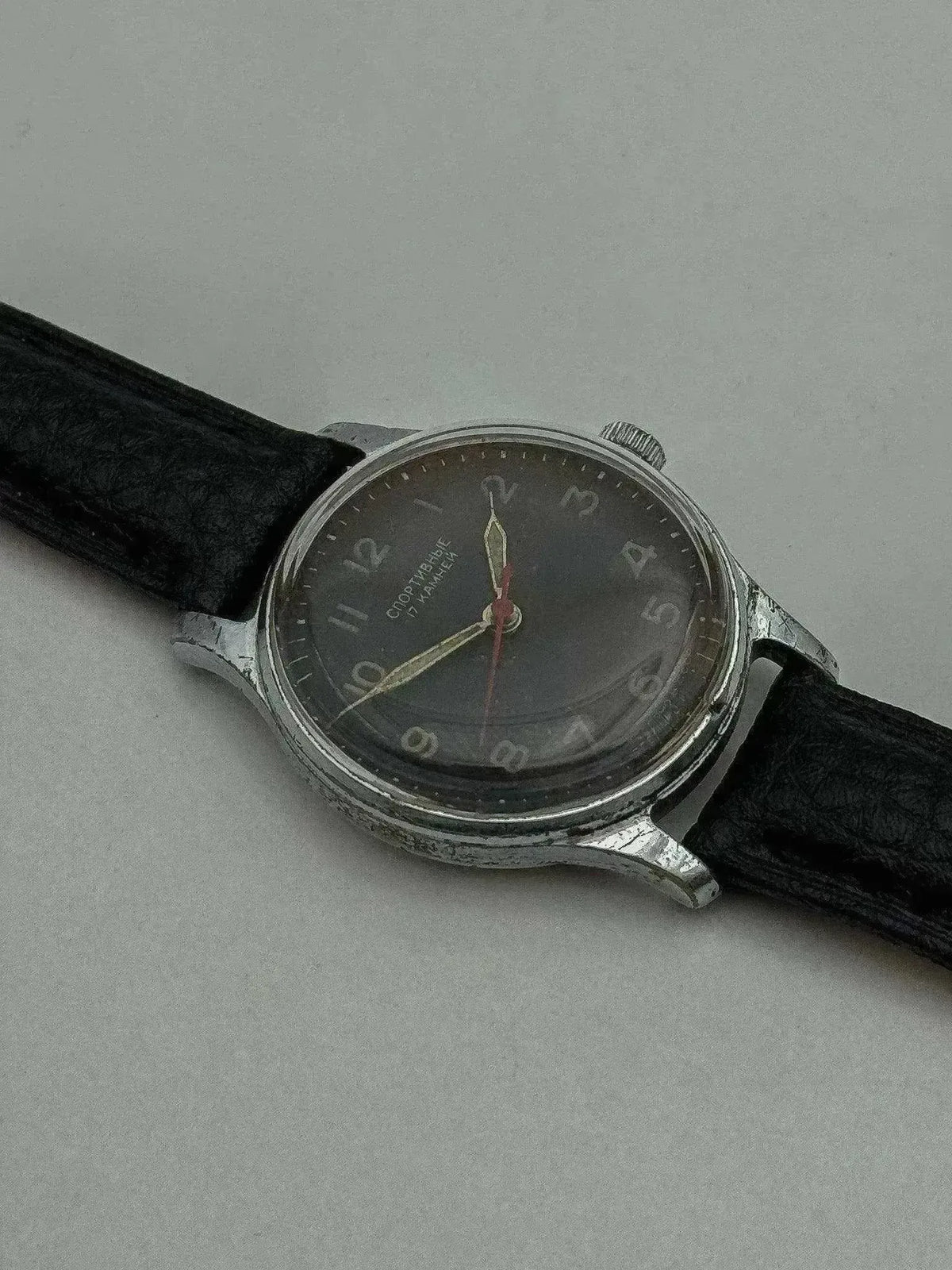
- Poljot Sturmanskie — "navigator" in Russian. The first watch worn in space — on the wrist of Yuri Gagarin during the Vostok 1 flight on April 12, 1961. Gagarin simply wore his personal watch, a military-issue model with a black dial and hand-wound movement. This is a documented historical fact. vintage Sturmanskie watches from the Soviet era are highly sought-after collectors' pieces.
- Poljot Strela — military-issue chronograph, calibre 3017 (column-wheel chronograph movement derived from the Swiss Venus 150). The Strela was worn by Alexei Leonov during the first spacewalk (1965). Strela watches with calibre 3017 are the most prized Soviet chronographs.
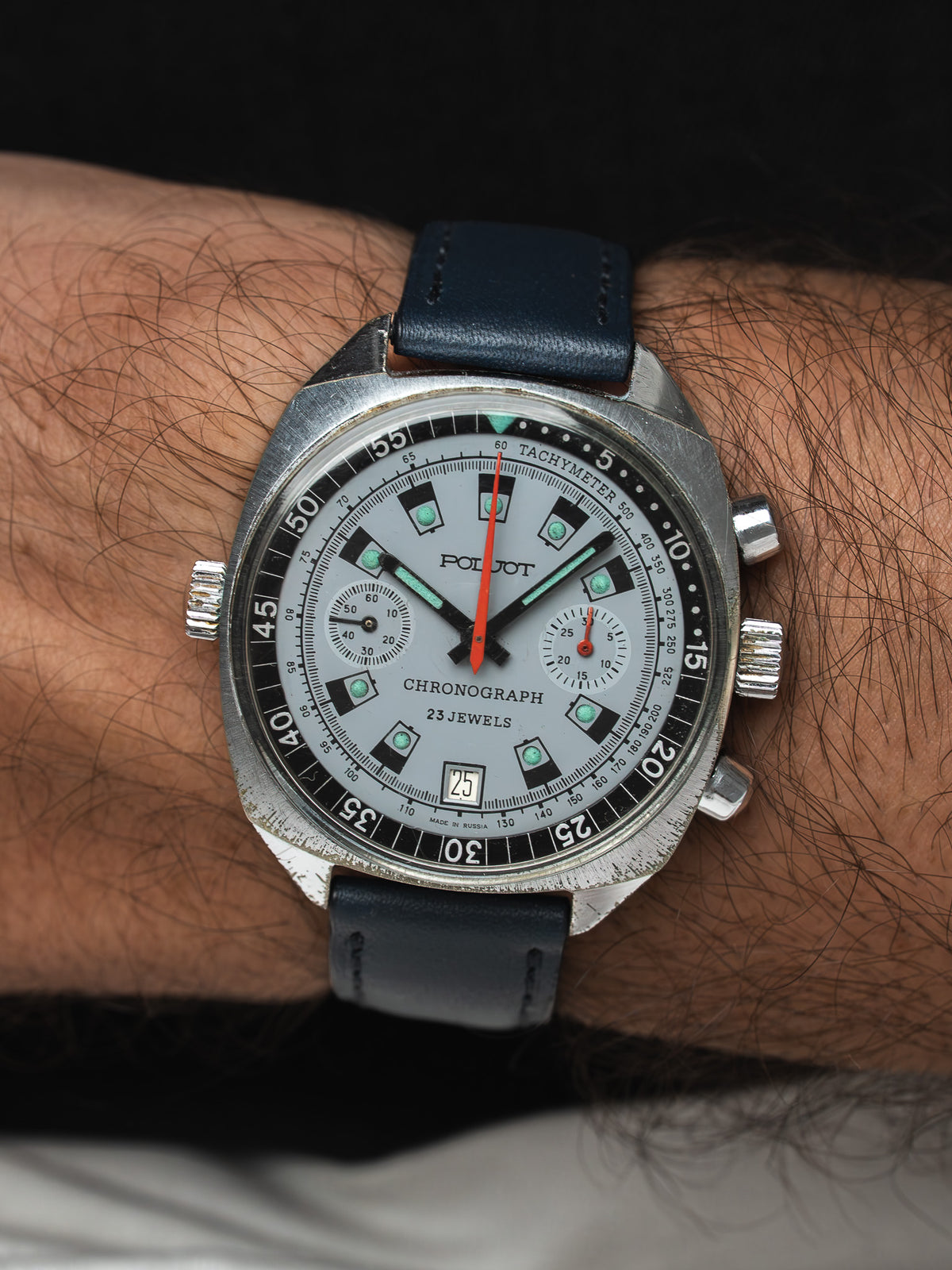
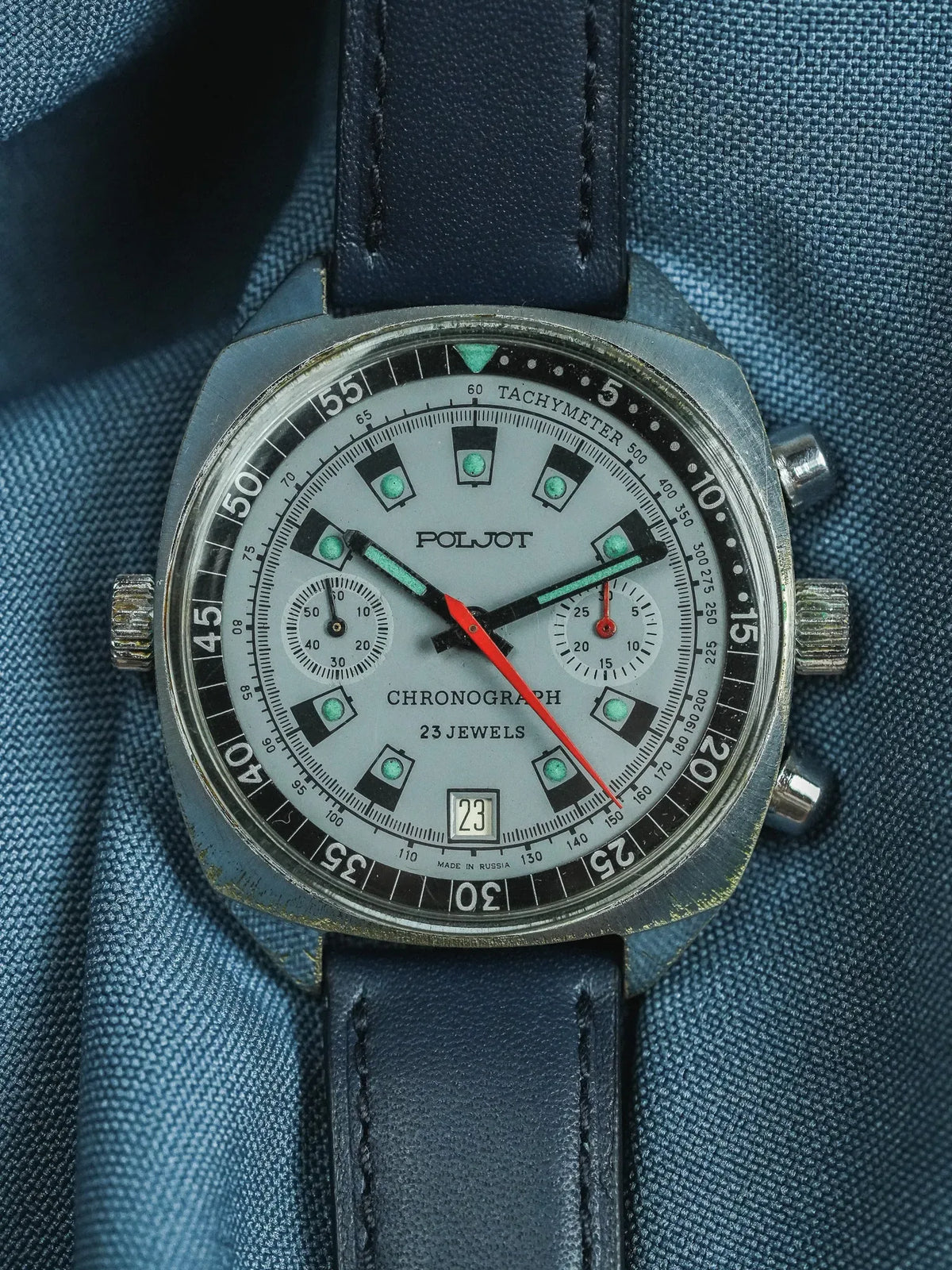
- Poljot chronograph calibre 3133 — hand-wound chronograph movement, 23 jewels, 21,600 A/h, 42-45 hour power reserve. Derived from the Swiss Valjoux 7734 (produced under license in the USSR from the 1970s onward). It is the most common and most widely collected Soviet chronograph movement. Used in Poljot Aviator, Okeah (navy), Albatros (aviation). The calibre 3133 is mechanically a Swiss movement manufactured in Russia — robust, reliable, easy to service.
- Poljot 2200 / Vympel — ultra-thin movements, among the thinnest in the world in their time. The Poljot de Luxe and Vympel are thin Soviet dress watches.
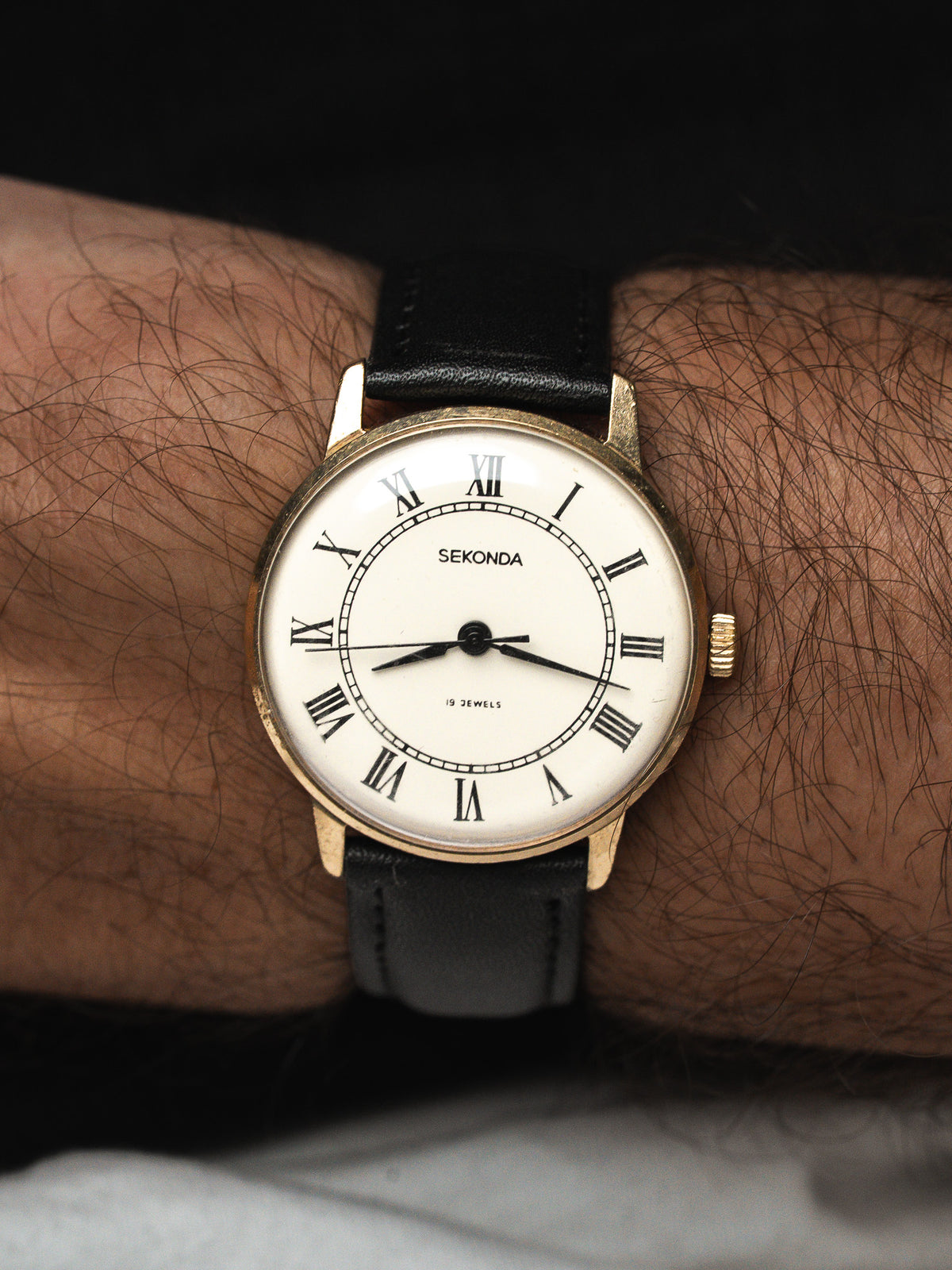
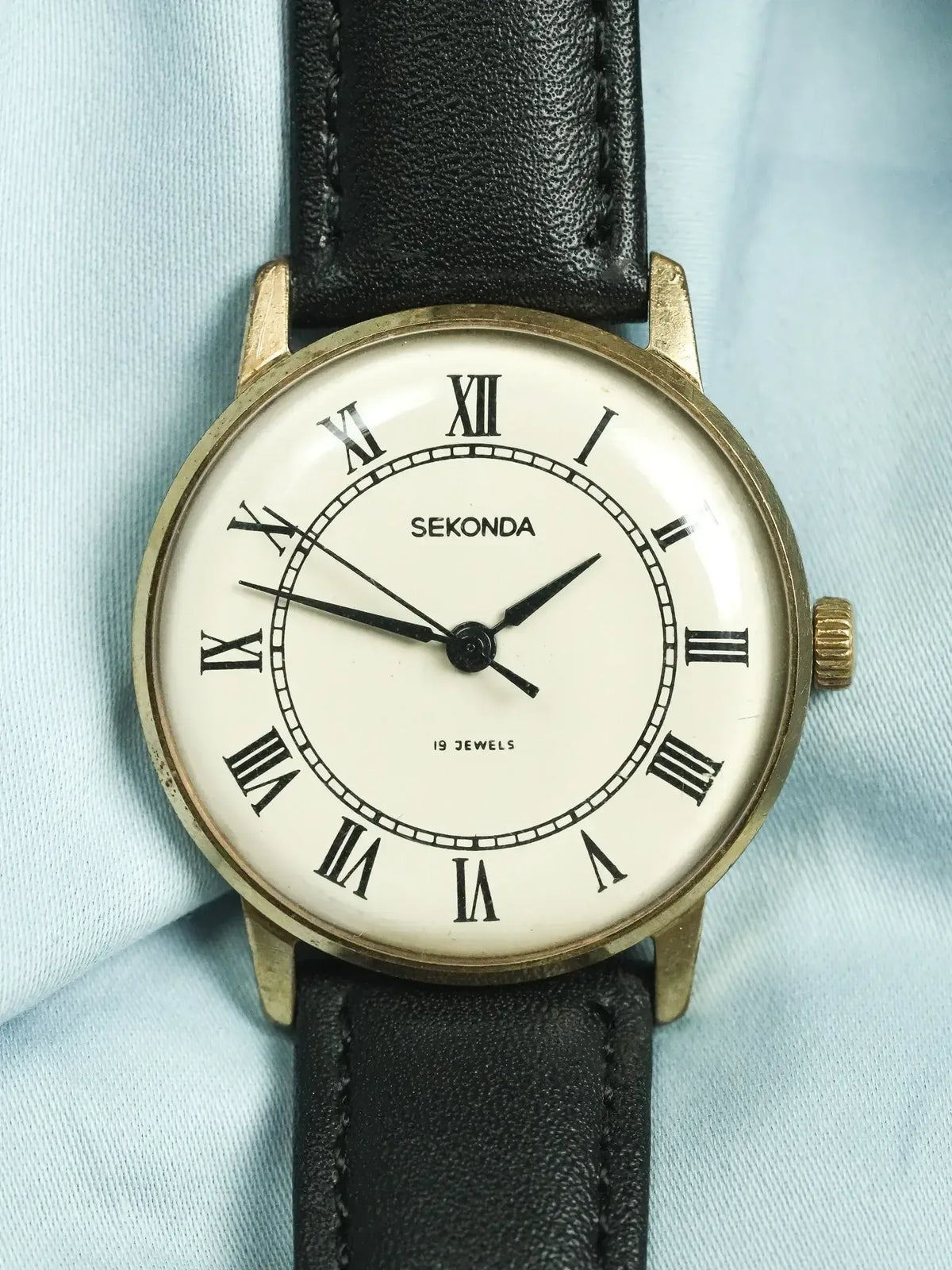
- Sekonda — export brand of Poljot for the British and European markets.
Petrodvorets Watch Factory → Raketa
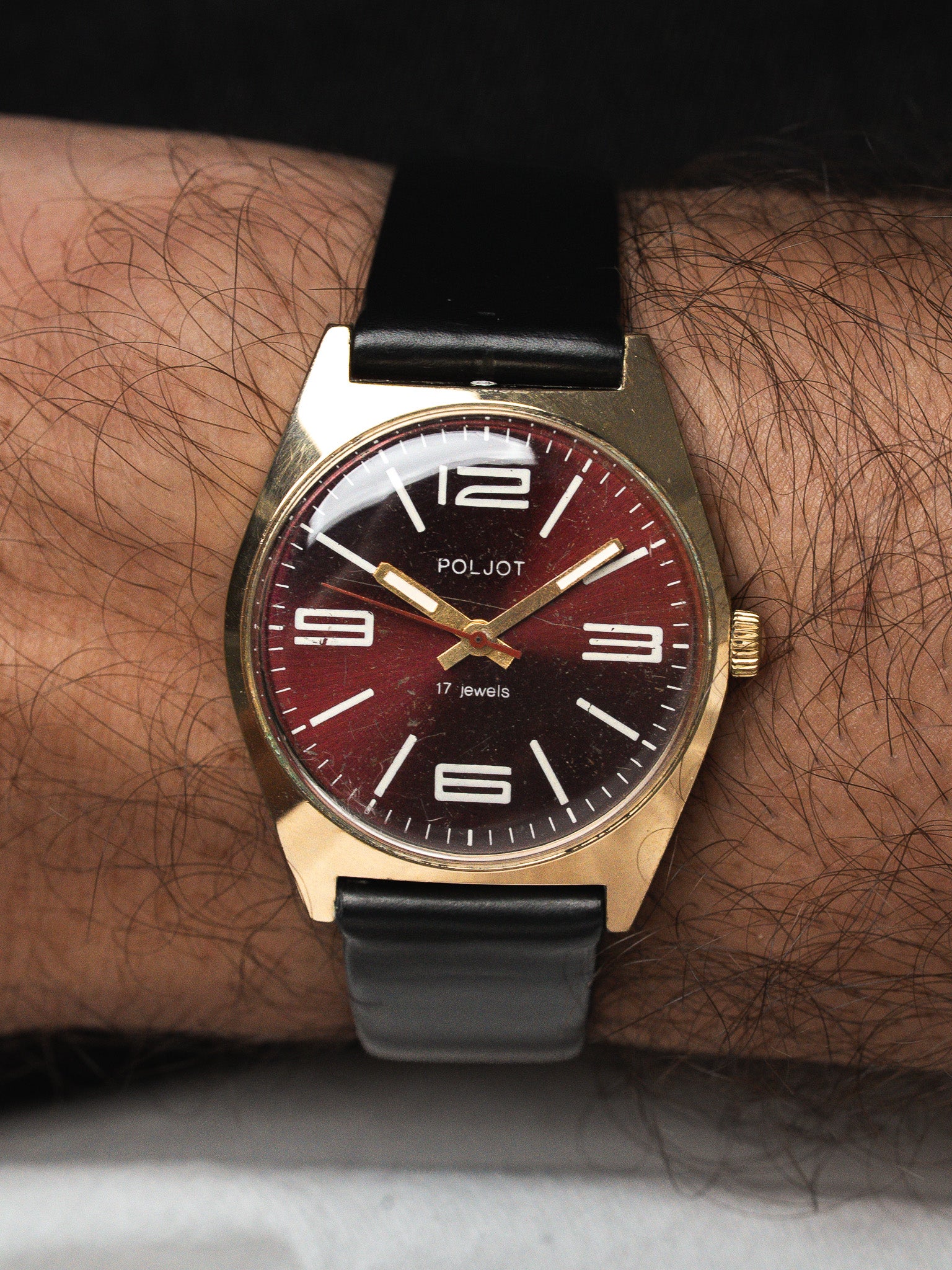
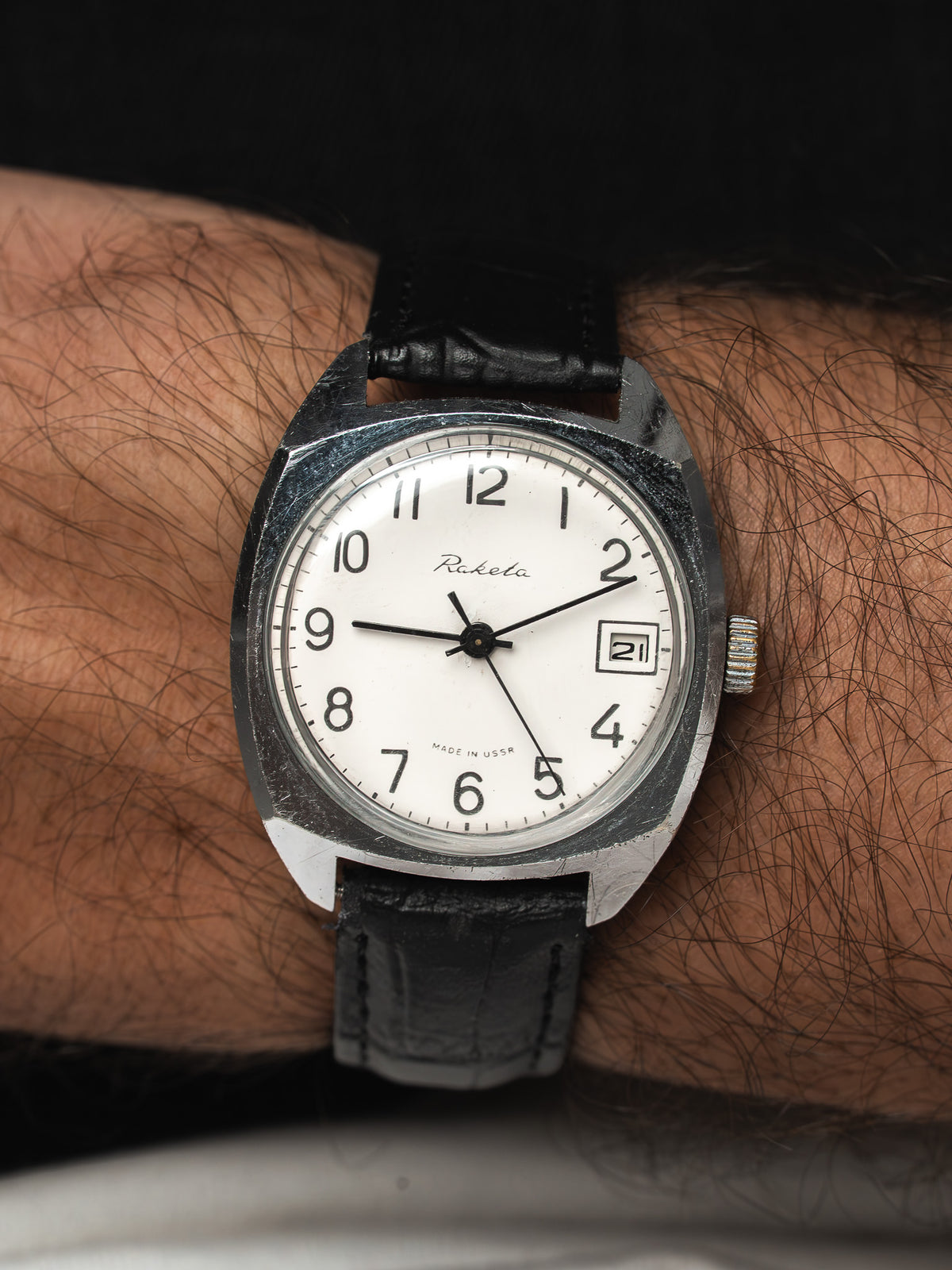
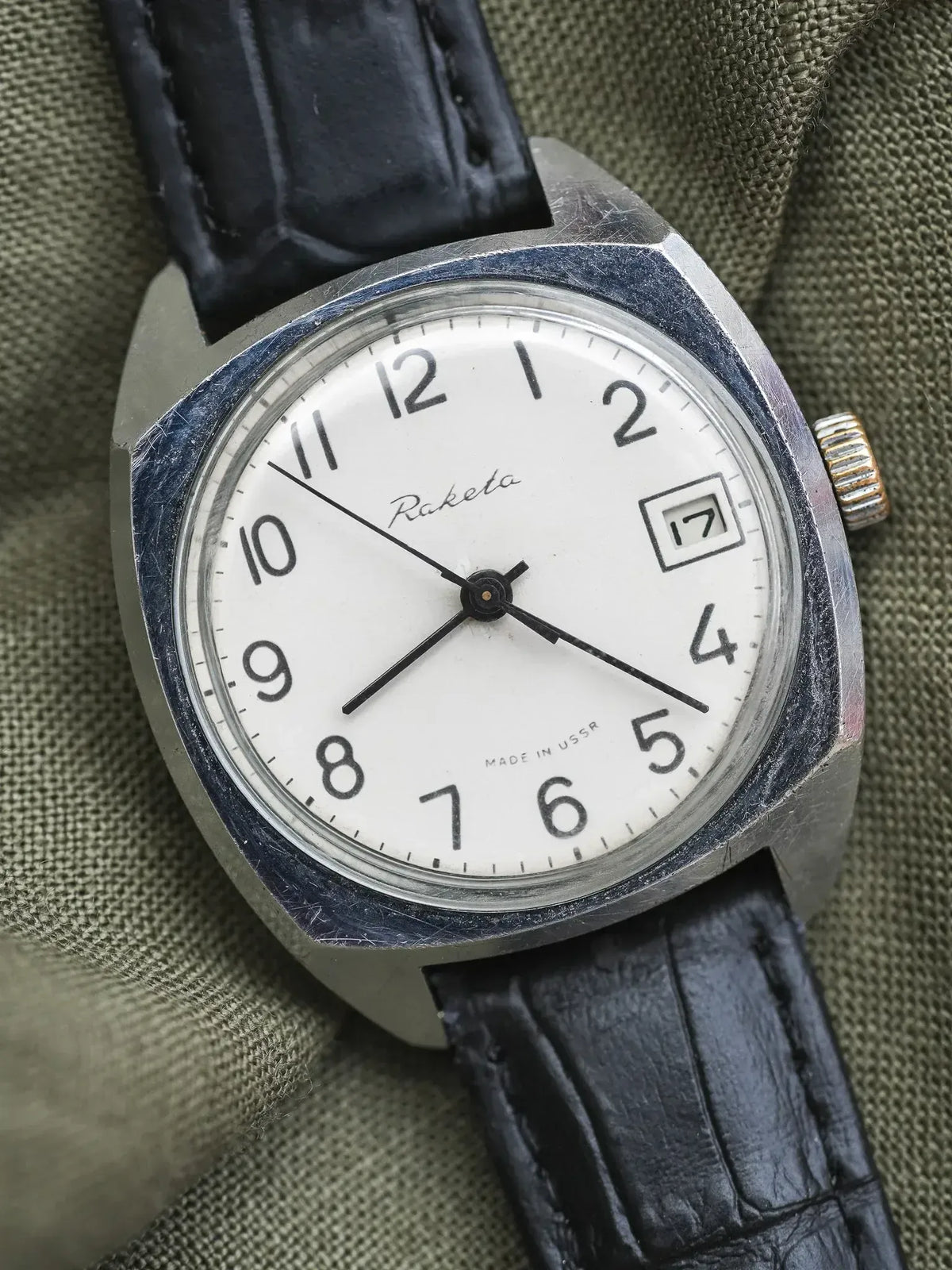
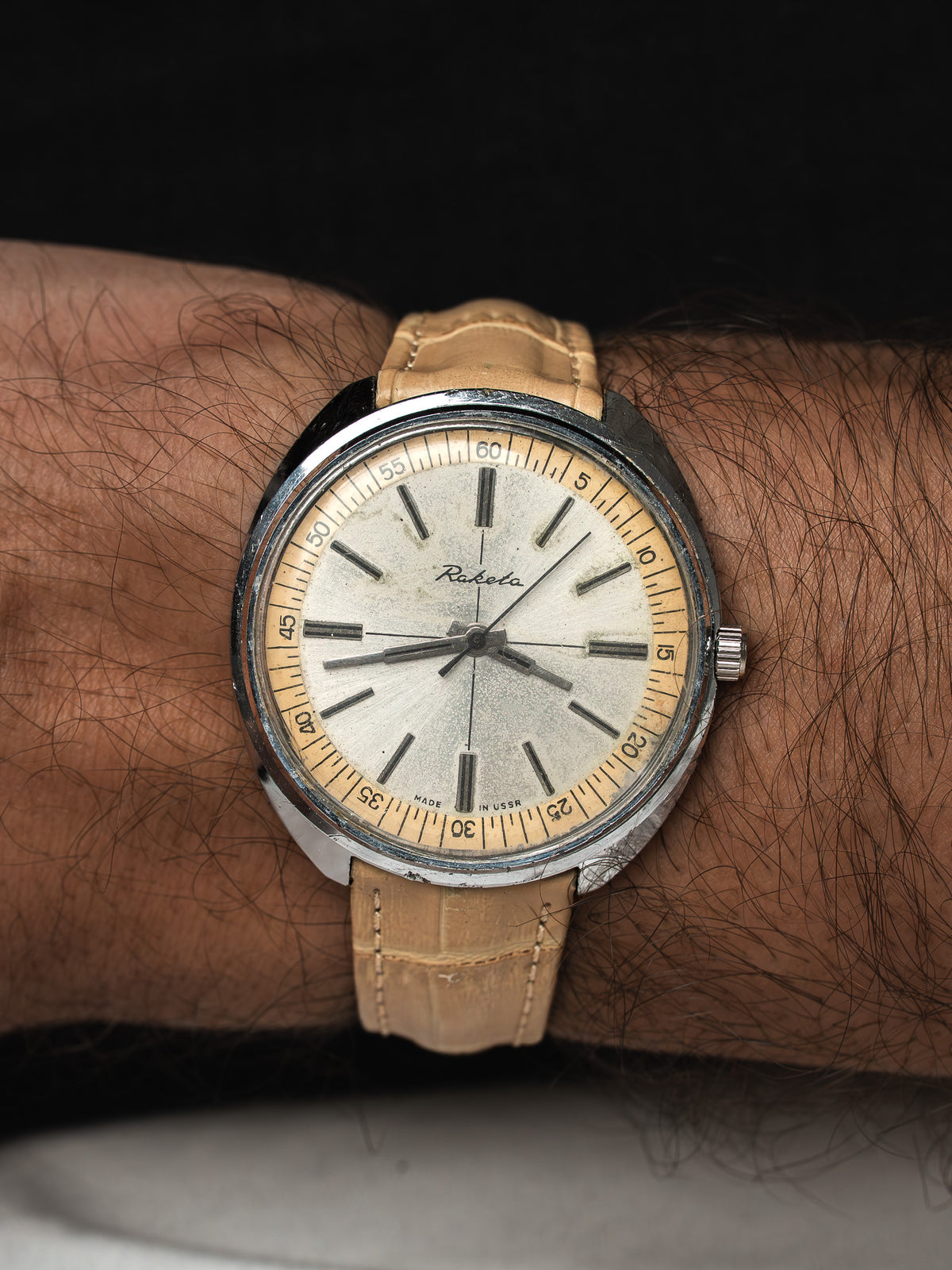
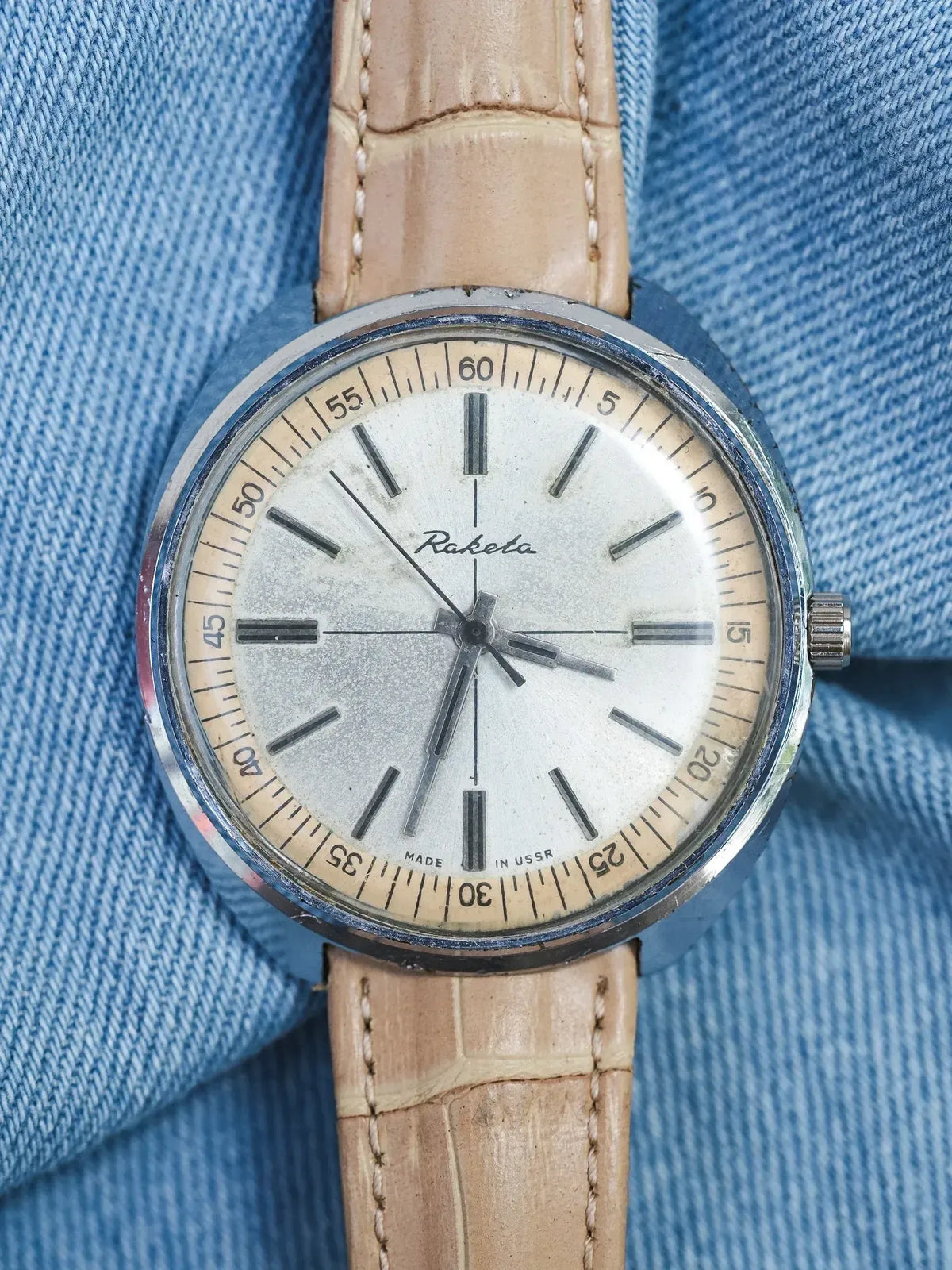
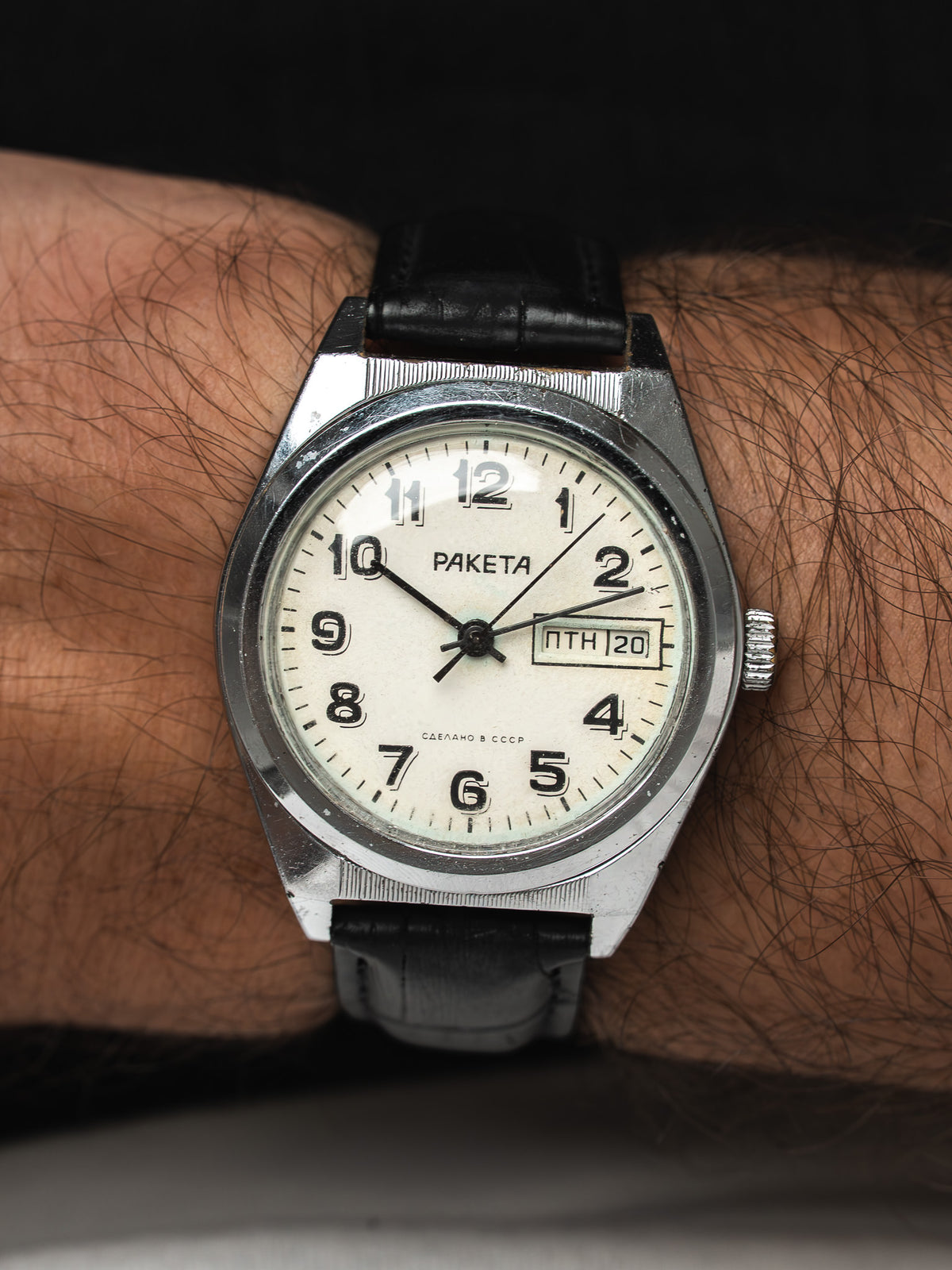
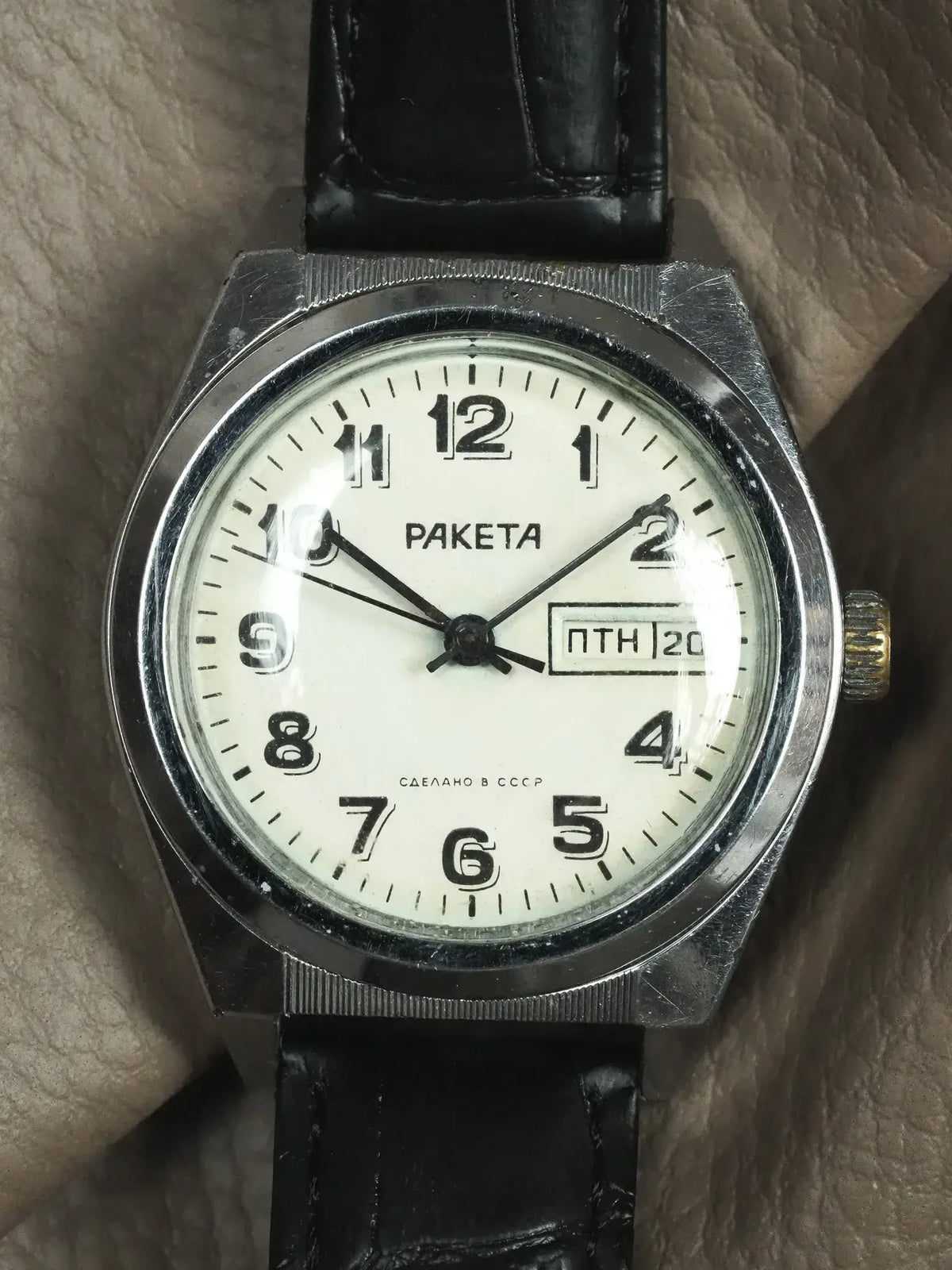
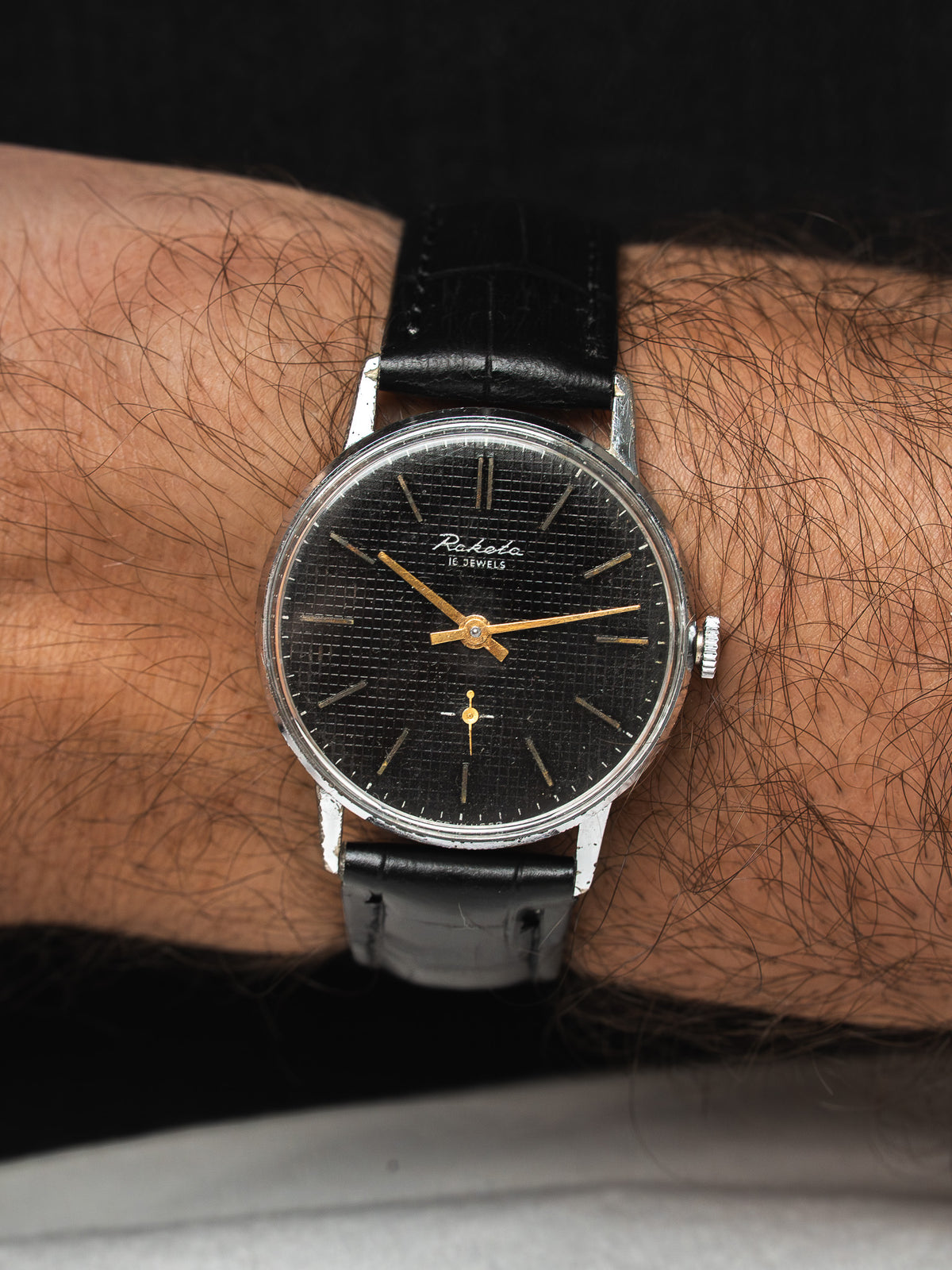
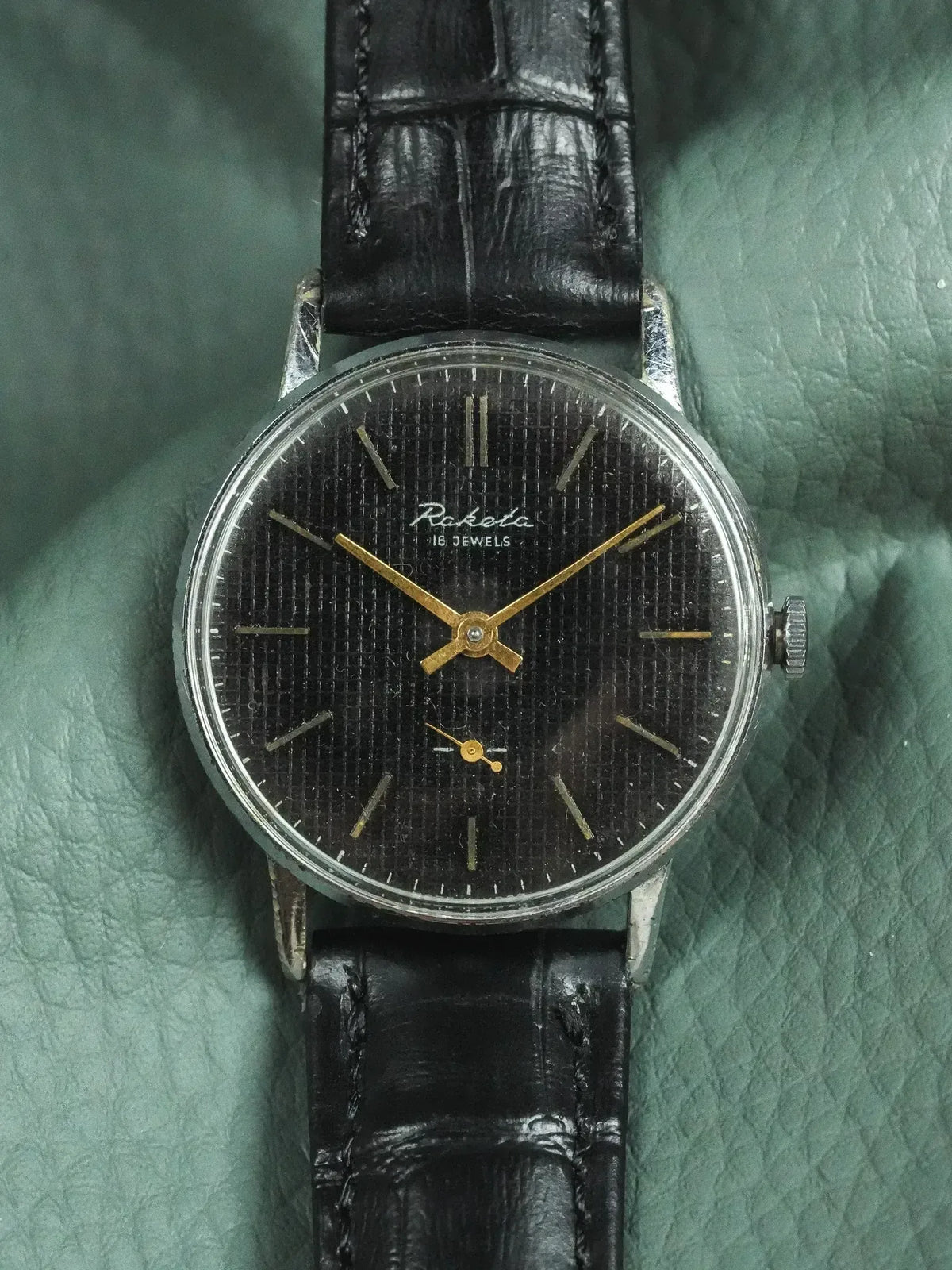
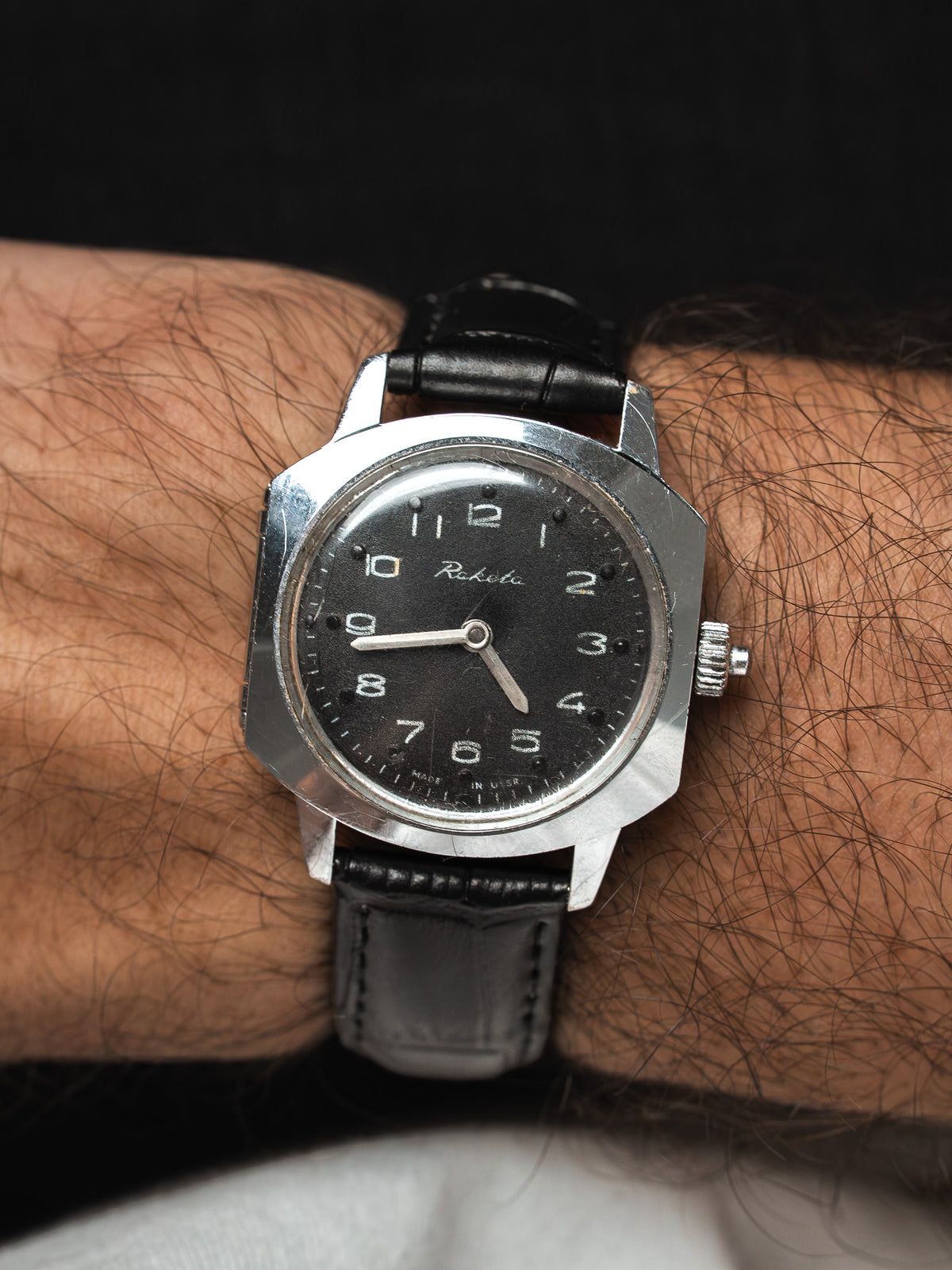
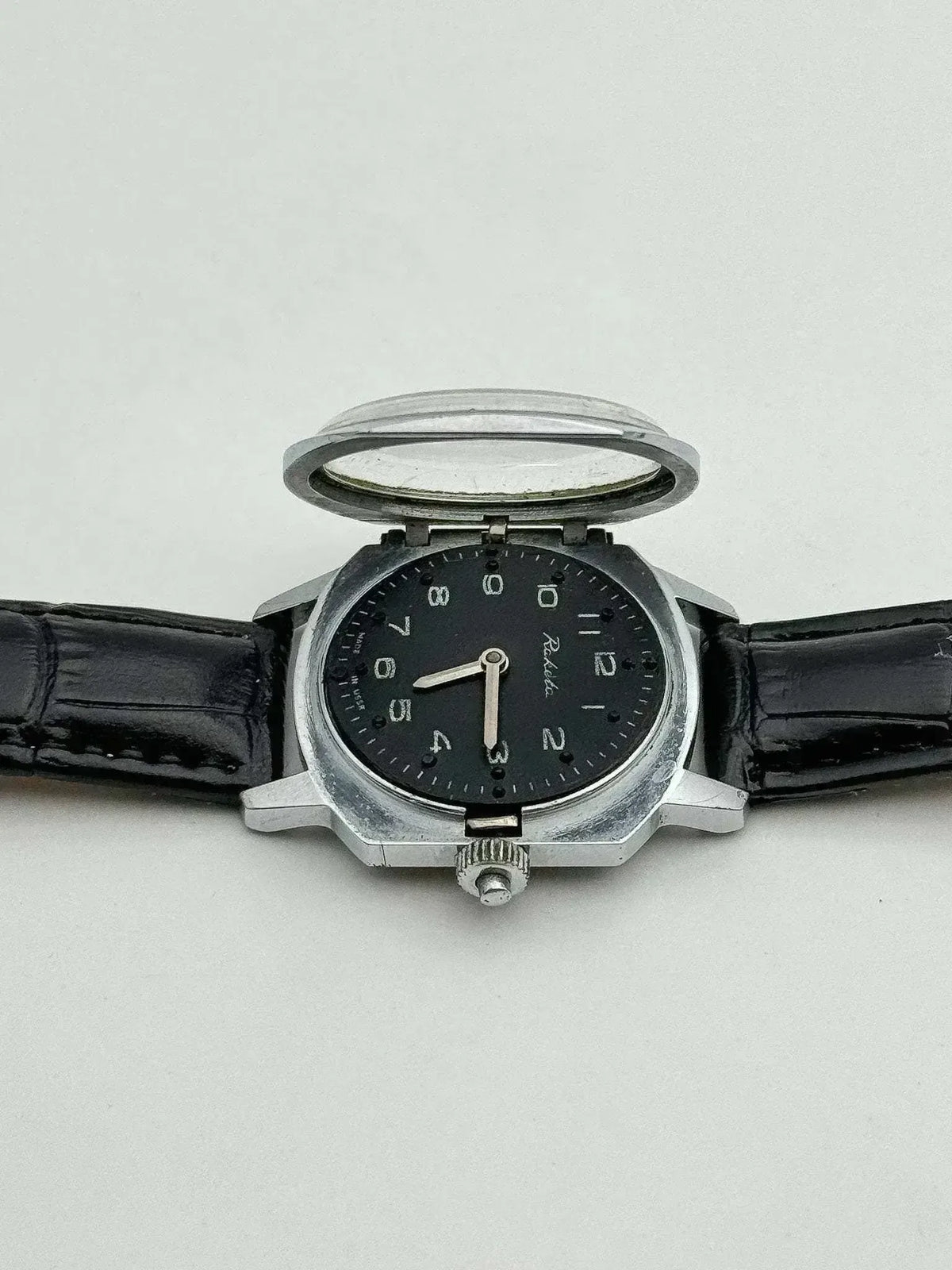
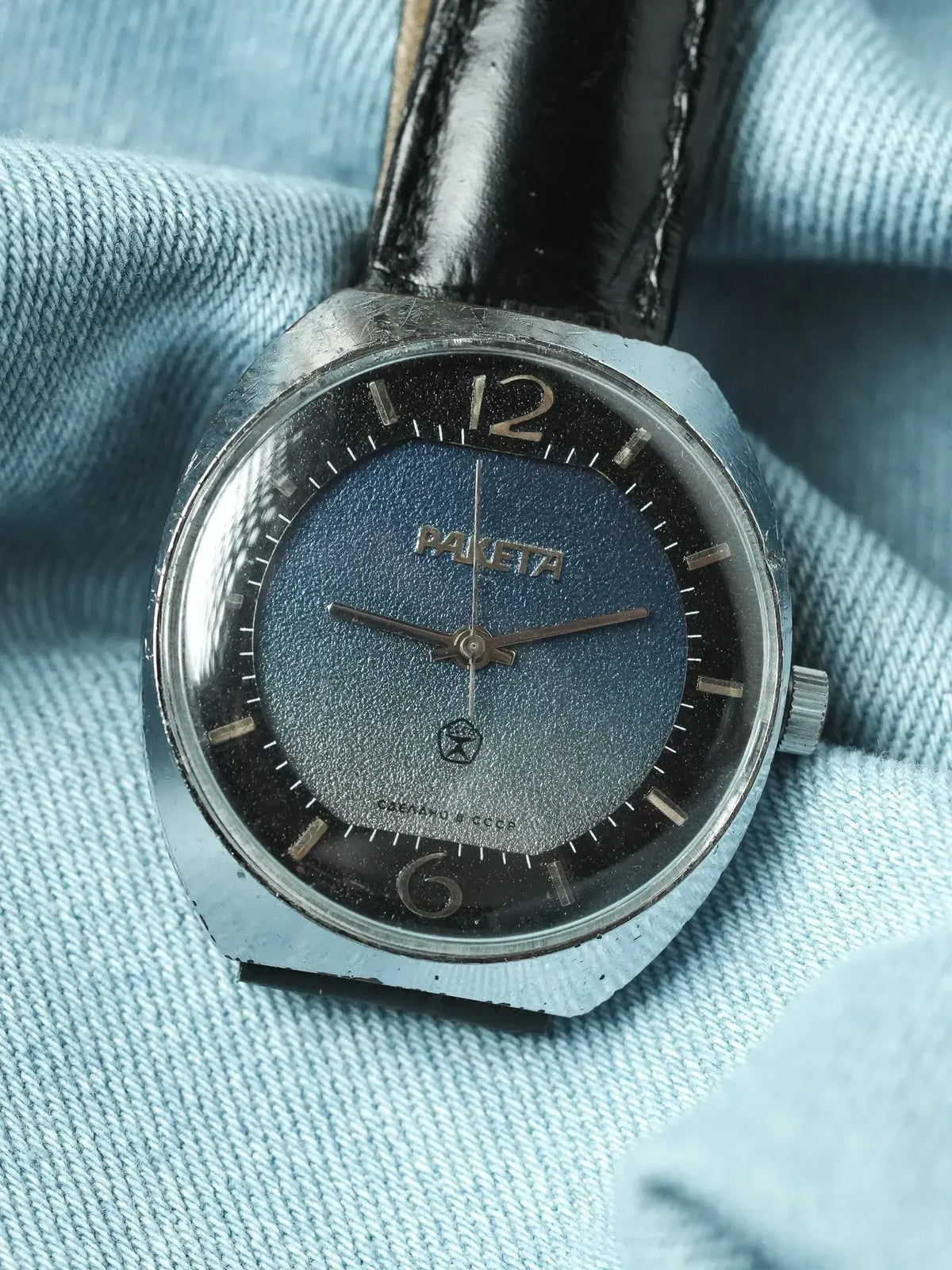
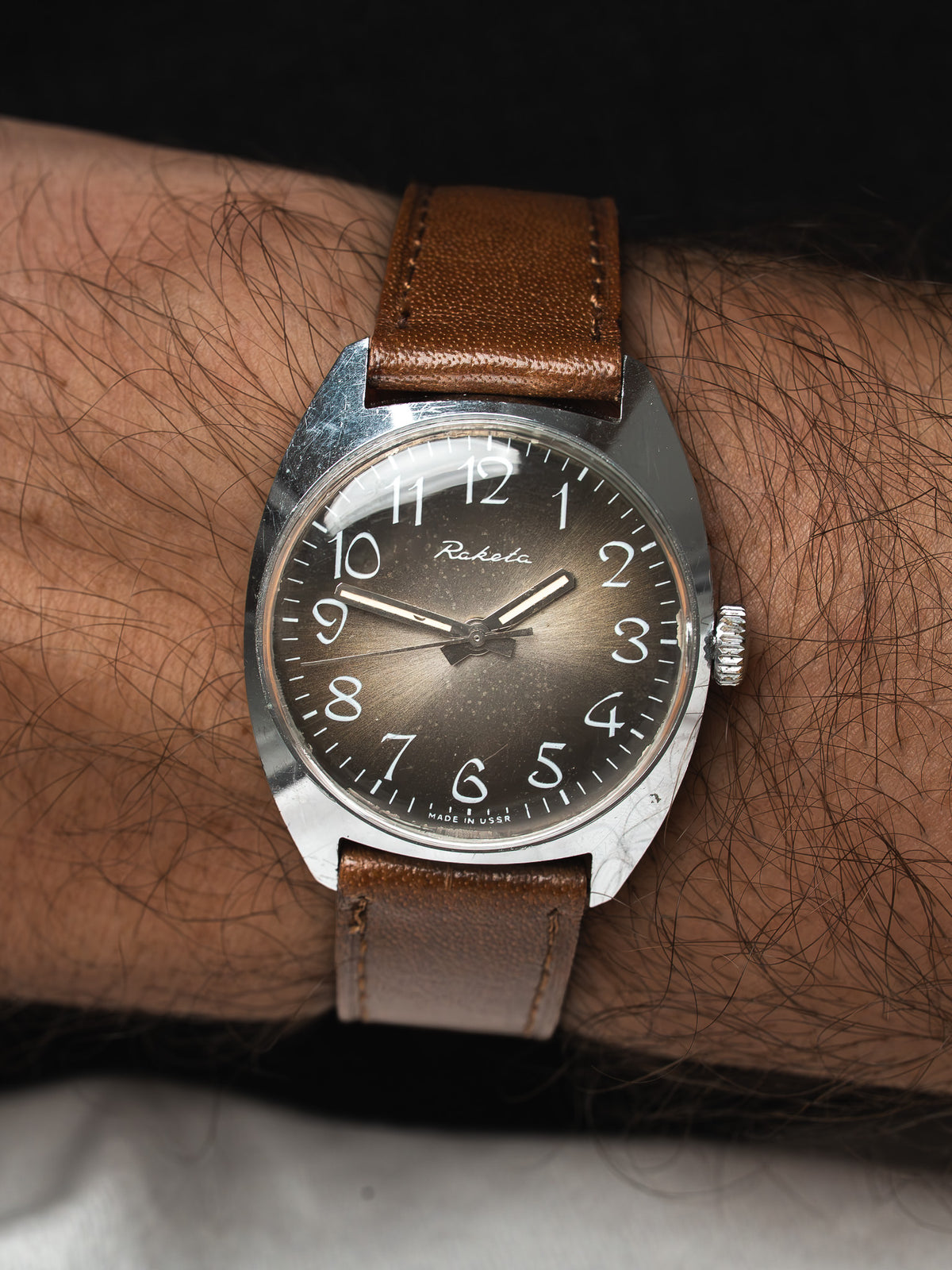
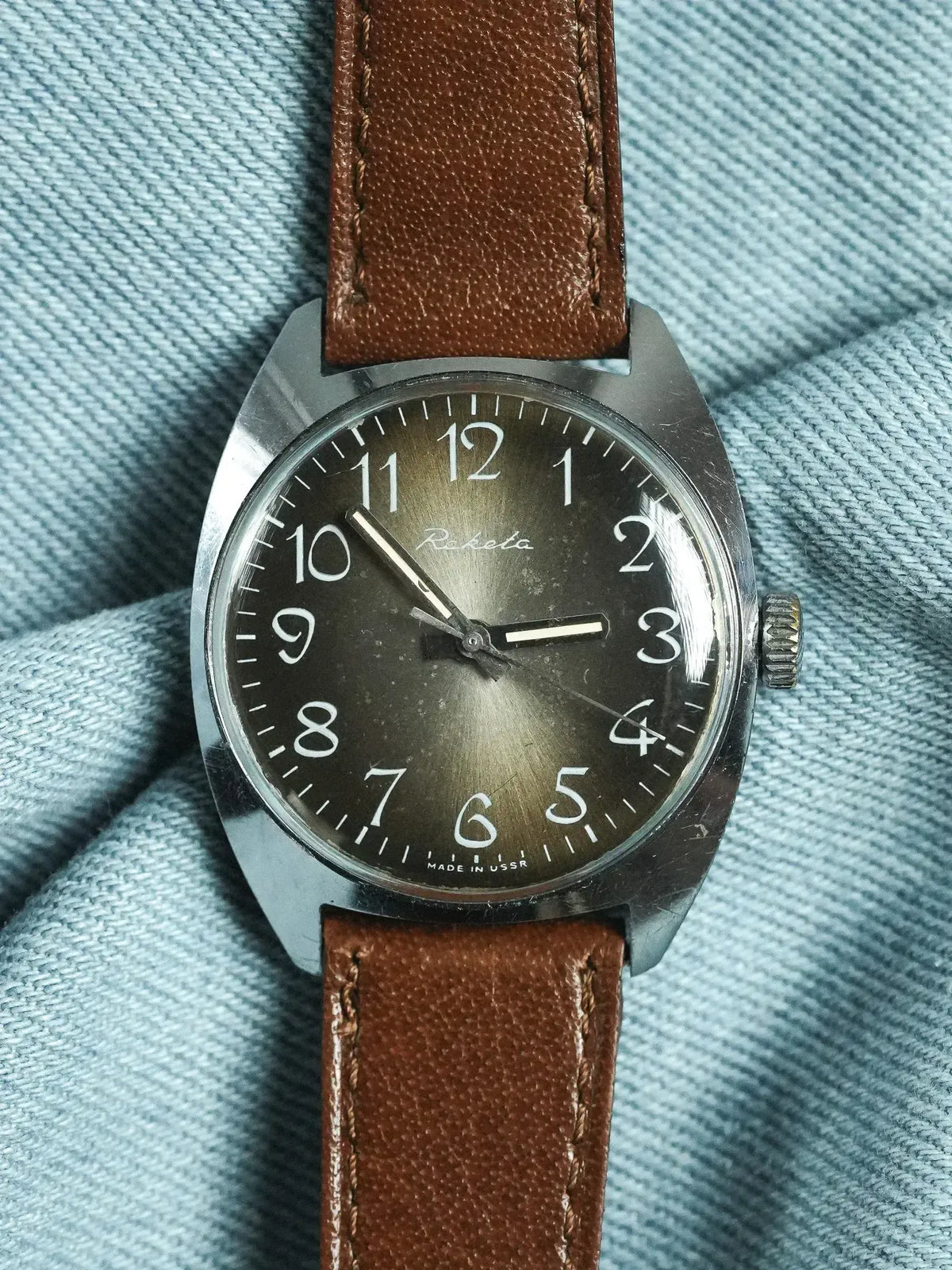
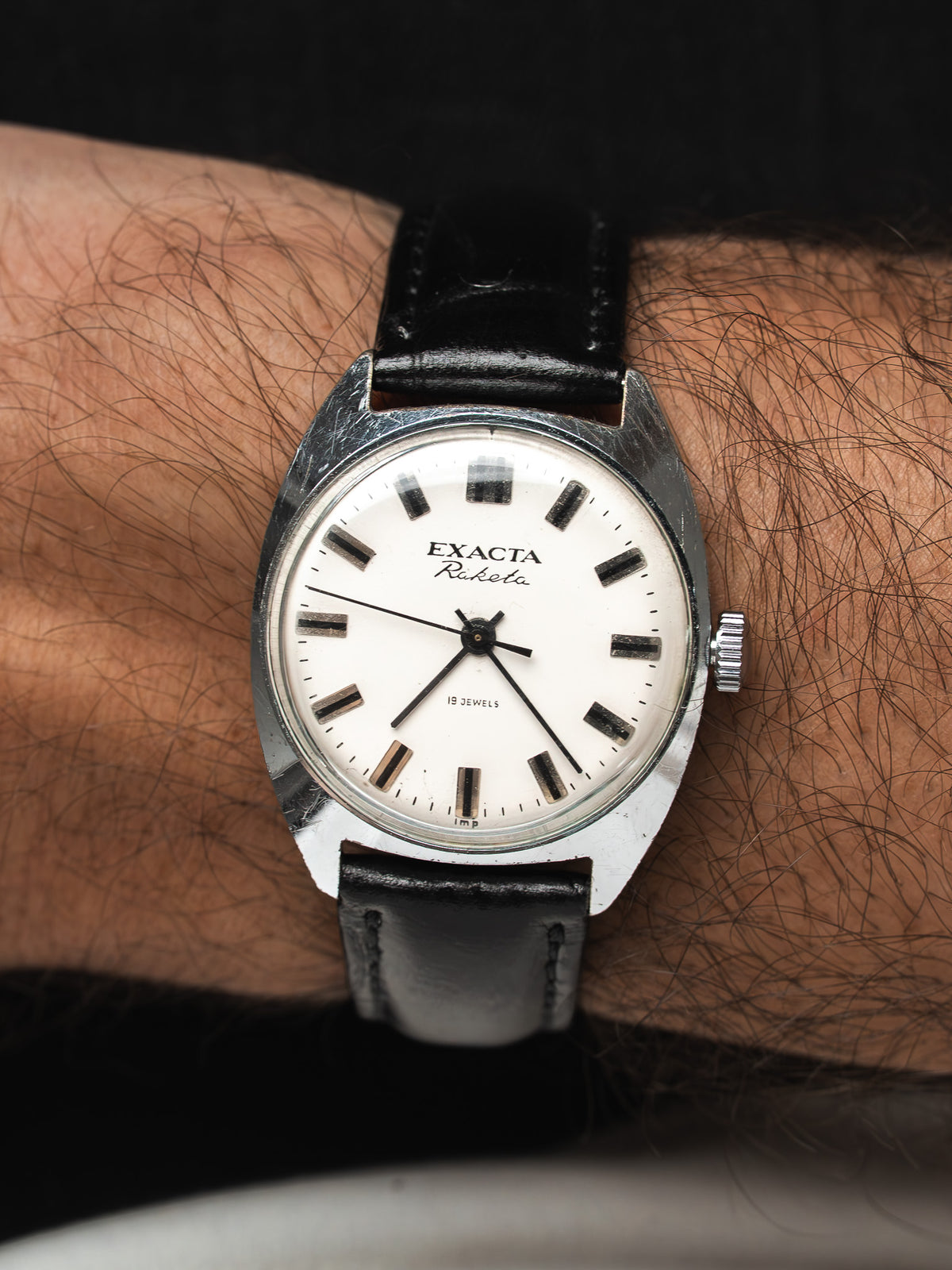
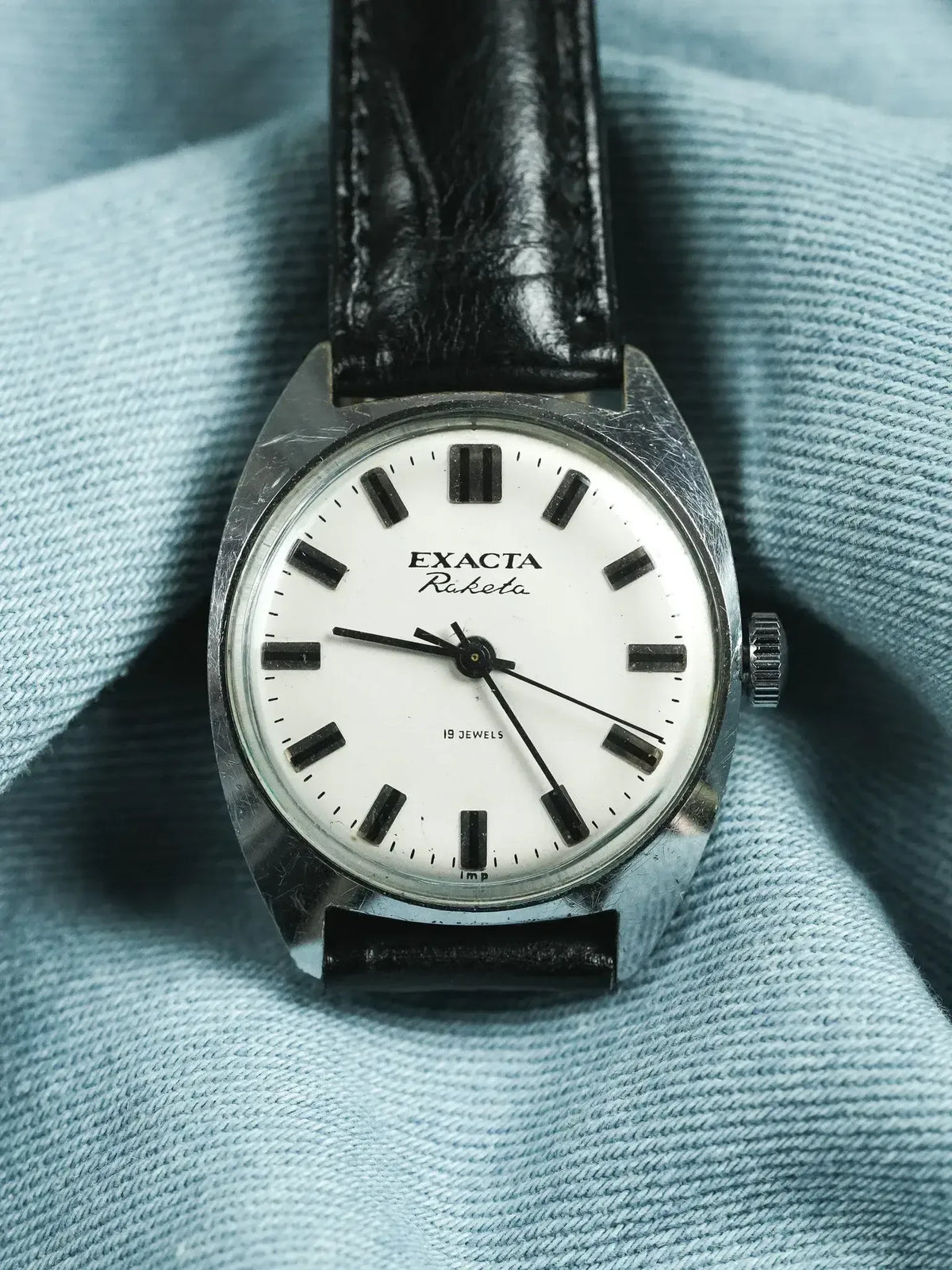
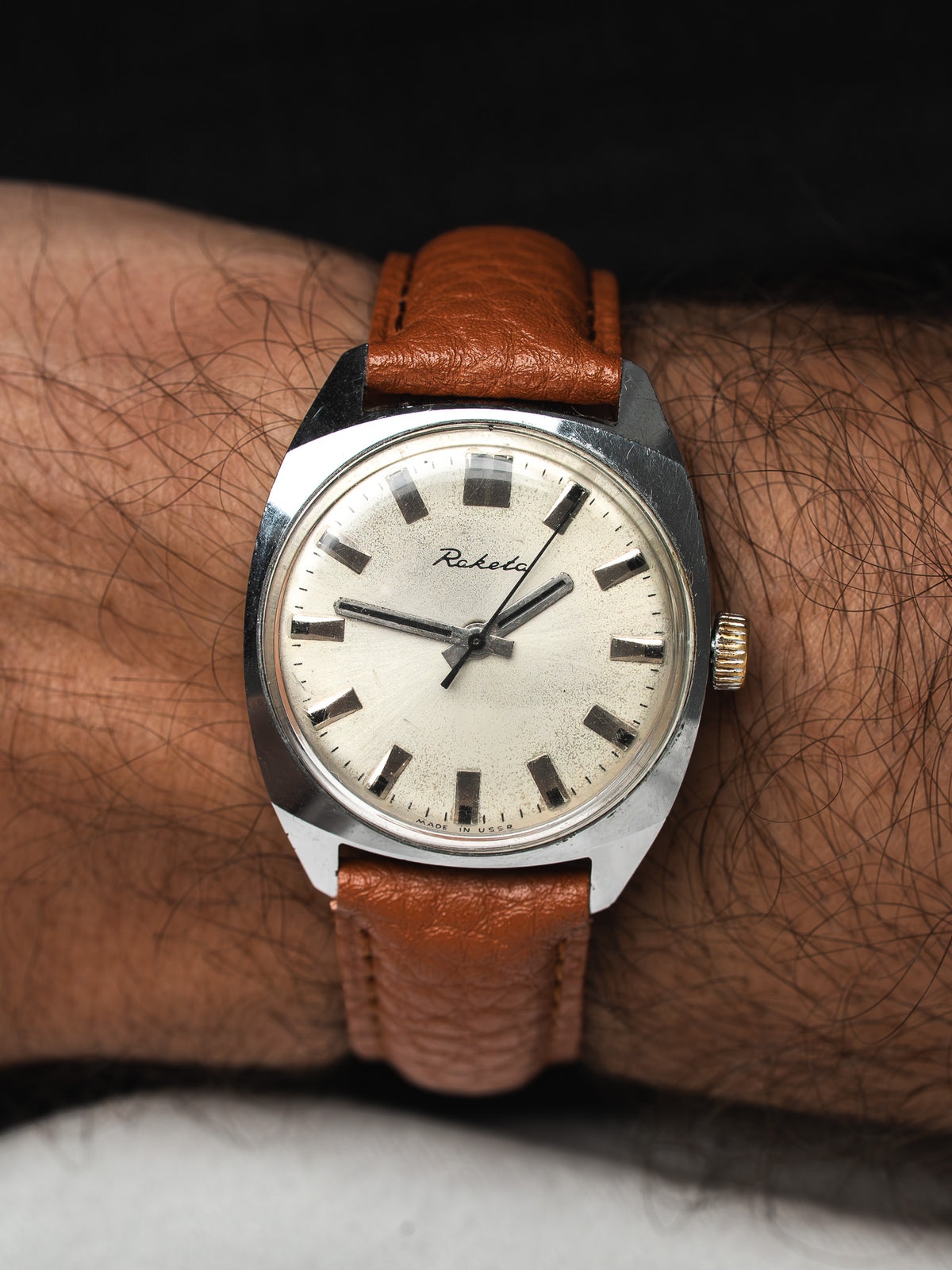
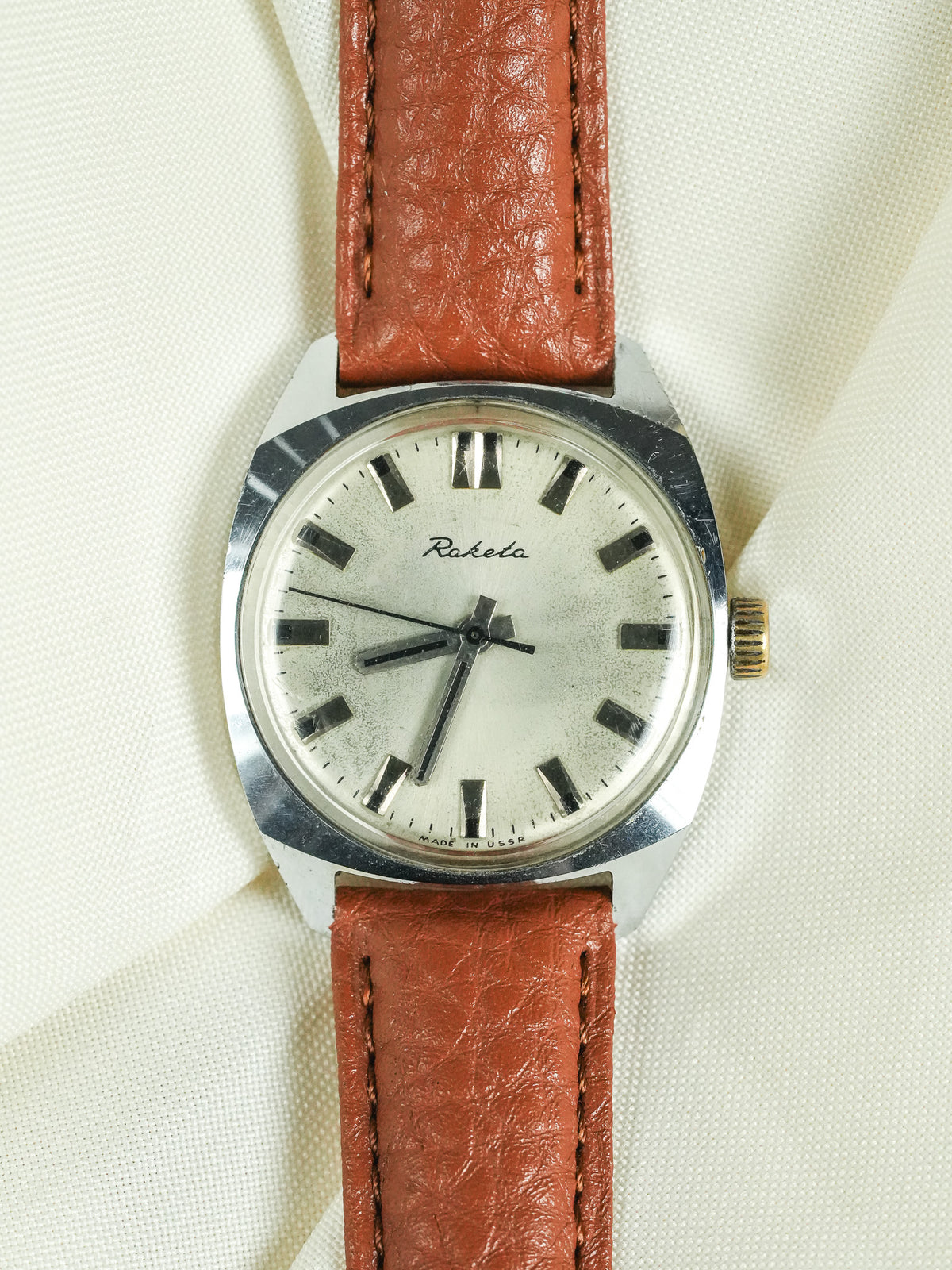
The Petrodvorets factory, founded by Peter the Great in 1721 as a atelier for cutting semi-precious stones, is the oldest factory in Russia still in operation. It began producing watches in 1949 under the Zvezda and Pobeda brands. In 1961, after Gagarin's flight, the Raketa ("rocket") brand was launched. In the 1980s, Raketa produced around 5 million watches per year. Worn by Mikhail Gorbachev and Fidel Castro.
- Raketa Big Zero — the most recognizable model. Dial with a large "0" at 12 o'clock, a distinctive graphic design. Legend has it that when Gorbachev was asked about the meaning of Perestroika, he pointed to the "0" on his Big Zero. Calibre 2609.HA movement, hand-wound, 19 jewels.
- Raketa Copernic — astronomical dial with rotating discs representing planetary orbits. A unique design in watchmaking.
- Raketa 24 Hours — 24-hour dial (not 12-hour), designed for polar explorers and Soviet submariners who lived without a day-night cycle. Calibre 2623.H movement.
- Raketa Polar — worn during the 16th Soviet expedition to Antarctica. Watches designed for extreme cold conditions.
After the fall of the USSR, Raketa declined — inventories were liquidated, quality fell, and counterfeits proliferated. In 2009, the brand was relaunched by Jacques Von Polier and David Henderson-Stewart, retaining the original machinery while moving upmarket. Raketa is now one of the few brands in the world to produce all the components of its watches in-house.
Chistopol Factory → Vostok
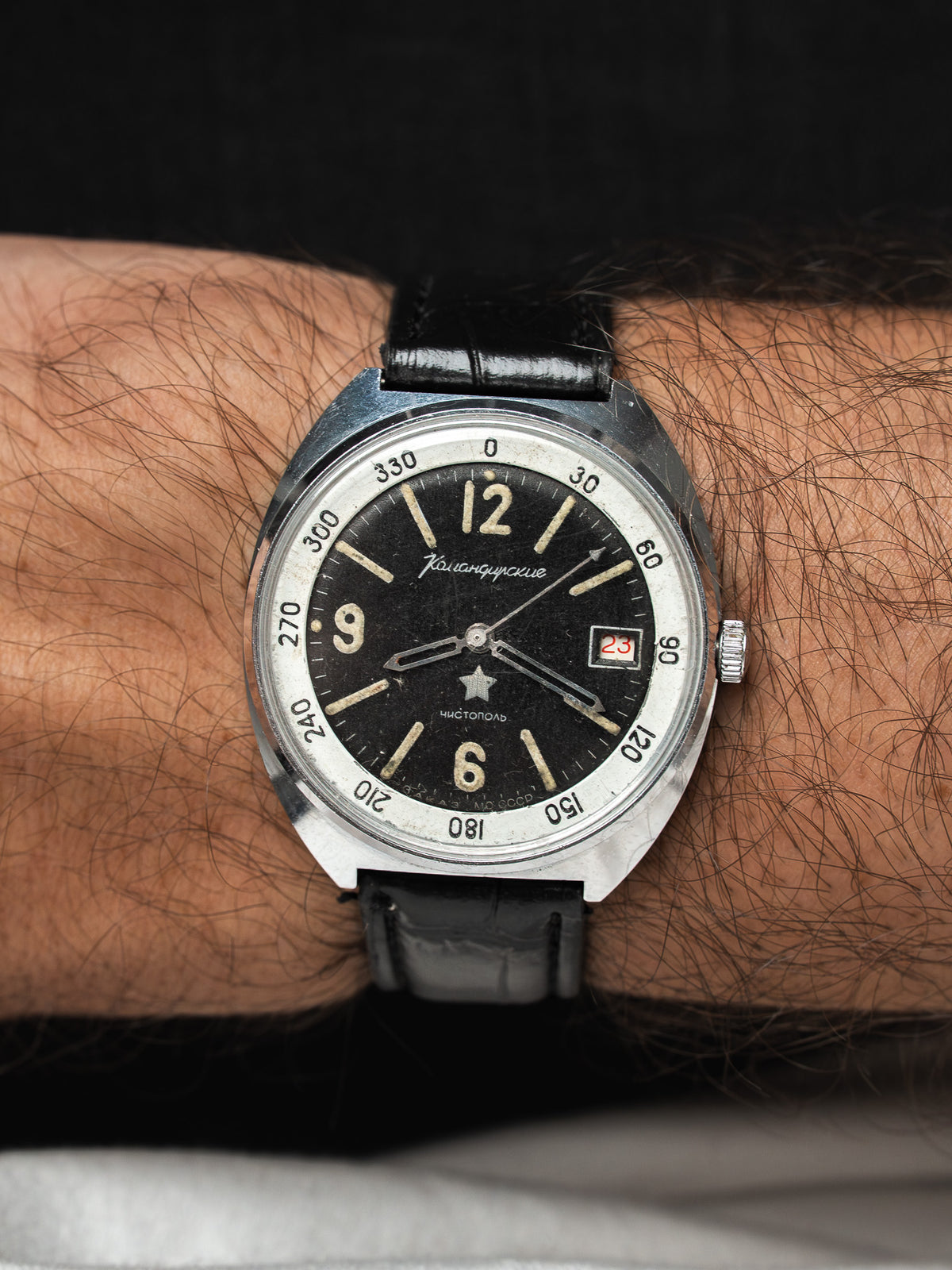
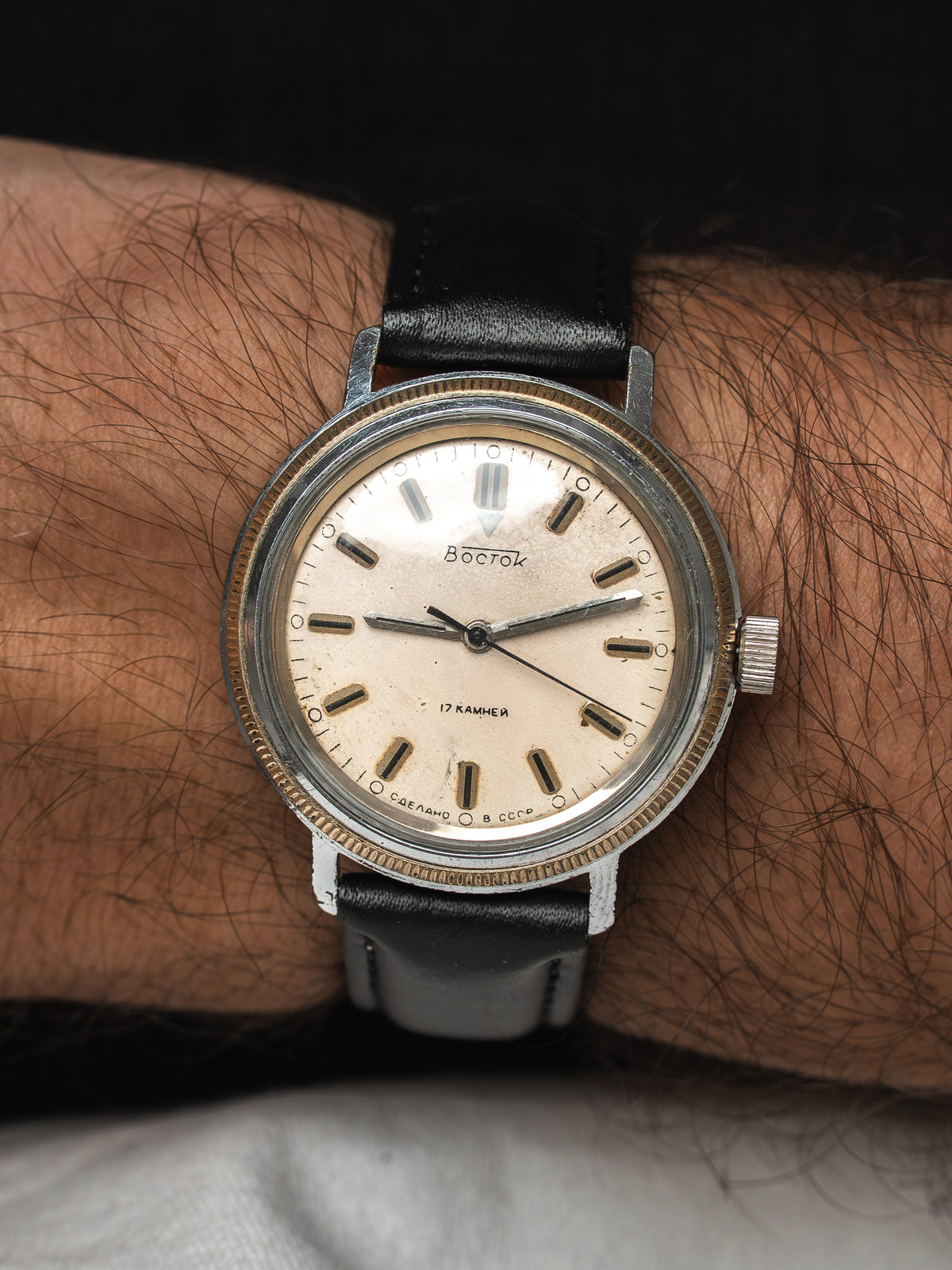
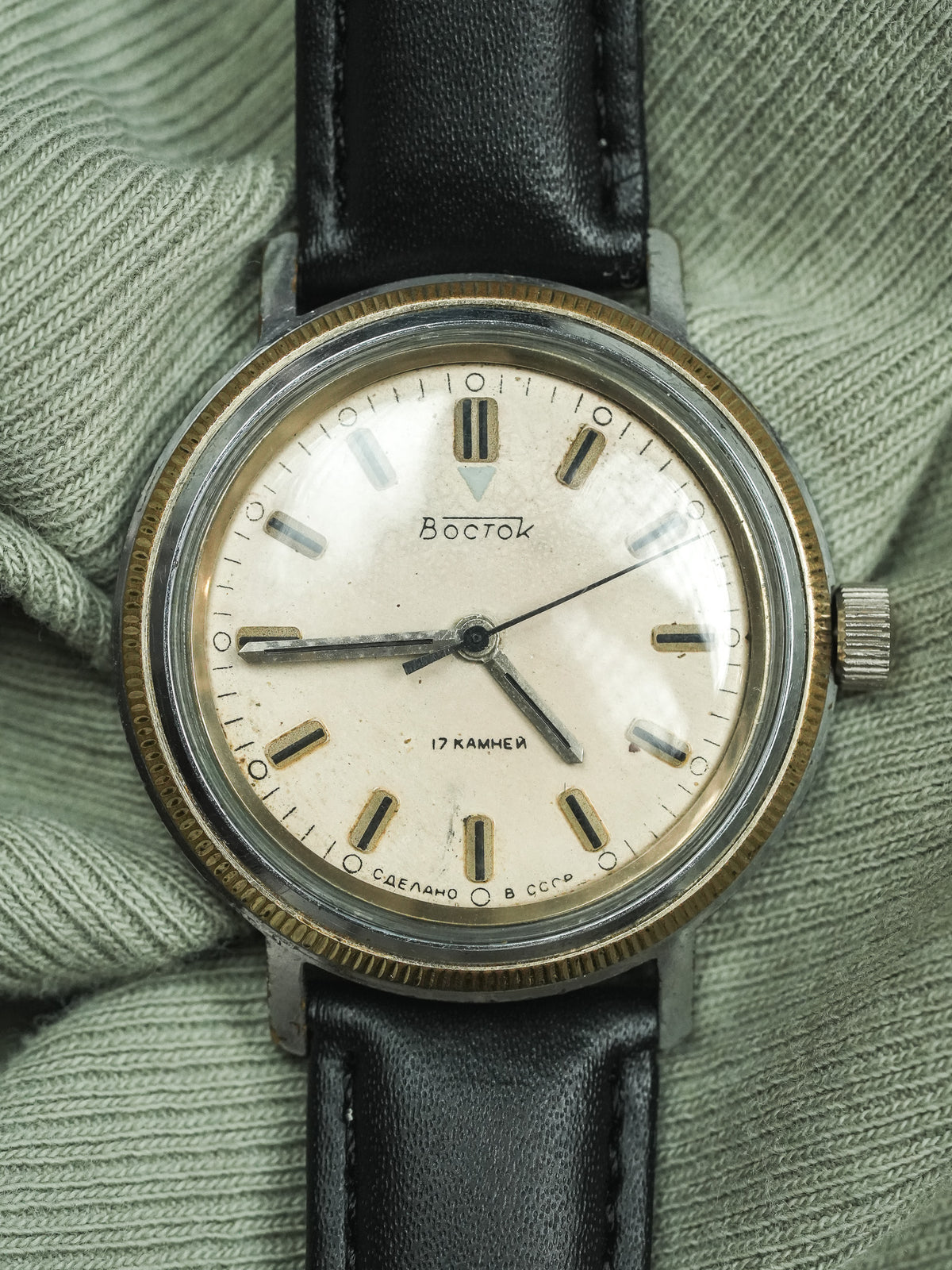
The Chistopol factory (Tatarstan) was founded in 1942 from the evacuation of part of the First Moscow Watch Factory during the Second World War. It only adopted the name Vostok ("East") in 1963 — in reference to the Vostok space program (Gagarin's spacecraft). In 1965, Vostok became the official watch supplier to the USSR Ministry of Defense.
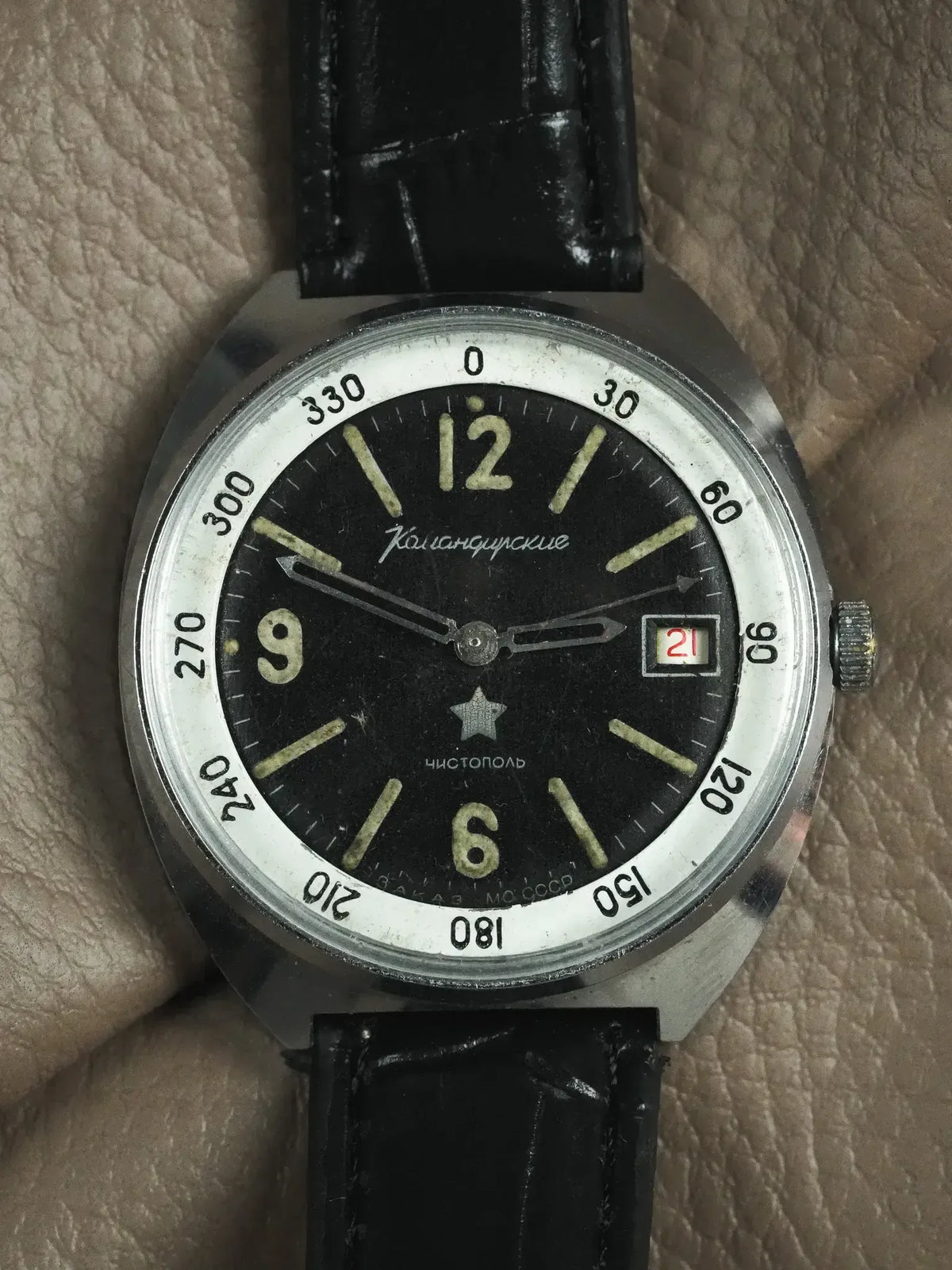
- Vostok Komandirskie — "Commander". Military-issue watch with illustrated motif dials (submarines, aircraft, rockets, motifs of the Soviet armed forces). Case chrome, painted caseback. Calibre 2414 movement, hand-wound, 18 jewels. Robust and accessible (often €80-150).
- Vostok Amphibia — dive watch with a unique water-resistance system: the caseback and the Crystal are held in place by the water pressure itself — external pressure reinforces water resistance instead of compromising it. Water resistance rated to 200 meters. Calibre 2416B movement, automatic, 31 jewels. Designed for the Soviet navy in the late 1960s. Worn by Bill Murray in the film The Life Aquatic (2004).
- Vostok Precision / Volna / Almaz — chronometer watches, the only chronometer-certified watches produced in the USSR. Calibre 2809 movement, 22 jewels. Produced in the 1960s. Rare and sought-after pieces.
Vostok manufactures all of its movements in-house and also supplies calibres to other brands (Vostok Europe, Moscow Classic, Volmax). All Vostok mechanical movements beat at 19,800 vibrations per hour.
Second Moscow Watch Factory → Slava
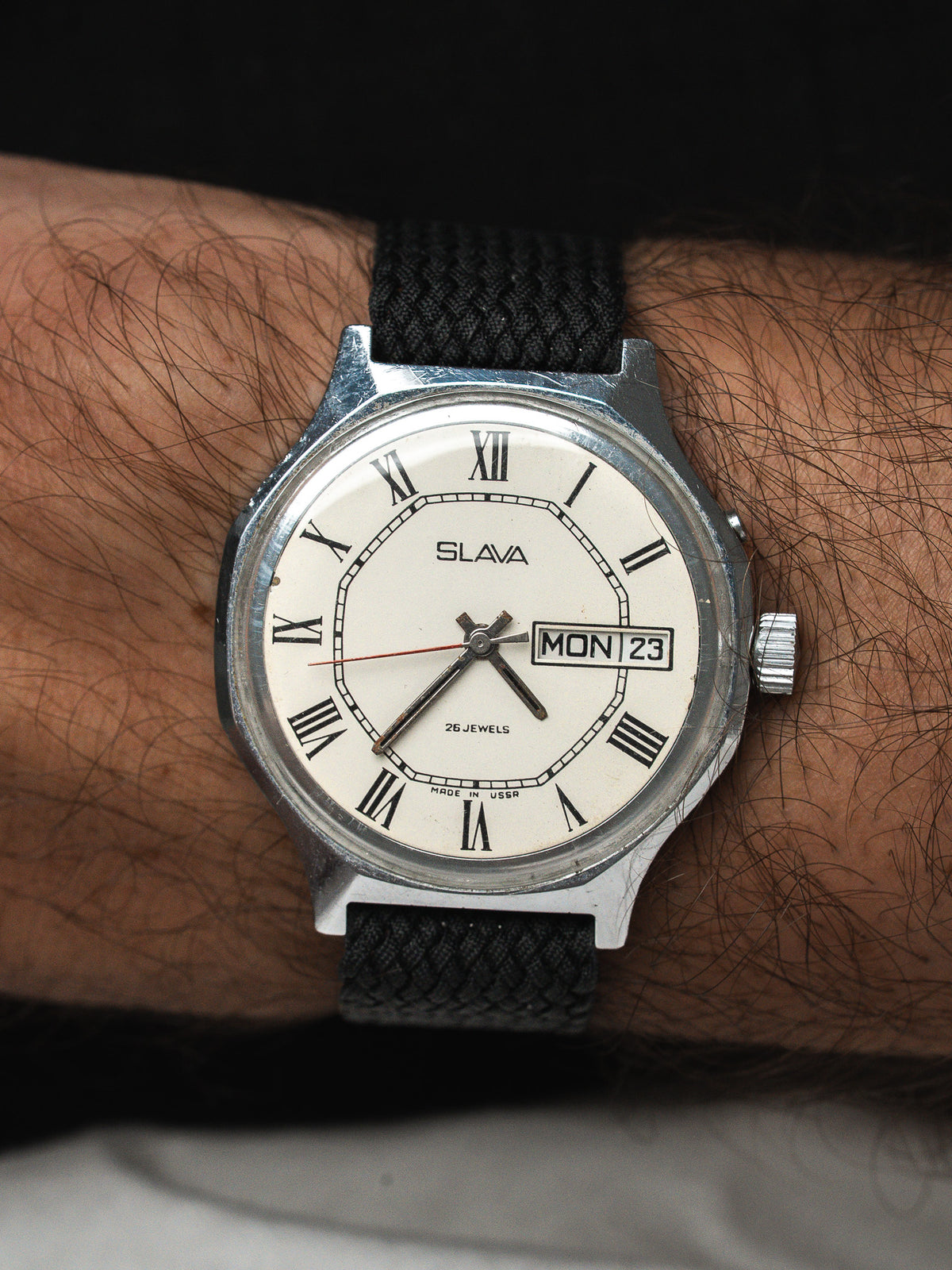
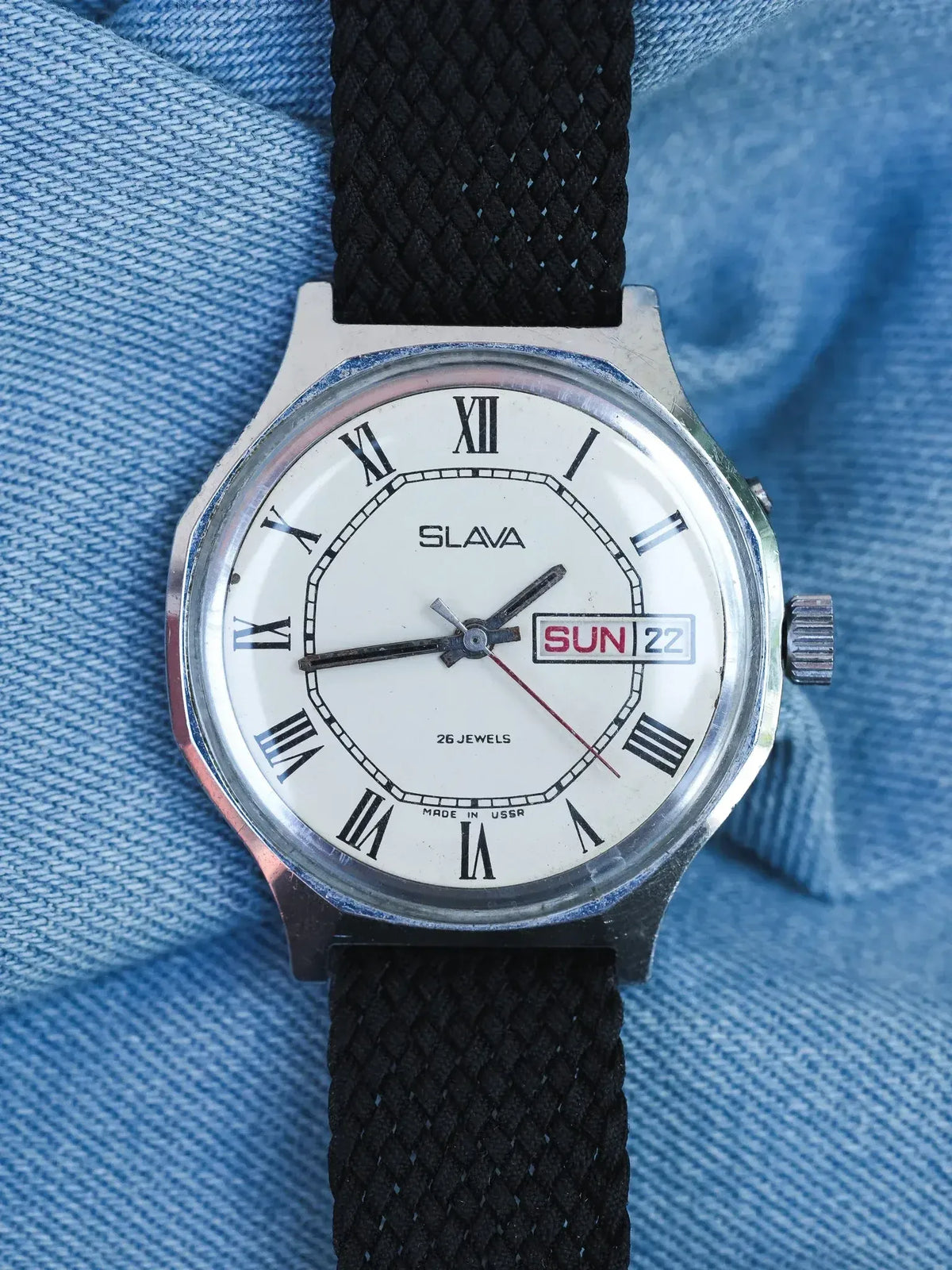
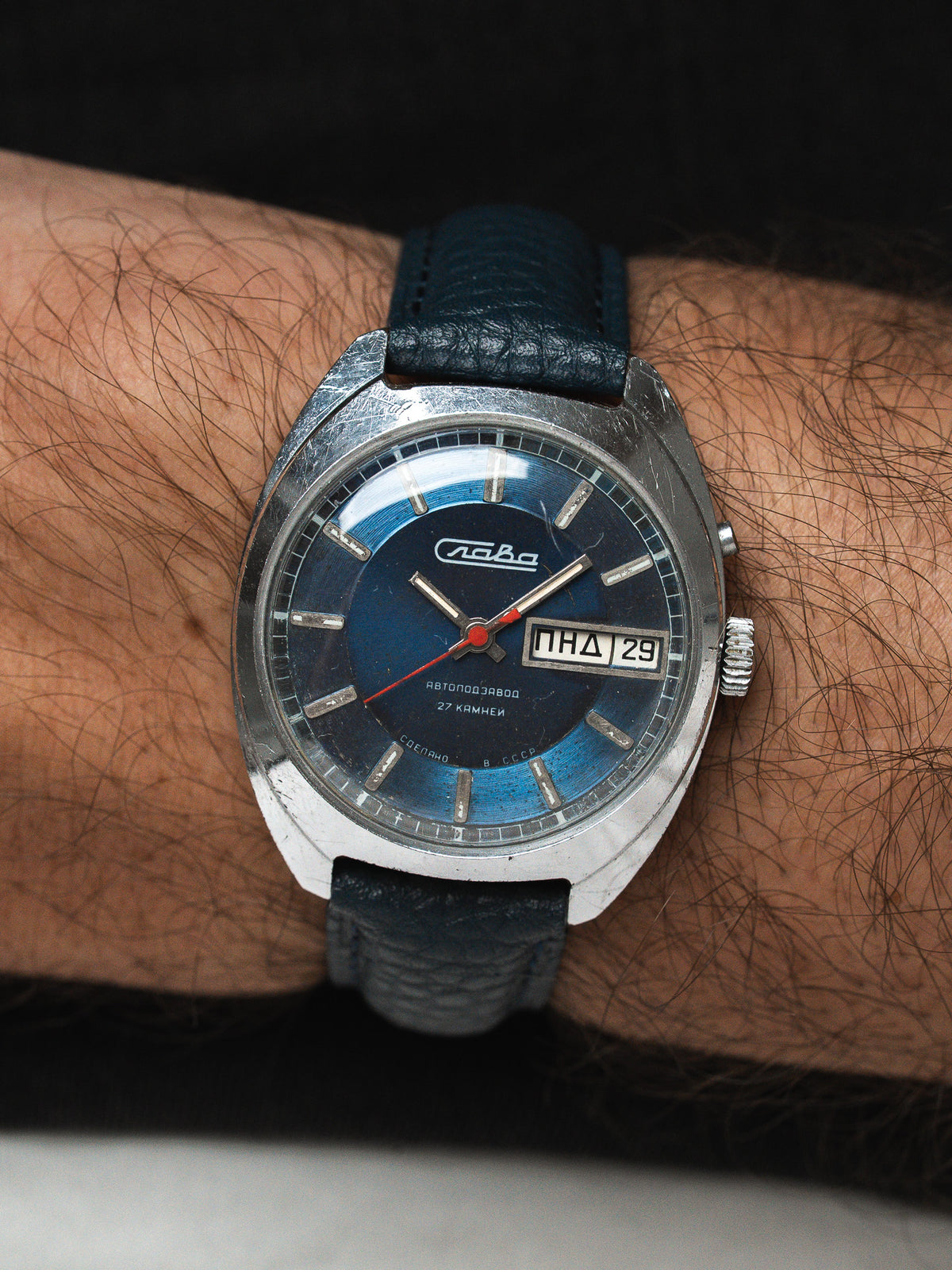
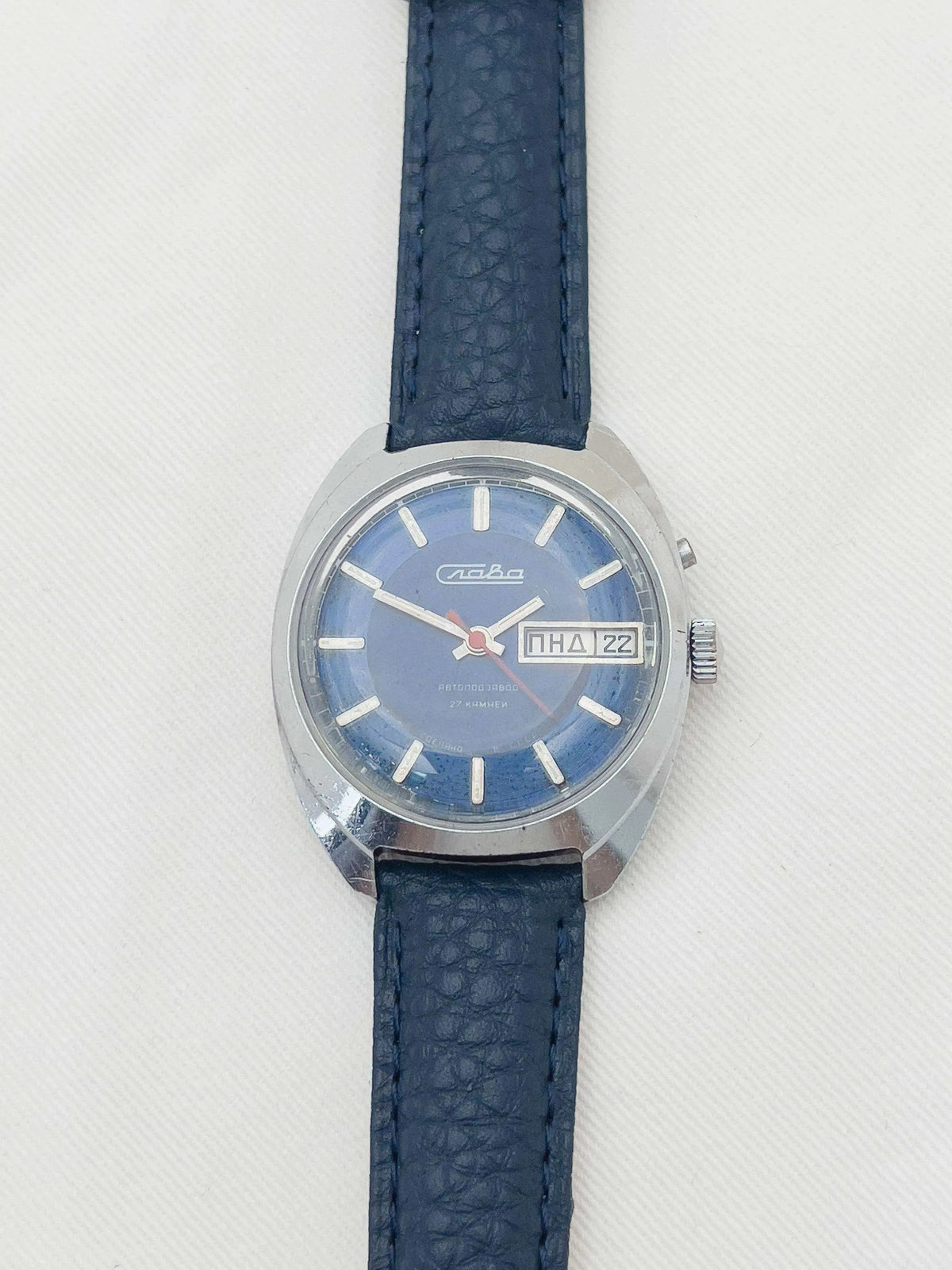
The Second Moscow Watch Factory (2nd MWF) produced watches under the Slava ("Glory") brand. Positioned in a slightly dressier segment than Poljot, Slava produced elegant automatic and mechanical watches for everyday civilian use. Vintage Slava watches from the 1970s and 1980s offer tonneau cases, sunburst dials, and reliable automatic movements. More accessible than Poljot and less military than Vostok.
Minsk Factory → Luch & Zarja
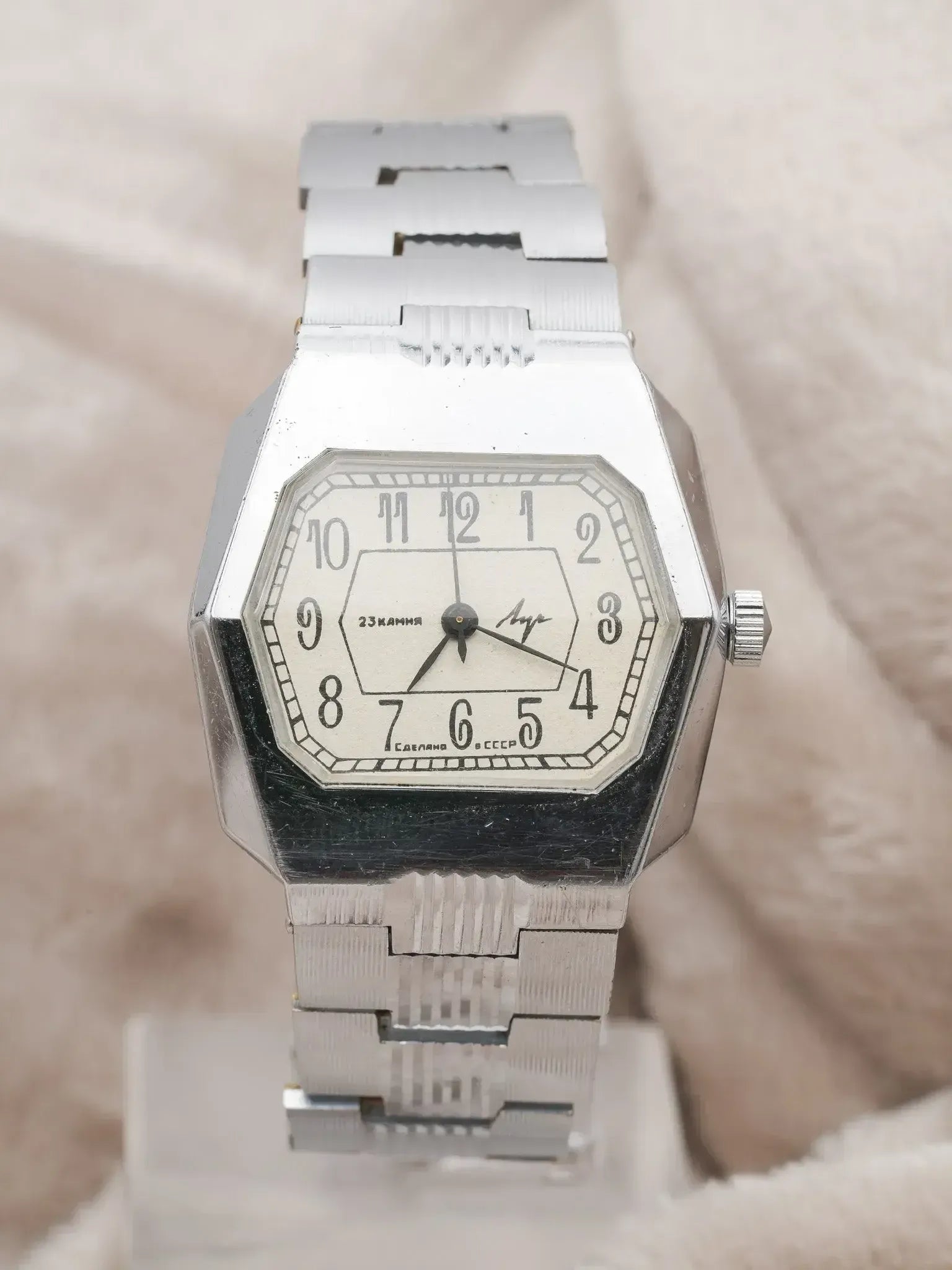
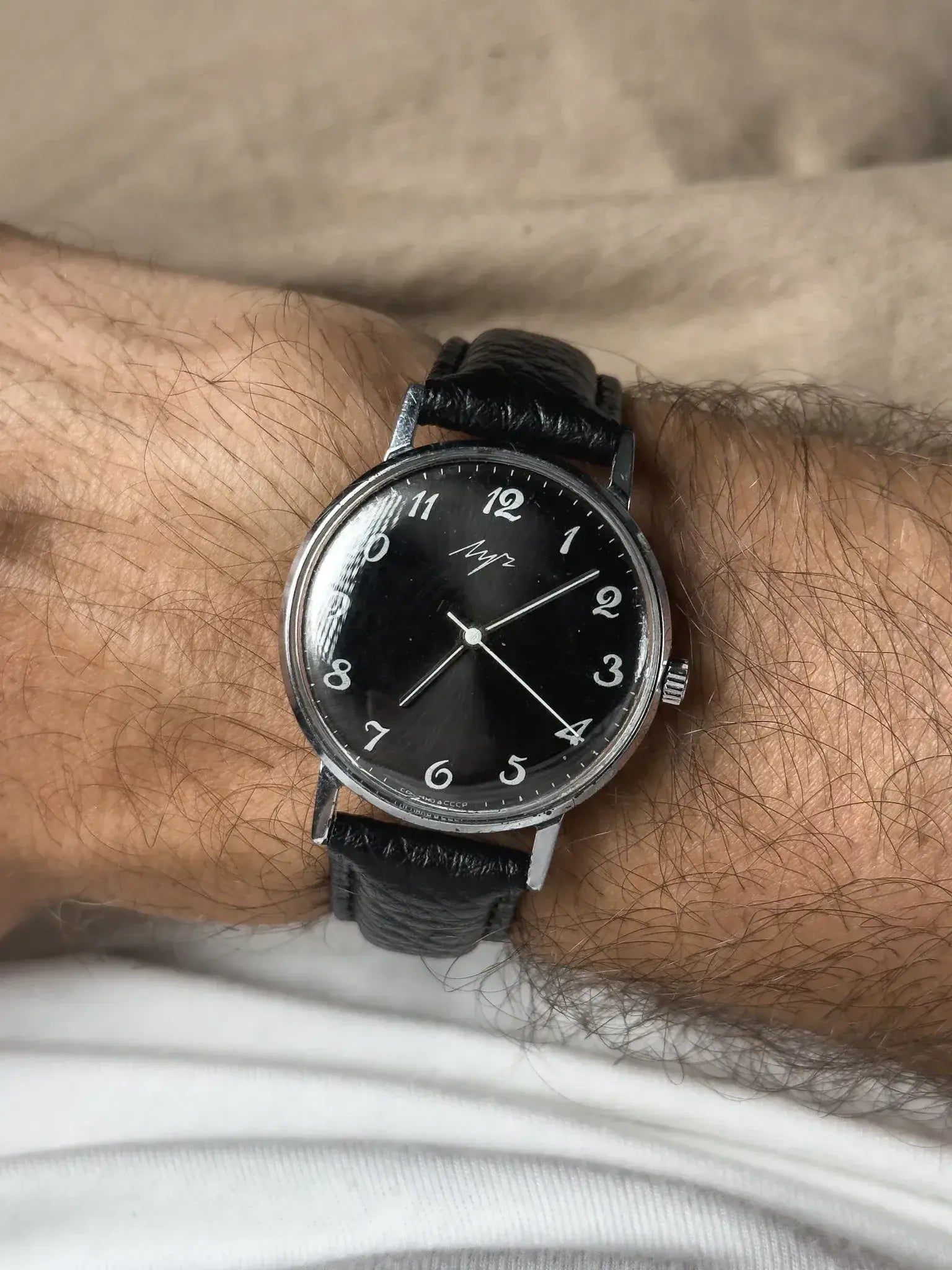
The Minsk factory (Belarus, founded in 1953) produced watches under the Luch and Zarja brands. Luch distinguished itself with its ultra-thin men's watches and its women's pendant watches. Luch also produced high-end watches for Poljot, stamped "Poljot de Luxe". The factory survived the fall of the USSR and still produces watches today — one of the last manufactures inherited from the Soviet era still in operation.
Chaika: Soviet Women's Watchmaking
Chaika ("Seagull") is the Soviet brand historically dedicated to women's watches. Produced by the Uglich factory, Chaika is distinguished by small-format golden cases, decorated dials, and compact mechanical movements. Vintage Chaika watches are the most common Soviet women's watches — worn like Jewelry from another era. The name refers to Valentina Tereshkova, the first woman in space (1963), whose radio callsign was "Chaika" (seagull).
Pobeda & ZIM
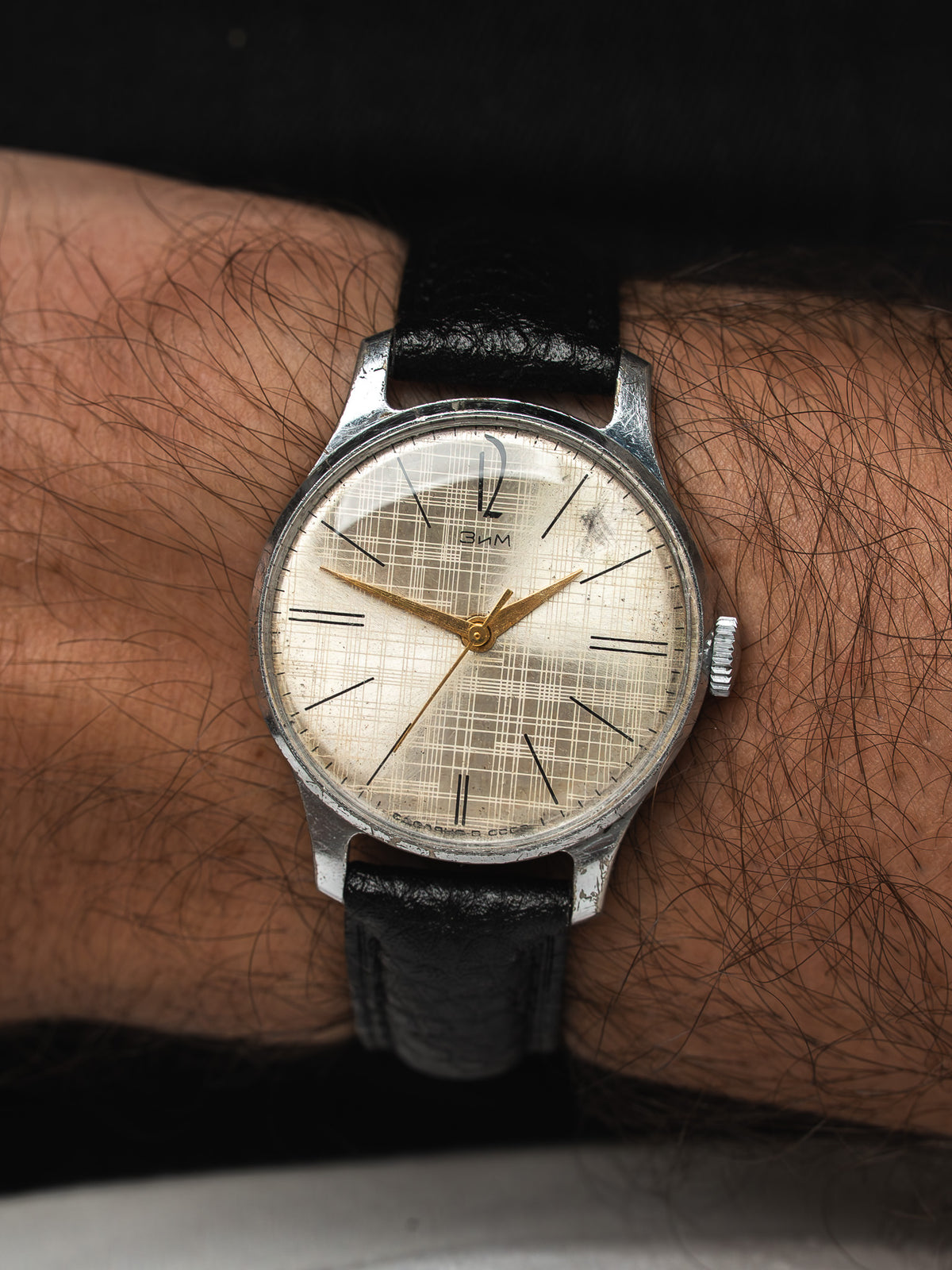
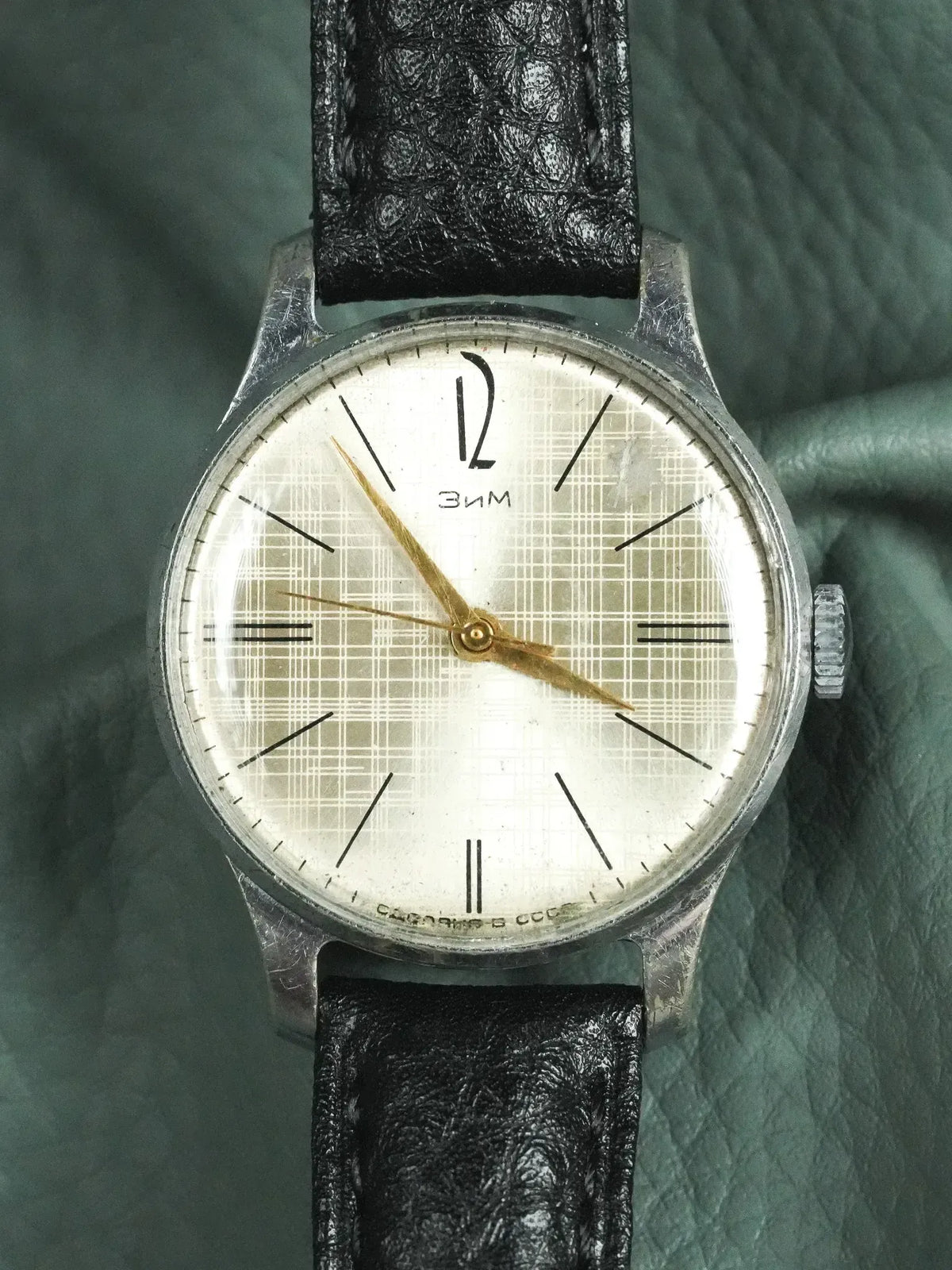
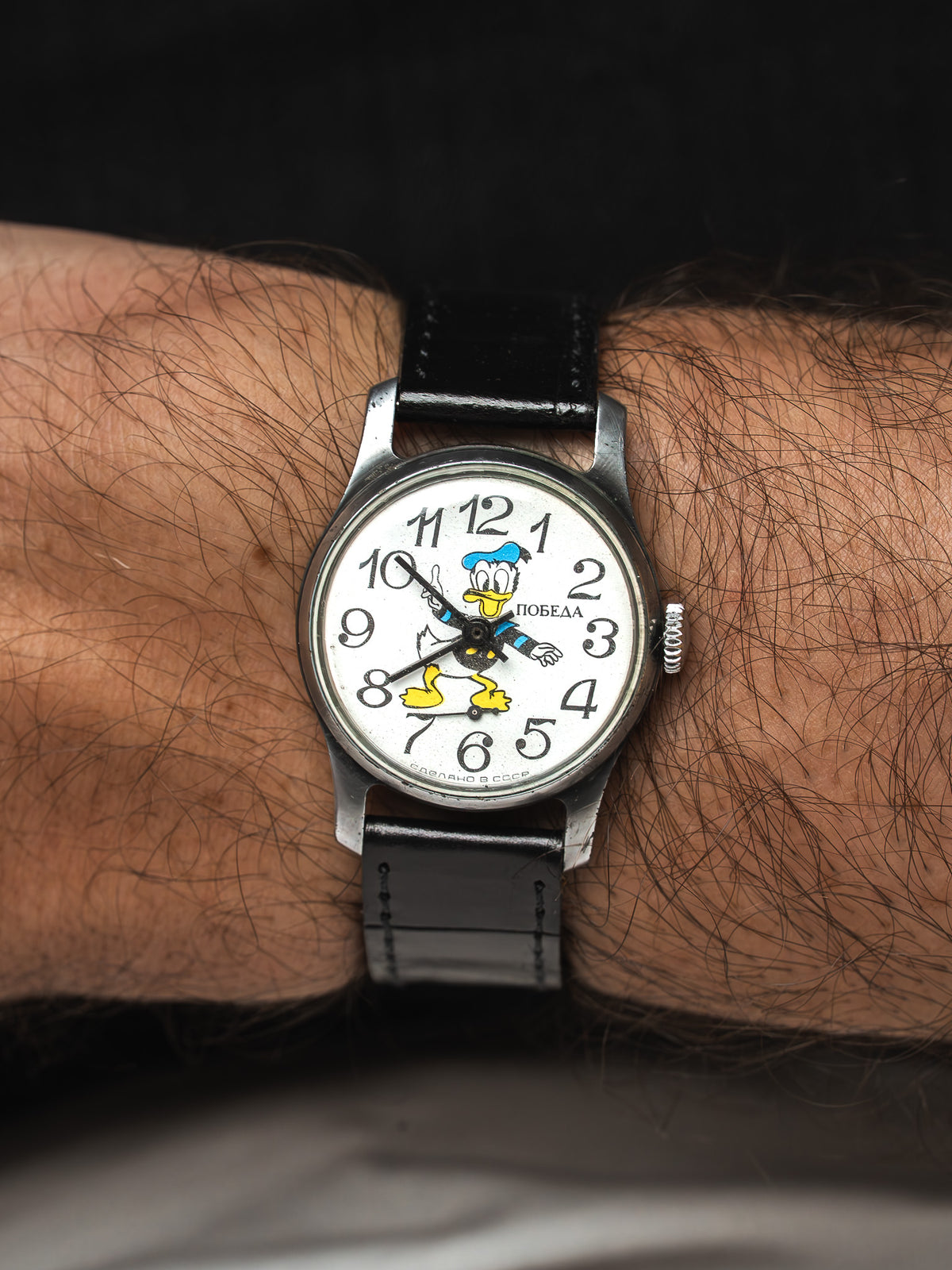
Pobeda ("Victory") is one of the first Soviet watch brands — launched in 1946, one year after the end of the Second World War. Its movement is based on the French R26 calibre developed by LIP — a little-known link between française and Soviet watchmaking. Simple, precise, hand-wound watches. Vintage Pobeda watches are emblematic pieces of post-war reconstruction. ZIM (the Samara factory) produces robust watches with a minimalist style, intended for Soviet engineers and technicians.
Soviet Calibres to Know
- Calibre 3017 (Poljot) — column-wheel chronograph, derived from the Swiss Venus 150. The movement of Strela and the first Poljot chronographs. The most mechanically noble Soviet calibre. Rare and highly regarded.
- Calibre 3133 (Poljot) — hand-wound chronograph, 23 jewels, derived from the Swiss Valjoux 7734. The most common Soviet chronograph movement. Robust, reliable, parts available. Powers the Aviator, Okeah, Albatros. The most accessible mechanical chronograph movement on the global market.
- Calibre 2609.HA (Raketa) — hand-wound, 19 jewels. The base movement of Raketa — served as a platform for dozens of variants (calendar, 24h, antimagnetic, military). Robust and simple.
- Calibre 2623.H (Raketa) — hand-wound, 19 jewels, 24-hour dial. The movement of the Raketa 24h and Polar.
- Calibre 2416B (Vostok) — automatic, 31 jewels. The movement of the Amphibia. Designed for military use — robustness and reliability.
- Calibre 2414 (Vostok) — hand-wound, 18 jewels. The movement of the Komandirskie. Simple, robust, accessible.
- Calibre 2809 (Vostok) — automatic, 22 jewels. The Soviet chronometer movement — the only Soviet calibre certified as a chronometer. Rare.
- Calibre K-26 / Pobeda — hand-wound, derived from the French LIP R26 calibre. The movement of Pobeda and the first Soviet watches.
The "Fantasy Dial" Problem: The Biggest Trap in the Soviet Market
The vintage Soviet watch market is overrun with fantasy dials — modern dials fitted to period cases and movements to give a vintage appearance. These "fantasy dials" often bear exaggerated inscriptions ("KGB", "CCCP" in oversized characters, "спецназ" / Special Forces), military motifs inconsistent with actual Soviet production (eagle, skull, aggressive motifs), or invented logos. The movement inside is often authentic — it is the dial that is fake.
This phenomenon expanded massively after the fall of the USSR in 1991 — informal workshops recovered stocks of Soviet cases and movements and fitted them with "tourist" dials intended for Western collectors. These are not counterfeits in the strict sense (the movement may be a genuine Vostok or Raketa), but they are not watches consistent with what was actually produced in the USSR.
How to spot a fantasy dial: typography that does not conform to Soviet standards (authentic Soviet inscriptions use specific fonts), motifs that are too detailed or too "commercial," inscriptions reading "Сделано в СССР" (Made in the USSR) on obviously recent dials, inconsistent dial/case combinations. At Atelier Victor, our experts systematically identify and exclude these pieces — we sell only Soviet watches with dials consistent with the original production. Authenticity guaranteed for life.
Space Conquest on the Wrist
Soviet watchmaking is inseparable from the space conquest — and several watches are linked to documented historical moments:
- 12 April 1961 — Yuri Gagarin wears a Sturmanskie (1st Moscow Watch Factory) during the first manned spaceflight (Vostok 1). It is the first watch worn in space.
- 18 March 1965 — Alexei Leonov wears a Strela (chronograph Poljot caliber 3017) during the first extravehicular activity.
- 1973 — In parallel, on the American side, astronaut William Pogue wears a Seiko 6139 ("Pogue") on Skylab — the first automatic chronograph in space.
These historical facts are documented and give Soviet watches a dimension that goes beyond watchmaking — they are objects of history accessible at modest prices.
Soviet Watches for Women
Vintage Soviet women's watches are rare and elegant pieces. Chaika models with golden and decorated cases, ultra-thin Luch models with clean lines, and compact Zarja models are the most collected. Worn like Jewelry from another era, these watches offer unique charm — designs and finishes impossible to find in Western watchmaking. Very affordable pre-owned prices (often €50-150). Explore our selection of vintage watches for women.
Caring for Soviet Watches
Soviet calibers were designed according to a logic of military engineering: robustness, simplicity, ease of maintenance. The Vostok 2416B, Poljot 3133 and Raketa 2609 movements are simple and solid mechanics — with a stripped-down construction designed for mass production. At Atelier Victor, each watch is serviced before being offered for sale and covered by a one-year mechanical warranty.
Frequently Asked Questions — Vintage Soviet Watches
Is Gagarin's Sturmanskie really the first watch in space?
Yes. On 12 April 1961, Yuri Gagarin wears a Sturmanskie (produced by the First Moscow Watch Factory) during the Vostok 1 flight — the first manned spaceflight in history. This is a documented fact. Gagarin was simply wearing his issued military watch — it was not a marketing operation, unlike the selection of the Speedmaster by NASA in 1965.
Is the Poljot 3133 a Swiss or Soviet movement?
Both. The calibre 3133 is a chronograph movement derived from the Swiss Valjoux 7734, produced under license in the USSR from the 1970s onward. Mechanically, it is a movement of Swiss architecture manufactured in Russia. Robust, reliable, easy to service — parts are available. It is the most accessible mechanical chronograph movement on the global market.
What is a "fantasy dial" and how can it be avoided?
A "fantasy dial" is a fanciful modern dial (oversized "KGB" or "CCCP" markings, exaggerated military motifs) fitted to an authentic Soviet case and movement to create a vintage appearance. The movement is often genuine — it is the dial that is false. These watches do not correspond to models that were actually produced in the USSR. At Atelier Victor, our experts systematically identify and exclude these pieces.
Is the Vostok Amphibia truly water-resistant?
The Amphibia's water-resistance system is ingenious — designed so that water pressure strengthens the seal. However, as with any vintage watch, the gaskets deteriorate over time (30-40 years). We recommend not immersing a vintage Amphibia without having the gaskets checked first. For daily wear (rain, hand washing), there is no issue with steel models.
Why do some Raketa have a 24-hour dial?
The Raketa 24 Hours (calibre 2623.H) were designed for polar explorers and Soviet submariners — people who lived without a natural day-night cycle. A 24-hour graduated dial (one complete rotation of the hands per day, instead of two on a standard dial) makes it possible to tell whether it is "day" or "night." It is a functional tool that has become a collector's item for its distinctive design.
What is the difference between Komandirskie and Amphibia?
The Komandirskie ("Commander") is a land-based military watch — chrome case, painted caseback, hand-wound movement (calibre 2414), limited water resistance. The Amphibia is a diving watch — steel case, screw-down caseback, automatic movement (calibre 2416B), 200 m water resistance. The Amphibia is more robust and more water-resistant; the Komandirskie is more accessible and offers a wider variety of illustrated dials.
Is the 3017 calibre (Strela) different from the 3133?
Yes. The 3017 calibre is a column-wheel chronograph derived from the Swiss Venus 150 — the movement used in Strela and the first Poljot chronographs of the 1960s. It is the most mechanically refined Soviet calibre. The 3133 calibre is a cam-operated chronograph derived from the Valjoux 7734 — produced from the 1970s onward. The 3017 is rarer and more highly prized; the 3133 is more common and more accessible.
Do Pobeda really use a French movement?
Yes. The movement of the first Pobeda — the K-26 calibre — is based on the French R26 calibre developed by LIP (Besançon). It is a little-known historical link between française watchmaking and Soviet watchmaking. Pobeda are simple, precise, hand-wound watches — emblematic pieces of post-war Soviet reconstruction.
Are vintage Soviet watches suitable for daily wear?
Yes. Soviet calibres are designed for robustness and durability — a military engineering logic. Each watch sold by Atelier Victor is serviced and covered by a one-year mechanical guarantee. Standard precautions: avoid immersion (vintage gaskets), avoid magnetic fields, wind regularly (hand-wound watches).
Do vintage Soviet watches increase in value?
At Atelier Victor, we approach watchmaking from the perspective of a pleasure purchase. While Strela with 3017 calibre, period Sturmanskie and certain Poljot 3133 chronographs with authentic dials have seen their demand evolve, most Soviet watches remain purchases for pleasure and historical discovery at very accessible prices. It is this accessibility that forms part of their charm.
Where can I find a strap for a vintage Soviet watch?
Atelier Victor offers watch straps compatible straps — in leather, NATO, Milanese mesh and steel. Soviet watches most often use lug widths of 18 mm (Raketa, Poljot, Pobeda) and 22 mm (Vostok Amphibia). NATO straps are particularly well suited to Soviet military watches. Contact us via WhatsApp.
Discover our other accessible vintage watch collections: Seiko vintage, Citizen vintage, Orient vintage, Yema vintage, LIP vintage. By budget: -500 €.
A question about a vintage Soviet watch? Contact us via WhatsApp or by email.
Need advice or have a hesitation? Our experts are here to assist you.