






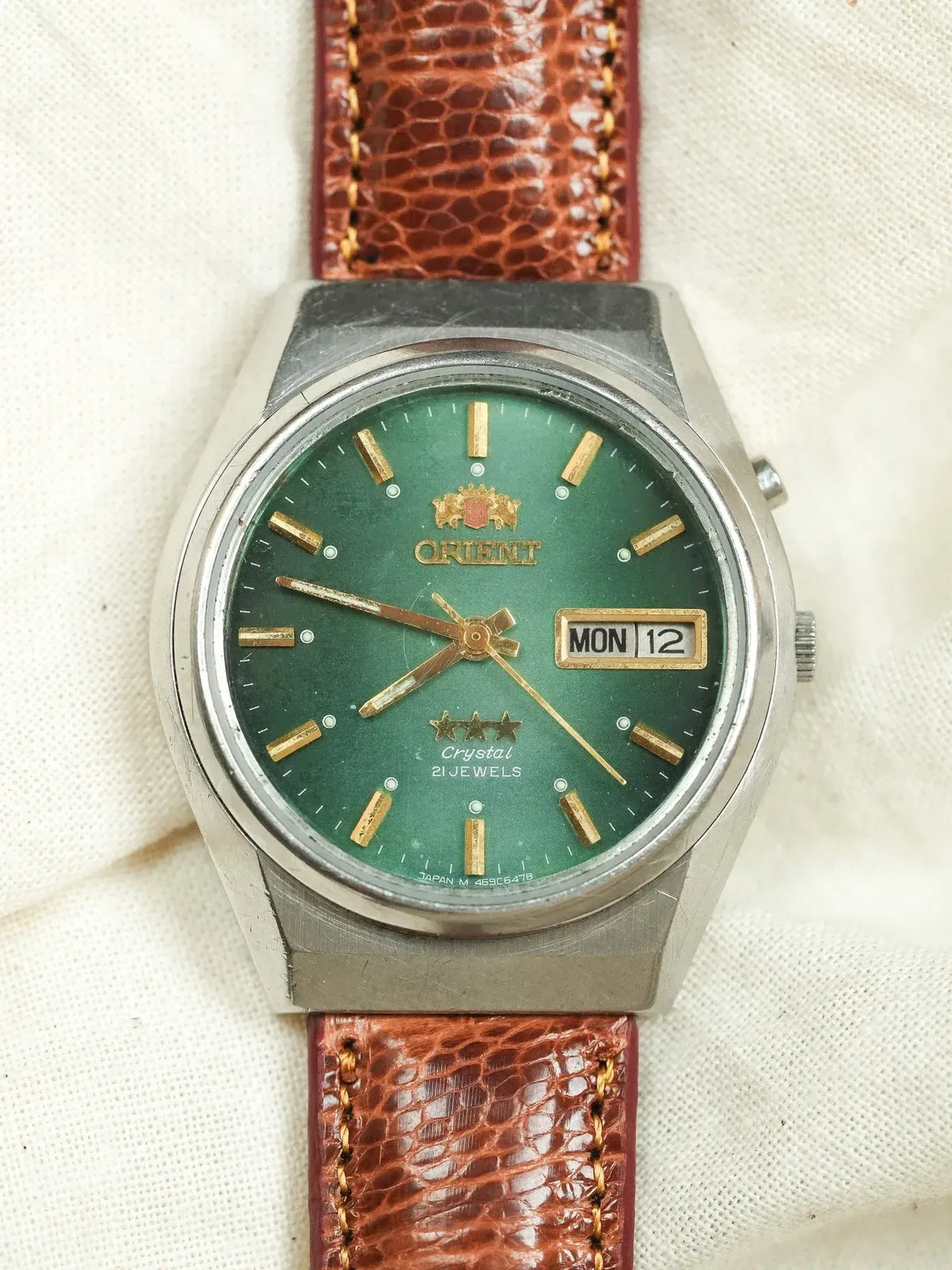
Vintage Watches Guide
Rolex, Cartier, Omega, Longines, Jaeger-LeCoultre, Breitling, Seiko — more than 40 brands, from the 1930s to the 2000s. Discover our complete guide: how to choose, authenticate and care for a vintage watch, the benchmark calibres, materials, pitfalls to avoid and answers to the most frequently asked questions.
Read the guide
What is a vintage watch?
In watchmaking, the term vintage watch refers to a watch made at least twenty to thirty years ago — generally between the 1930s and the 1990s. What distinguishes a vintage watch from a simple recent pre-owned watch is the age of its components, the manufacturing methods of its era and the natural patina that has developed on its materials. A dial patinated by time — whether tropical (uniform colour change), stardust (microscopic speckling) or spider (cracking) — cannot be artificially reproduced. This is what makes each vintage watch unique.
Not to be confused with neo-vintage: watches produced in the 1990s-2000s, too recent to be considered classic vintage, but whose design follows in the continuity of historic pieces. Neo-vintage is attracting growing interest, particularly with Omega Seamaster from the 1990s or TAG Heuer from the same period.
Why buy a vintage watch rather than a new watch?
The reasons that draw collectors and enthusiasts to vintage watchmaking are numerous. From an aesthetic point of view, watches from the 1950s-80s offer proportions, dials and finishes that modern production no longer reproduces — cases measuring 34 to 36 mm (the classic men's format of the period, now back in fashion), hand-painted dials with applied hour markers, dauphine or leaf hands in blued steel. From a mechanical point of view, vintage watches provide access to manufacture movements — designed and produced entirely by the brand — at prices often lower than those of modern ébauche movements. A Longines Flagship from the 1960s with a manufacture calibre 340 costs on the pre-owned market a fraction of the price of a new Longines fitted with a standard ETA movement.
From a financial point of view, the pre-owned market provides access to houses such as Rolex, Cartier or Omega at prices often 30 to 50% lower than the price of new — for pieces that have already undergone the initial depreciation and that, in some cases, retain or increase their value over time. From a stylistic point of view, a vintage watch immediately stands apart from modern production — it conveys a culture, an expertise, a taste for objects with a history.
The major families of vintage watches
Vintage dress watches (dress watches)
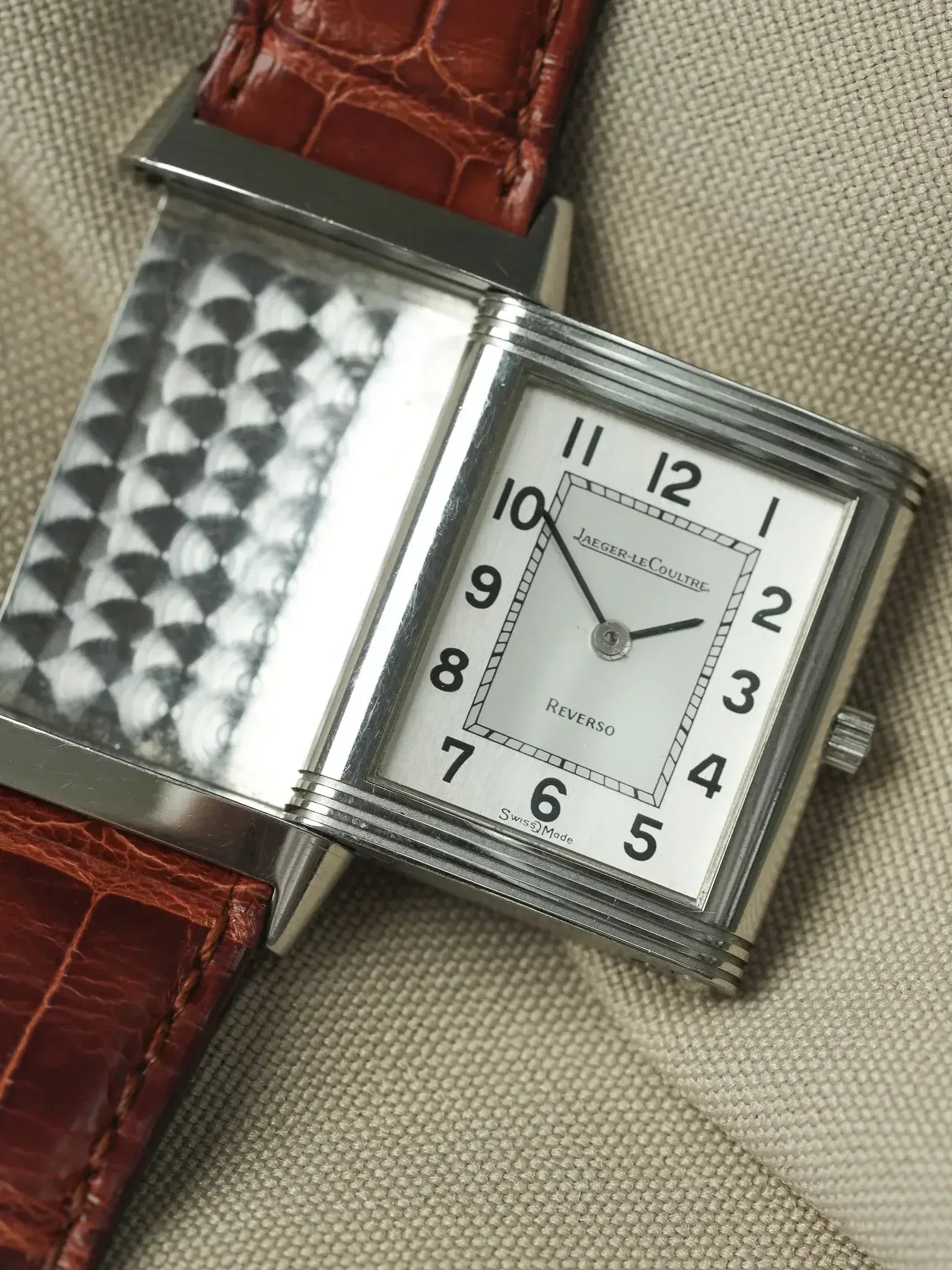
Dress watches — or dress watches — are thin, discreet watches designed to be worn with a suit or formal attire. Round or rectangular cases from 33 to 36 mm, pared-back dials with applied indexes, hand-wound or automatic mechanical movements, leather straps. Classic references: Longines Flagship, Omega De Ville, Jaeger-LeCoultre Master, Piaget Protocole, Cartier Tank. Dress watches in 18-carat gold or vermeil represent the most classic segment of vintage.
Vintage dive watches
Vintage dive watches are tool watches by definition — designed to withstand pressure, water, and shocks. Unidirectional rotating bezel, screw-down crown, reinforced water resistance, highly legible dials with luminous material (radium, then tritium, then Super-LumiNova). Historic references: Rolex Submariner, Omega Seamaster 300, Blancpain Fifty Fathoms, Longines Legend Diver, Yema Superman, Seiko Turtle. Important: the water resistance of a vintage watch is no longer guaranteed after decades — gaskets deteriorate over time.
Vintage chronographs
The chronograph — a complication that makes it possible to measure intervals of time — is one of the most collected categories in vintage watchmaking. Dials with sub-counters, pushers, tachymeter scales printed on the bezel or the dial. Collector references: Omega Speedmaster (the “Moonwatch”), Breitling Navitimer, Heuer Carrera / Autavia / Monaco, Zenith El Primero, Universal Genève Compax / Tri-Compax . The most sought-after chronograph calibres: Lémania 321, Valjoux 72, Venus 175, Landeron 48, Valjoux 7750.
Vintage aviator watches (pilot watches)
Designed for pilots, vintage aviator watches are characterized by highly legible dials, luminous Arabic numerals, and often complications such as the chronograph or slide rule. The Breitling Navitimer (with its circular slide rule), the IWC Mark XI, and the Longines Hour Angle (designed with Charles Lindbergh) are the historical references of the category.
Vintage watch-Jewelry
Worn as Jewelry as much as as watches, vintage watch-Jewelry prioritize aesthetics and noble materials over technical complication. Cartier Panthère (articulated link bracelet), Piaget in solid gold with hardstone dials, Bvlgari Bvlgari with engraved bezel. This is the segment where Cartier and jeweller-watchmakers dominate — watches where design and material matter just as much as the movement.
Understanding vintage watch movements
Hand-wound mechanical movement
The hand-wound movement is the oldest and most traditional type of movement. Energy is supplied to the movement by turning the crown manually — a daily gesture that is part of the ritual of owning a mechanical watch. Hand-wound movements are generally thinner than automatic ones (no rotor), which allows for flatter cases — which is why they are frequently found in dress watches and vintage chronographs. Reference calibres: Omega 269, Longines 30L, Valjoux 7733 (chronograph), Lémania 321 (Speedmaster), Venus 175.
Automatic movement
The automatic movement (or self-winding) is wound thanks to a rotor that turns with the movements of the wrist. More practical for everyday use — no need to wind the watch every day if it is worn regularly. Automatic calibres are generally thicker due to the rotor. Reference calibres: Omega 552 / 565 (Seamaster, Constellation), Longines 340 (Flagship), ETA 2824 / 2892, Seiko 7S26 / 6R15, Valjoux 7750 (automatic chronograph).
Quartz movement
The quartz movement uses a quartz oscillator powered by a battery to regulate time. More precise than a mechanical movement (a variation of a few seconds per month versus a few seconds per day), quartz requires no winding. Introduced in the late 1960s with the Seiko Astron (1969), quartz triggered the “quartz crisis” that nearly swept away Swiss mechanical watchmaking. Many vintage luxury watches from the 1970s to the 1990s are equipped with quartz movements — the Cartier Tank Must quartz, Omega De Ville quartz, Longines La Grande Classique. Vintage quartz should not be dismissed — it is a deliberate choice of precision and slimness, not a compromise.
Materials of vintage watches
Stainless steel
Stainless steel (316L steel) is the most common and most robust material found in vintage watches. Resistant to corrosion, scratches, and shocks — it is the material of dive watches, sporty chronographs, and everyday watches. Vintage steel rarely develops a visible patina, but the finishes (brushed, polished, satin) take on character over time.
18-carat gold (750‰)
18-carat gold (750 thousandths pure gold) is the benchmark precious metal in luxury watchmaking. Available in yellow gold, rose gold, and white gold. Vintage solid gold watches — Piaget, Cartier Tank Louis, Rolex Day-Date — represent the noblest segment of vintage collecting. The intrinsic value of the metal provides a value floor.
Vermeil
Vermeil is sterling silver 925 coated with a layer of gold (minimum 3 microns, 20 microns at Cartier). It is the signature material of Cartier Must. More precious than gold-plated (brass base). Vermeil develops a warm patina over time — avoid prolonged contact with water and perfumes.
Gold-plated
Gold-plated is a thin layer of gold applied over a brass or base metal foundation. Common on watches from the 1960s to the 1980s (Longines, Omega, Tissot). Gold-plating wears over time — the edges and corners are the first to be affected. The quality of the plating varies: 10 microns (entry-level) to 80 microns (high quality). Rolled gold (gold-filled) is a thicker, more durable variant, common on American watches (Bulova, Hamilton).
How to choose your first vintage watch
Define your style and use
The first question to ask is not “which brand?” but “for what use?”. A slim dress watch in 34 mm on a leather strap for everyday wear and formal attire. A sporty chronograph in 38-40 mm for more casual wear. A dive watch for those who like a tool-watch and sporty style. The choice of shape (round, rectangular, cushion, tonneau) and diameter is just as important as the choice of brand.
Define your budget
The vintage watch market is accessible to all budgets. Our collections by budget: under €500 (Seiko, Citizen, Orient, Tissot, LIP vintage), €500 to €1,000 (Longines, Omega Genève, Cartier Must quartz), €1,000 to €2,000 (Omega Seamaster, Cartier Tank Must Vermeil, Longines Conquest), over €2,000 (Rolex, Cartier Santos, Omega Speedmaster, Jaeger-LeCoultre).
Check authenticity and condition
Authenticity is the primary concern when buying a vintage watch. The elements to check: the dial (typography, logo, "Swiss Made" or "Swiss"), the hands (shape and finish corresponding to the reference), the movement (original calibre, serial number), the case (hallmarks, serial number, signs of excessive polishing), the original bracelet or Buckle. A "relumed" dial (repainted) or a replaced movement significantly reduces the value of a piece. At Atelier Victor, each watch is authenticated by our experts — you do not need to carry out these checks yourself.
Pitfalls to avoid
The vintage market involves risks that buyers should be aware of. Frankenwatches: watches assembled with parts from different watches (dial from one reference, case from another, movement from a third). Repainted dials: dials whose patina has been artificially added or whose text has been retouched. Fake vintage watches: recent watches artificially aged to resemble vintage pieces. Abnormally low prices: if a vintage Rolex Submariner is offered at too low a price, that is a warning sign. Going through a specialist dealer with a guarantee of authenticity eliminates these risks.
Caring for your vintage watch
Watch servicing
A vintage mechanical watch requires a complete service every 4 to 5 years (every 3-4 years for high-frequency movements). Servicing includes complete disassembly of the movement, ultrasonic cleaning, replacement of seals, oiling, adjustment, and accuracy testing. At Atelier Victor, each watch is serviced before being offered for sale — you receive a watch ready to wear, covered by a one-year mechanical warranty.
Daily precautions
A few simple rules to preserve a vintage watch: avoid immersion in water (even for old diving watches — seals are no longer reliable after decades), avoid magnetic fields (phones, speakers, bag clasps), avoid direct impacts on the crown. For vermeil or gold-plated watches: avoid contact with perfumes, creams, and chemicals. Wipe with a soft cloth after each wear. Store in a case or a soft Pouch.
Vintage watches by origin
Vintage Swiss watchmaking
Switzerland represents the historic heart of mechanical watchmaking. The most collected vintage Swiss manufactures: Rolex (Genève — Oyster Perpetual, Submariner, Daytona), Omega (Bienne — Seamaster, Speedmaster, Constellation), Longines (Saint-Imier — Flagship, Conquest), Jaeger-LeCoultre (Le Sentier — Reverso, Memovox), Zenith (Le Locle — El Primero), Breitling (Grenchen — Navitimer), Tissot (Le Locle), Universal Genève (Polerouter, Compax), IWC (Schaffhausen).
Vintage française watchmaking
France has its own watchmaking tradition, distinct from Switzerland. LIP (Besançon — Himalaya, Dauphine, Mach 2000 designed by Roger Tallon, Electronic R27) and Yema (Morteau — Superman, Yachtingraf, Rallygraf) are the two most collected French brands. Vintage française watchmaking offers strong value for money and a distinct stylistic character.
Vintage Japanese watchmaking
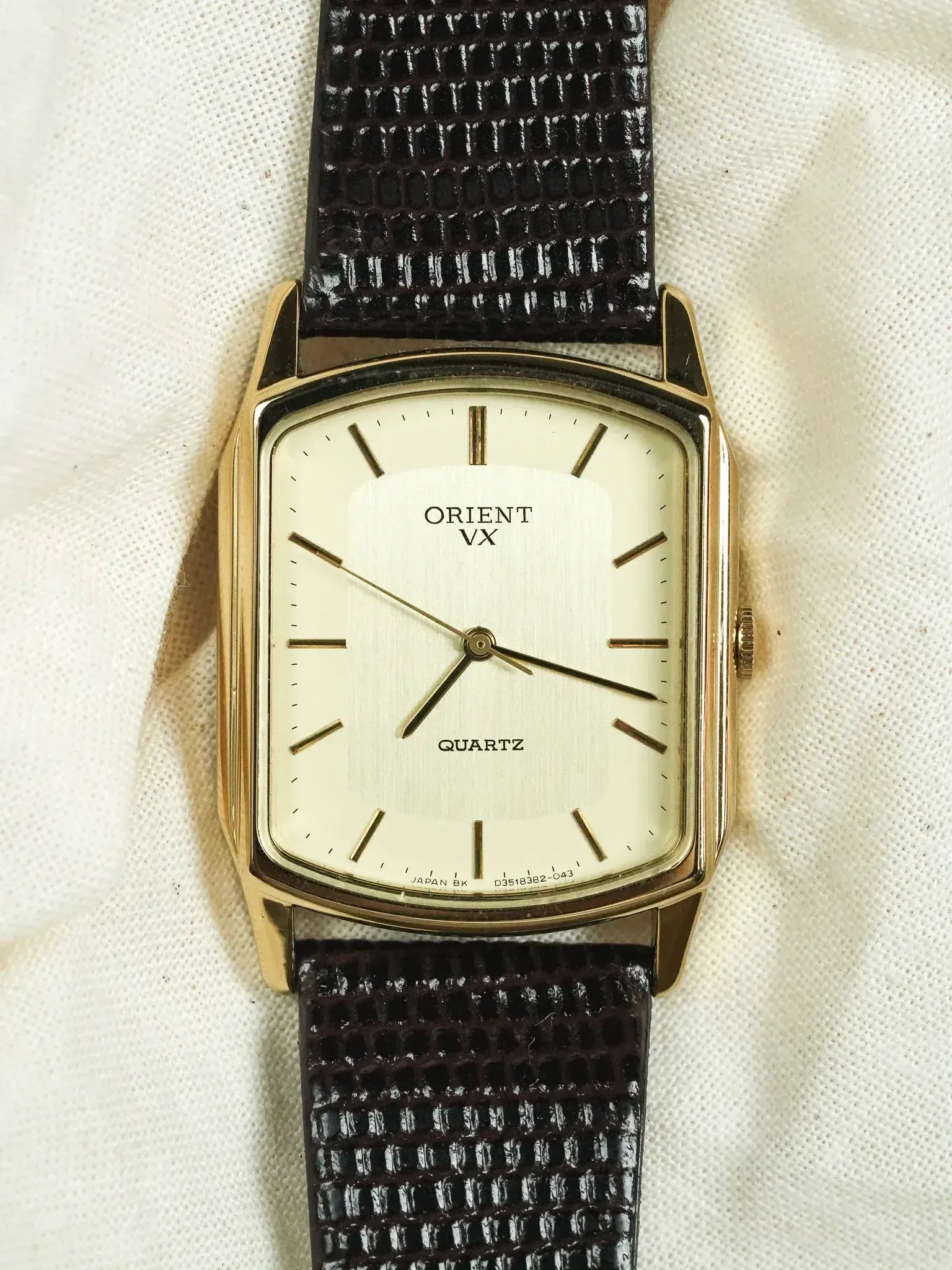
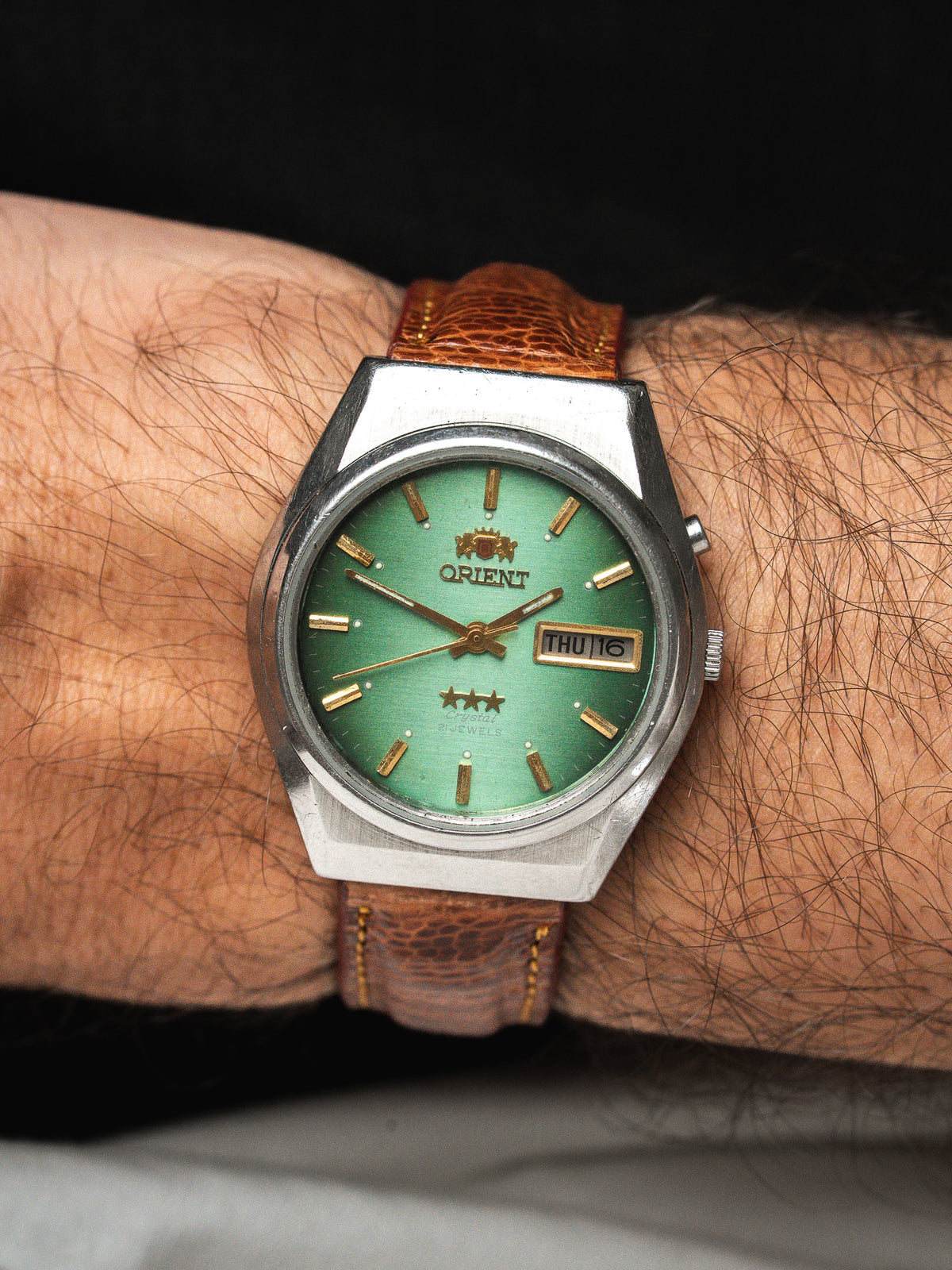
Japan is the world's second watchmaking nation. Seiko (6138/6139 chronographs, Turtle dive watches, Grand Seiko), Citizen (Promaster, Flyback chronographs) and Orient (King Diver, Weekly Auto) produce manufacture movements designed entirely in-house — a technical independence few Swiss brands possess. Vintage Japanese watches offer colorful dials and bold designs not found in Swiss watchmaking, at very accessible pre-owned prices.
Parisian luxury watchmaking (jeweler-watchmakers)
Cartier (Tank, Santos, Pasha, Panthère) and Piaget (ultra-thin watches in solid gold) represent the jeweler-watchmaker category — houses where the watch is first a jewel, then an instrument for measuring time. Bvlgari (Roma, Bvlgari Bvlgari) adds an Italian touch to this category.
The question of the « full set »
A full set refers to a watch sold with all of its original accompanying elements: box (the brand's presentation case), papers (warranty certificate dated and stamped by an official retailer, with the reference and serial number), original strap, and ideally the purchase invoice and instruction manual. On the vintage market, a complete full set is rare — the older the watch, the less common it is to have these documents. The presence of the full set significantly increases the value of a vintage watch: from 10 to 30% depending on the brand and model. For brands with archives (Longines, Omega, Patek Philippe), an archive extract can be requested to trace a watch's history.
Patinated dials: understanding the types of patina
The patina of a dial is the natural evolution of its materials over time — a transformation that collectors actively seek.
- Tropical dial — uniform color change of the dial (a black dial turning chocolate brown, a blue one becoming turquoise). Highly sought-after on Rolex Submariner and Omega Seamaster.
- Spider dial — fine cracking on lacquered dials, common on Cartier Tank Must Vermeil with a burgundy or black dial.
- Stardust dial — micro-speckles that appear on certain dials over time, creating a shimmering effect.
- Patinated hands and hour markers — period luminous materials (radium, tritium) change color over time, shifting from white to cream, honey, or even brown. This patina must be consistent between the hands and the hour markers to be valued.
A patinated dial in good condition — without retouching or restoration — can increase the value of a vintage watch. A repainted or retouched dial (often identifiable by an overly uniform color or slightly different typography) lowers its value.
Frequently asked questions — luxury vintage & pre-owned watches
What is the difference between a vintage watch and a pre-owned watch?
In watchmaking, the term vintage generally refers to a watch made at least twenty to thirty years ago (1930s to 1990s). A pre-owned watch can be from any period, including recent ones. Neo-vintage refers to watches from the 1990s-2000s — too recent to be classic vintage, but with a historic design. At Atelier Victor, our catalog covers all three categories.
Are vintage watches reliable for everyday wear?
Yes, provided they are properly serviced. Each watch sold by Atelier Victor is fully serviced by our watchmakers — movement disassembled, cleaned, oiled, adjusted and tested — and covered by a one-year mechanical warranty. Swiss and Japanese calibers from the 1950s-80s are renowned for their robustness.
How should you choose between mechanical, automatic and quartz?
Hand-wound offers the slimness of a flat case and the ritual of winding your watch every day — it is the purist's choice. Automatic is more practical for everyday wear — the watch winds itself with wrist movements. Quartz offers the best accuracy and requires no winding — it is the practical choice. No type is superior to another — each suits a particular use and preference.
What is a « Frankenwatch » and how can you avoid it?
A Frankenwatch is a watch assembled from components taken from different watches — dial from one reference, case from another, movement from a third. The result may visually resemble an authentic watch but is not one. The best protection: buy from a specialist dealer who opens and checks every watch, and who guarantees authenticity. At Atelier Victor, each piece is checked by our watchmakers — authenticity guaranteed for life.
Can you wear a vintage dive watch underwater?
We recommend avoiding immersion for any vintage watch — even models designed for diving (Rolex Submariner, Omega Seamaster 300, Yema Superman). Water-resistance gaskets deteriorate over time and no longer guarantee their original resistance. For daily wear, rain and hand washing are not a problem for steel models.
Is the patina of a dial an asset?
Yes, provided it is natural and even. A tropical dial (uniform color change), a spider dial (fine cracking), or patinated hour markers (shifting from white to cream) are actively sought after by collectors. On the other hand, a touched-up, repainted dial or one with moisture stains loses value.
Are luxury vintage watches a good investment?
At Atelier Victor, we approach watchmaking from the perspective of a pleasure purchase — choosing an object to wear and enjoy every day. While demand for certain historic models has evolved favorably on the pre-owned market, we prefer guiding you toward a piece that matches your aesthetic and mechanical expectations rather than offering financial recommendations.
Which vintage watch for a woman?
Browse our selection of vintage watches for women. The most commonly worn models: Cartier Tank Must in vermeil, Cartier Panthère, Omega De Ville, Piaget in gold, Longines La Grande Classique. Women's vintage watches offer restrained proportions (20 to 28 mm) naturally suited to feminine wrists.
Which first vintage watch to start with?
For a first purchase, we recommend choosing a recognized brand with a widely available caliber. Under €500: Seiko automatic, Orient Weekly Auto, LIP Dauphine. In the €500 to €1,000 range: Longines Flagship, Omega Genève. In the €1,000 to €2,000 range: Cartier Tank Must Vermeil, Omega Seamaster.
Where can I find a replacement strap for a vintage watch?
Atelier Victor offers watch straps compatible — in alligator leather, calfskin leather, steel, Milanese mesh, and NATO, with all lug widths (14 mm, 18 mm, 20 mm, 22 mm). Contact us via WhatsApp.
Discover our collections by brand: Rolex, Cartier, Omega, Longines, Jaeger-LeCoultre, Breitling, Seiko, Yema. Or by budget: -500 € · 500-1 000 € · 1 000-2 000 € · +2 000 €.
A question about our vintage watch catalog? Contact us via WhatsApp or by email.
Need advice or have a hesitation? Our experts are here to assist you.