

Skip to content
Important: Shipments from Dubai will resume on May 4th.

Basket

Your basket is empty

Exclusive Access

Sign up to receive exclusive offers in advance.

Vintage Rolex Watches

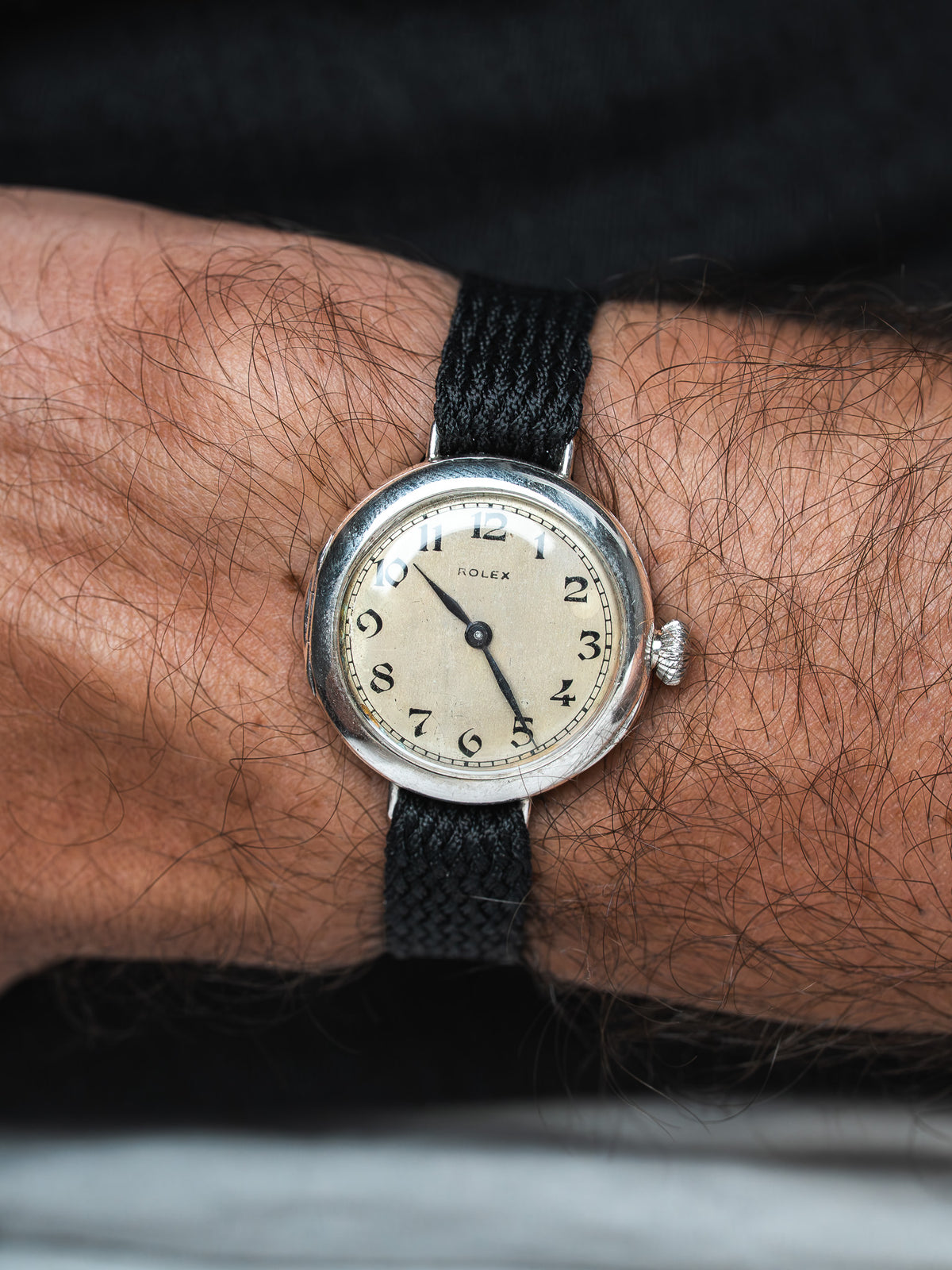
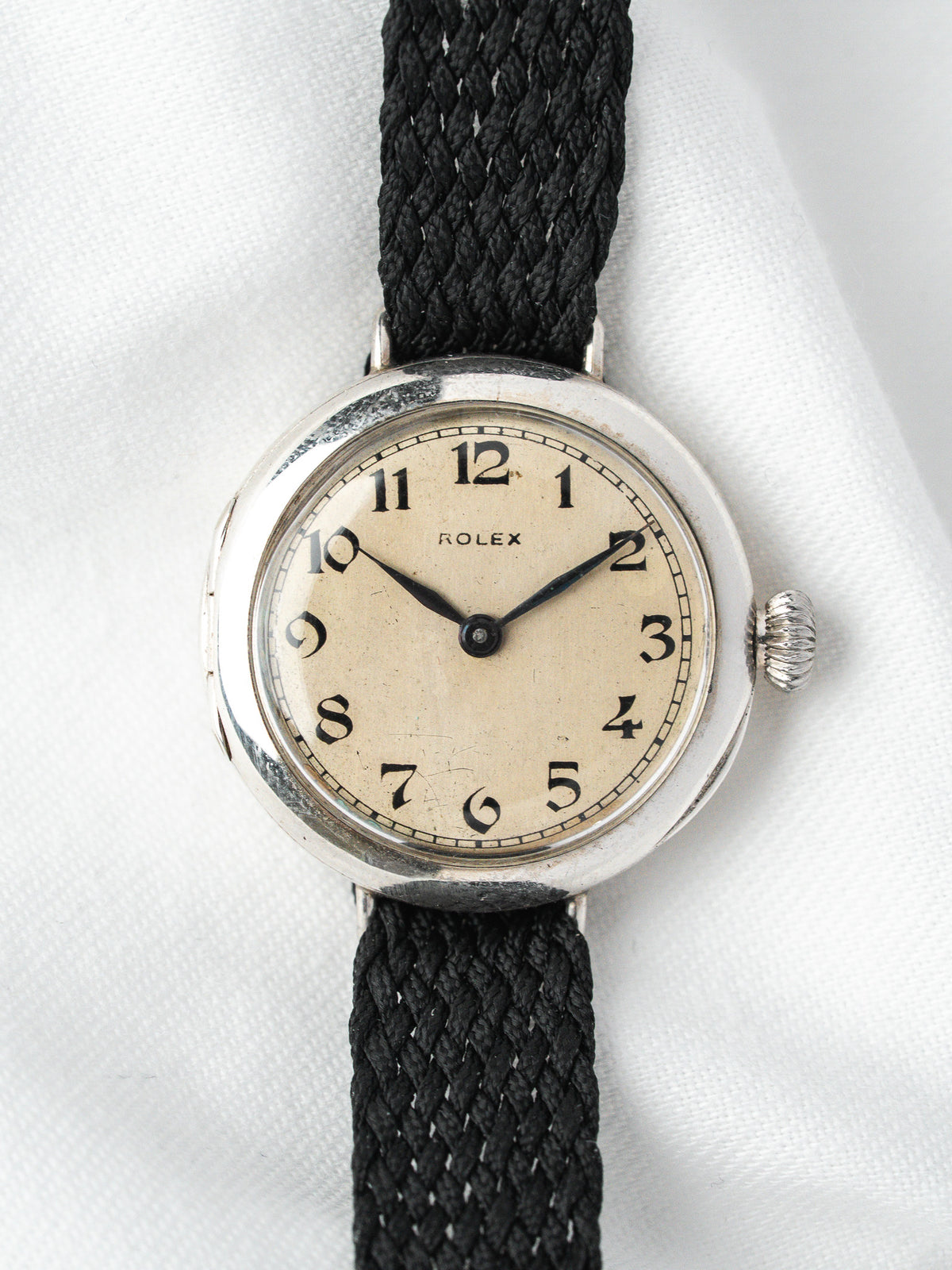
Atelier Victor: Discover our collection of vintage Rolex watches and pre-owned for men and women. Datejust, Submariner, Daytona, Oysterdate, Cellini, Lady-Datejust… in steel, 18-carat gold or two-tone. Serviced movement, one-year mechanical warranty, lifetime authenticity guarantee.

Read more

Vintage Rolex Watches: The Historical References of Watchmaking

Rolex occupies a central place in the history of the watchmaking industry. Vintage Rolex watches have characteristics that contemporary productions no longer offer: dials that have developed a natural patina, more contained case proportions, and references that have marked the evolution of design. A Submariner 5513 from the 70s or a Datejust 1601 from the 60s stand out for their aesthetics and construction specific to their manufacturing period.

Vintage Rolex Men's Watches: The Most Sought-After Models

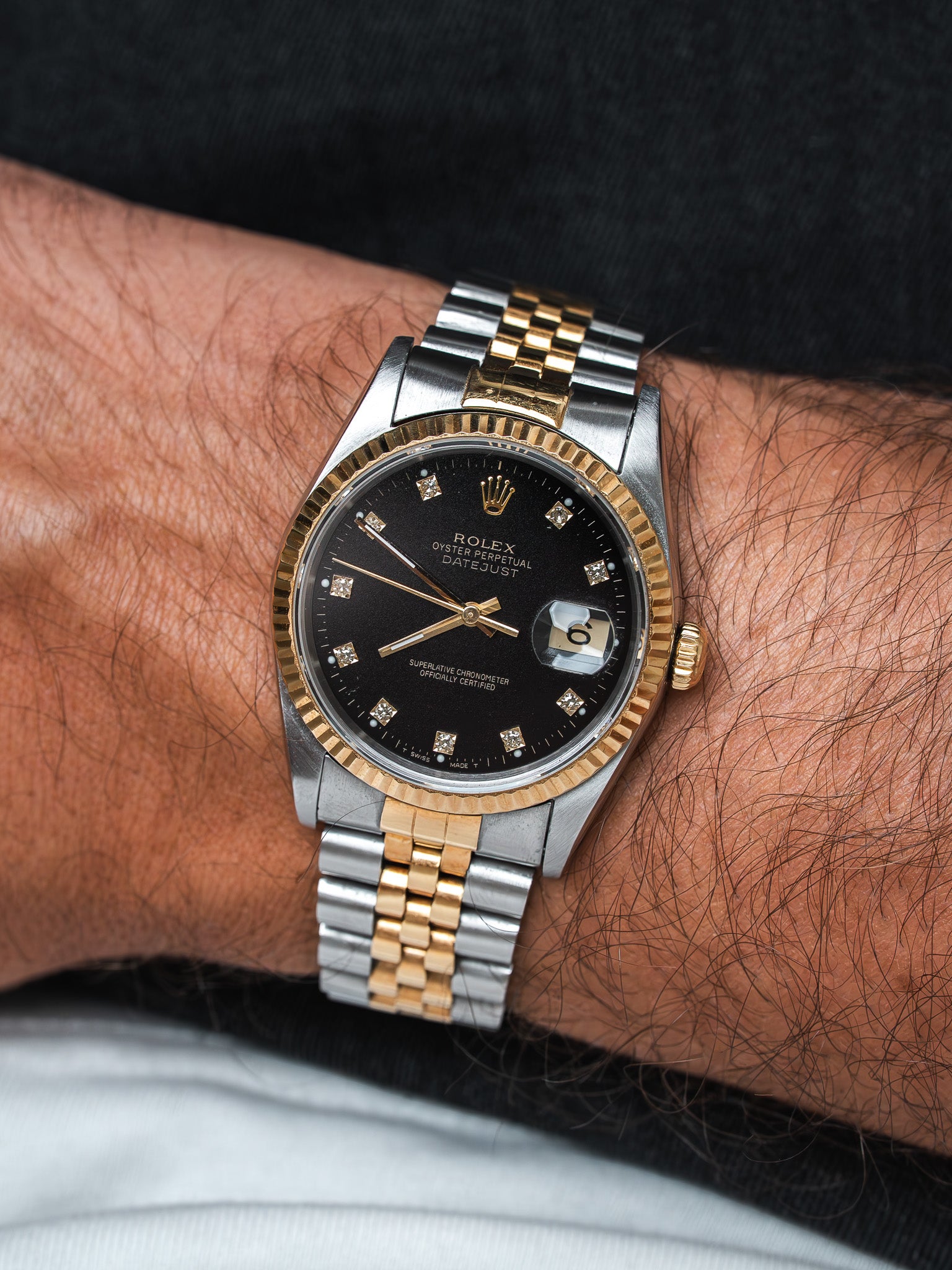
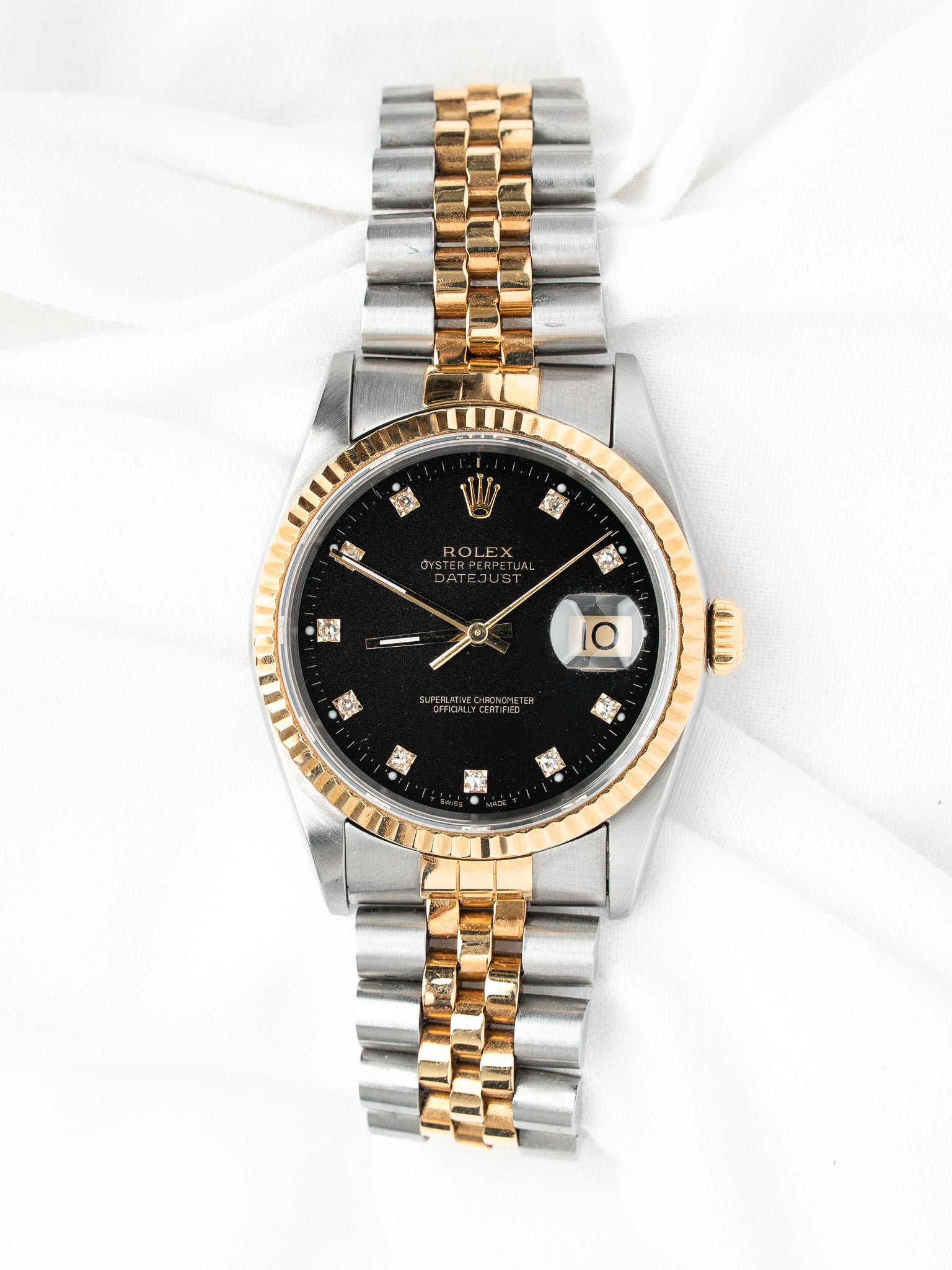
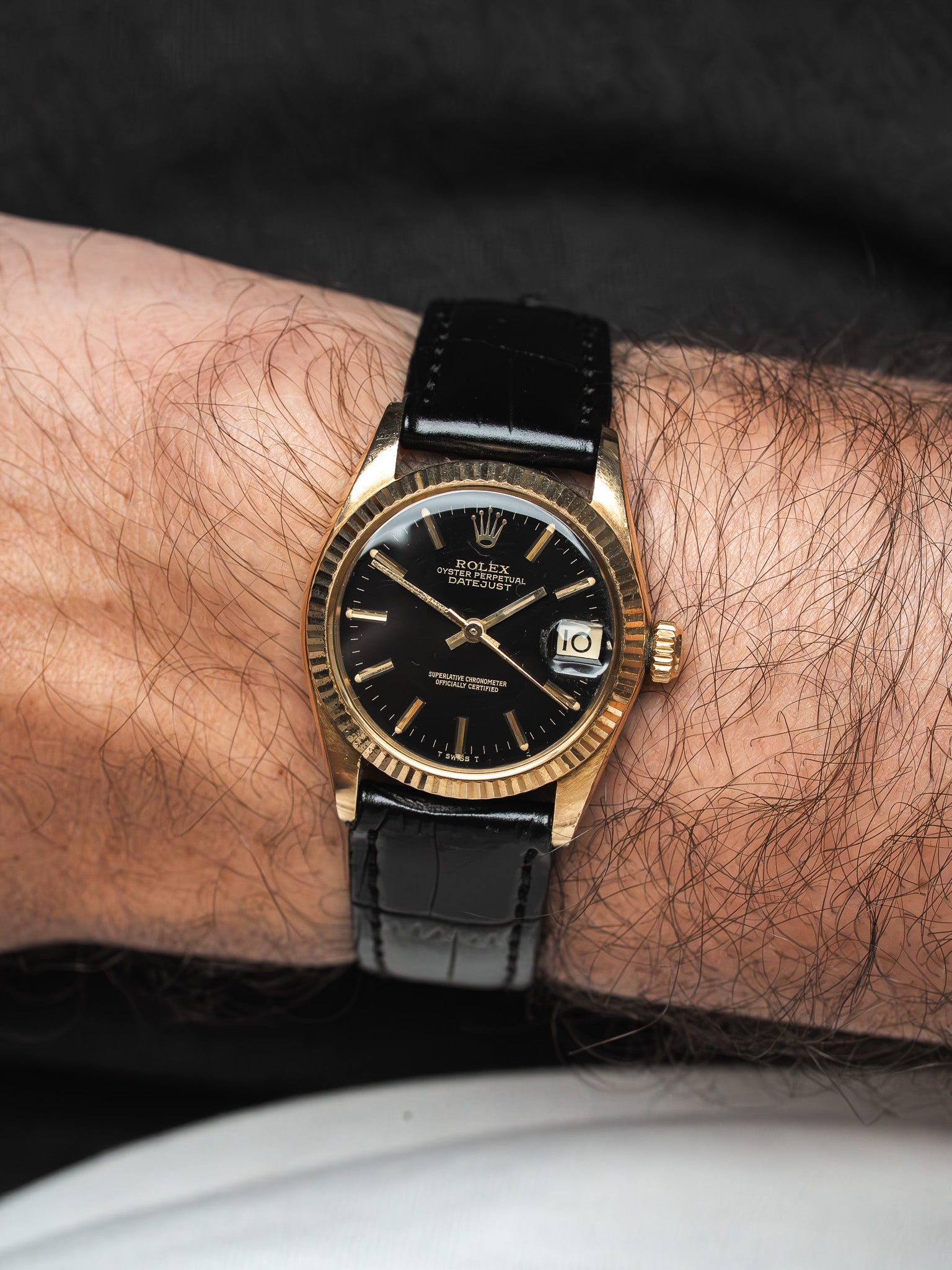
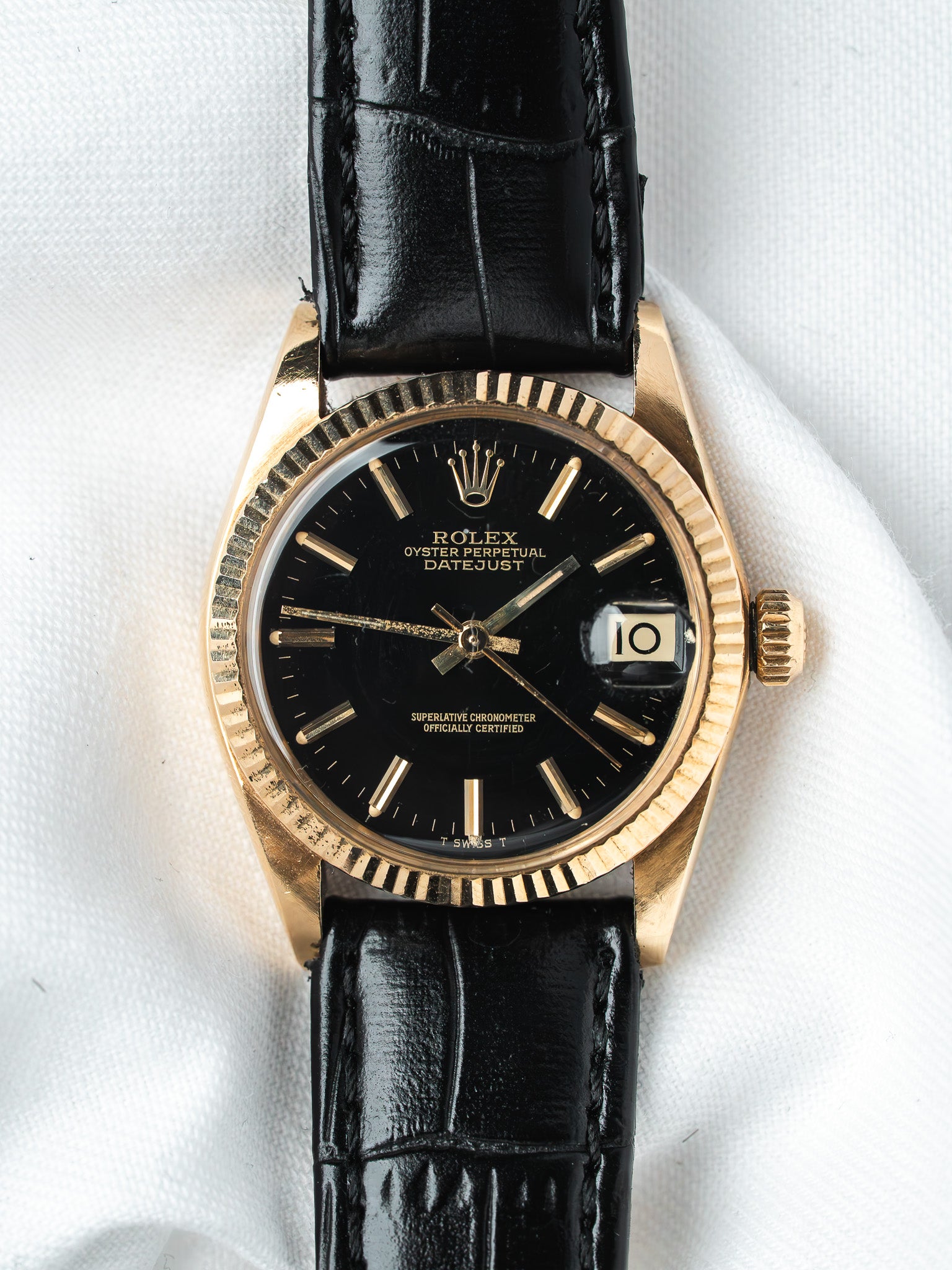
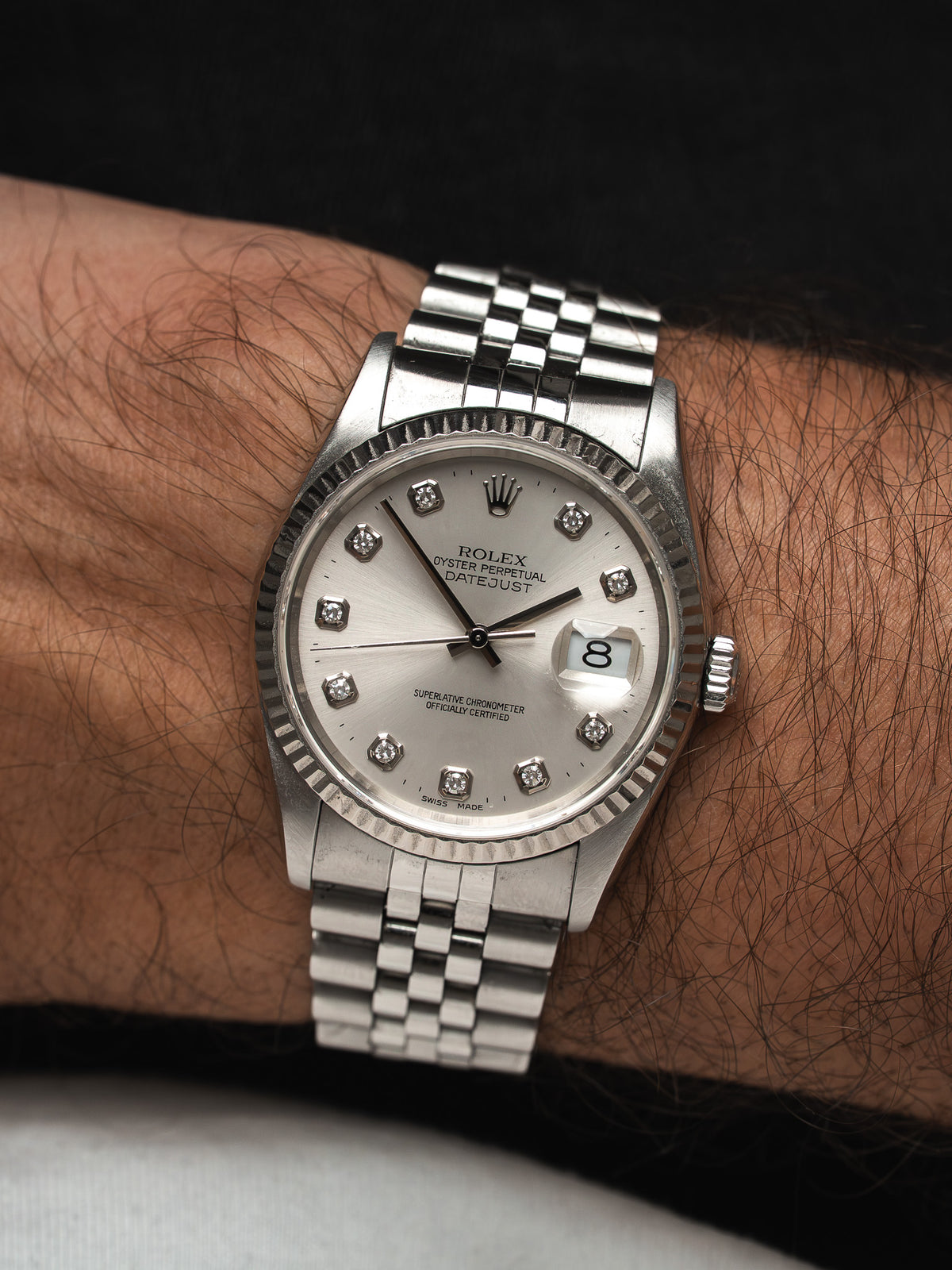
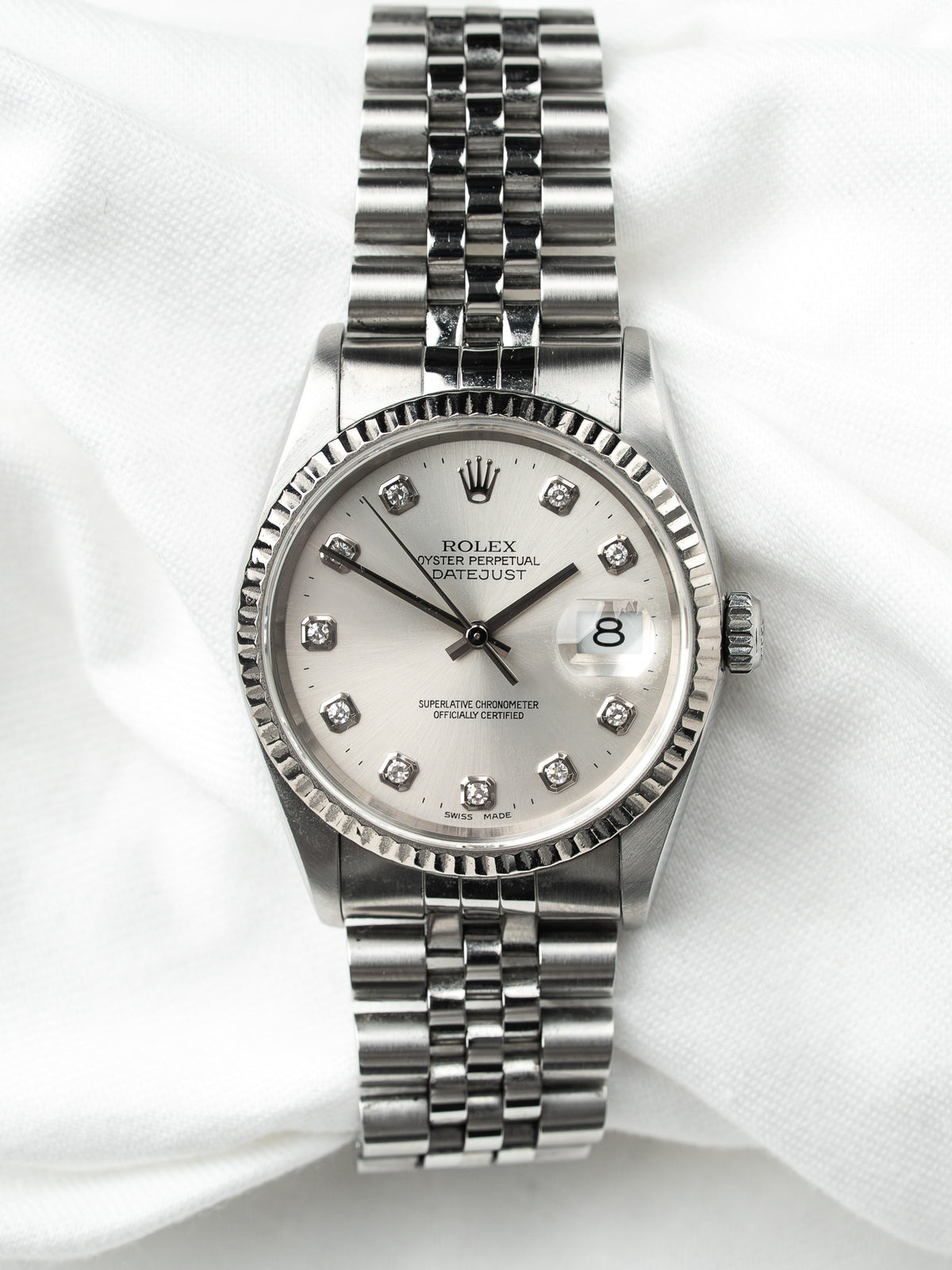
  • Vintage Rolex Datejust — ref. 1601 with fluted white gold bezel, 1603 with engine-turned bezel, or 16233 two-tone on Jubilee bracelet, the classic model par excellence.
  • Vintage Rolex Submariner — ref. 5513 (no date) or 1680 (first version with date), the most studied diving models by collectors.
  • Vintage Rolex Daytona — ref. 6239, 6263, chronograph historically linked to motorsports, a major piece in the pre-owned market.
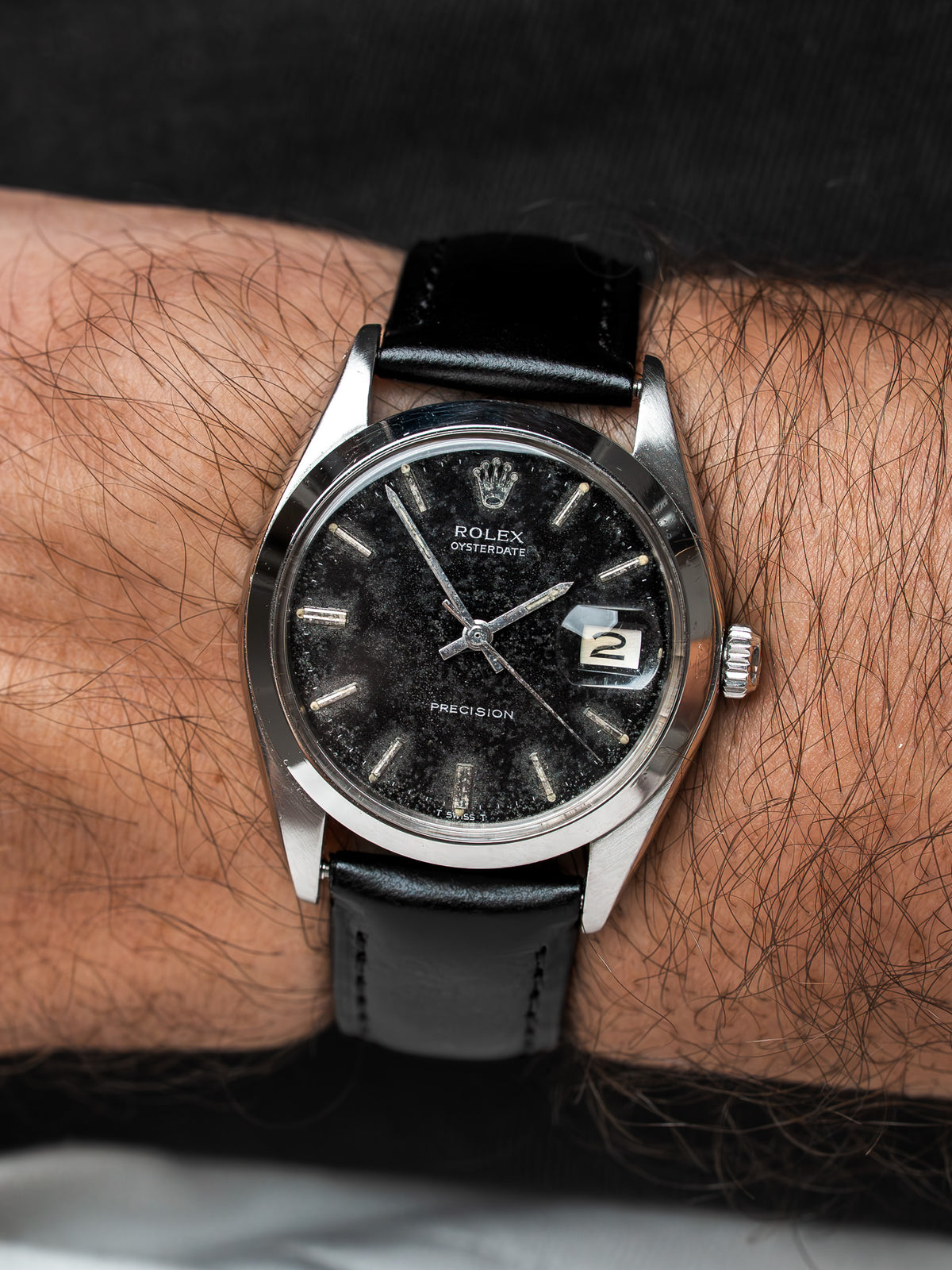
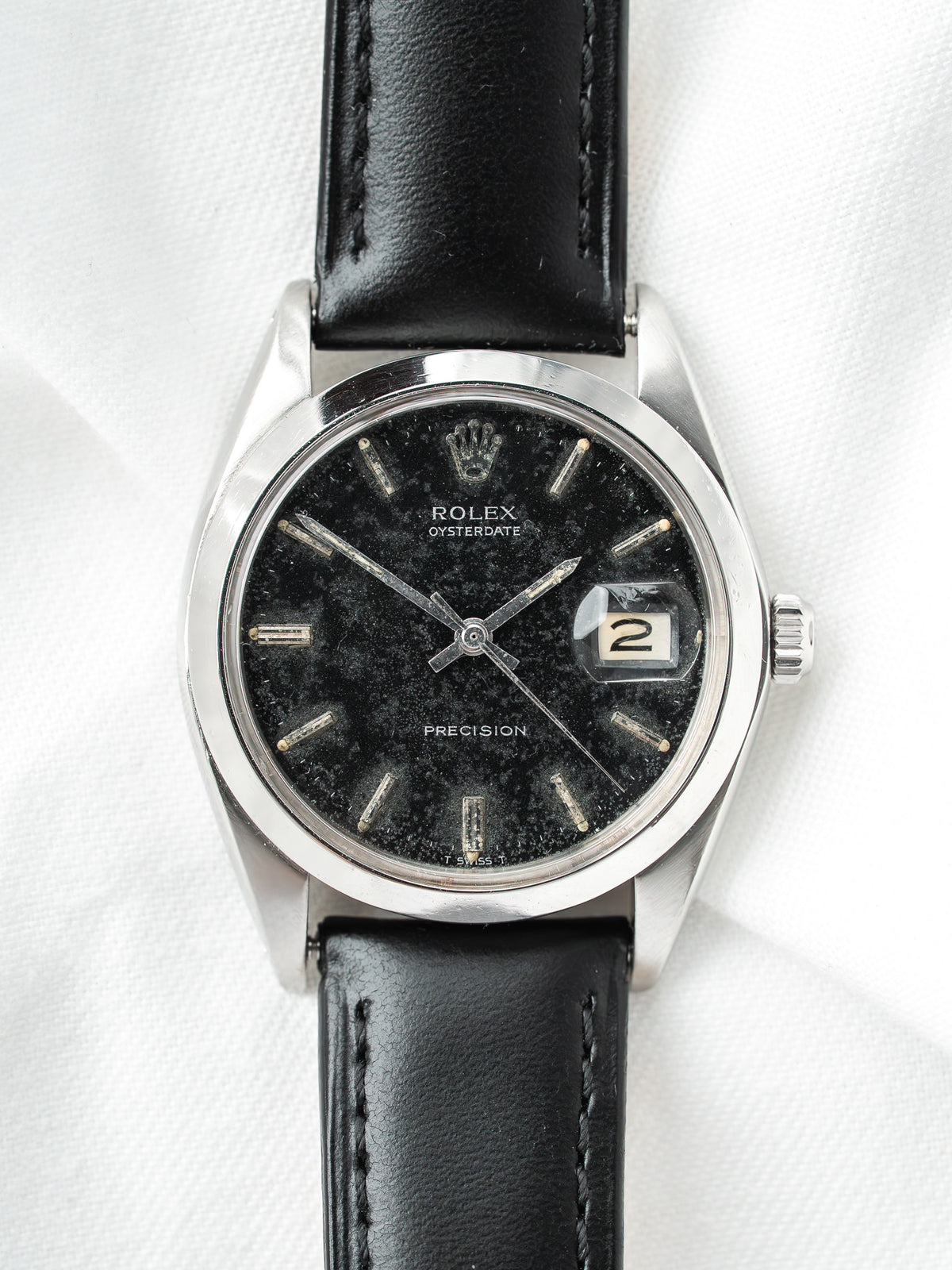
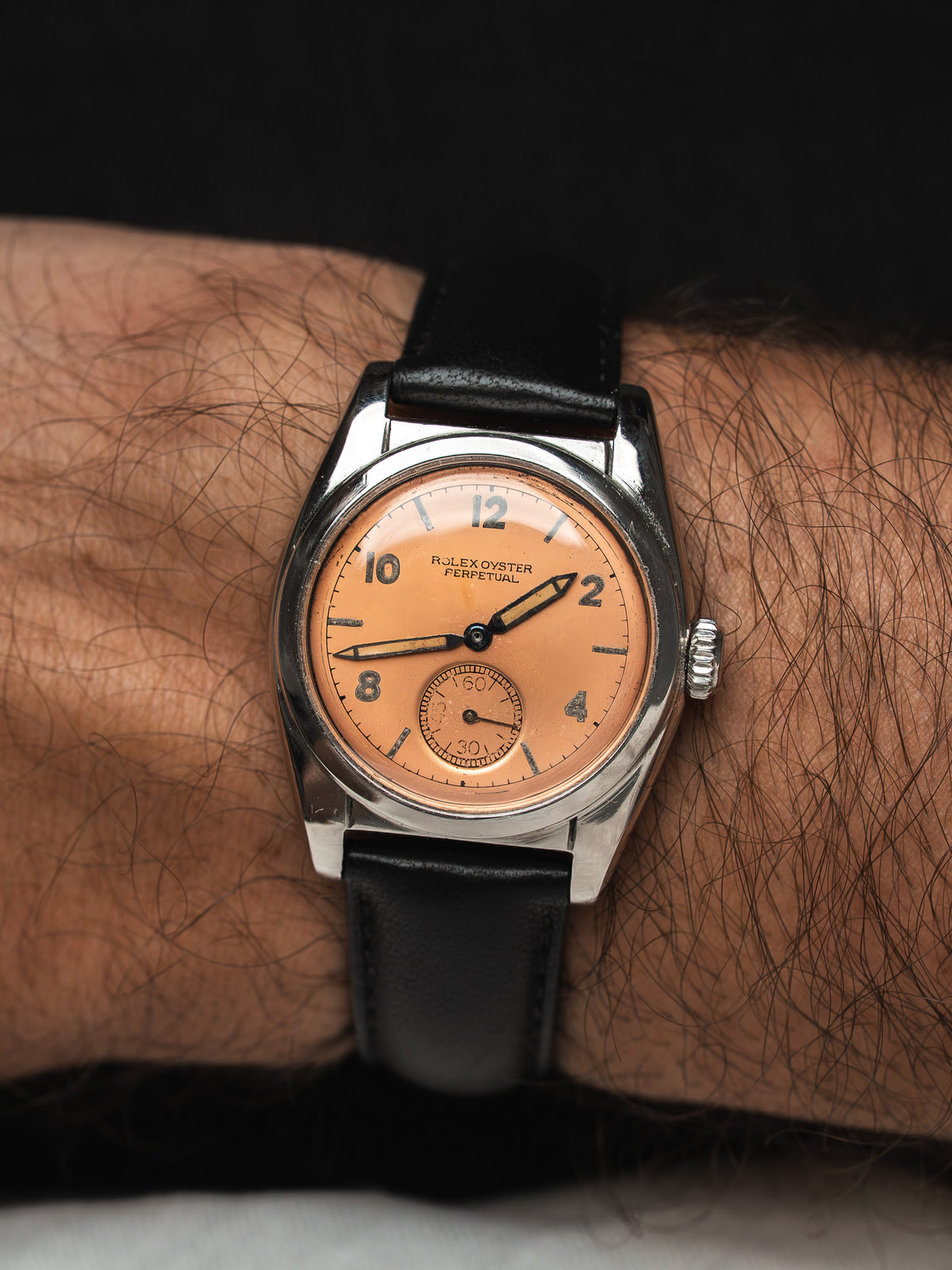
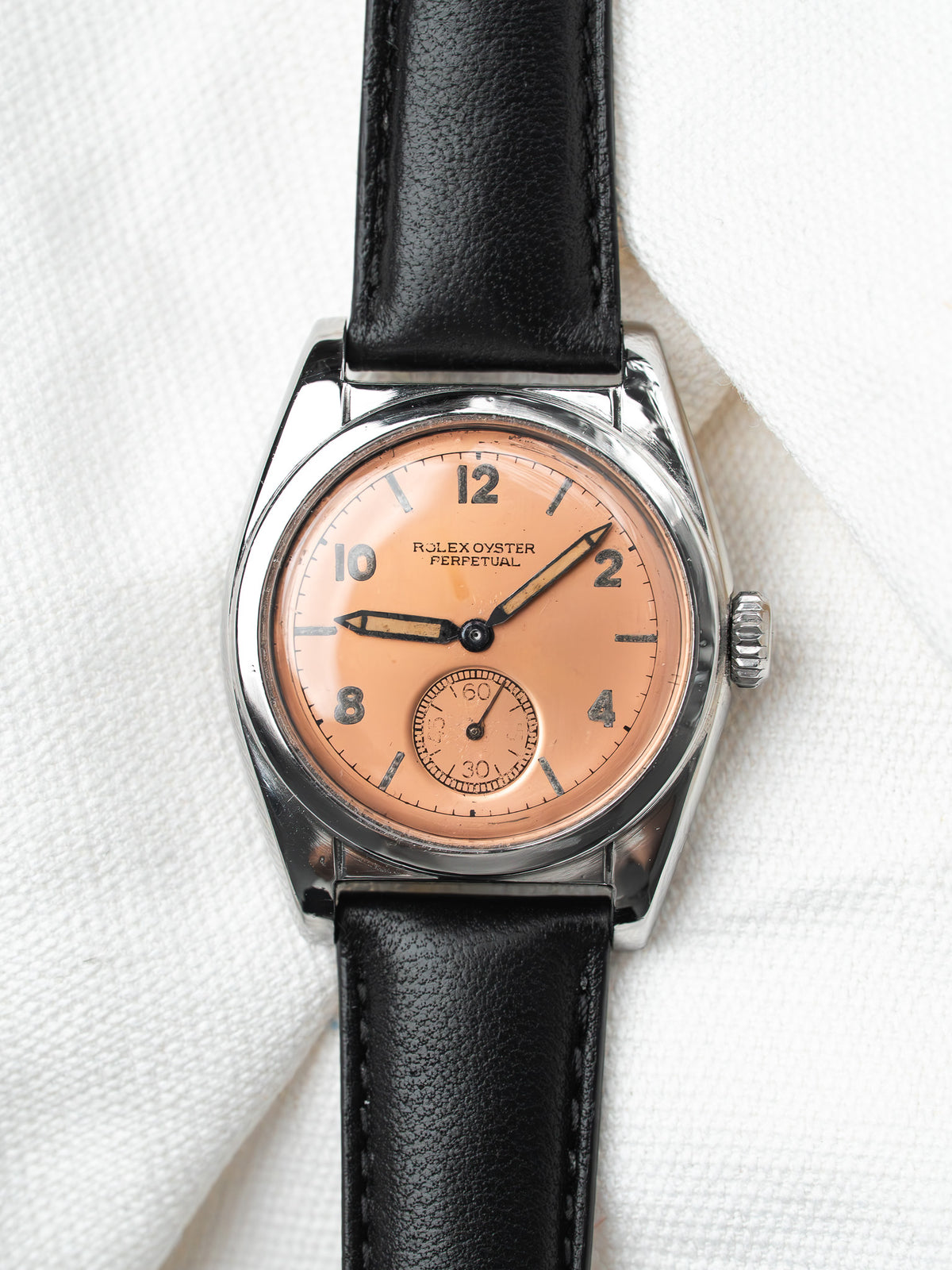
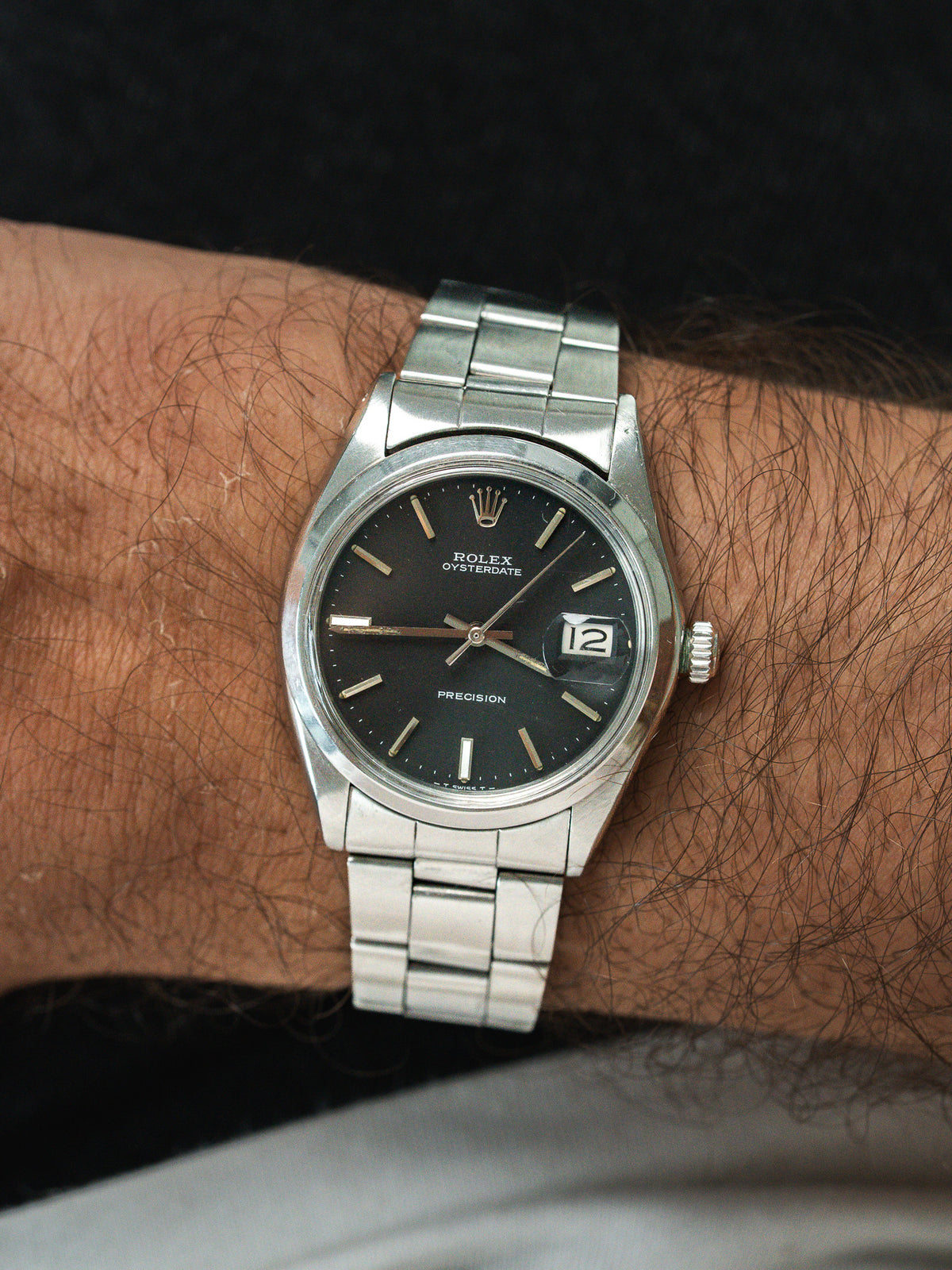
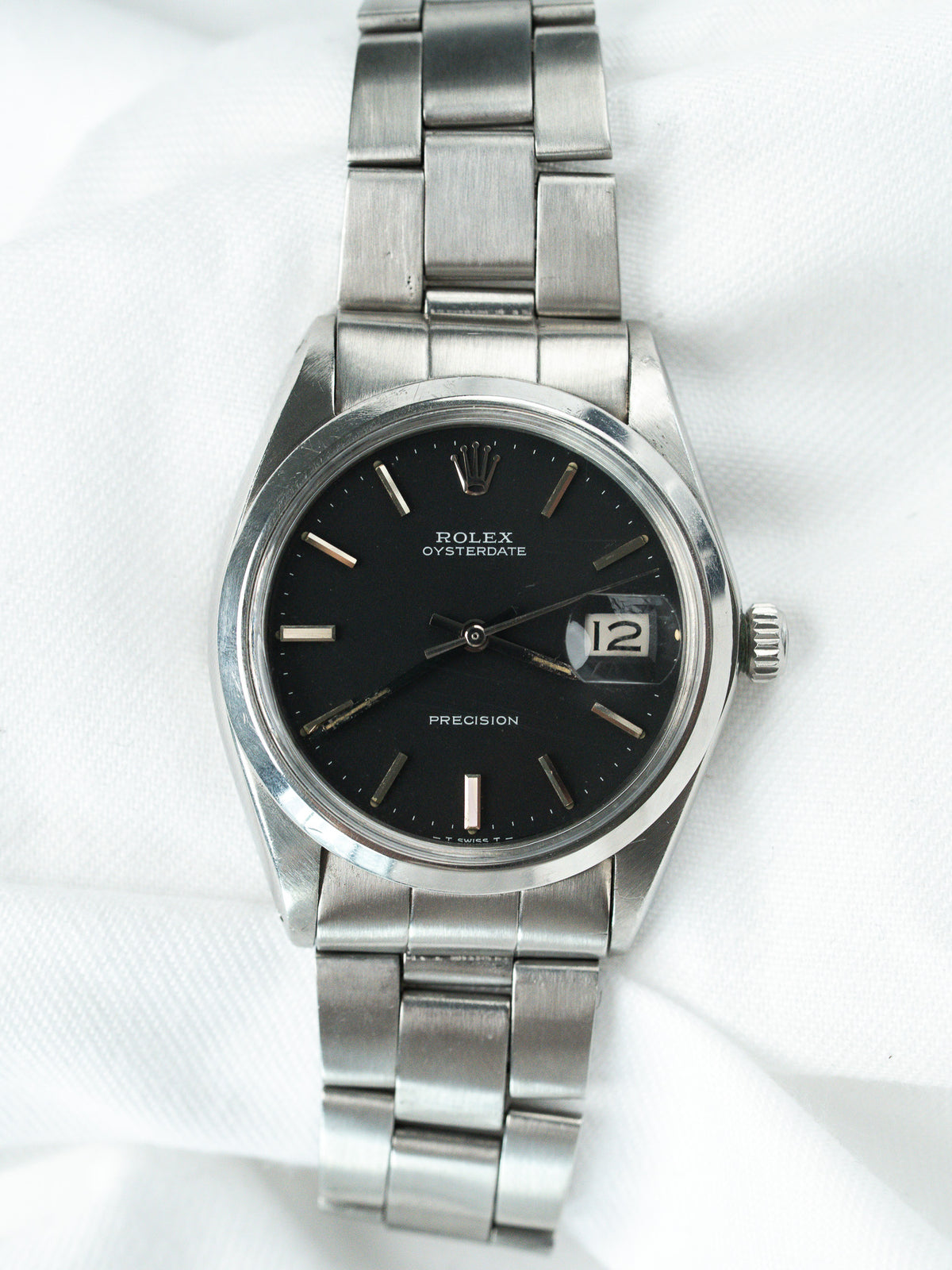
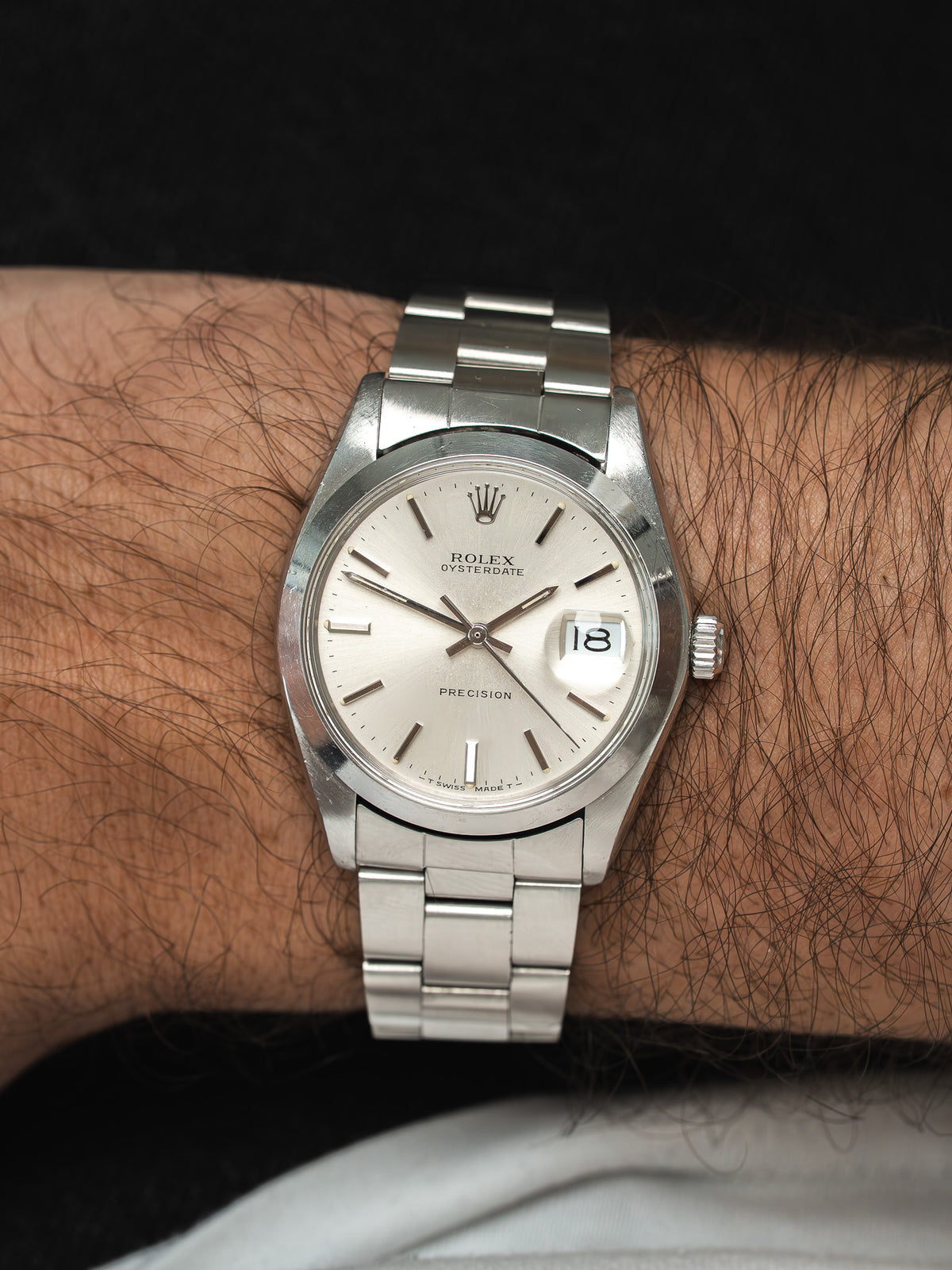
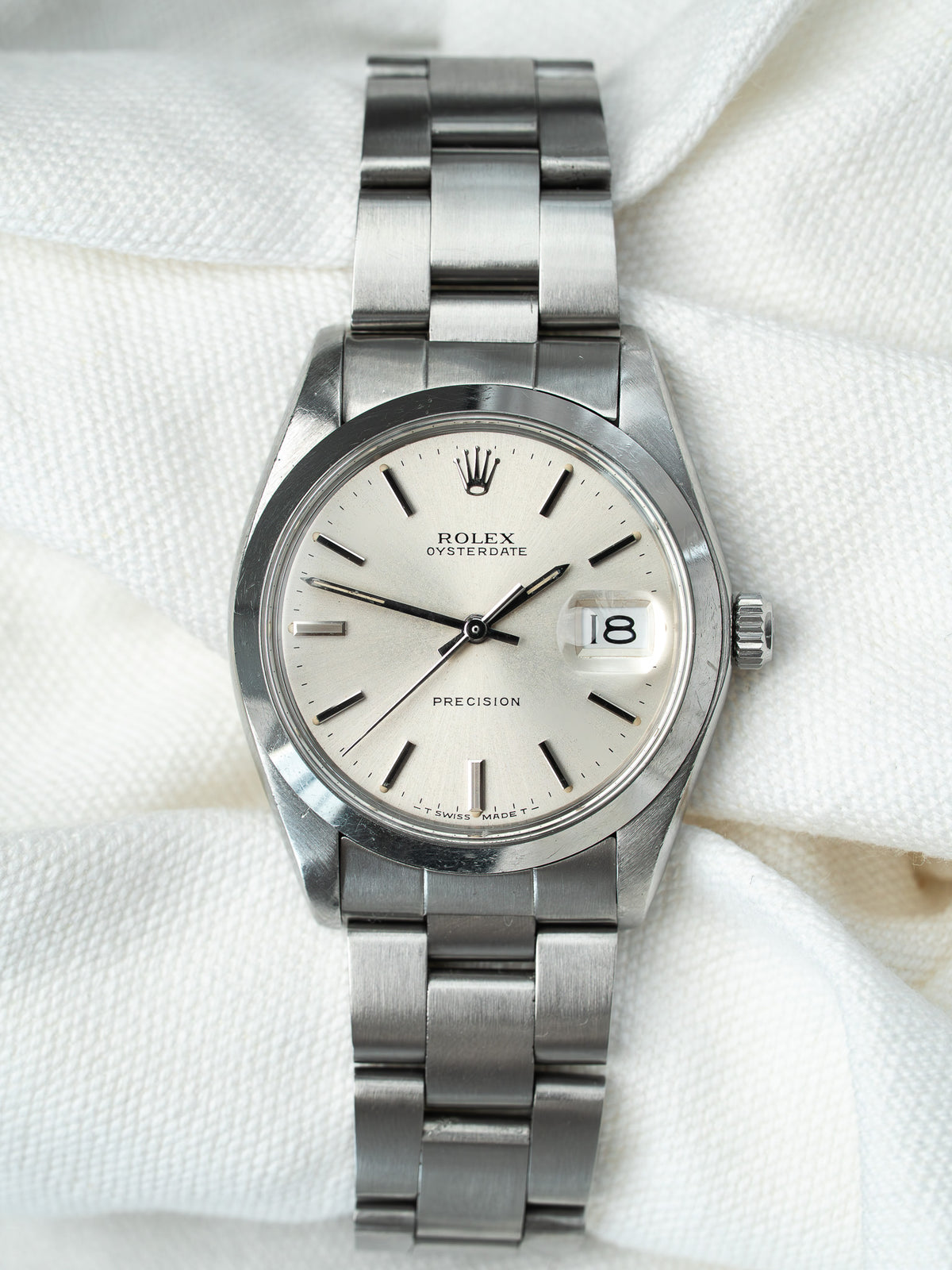
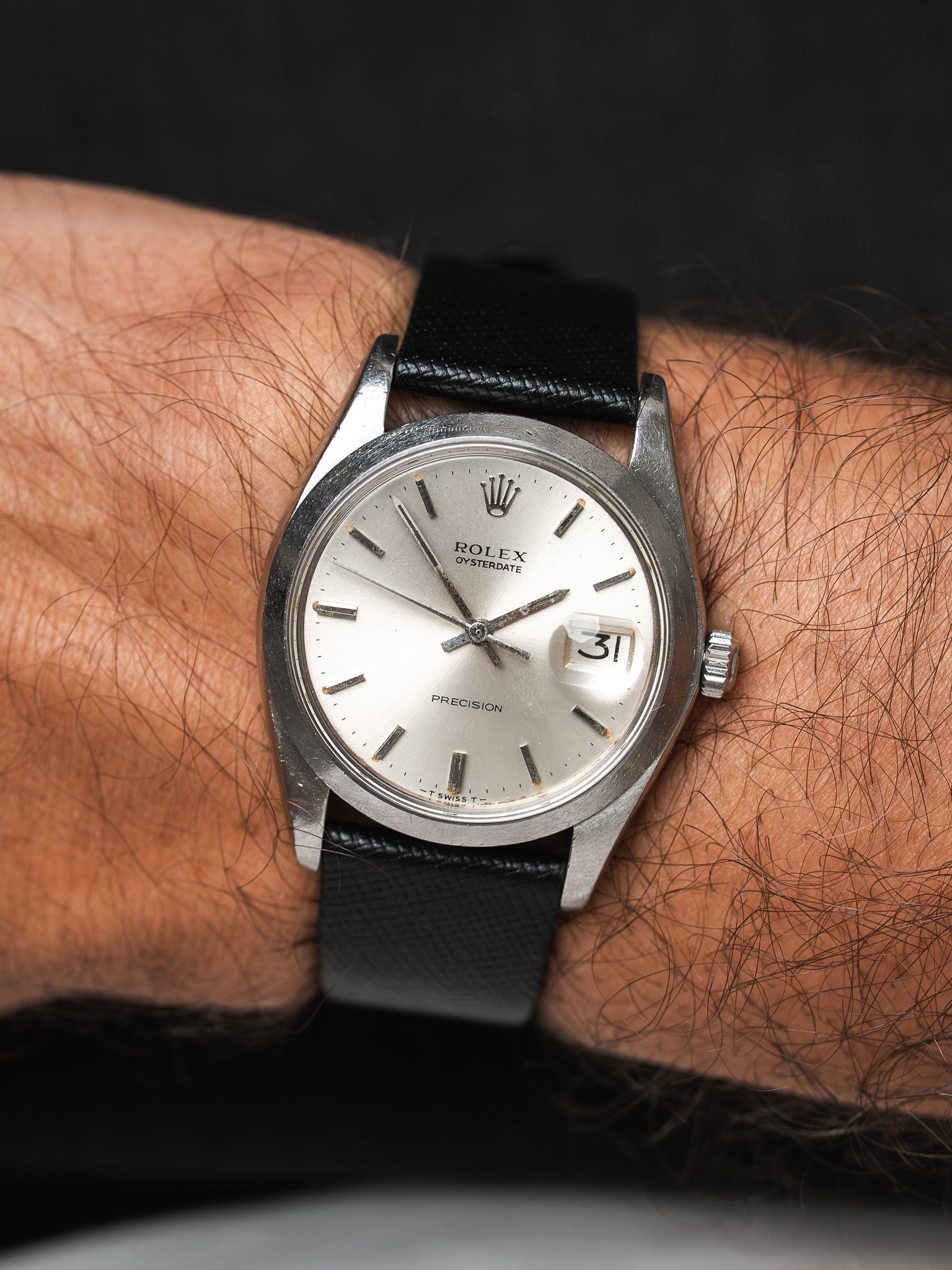
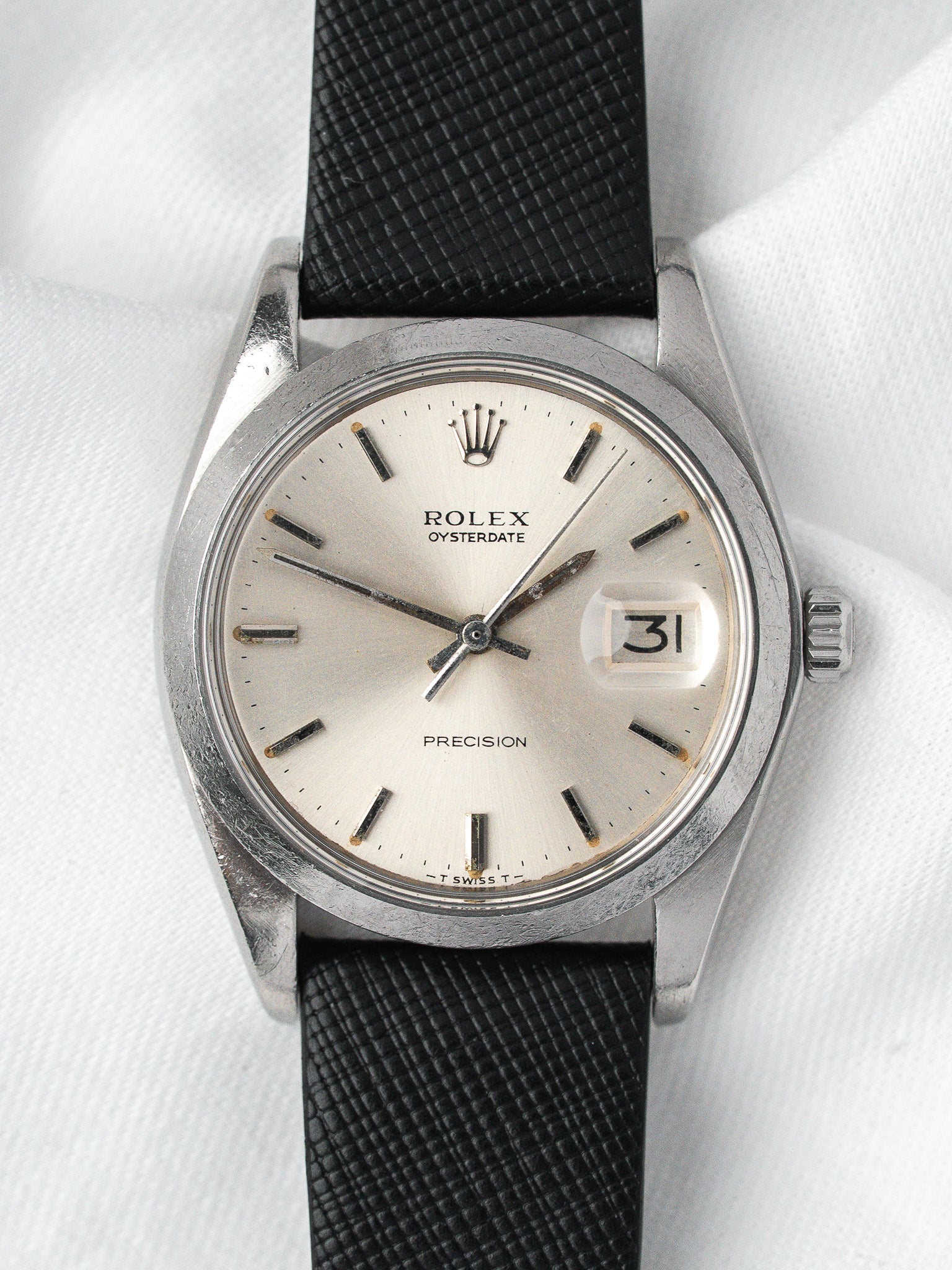
  • Rolex Oysterdate Precision 6694 — 34mm hand-wound case, a model with recognized balance, often favored for a first vintage Rolex purchase.
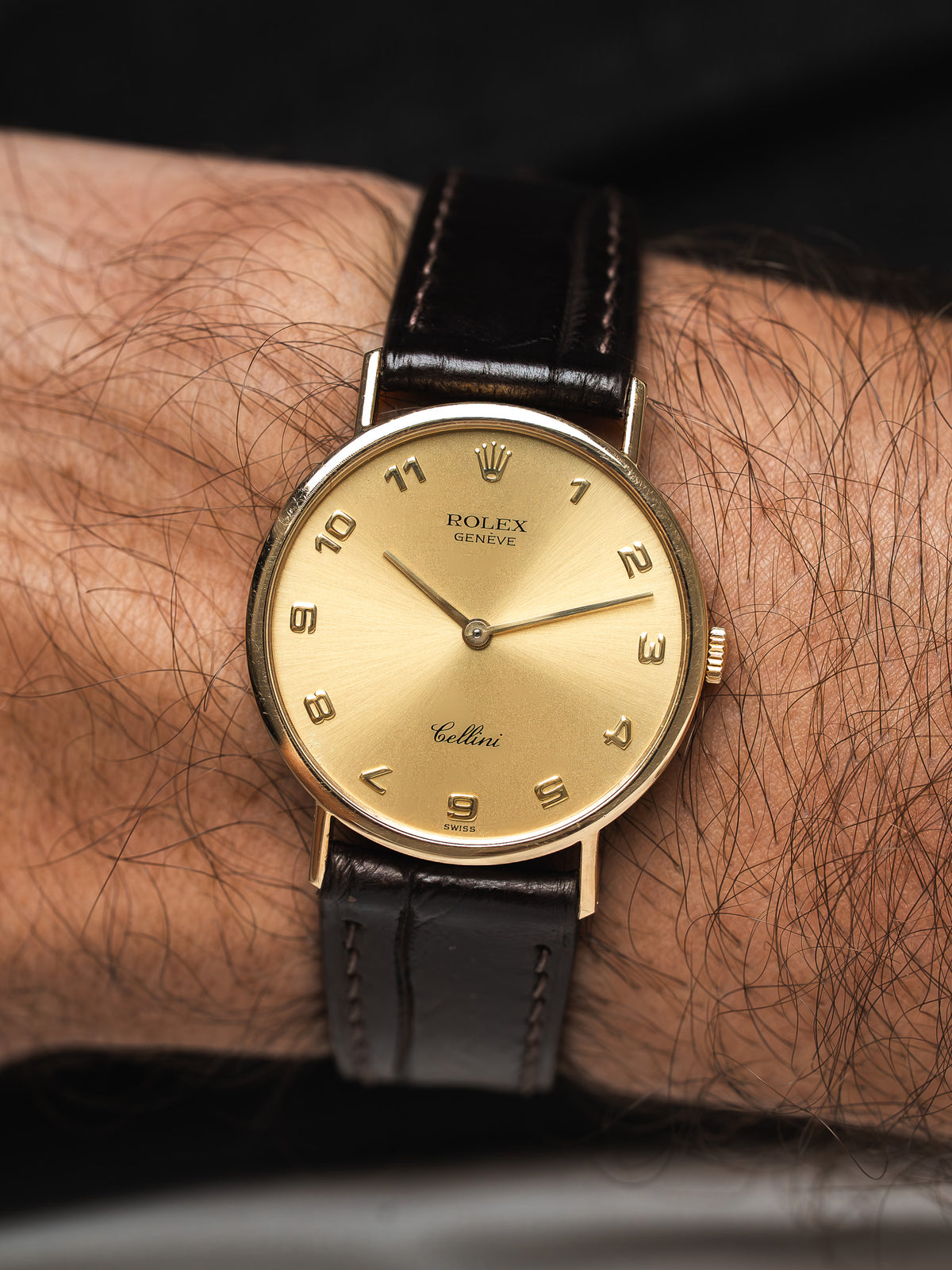
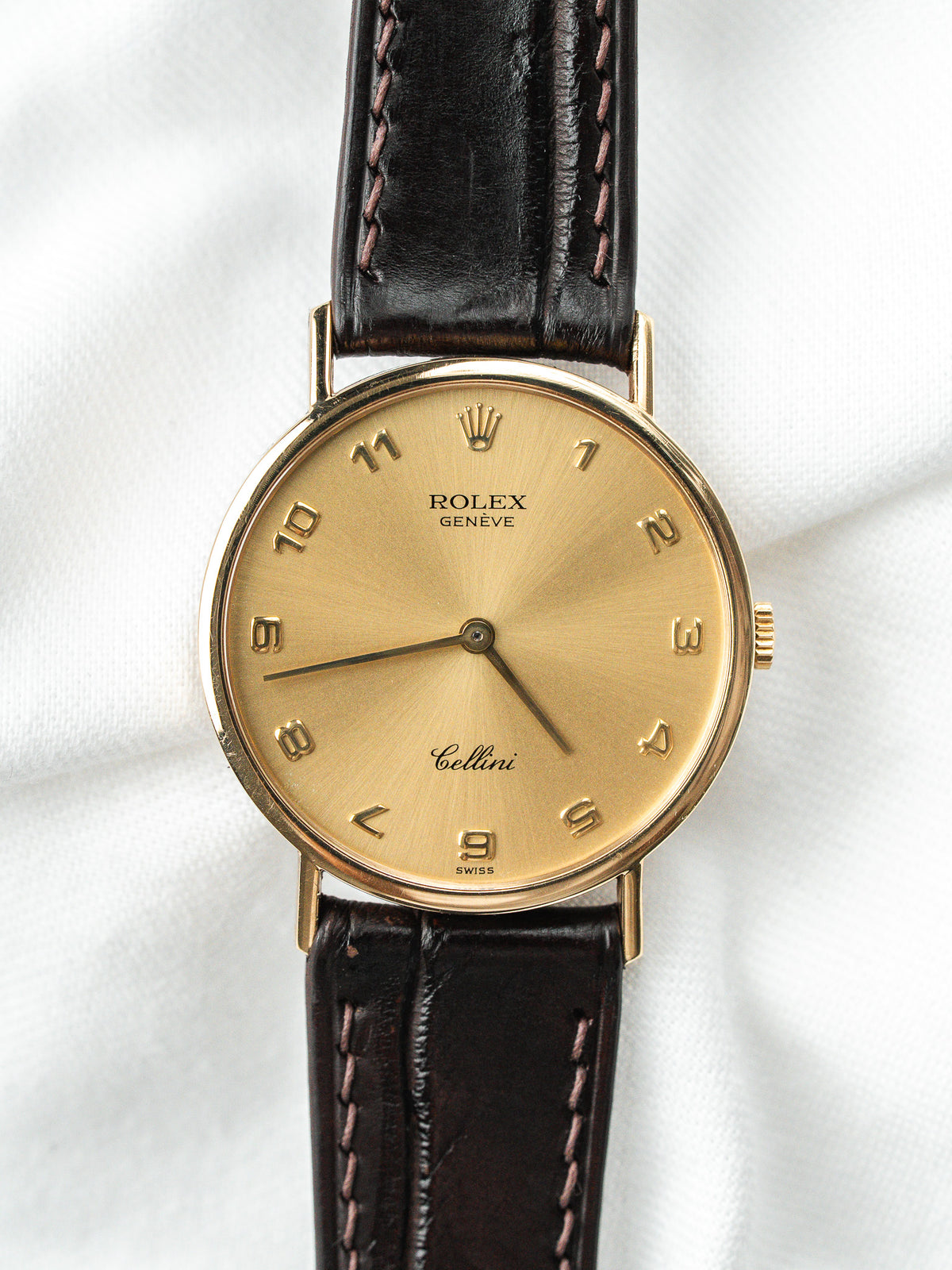
  • Vintage Rolex Cellini — variations in yellow, white, or rose 18-carat gold, the line dedicated to the traditional dress watch.
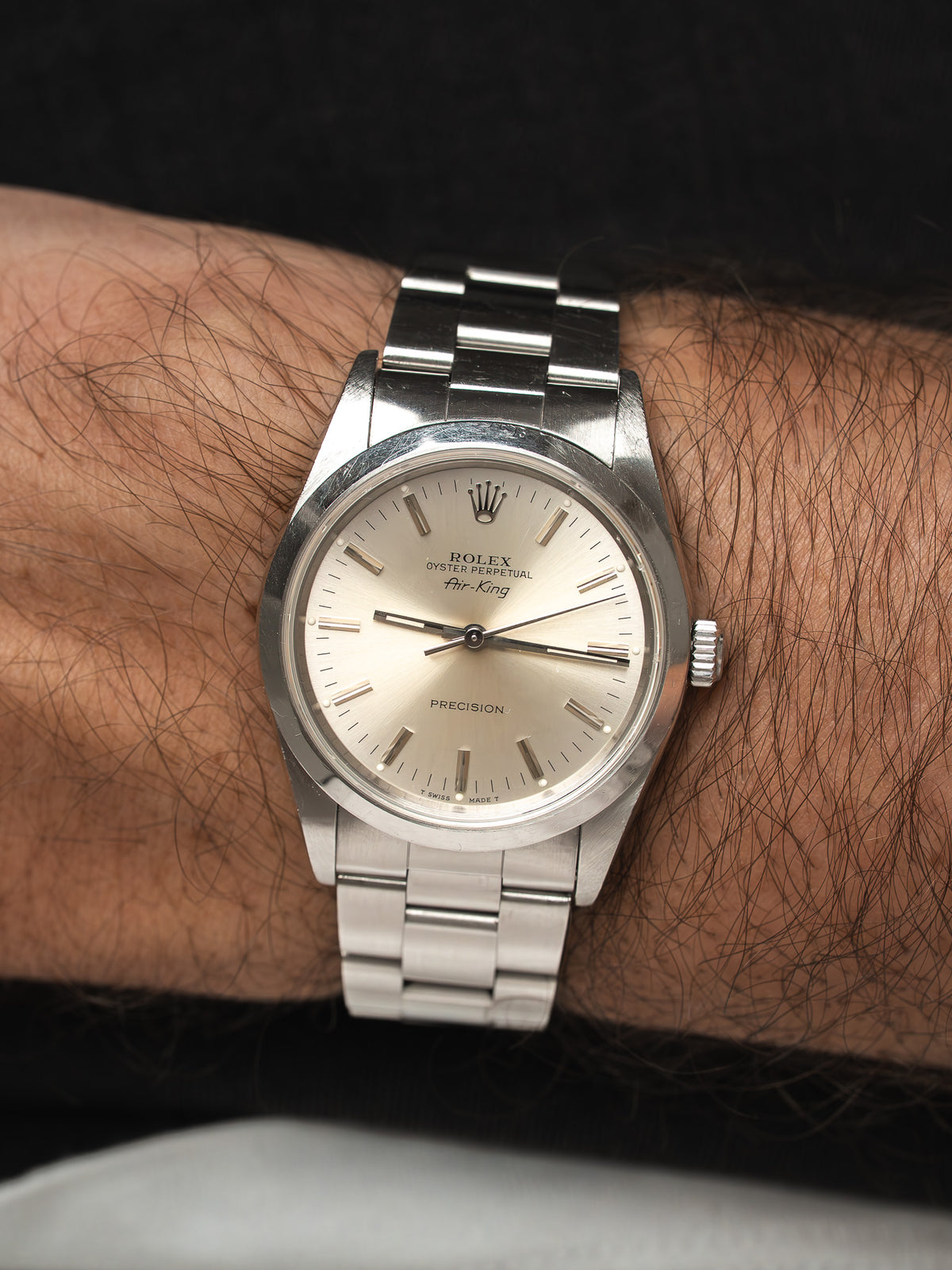
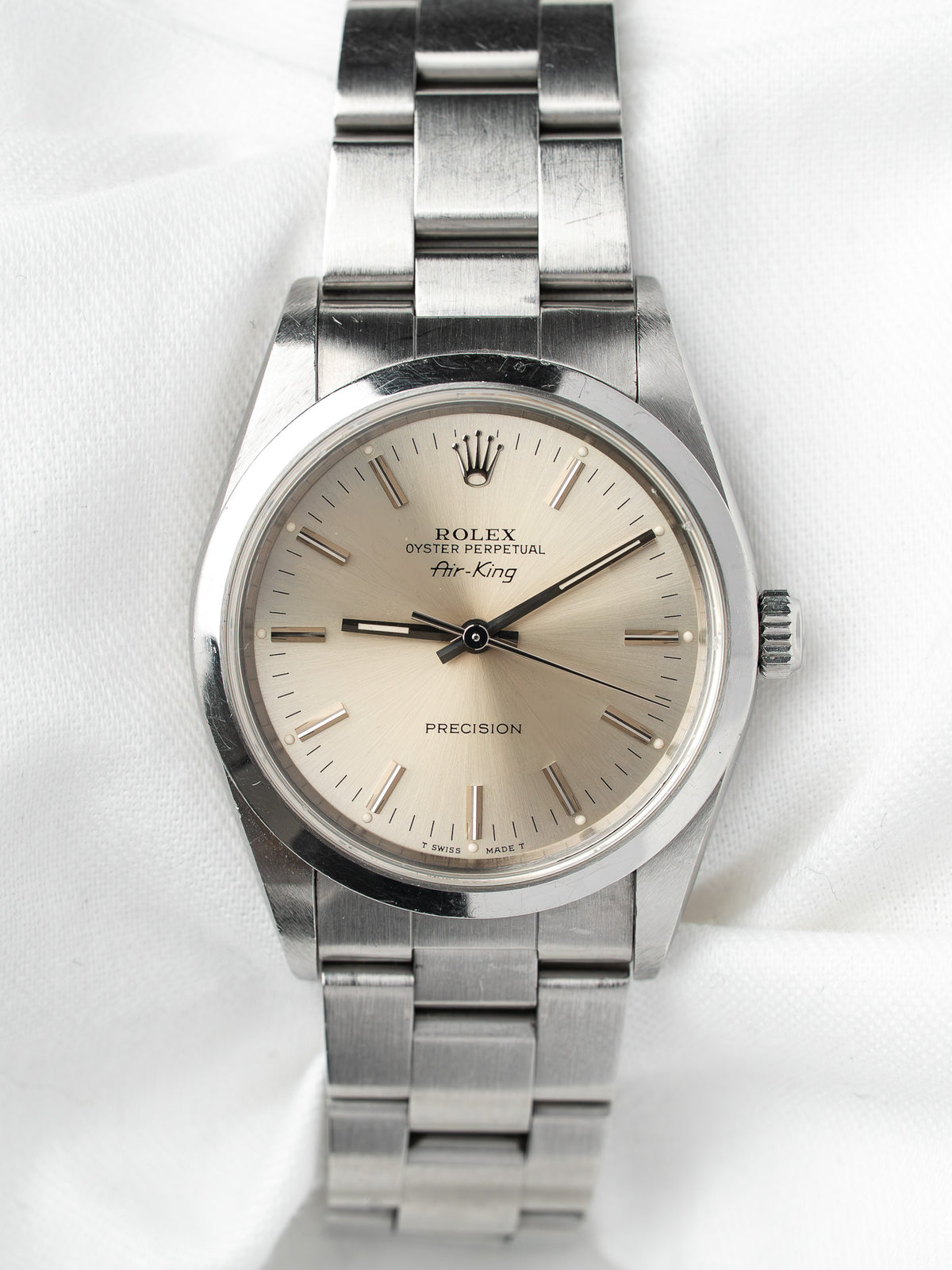
  • Vintage Rolex Air-King — clean dial, 34mm case and automatic movement, ideal for daily wear.
  • Vintage Rolex Explorer — black dial and high-legibility indexes, the brand's historical exploration model.

Vintage Rolex Women

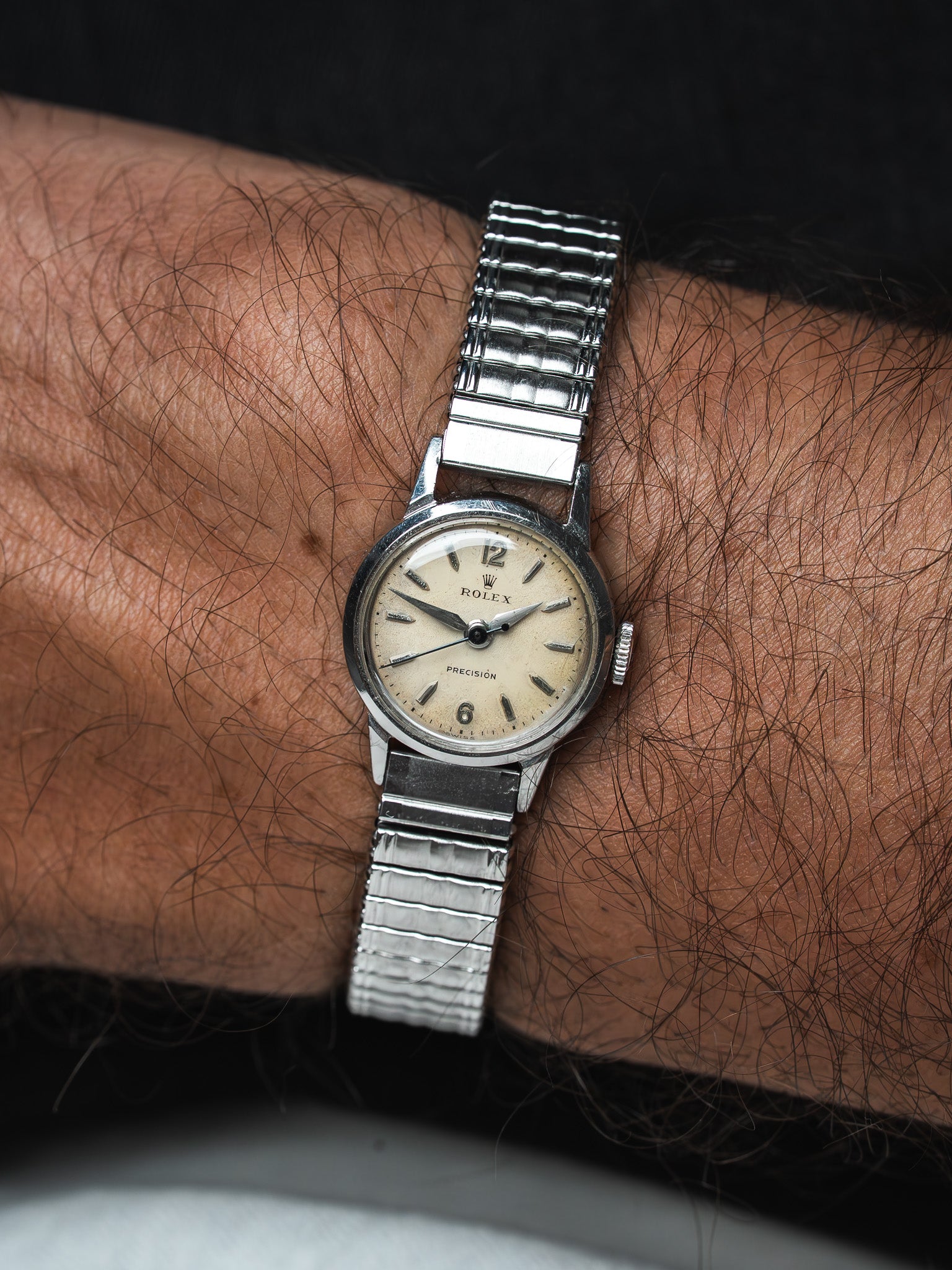
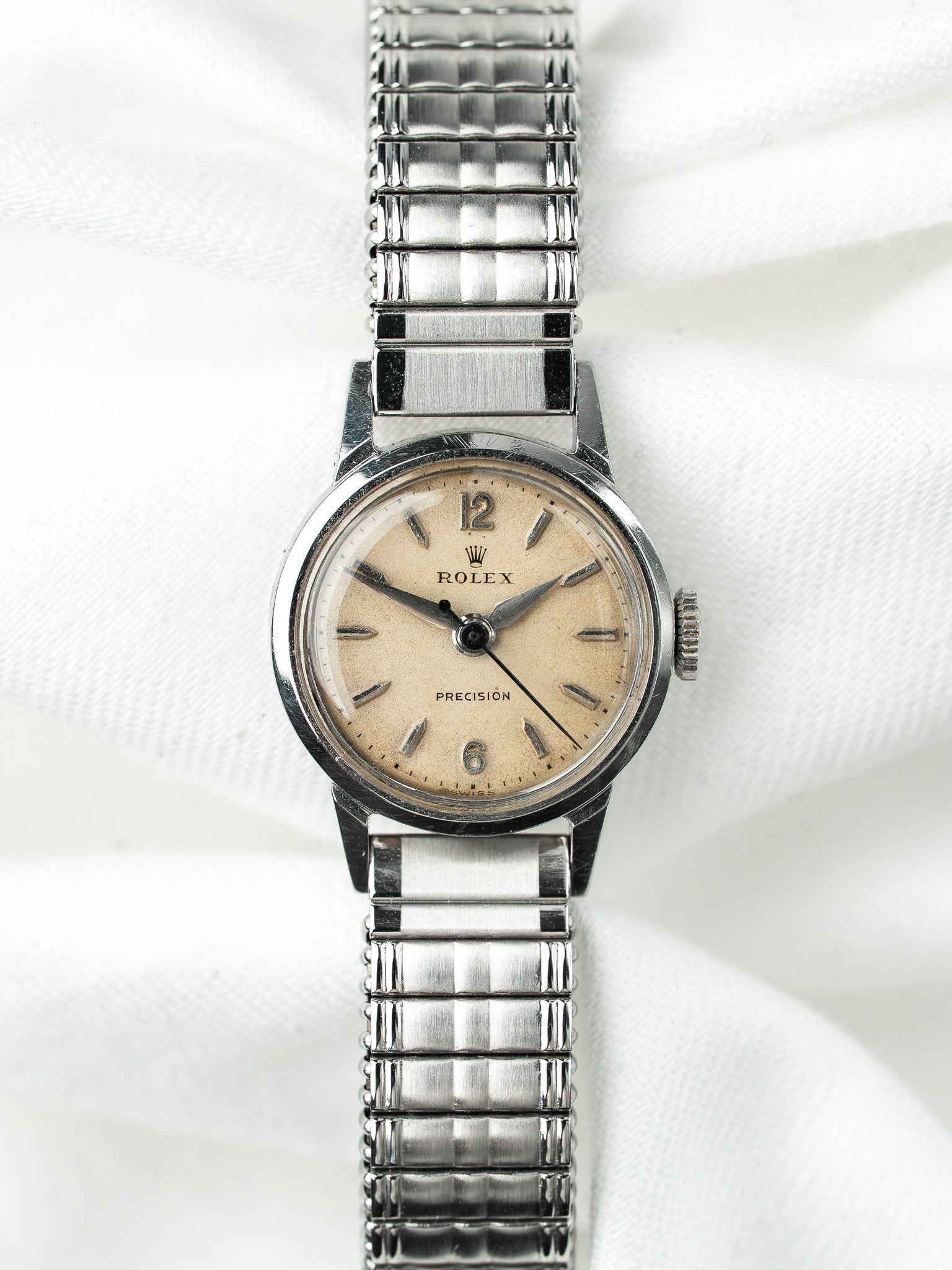
Our selection of vintage Rolex women's watches includes pieces with adapted dimensions: Lady-Datejust in gold or two-tone with Jubilee bracelet, small format Oyster Perpetual, or Cellini in 18-carat gold for an evening aesthetic. The Oysterdate 6694 in 34mm is also a frequent option for a Unisex wear. These pre-owned Rolex women's watches offer measured diameters, faithful to the aesthetic standards of the 20th century.

The Charm of Patina Dials

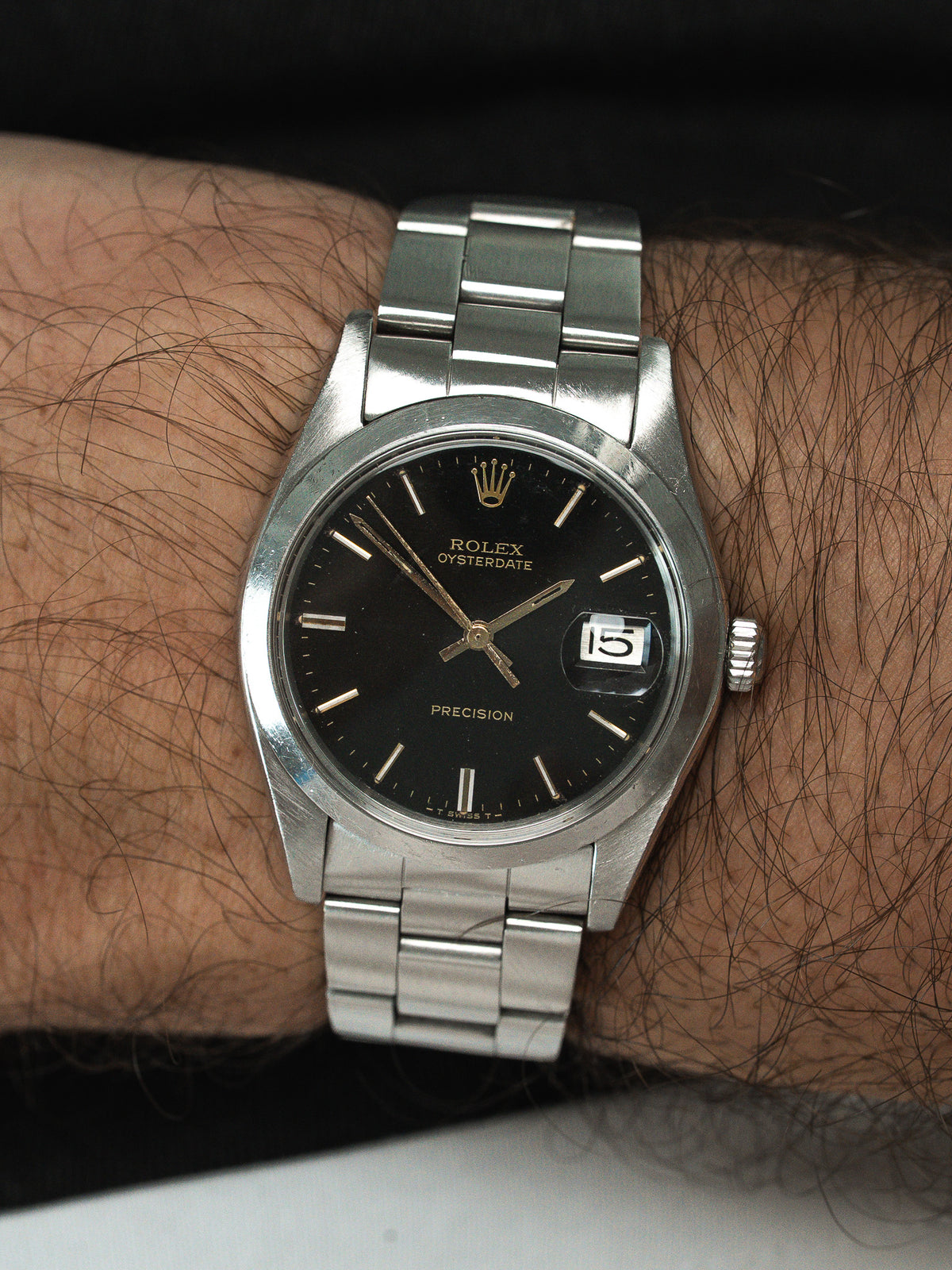
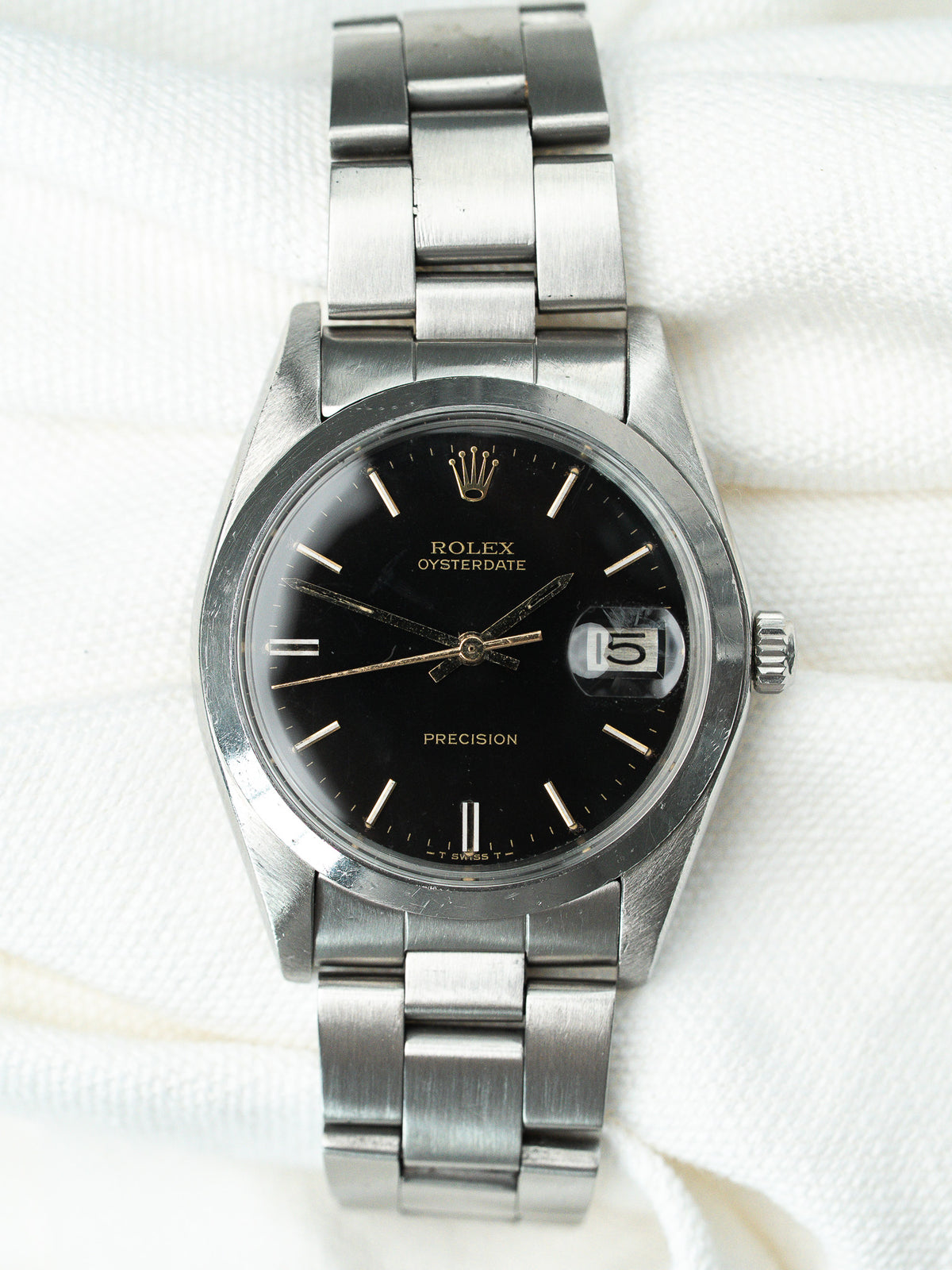
The appeal of a vintage Rolex often lies in the evolution of its dial. Over time, the materials used by the manufacture develop a patina — a natural aging process that makes each piece unique. Whether it's a "tropical" dial that has turned brown, indices that have taken on a cream hue, or luminescent material that has yellowed over the decades, these details document the watch's history and are particularly analyzed by enthusiasts.

Authentication & Servicing by Our Watchmakers

Every pre-owned Rolex watch offered by Atelier Victor is rigorously checked by our expert watchmakers. The movement, dial, hands, Oyster case, crown, bezel, and chronometric precision are verified. We ensure the preservation of original components — dial, hands, inserts — which constitute the historical value of the piece. Each watch benefits from a lifetime authenticity guarantee.

Why Buy a Vintage Rolex from Atelier Victor?

  • Over 1500 pieces sold to collectors in more than 30 countries.
  • One-year mechanical warranty on every Rolex watch.
  • Lifetime authenticity guarantee.
  • Secure worldwide shipping with insurance.
  • Private appointments in Dubai.
  • Secure payment: credit card, bank transfer, PayPal, cryptocurrency.

Also discover our other prestigious manufactures: Vintage Tudor, Vintage Omega, Vintage Cartier.


Frequently Asked Questions — Vintage Rolex Watches

Which vintage Rolex should I choose to start a collection?
The Rolex Oysterdate Precision 6694 is an excellent entry point: 34mm size, hand-wound movement, and clean design. The Datejust 1601 is the reference choice for those seeking a classic automatic caliber. The Air-King offers a simple alternative for daily use.

What is the difference between a vintage Rolex and a modern model?
Vintage Rolexes feature more compact dimensions (often between 34mm and 40mm), unique patina dials, and plexiglass crystals on the oldest references. Contemporary models use more technical materials (ceramic, sapphire) and often larger diameters.

Are vintage Rolex movements reliable?
Yes. Rolex calibers are renowned for their robustness and longevity. Every watch sold by Atelier Victor is fully serviced by our services and covered by a one-year mechanical warranty ensuring its daily reliability.

Are these models a good investment?
At Atelier Victor, we approach watchmaking from the perspective of enjoyable purchasing. Rolex is a brand whose demand has significantly evolved in the pre-owned market — particularly for the Submariner, Daytona, and Datejust ranges. — we guide our clients towards pieces that meet their aesthetic and technical expectations, without making purely financial recommendations.

A question about a vintage Rolex watch? Contact us via WhatsApp or by email.

sort by

13 products

Filters

Vintage Rolex Watch Guide

Founded in 1905 by Hans Wilsdorf, Rolex is the most recognized watch brand in the world. From the Datejust to the Submariner, from the Daytona to the GMT-Master — discover the history, collections, in-house calibers, types of dials, and expert advice to choose your vintage Rolex watch.

Read the guide

Rolex: The Brand that Invented the Modern Watch

The history of Rolex begins in 1905, when Hans Wilsdorf and Alfred Davis founded the company Wilsdorf & Davis in London — which would become Rolex Watch Company in 1915 before relocating to Genève in 1919. Contrary to popular belief, Rolex is not a manufacture in the historical sense: the brand did not invent a fundamental watch movement. What Rolex invented is something more important for modern watchmaking: the waterproof watch (Oyster case, 1926), the reliable automatic winding (Perpetual rotor, 1931), the instant date change (Datejust, 1945), and the Cyclops lens. Rolex did not invent watchmaking — Rolex invented the wristwatch as we know it today.

In 1926, Rolex introduced the Oyster case — the first truly waterproof watch case, with a screw-down crown and screw-down back. In 1927, swimmer Mercedes Gleitze swam across the English Channel with a Rolex Oyster on her wrist — the watch functioned perfectly upon arrival. In 1931, Rolex patented the Perpetual rotor — a 360° rotating rotor automatic winding system that would become the industry standard. In 1945, the Datejust (ref. 4467) was the first wristwatch with a date display through a window. In 1953, the Submariner (ref. 6204) inaugurated the line of professional dive watches. That same year, Sir Edmund Hillary and Tenzing Norgay reached the summit of Everest with Rolex watches on their wrists. In 1963, the Cosmograph Daytona was launched for automotive racing drivers. These dates mark the history of a brand that has systematically defined the standards of functional watchmaking.

The Vintage Rolex Collections in Detail

Datejust: The Watch de Ville by Definition

The Rolex Datejust, launched in 1945, is the most produced and sold model in Rolex's history. It is the watch that introduced the date display through a window at 3 o'clock, magnified by the Cyclops lens on the Crystal. In vintage, the most collected references: the ref. 1601 (fluted bezel in white gold, Rolesor — steel and gold —, caliber 1570/1575, produced from 1959 to the 1980s), the ref. 1603 (engine-turned bezel in steel), the ref. 1600 (smooth bezel in steel), and the ref. 16013/16233 (next generation, caliber 3035/3135). The classic diameter of the vintage Datejust is 36 mm — a format considered today as the return of good taste against oversized watches. The "pie pan" dial (sloped towards the edges) characteristic of the first references is sought after. Bracelets: Jubilee (5-link rows) or Oyster (3-link rows).

Submariner: The Original Diving Watch

The Rolex Submariner, launched in 1953, is the most influential diving watch in watchmaking history. It defined the codes that would become the standard for the genre: unidirectional rotating bezel, screw-down crown, luminous dial, water resistance to 200 meters (then 300 meters). The most sought-after vintage references: the ref. 5513 (no date, caliber 1520, produced from 1962 to 1989 — the longest-produced and most accessible Sub in vintage), the ref. 1680 (first Submariner with date and Cyclops magnifier, caliber 1575, produced from 1967 to 1979), and the ref. 5512 (chronometer certified, caliber 1560/1570, produced from 1959 to 1978). The "Red Sub" — ref. 1680 with the "SUBMARINER" inscription in red on the dial — is a highly prized variant of the early series.

Daytona: The Racing Chronograph

The Rolex Cosmograph Daytona, launched in 1963, is the Rolex chronograph — and one of the most coveted chronographs in watchmaking history. Named after the Daytona Beach circuit in Florida, it is designed as a timing instrument for race car drivers, with its tachymetric scale on the bezel. The first references (ref. 6239, 6241, 6263, 6265) use Valjoux 72 calibers (hand-wound). The "Paul Newman" — a specific dial with Art Deco indexes and contrasting sub-dials, named after the actor who wore this configuration — is the most coveted Rolex dial in the world (the actor's Rolex Daytona "Paul Newman" sold for $17.8 million in 2017). From 1988, the Daytona switched to a modified automatic Zenith El Primero movement (Rolex caliber 4030), then to the in-house caliber 4130 from 2000.

Oyster Perpetual & Oysterdate Precision

The Rolex Oyster Perpetual is the most fundamental collection of Rolex — the waterproof Oyster case with the automatic Perpetual movement, without complications. It is Rolex in its purest form. The Rolex Oysterdate Precision ref. 6694 is the most accessible vintage Rolex: 34 mm case, hand-wound movement (caliber 1225), dial with date. It is the only commonly found vintage Rolex with a hand-wound movement (the others are automatic) — which explains its more contained price. The Rolex Date ref. 1500 (automatic, caliber 1570, 34 mm) and the Rolex Oyster Perpetual ref. 1002 (automatic, no date, caliber 1570) complete the range of accessible vintage Rolex watches.

GMT-Master: The Time Zone Watch

The Rolex GMT-Master, launched in 1955 for Pan American World Airways pilots, simultaneously displays two time zones thanks to an additional 24-hour hand and a bi-color bezel graduated over 24 hours. The ref. 1675 (caliber 1575, produced from 1959 to 1980) is the reference vintage GMT-Master. The bezel color combinations gave birth to famous nicknames: "Pepsi" (blue and red), "Coke" (black and red), "Root Beer" (brown and gold). The GMT-Master II ref. 16710 (caliber 3185, produced from 1989 to 2007) is the most worn neo-vintage reference.

Explorer: The Adventure Watch

The Rolex Explorer, launched in 1953 after the conquest of Everest, is Rolex's most legible tool watch. Black dial, luminous indices (3, 6, 9 numerals), Mercedes hands, 36 mm. The ref. 1016 (caliber 1570, produced from 1963 to 1989) is the reference vintage Explorer — one of the longest-produced Rolex watches without major modification. The Explorer II ref. 1655 (1971, orange 24h hand — nicknamed "Steve McQueen" although the actor never wore it) is a sought-after collector's piece.

Air-King: The Entry-Level Rolex

The Rolex Air-King, launched in 1958, occupies the entry-level position in the Rolex catalog. Case 34 mm, clean dial without date, automatic movement (caliber 1520 or 1530 — not COSC certified on vintage references, unlike the Datejust). The ref. 5500 (produced from 1958 to the 1980s) is the classic vintage Air-King. It is an unpretentious everyday Rolex, offering the Oyster case and Perpetual movement at an affordable pre-owned price.

Cellini: The Rolex Dress Watch

The Rolex Cellini is Rolex's dress watch collection — the only one that does not use the Oyster case. Named after the Florentine sculptor and goldsmith Benvenuto Cellini, this collection offers watches in 18-carat gold (yellow, white, or rose) with round, rectangular, or oval shapes, featuring simple dials and hand-wound mechanical movements. The vintage Cellini are the least valued Rolex watches relative to their gold content — making them accessible precious metal dress watches on the pre-owned market.

Lady-Datejust: The Rolex for Women

The Rolex Lady-Datejust is the feminine version of the Datejust — 26 mm (then 28 mm) case, same Oyster architecture, same Perpetual movement, same Cyclops lens. In vintage, the Lady-Datejust in yellow gold, two-tone (Rolesor), or steel with Jubilee or President bracelet are reference women's watches. Dials with diamond indices or mother-of-pearl dials add a jewelry dimension.

Rolex Calibers: Understanding Vintage Movements

Before 1957, Rolex outsourced the production of its movements. The generation of 15xx calibers is the first developed and produced entirely in-house — representing a turning point in the brand's history.

  • Caliber 1520/1530 — automatic, not COSC certified. Used in Air-King ref. 5500 and some Oyster Perpetual. The most basic vintage Rolex movement — reliable but without chronometer certification.
  • Caliber 1560 — automatic, 18,000 A/h, COSC certified. Used in the early Submariner 5512 and some Oyster Perpetual. Replaced by the 1570.
  • Caliber 1570 — automatic, 19,800 A/h, 26 jewels, COSC certified, 48h power reserve. The vintage Rolex movement of reference. Used in the Submariner 5512/5513, Explorer 1016, Oyster Perpetual, Date 1500. Hacking function (stop seconds) added from 1972. Considered by watchmakers as one of the most reliable and enjoyable Rolex calibers to service.
  • Caliber 1575 — automatic with date, 19,800 A/h, 25 jewels, COSC certified. Variant of the 1570 with date window. Used in the Datejust 1601/1603, Submariner 1680, GMT-Master 1675, Explorer II 1655, Sea-Dweller 1665. The caliber that equipped the most collected Rolex sports watches of the 60s-70s.
  • Caliber 1225 — hand-wound, 21,600 A/h. Used in the Rolex Oysterdate Precision 6694. The only common vintage Rolex hand-wound movement — thinner than the automatics.
  • Caliber 3035 — automatic, 28,800 A/h, 27 jewels, quick date change. Launched in 1977. Marks the transition to the modern generation of Rolex calibers. Used in the Datejust 16013/16014 and the Day-Date of this era.
  • Caliber 3135 — automatic, 28,800 A/h, 31 jewels. Launched in 1988. The modern reference Rolex caliber, still in production (with evolutions). Used in the Submariner 16610, Datejust 16233, etc. Higher frequency and technical improvements compared to the 1575.

At Atelier Victor, our watchmakers master the servicing of all these calibers. The 1570/1575 caliber, in particular, is renowned for its longevity — specimens over 50 years old still operate within COSC tolerances after a simple servicing.

The Case Oyster: The Foundational Innovation

The Oyster case is the invention that made Rolex what it is. Patented in 1926, it is the first truly waterproof watch case — with a screwed crown, a screwed case back, and a Crystal crystal (plexiglass on vintage models, replaced by sapphire on modern ones). The term "Oyster" refers to the case's waterproofness — sealed like an oyster. On vintage Rolex watches, the Oyster case is made of 904L stainless steel (from 1985 — 316L before), 18-carat gold, or Rolesor (a combination of steel and gold, a term trademarked by Rolex). Reference and serial numbers are engraved between the lugs (under the bracelets) — a point of authenticity verification checked on each watch.

Vintage Rolex Bracelets

Vintage Rolex bracelets are an important value criterion. The main types:

  • Jubilee Bracelet — 5-row links (3 smooth central, 2 polished outer). The classic bracelet of the Datejust. Early versions (before ~1975) have hollow links (called "folded links") — lighter but more fragile than the solid links of later versions.
  • Oyster Bracelet — 3-row links. More sporty than the Jubilee. The standard bracelet of the Submariner, GMT-Master, Explorer. Same hollow/solid variants depending on the era.
  • President Bracelet — semi-circular links. Exclusive to gold models (Day-Date, Lady-Datejust in gold).
  • Rivet Bracelet — the first versions of the Oyster bracelet with links held by visible rivets. Sought after for its authentic vintage character.

The presence of the original bracelet (with Buckle Rolex deployant) significantly increases the value of a vintage Rolex. A stretched bracelet (excessive play between the links due to wear) decreases the value — this is a point our experts check on each watch.

Patina Dials: The Charm of the Vintage Rolex

The patina of the dials is the collection criterion that distinguishes a vintage Rolex from a recent pre-owned Rolex:

  • Tropical dial — the dial has changed color uniformly over time: a black turning to chocolate brown, a blue becoming turquoise, a gray turning to brown. Tropical dials are among the most sought after — each piece is unique.
  • gilt (gilt) dial — Rolex dials from the 50s-60s had a gilt finish (gilt) with raised text and indexes. These dials, often associated with patina indexes and hands, are highly valued.
  • "Swiss only" vs "T Swiss T" dial — the inscription at the bottom of the dial indicates the luminescent material: "T Swiss T" means tritium (used from the 60s to the 90s), "Swiss only" or "Swiss" indicates an older or more recent production (luminova). This detail allows dating a dial.
  • Patina indexes and hands — the luminescent materials (radium then tritium) change color over time, from white to cream, honey, and brown. A homogeneous patina between hands and indexes is sought after — an inconsistency may indicate a replacement.

How to Recognize an Authentic Vintage Rolex

Rolex is the most counterfeited watch brand in the world. Control points that our watchmakers verify:

  • Serial number and reference number — engraved between the lugs of the case (under the bracelet at 6h and 12h). The serial number allows dating the watch. On counterfeits, these engravings are often approximate.
  • Rolex crown — the crown (winder) bears the Rolex logo and, on waterproof models, a specific seal. The quality of the crown engraving is a reliable indicator.
  • Caliber — the movement must correspond to the reference and the period. A caliber 1570 in a Datejust 1601 is correct; a caliber 2824 (ETA) is not.
  • Dial — "Rolex" and "Oyster Perpetual" typography specific to each era, position and style of the Rolex crown on the dial, lower inscription ("T Swiss T", "Swiss Made", etc.).
  • Bezel — original insert (aluminum on the vintage, ceramic on models from ~2005). The condition and color of the insert are value criteria.
  • Crystal — plexiglass (acrylic) on vintage Rolexes (with glued Cyclops lens), sapphire on modern models. A Crystal sapphire on a vintage reference is a warning signal.
  • Bracelet and Buckle — bracelet code (e.g., 62510H for a Jubilee), Buckle Rolex deployant with engraved crown.

At Atelier Victor, each Rolex is opened, inspected, and authenticated by our watchmakers. Each piece is accompanied by an Atelier Victor invoice and a lifetime authenticity guarantee.

Rolex vs Omega in Vintage: The Debate

This is the most frequent comparison in collector watchmaking. In the 50s-60s, Rolex and Omega were direct competitors. The Omega calibers of this era (5xx series) are technically comparable to the Rolex calibers (15xx series), with movement finishes often more refined at Omega (Côtes de Genève, more elaborate perlage). What widened the gap was Rolex's strategy from the 70s: controlled production, selective distribution, and constantly increasing pricing. Consequence on the vintage market: an Omega Seamaster from the 60s often costs 40 to 60% less than a Rolex Oyster Perpetual from the same era — for a comparable quality movement. However, Rolex remains the brand with the highest liquidity on the pre-owned market: a Rolex always resells.

Vintage Rolex on the Pre-Owned Market

Rolex is the watch brand whose vintage models negotiate best on the pre-owned market. The factors: a constant demand fueled by brand notoriety, historically controlled production, and references that have become mythical in popular culture. The models with the most followed ratings: the Submariner without date ref. 5513, the Submariner "Red" ref. 1680, the Daytona first references (refs. 6239, 6263), the GMT-Master "Pepsi" ref. 1675, and the Explorer ref. 1016. The presence of the full set (box, papers, invoice, original bracelet) significantly increases the value — by 15 to 30% depending on the references.


Frequently Asked Questions — Vintage Rolex Watches

What is the most affordable vintage Rolex?

The Rolex Oysterdate Precision ref. 6694 is the most affordable vintage Rolex: 34 mm case, hand-wound movement (caliber 1225), classic Oyster design. The Rolex Air-King ref. 5500 (automatic, no date, 34 mm) and the Rolex Date ref. 1500 (automatic with date, caliber 1570) are also accessible entry points.

What is the difference between ref. 5513 and ref. 1680 on a Submariner?

The ref. 5513 is the Submariner without date (caliber 1520, produced from 1962 to 1989). The ref. 1680 is the first Submariner with date and Cyclops lens (caliber 1575, produced from 1967 to 1979). The 5513 is generally more accessible; the 1680 in "Red Sub" version (red inscription) is more valued.

What is a "Paul Newman" dial on a Daytona?

The "Paul Newman" dial is a specific dial configuration of the early Rolex Daytona references: sub-dials with Art Deco indexes in the shape of squares and batons, an outer rehaut with a raised minute track, and distinctive typography. Named after the actor Paul Newman who wore this configuration. The actor's personal "Paul Newman" Daytona sold for $17.8 million at Phillips in 2017 — a record for a wristwatch.

What is "Rolesor"?

Rolesor is a term trademarked by Rolex designating the combination of stainless steel and 18-carat gold on the same model (the common term is "bicolor" or "two-tone"). The case is steel, the bezel and the central part of the bracelet are gold. The Datejust and GMT-Master in Rolesor are among the most worn vintage Rolex watches.

Why do vintage Rolex bracelets have play?

Vintage Rolex bracelets produced before ~1975 have hollow links (folded links) — folded steel sheets rather than machined links. Over time and wear, these links develop play (stretching). This is a normal phenomenon on vintage bracelets. The solid links bracelets of later generations are more durable. The condition of the bracelet is a value criterion that our experts evaluate on each watch.

What does "T Swiss T" mean on a Rolex dial?

The inscription "T Swiss T" at the bottom of the dial indicates that the luminescent materials used contain tritium (the "T"). This inscription is present on Rolex dials from the 60s to the 90s. Earlier dials bear "Swiss" or "Swiss Made" (radium-based luminescent materials), later dials (from ~1998) bear "Swiss Made" (Super-LumiNova, non-radioactive). This detail allows dating a dial and verifying its consistency with the reference.

How does the caliber 1575 work?

The caliber 1575 is a Rolex automatic movement with 19,800 vibrations per hour, 25 jewels, with a date window and a 48-hour power reserve. It is the movement that equipped the most collectible Rolex sports watches of the 60s-70s: Datejust 1601, Submariner 1680, GMT-Master 1675, Explorer II 1655. The hacking function (stopping the second hand when the crown is pulled) was added from 1972. The 1575 is renowned for its reliability — examples over 50 years old still operate within COSC tolerances after a simple servicing.

Is the Crystal of vintage Rolex watches sapphire or plexiglass?

Vintage Rolex watches are equipped with plexiglass (acrylic) crystals — not sapphire. Sapphire only appears on Rolex watches from the 80s-90s depending on the collections (Datejust from ~1988, Submariner from 1990 with ref. 16610). A sapphire Crystal on an earlier vintage reference is a sign of replacement or counterfeit. Plexiglass scratches more easily but can be polished (unlike sapphire which, once scratched, can only be replaced).

Is the Rolex Cellini a good deal in vintage?

The Cellini is the least valued Rolex collection proportionally to its precious material content. The vintage Cellini in 18-carat gold often trade below the value of their gold weight — making them some of the most accessible dress watches in precious metal on the market. For those looking for a gold watch to wear with a suit, the Cellini represents an interesting positioning.

Can you dive with a vintage Submariner?

We recommend avoiding immersion for any vintage Rolex — even the Submariner. The waterproof seals degrade over time, and the original water resistance (200m or 300m depending on the references) is no longer guaranteed after decades. The vintage plexiglass is also more vulnerable to pressure than the sapphire of modern models. For daily wear, rain and hand washing pose no problem.

Are vintage Rolex watches a good investment?

At Atelier Victor, we approach watchmaking from the perspective of pleasure purchasing. While Rolex is the brand whose vintage models maintain the best liquidity and the most sustained demand in the pre-owned market, we guide our clients towards pieces that match their aesthetic and mechanical criteria, without making financial recommendations.

Where can I find a bracelet for a vintage Rolex?

Atelier Victor offers watch straps compatible bracelets, as well as original vintage Rolex bracelets and period deployant clasps. Contact us via WhatsApp with your watch's reference.

Discover our other collections of vintage watches: Vintage Omega, Vintage Cartier, Vintage Tudor, Vintage Longines, Vintage Breitling. And our complete vintage watch collection.

A question about a vintage Rolex watch? Contact us via WhatsApp or email.

Need advice or have a hesitation? Our experts are here to assist you.