






Bottega Veneta Vintage Guide
Founded in Vicenza in 1966, Bottega Veneta is the house that made handwoven leather — intrecciato — its absolute signature, and the absence of a logo a true philosophy. "When your own initials are enough." From the Cabat to the Veneta Hobo, from the Knot Clutch to woven wallets — discover our complete expert guide.
Read the guide
Bottega Veneta: Luxury Without a Logo
The history of Bottega Veneta (literally "the shop of Veneto" in Italian) begins in 1966 in Vicenza, the historic heart of leather craftsmanship in Italy. Founded by Michele Taddei and Renzo Zengiaro, the leather goods house immediately made a radical decision against the trend: no visible logo. In an industry dominated by the ostentation of monograms (Louis Vuitton, Gucci, Fendi), Bottega Veneta chose to let the purity of the material and the virtuosity of the hand speak for themselves. It is the woven leather itself that becomes the brand's identity.
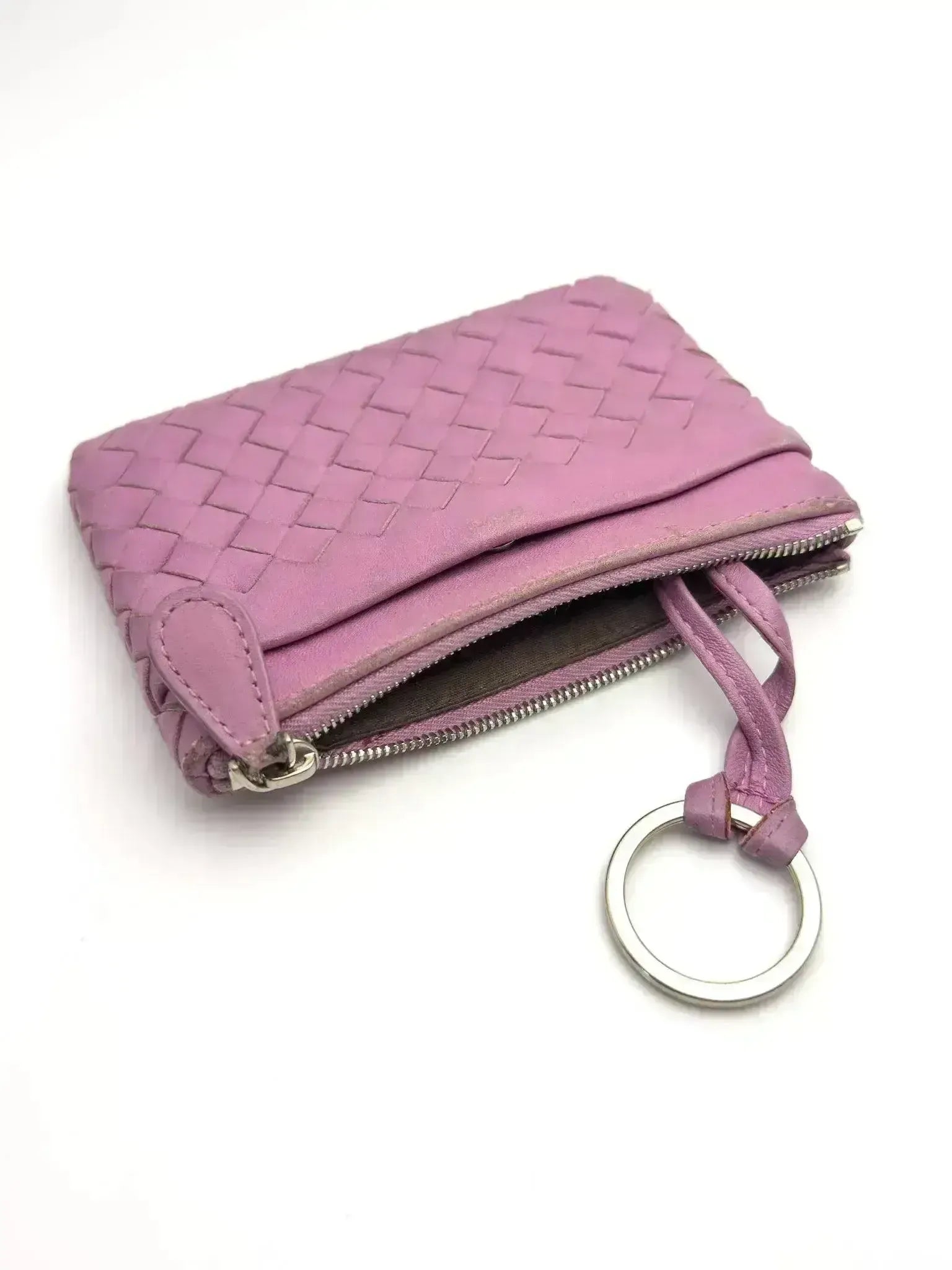
The founding technique of the house is called intrecciato (from the Italian "intrecciare", to interlace). Fine strips of leather are cut and then meticulously woven by hand to create a dense and regular pattern. This ingenious process gives the leather an increased resistance while maintaining extreme fluidity, as the strips move independently to dissipate tension. Intrecciato is to Bottega Veneta what quilting is to Chanel: a pinnacle of craftsmanship elevated to a visual signature.
The house's historic motto — "When your own initials are enough" — sums up this elitist philosophy: true luxury does not display itself, it is recognized. Those who wear Bottega Veneta have no need for a label to exist, the intrecciato speaks for them.
In the 2000s, under the leadership of Tomas Maier (2001-2018), the brand definitively established itself as the temple of "quiet luxury". Subsequently, Daniel Lee (2019-2023) infused a spectacular modernity with the Pouch and the Cassette, before giving way to Matthieu Blazy and then Louise Trotter. Acquired in 2001, the brand now shines within the Kering group.
Intrecciato: The Demands of Technique
Intrecciato is an art of weaving that requires exceptional expertise:
- The cutting: Strips are cut from the leather with millimetric regularity. The selection of the raw material is relentless: only leathers of perfect suppleness and homogeneity can withstand this weaving without ever cracking.
- The weaving: The strips are manually interlaced, one by one, diagonally. Creating a single bag can require several hours of uninterrupted work, each intersection being hand-adjusted to ensure perfect tension.
- The assembly: The woven panels are then mounted with invisible seams (hidden under the weaving), offering an uninterrupted interlaced surface on the outside.
What makes vintage intrecciato so coveted is that the leathers from the 70s to the 90s are often thicker and the weaving tighter than on current productions. This period leather develops a sublime patina, gaining a luster and tactile sensuality that new simply does not possess.
The Iconic Bottega Veneta Vintage Bags
Cabat: The Ultimate Tote
The Cabat is the technical masterpiece of the house. A monumental tote entirely woven in intrecciato, without lining, without closure, and without internal structure. The artisan simultaneously weaves the interior and exterior of the bag (a double-sided weaving). Rare and extremely sought after, the vintage Cabat embodies the absolute pinnacle of leatherworking expertise.
Veneta Hobo: The Signature Shape
The Veneta Hobo (often called "The Veneta") is the brand's most famous silhouette. Designed for shoulder wear, this supple crescent-shaped bag naturally conforms to the body. Vintage editions, whose leather has had time to soften and develop a patina, are collector's gems, often exchanging between 300€ and 800€.
Knot Clutch: The Twisted Clasp
The Knot is the stately evening Pouch of Bottega Veneta. This rigid and compact clutch is crowned by its heavy metal twisted clasp (Knot meaning "knot"). Vintage iterations, sometimes adorned with hard stones (onyx, agate), are negotiated between 200€ and 600€.
Crossbody and Everyday Clutches
For urban use, the crossbody bags and the delicate soft clutches from the 80s offer a magnificent entry into the world of intrecciato, generally offered between 150€ and 500€.
Archival Small Leather Goods
The vintage Bottega Veneta small leather goods are the most accessible way to embrace the "logo-free" philosophy:
- Intrecciato wallets: The tactile experience is immediate with every handling (100€ to 300€).
- Cardholders: The most refined luxury accessory on the market, devoid of any external inscription (50€ to 150€).
- Intrecciato belts: The absolute antithesis of belts with large buckles (like Gucci or YSL). Elegance here resides exclusively in the leather weaving and the discretion of the Buckle metallic clasp (80€ to 250€).
Authenticating a Bottega Veneta Vintage Piece
- The perfection of Intrecciato: Authentic weaving is dense, taut, and symmetrical. The strips are of strict and constant width. Counterfeits often betray a loose weave and cardboard-like leather.
- The feel of the Leather: Authentic Bottega Veneta leather offers a fluid sensation; the braided bands should glide and move slightly under your fingers.
- The inner stamp: The mention "Bottega Veneta" followed by "Made in Italy" is discreetly embossed inside. The clarity of the typography is a key indicator.
- The absolute absence of an exterior logo: If a supposed Bottega Veneta piece displays a monogram or logo on its outer face, it is undeniably a counterfeit.
- The quality of the closures: Archive pieces use excellent hardware (very often engraved Lampo or Riri zippers).
At Atelier Victor, this requirement for expertise is systematic for each creation, validated by a lifetime authenticity guarantee.
Maintenance of Intrecciato Leather
- Cleaning: Wipe the bag with a very slightly damp soft cloth, always following the direction of the weaving to avoid lifting the straps.
- Moisturizing: Apply a very light nourishing balm (thick waxes would clog the weaving gaps) once or twice a year to maintain the leather's elasticity.
- The
Need advice or have a hesitation? Our experts are here to assist you.