






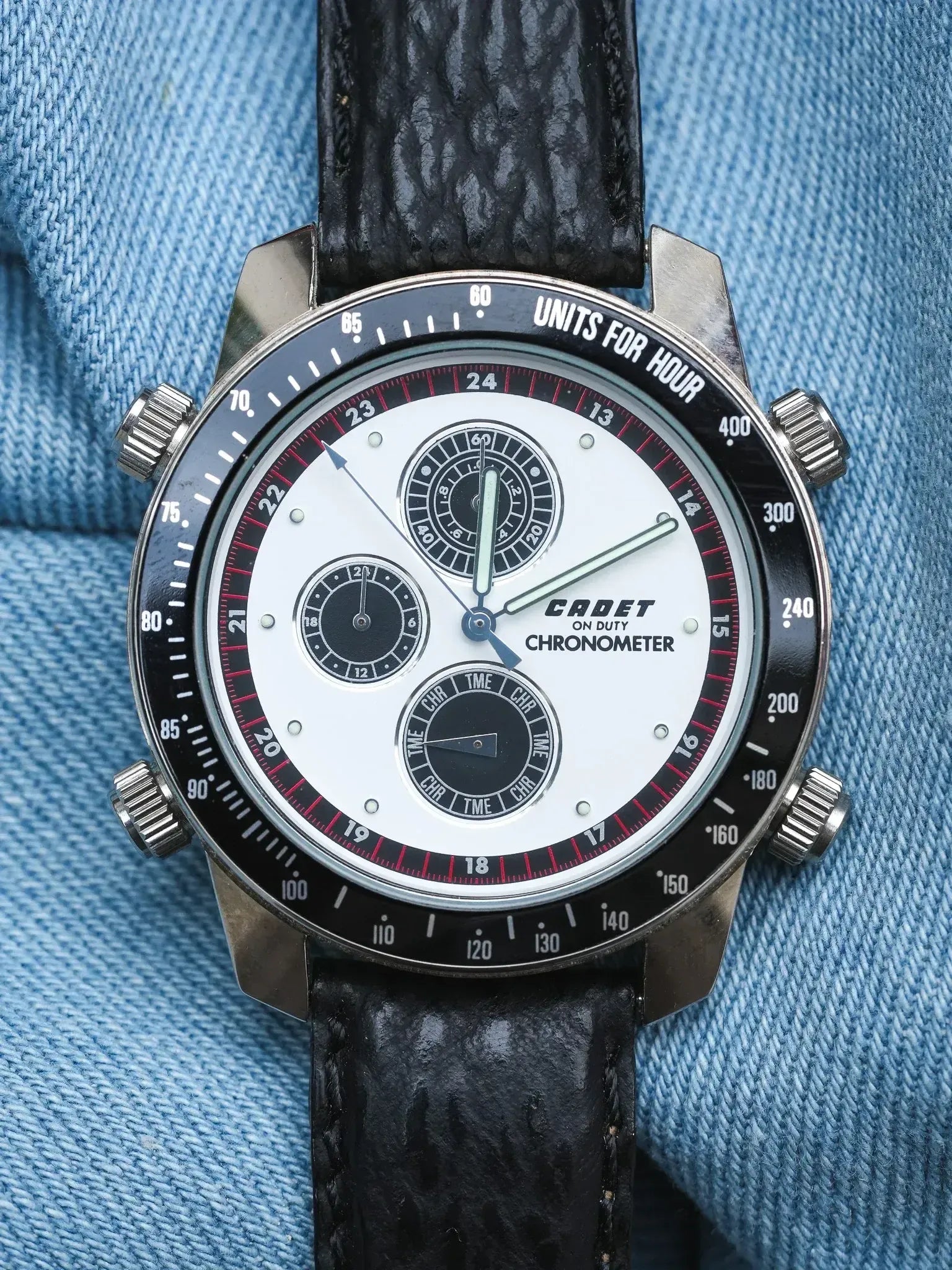
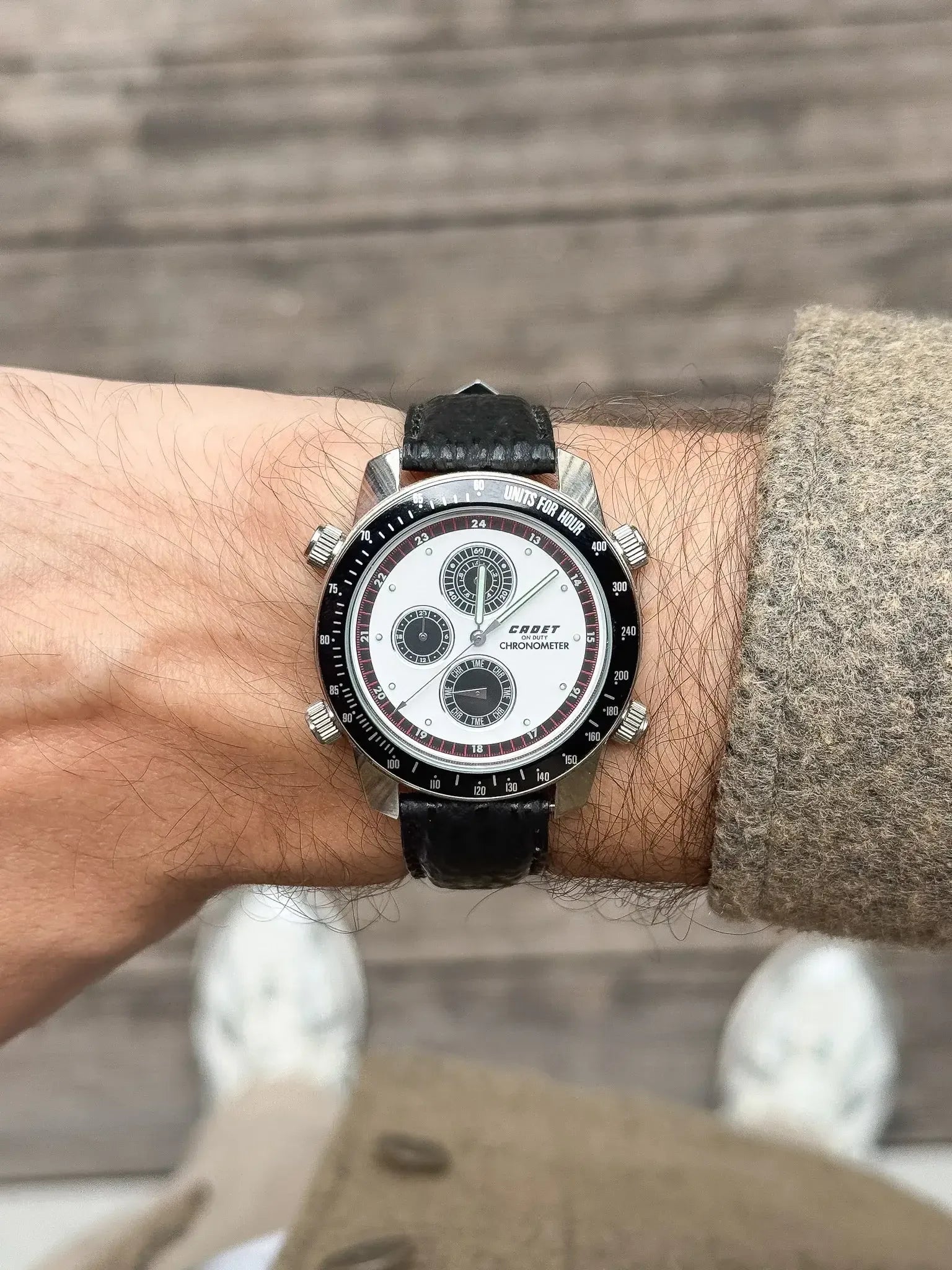
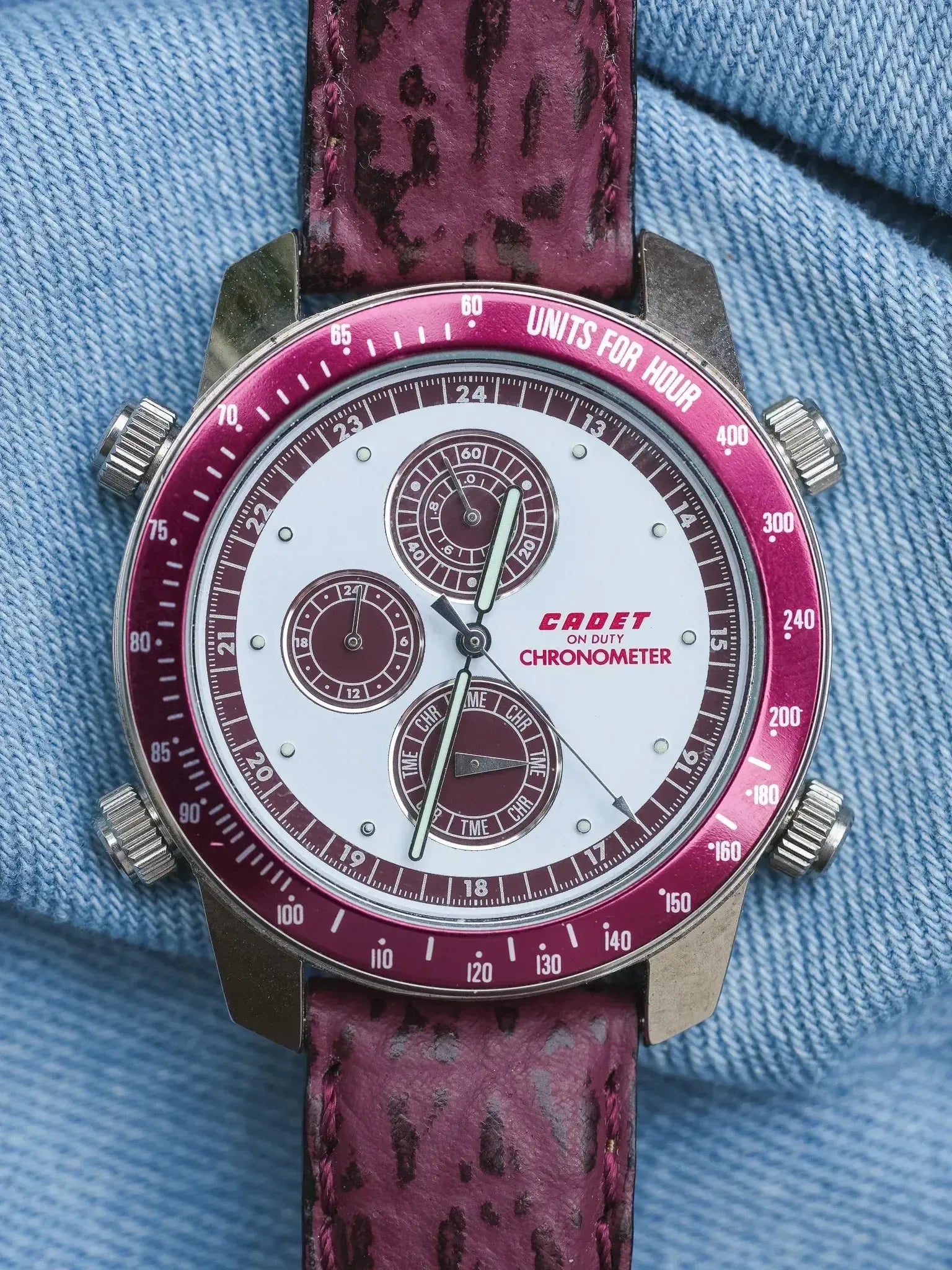
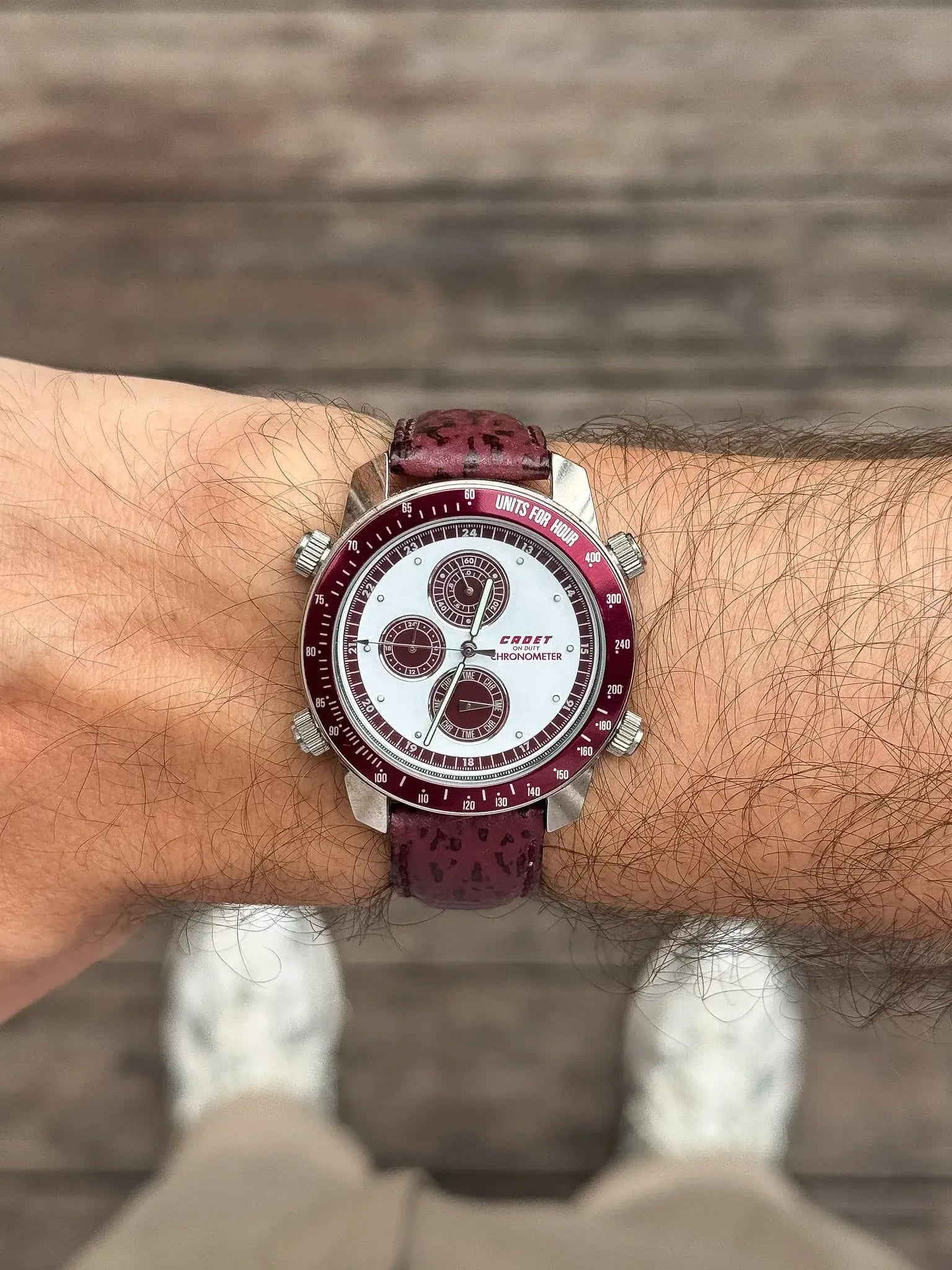



Vintage Chronograph Watches Guide
From the Speedmaster Moonwatch to the Breitling Navitimer, from the Heuer Carrera to the Zenith El Primero — the chronograph is the most collected complication in vintage watchmaking. Discover our complete guide: history, operation, Landeron, Venus, Lémania, and Valjoux calibres, dial types, authentication, and expert advice.
Read the guide
What Is a Chronograph?
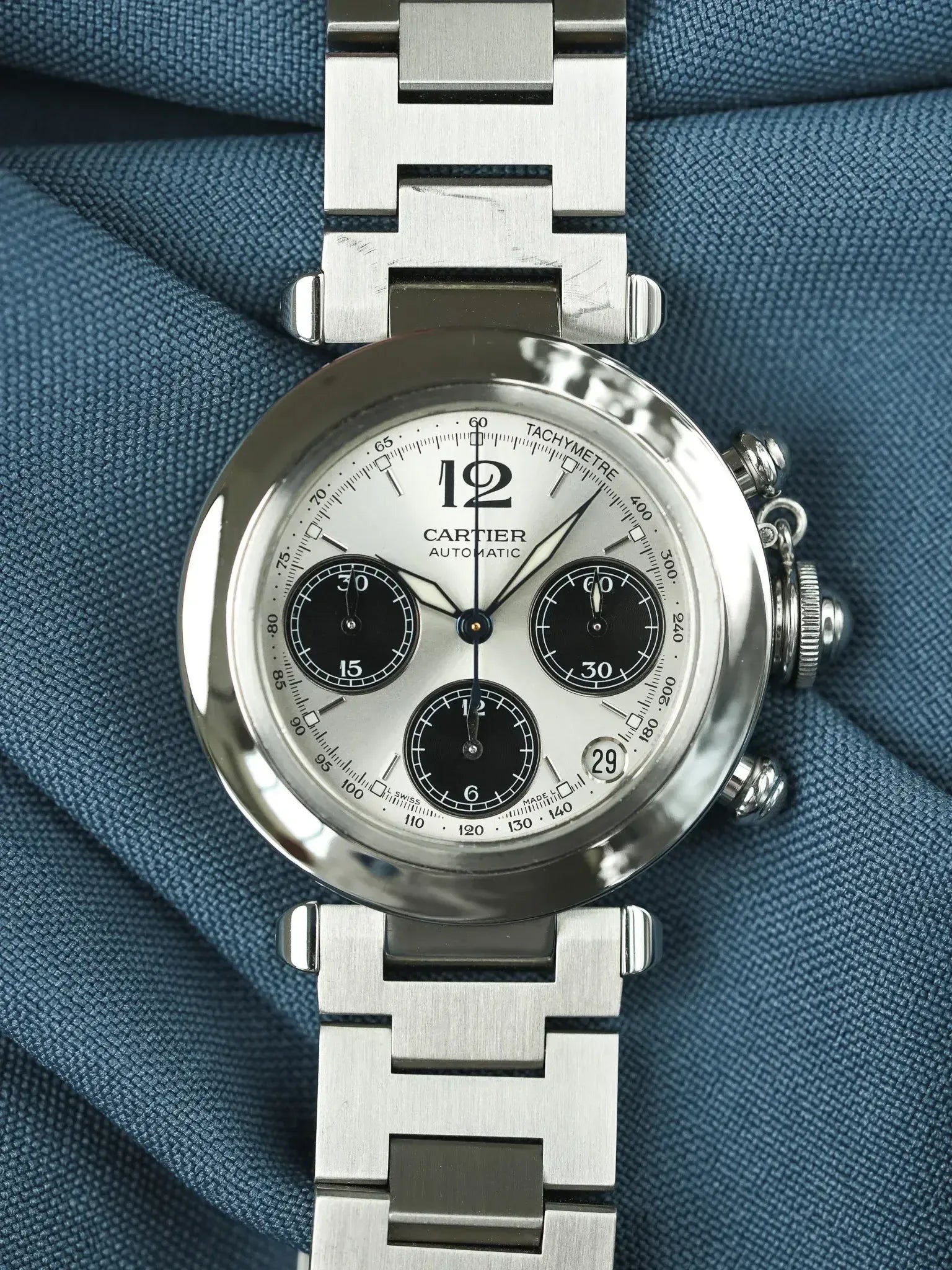
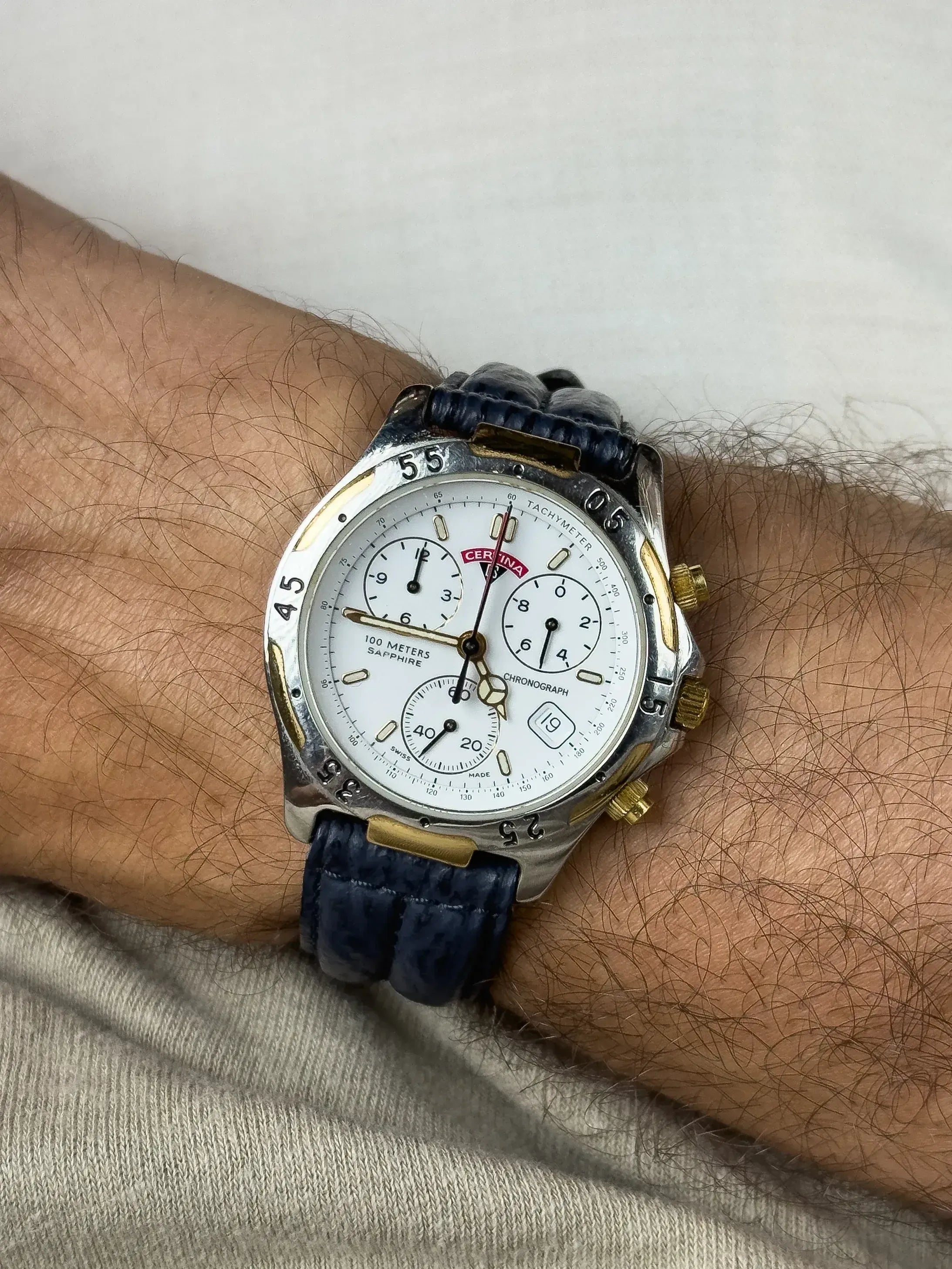
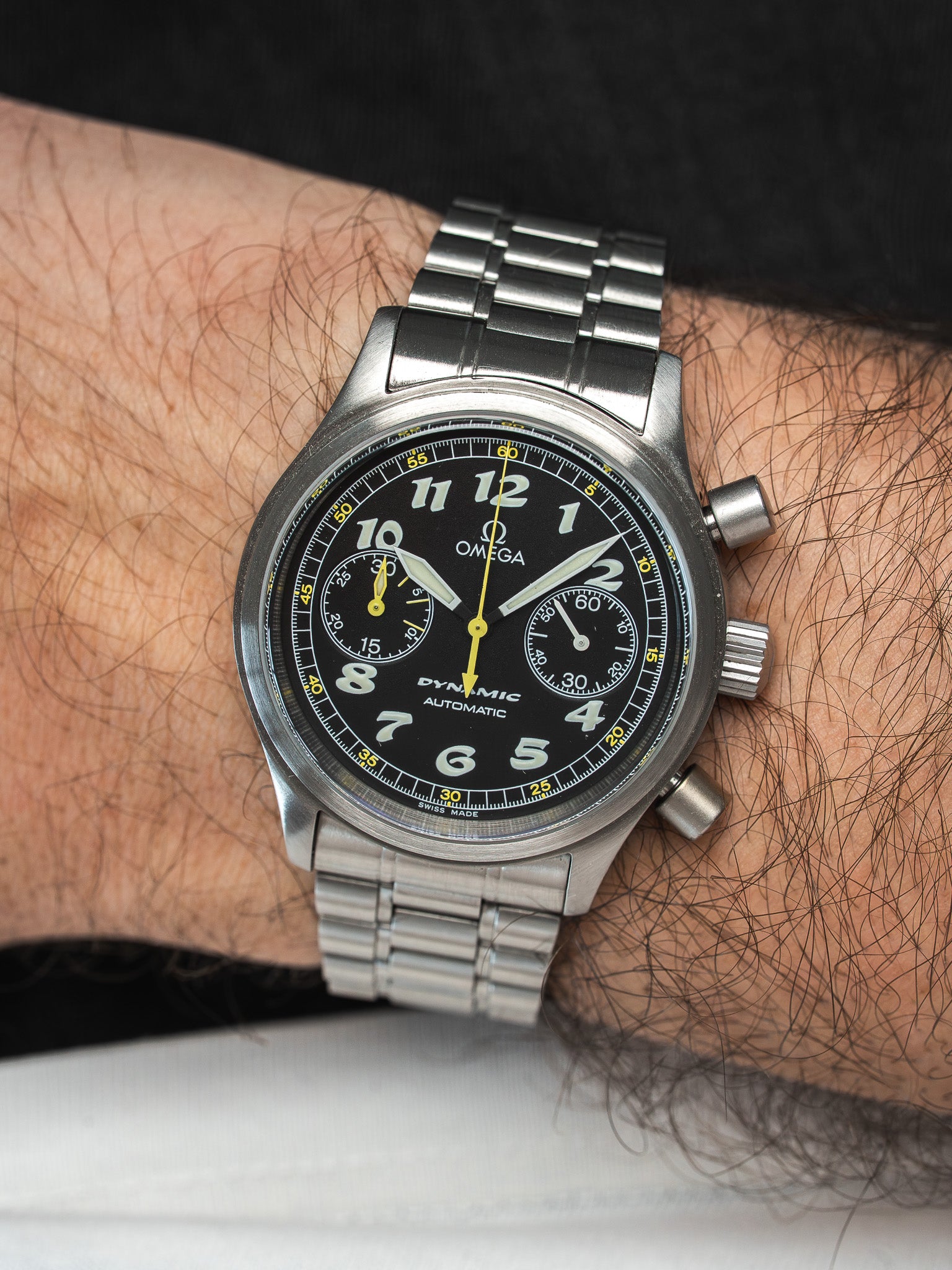
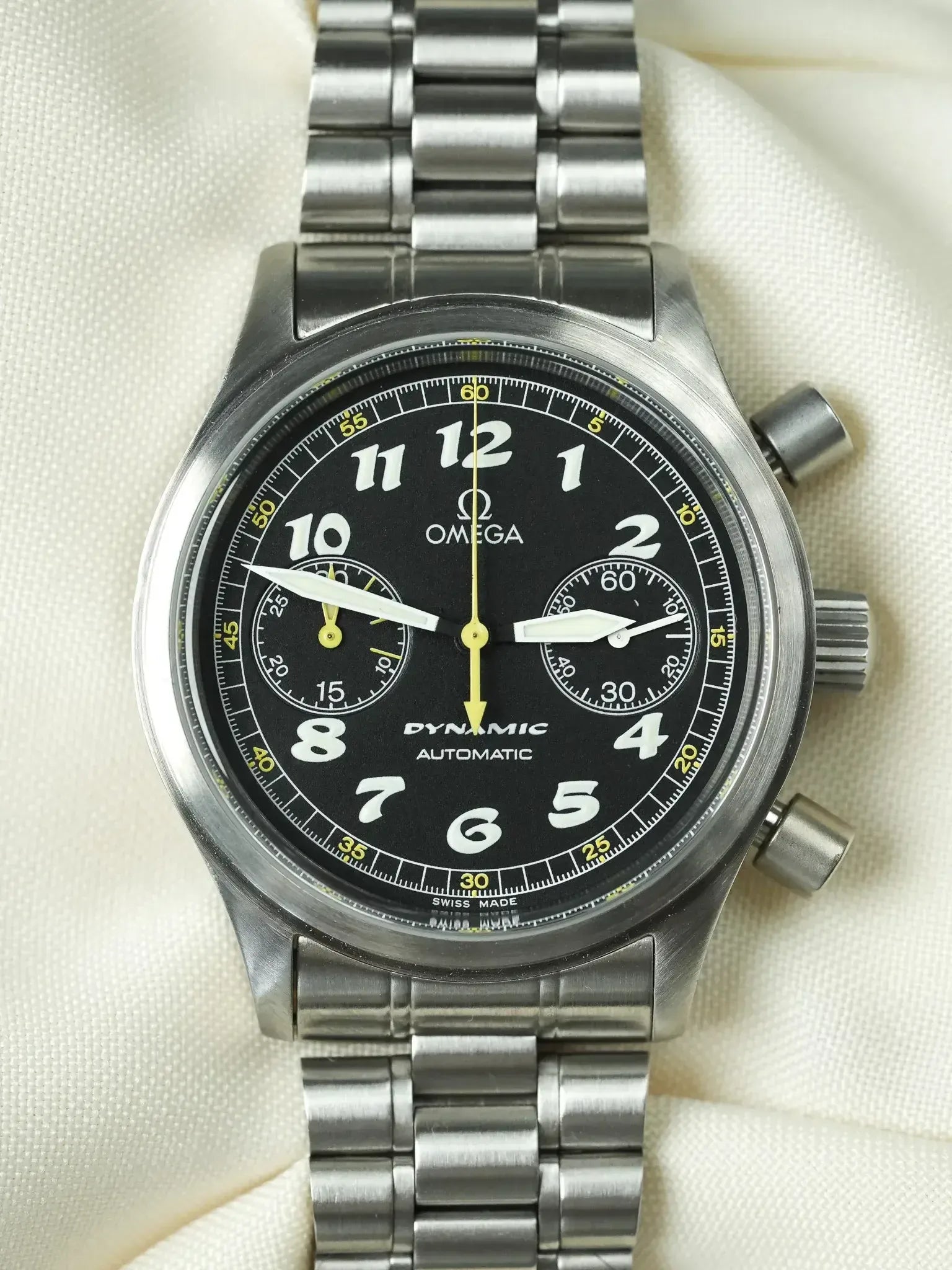
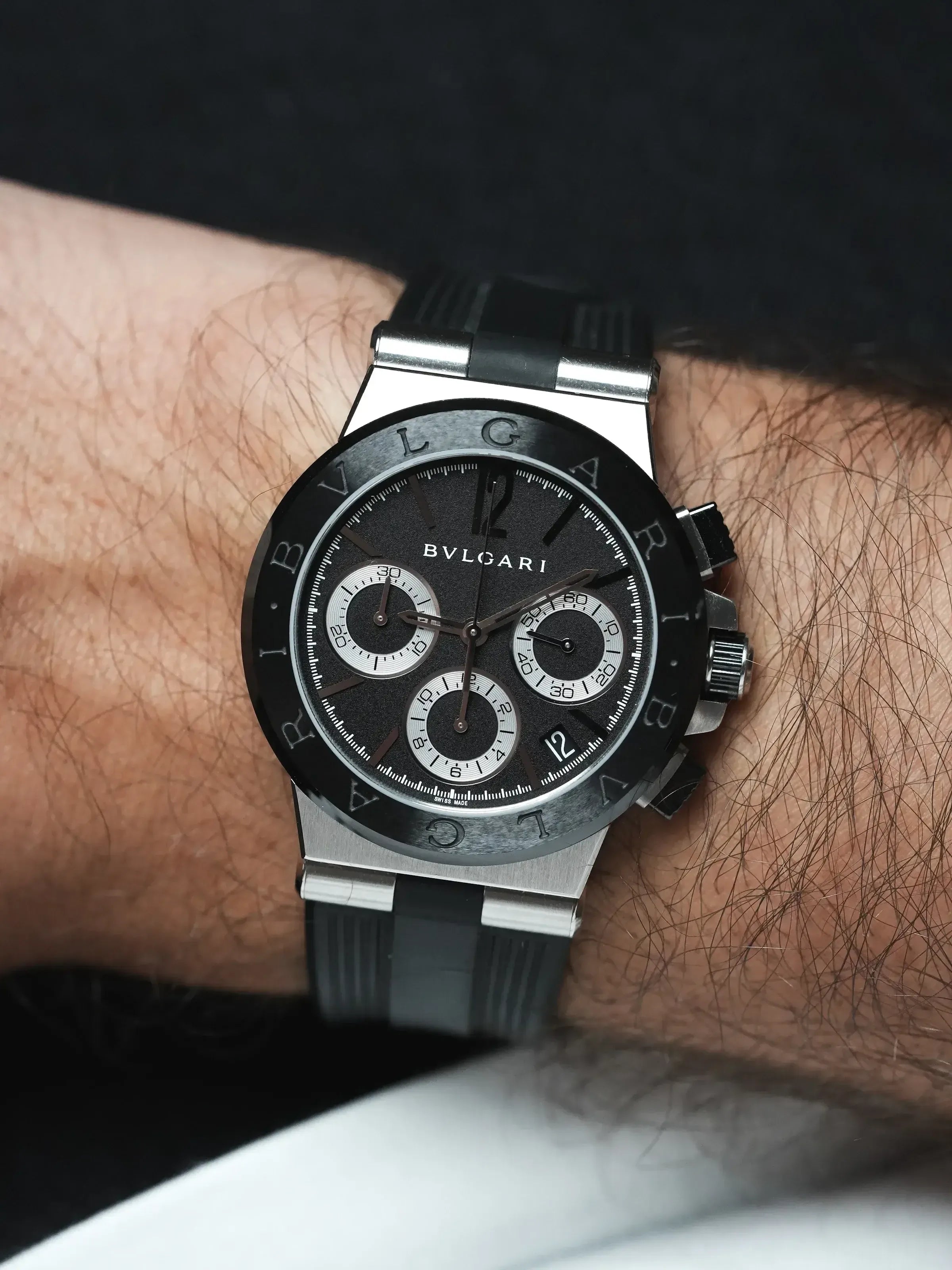
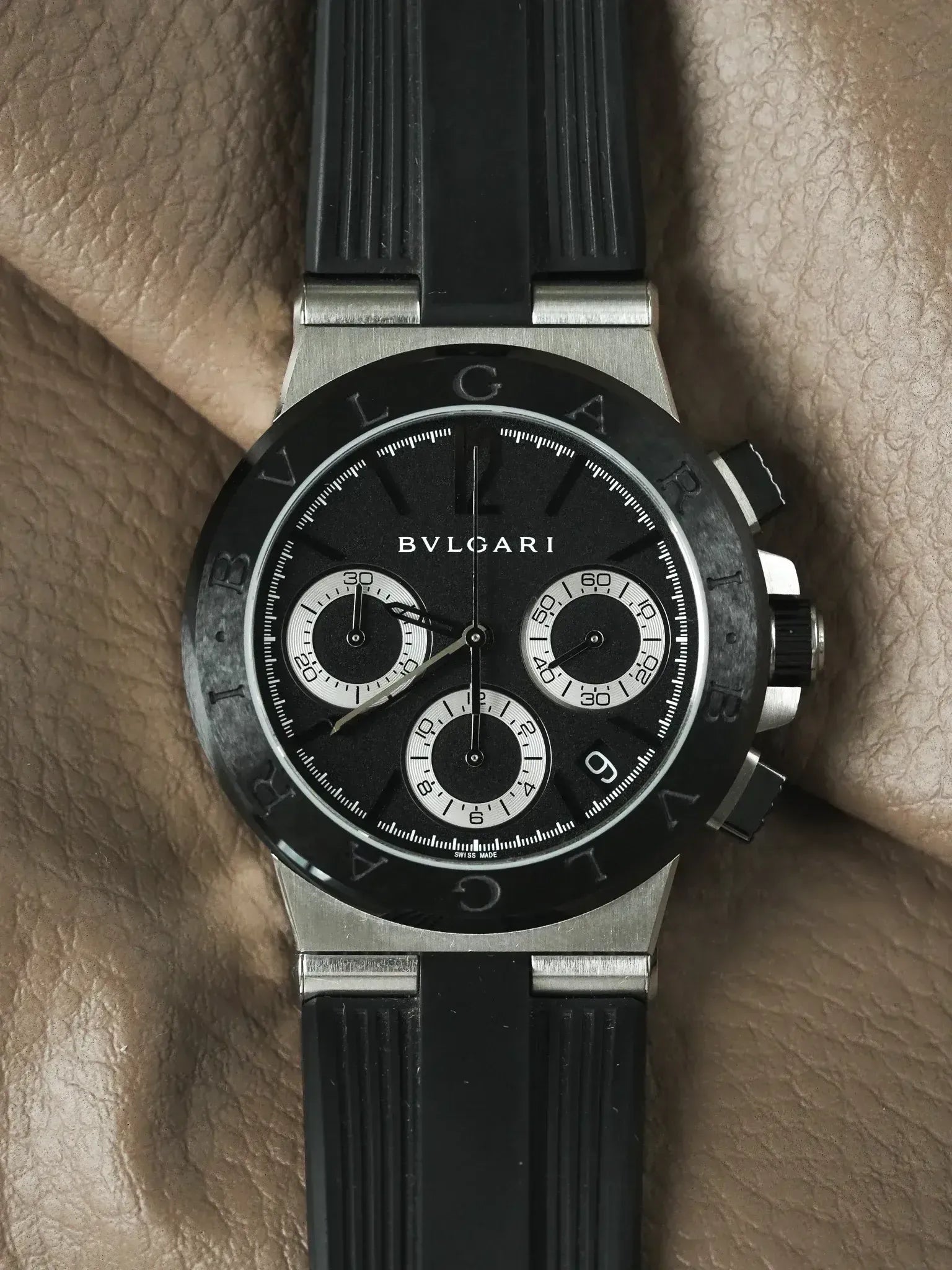
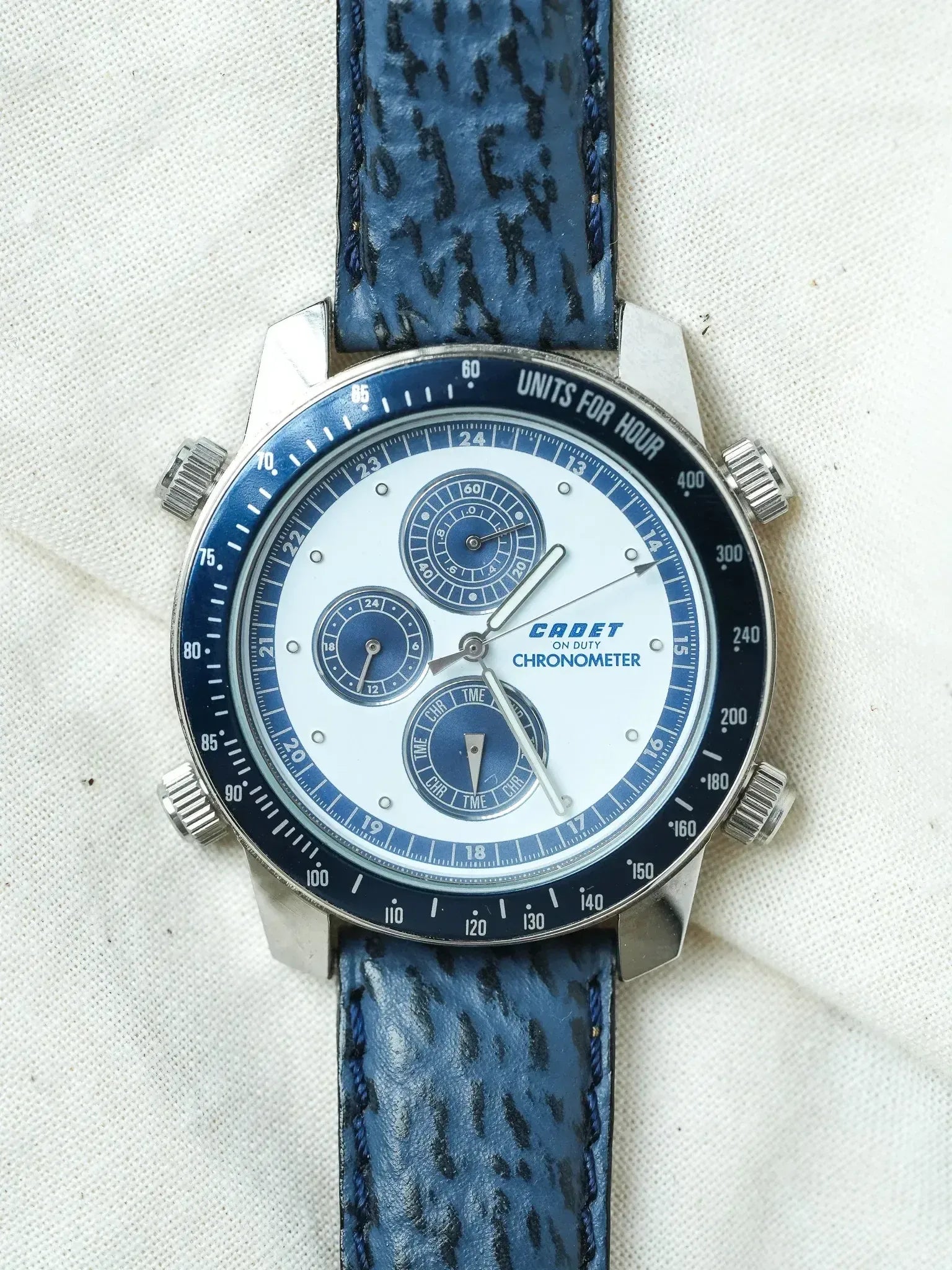
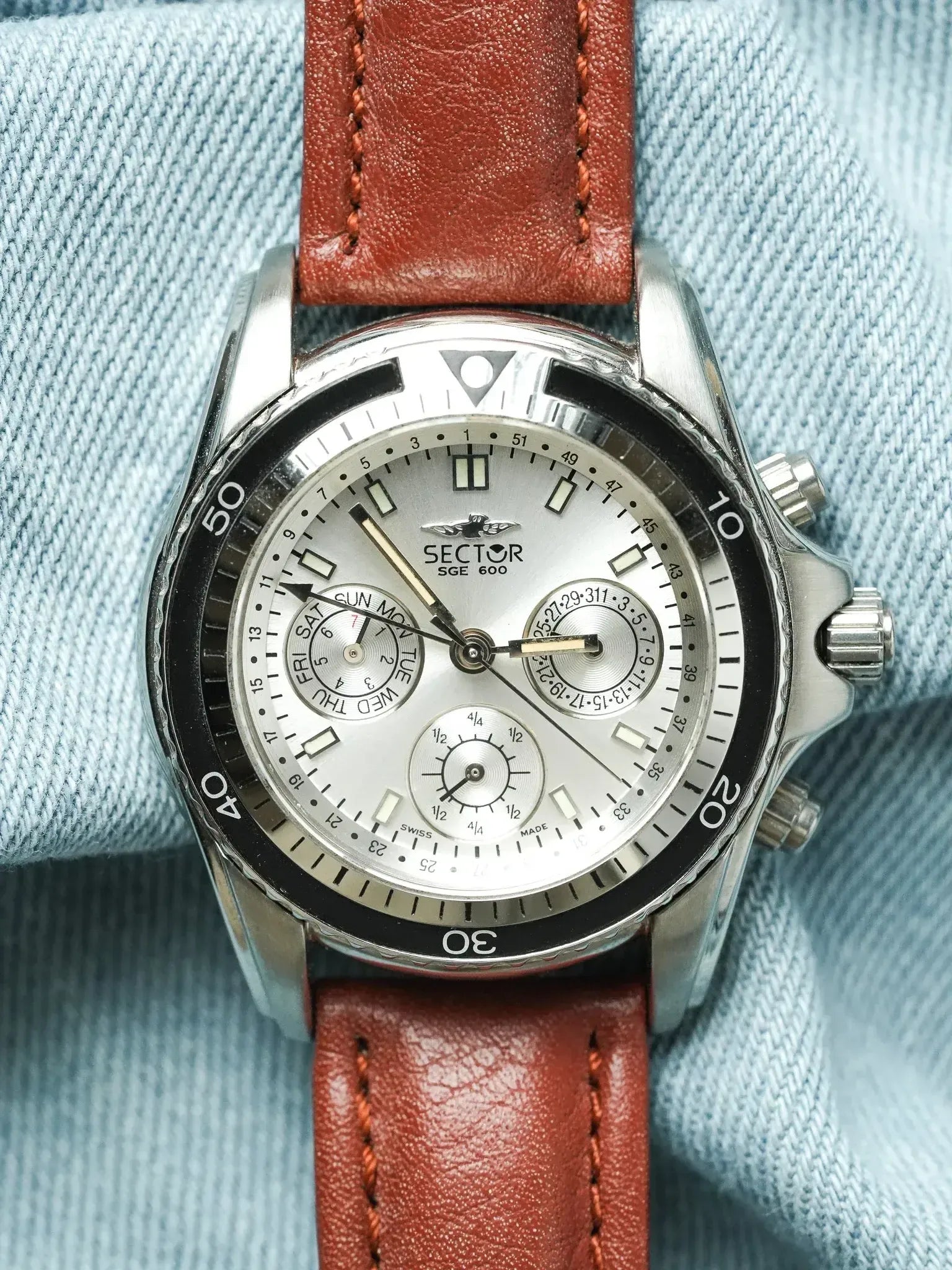
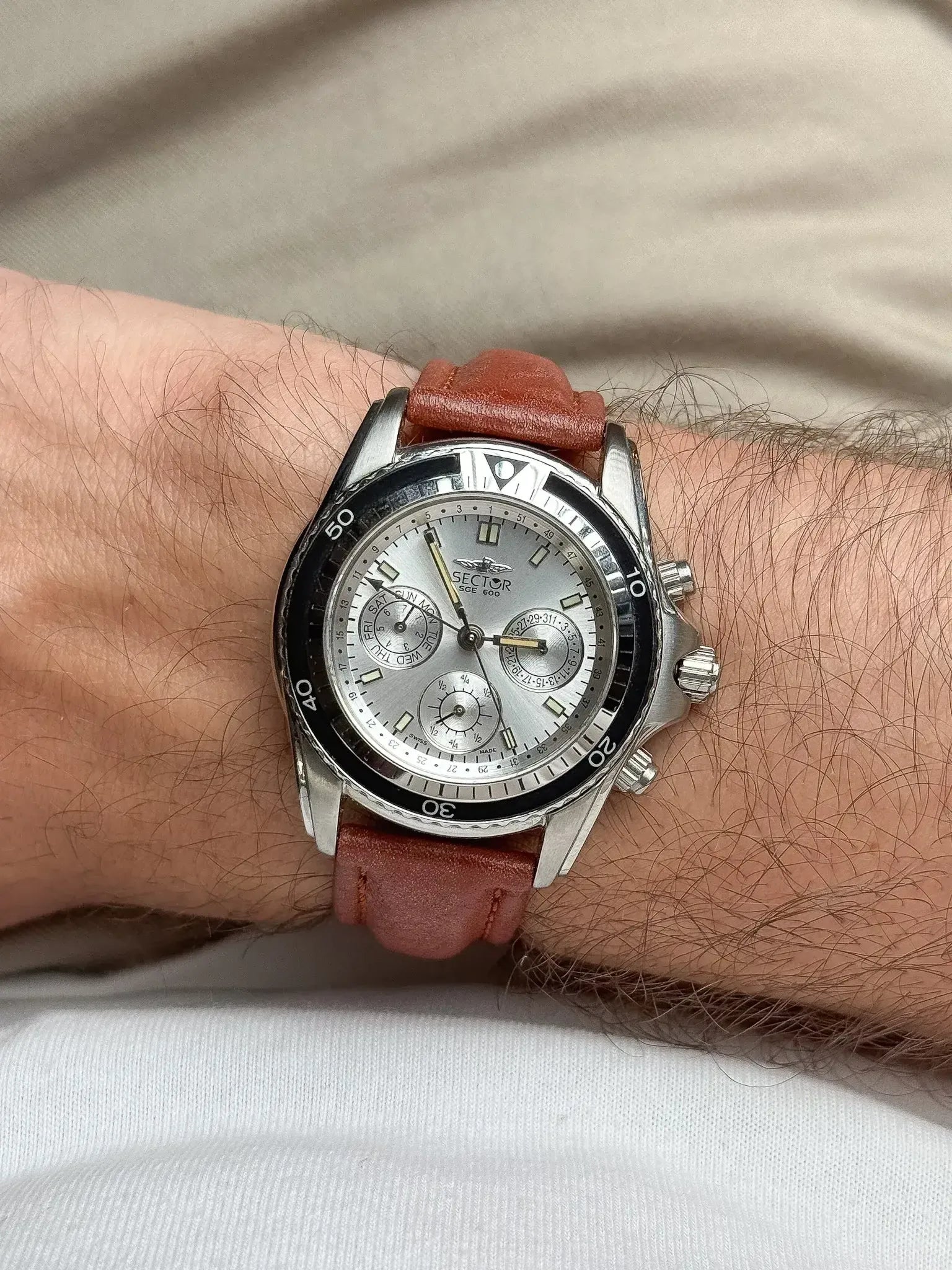
A chronograph is a watch equipped with a complication that allows time intervals to be measured independently of the current time. In practical terms, it is a watch incorporating a stopwatch function — started, stopped, and reset by pushers located on either side of the crown. The chronograph displays the measured time on sub-dials (or counters): generally a sub-seconds register, a minute counter, and sometimes an hour counter.
Not to be confused with a chronometer: this term refers to a watch certified for its precision by an official body (such as the COSC in Switzerland). A chronograph may be chronometer-certified (as is the case with the Zenith El Primero), but the two terms are distinct. The chronograph measures a duration; the chronometer attests to timekeeping precision.
History of the Chronograph: From Instrument to Icon
The history of the wrist chronograph begins in the 1910s and 1920s, when Swiss manufactures succeeded in miniaturizing movements to adapt them for the wrist. The first models were single-pusher — a single button controls the start, stop, and reset. In 1934, Breitling patented the two-pusher system (one to start/stop, the other to reset), which would become the industry standard.
The 1940s and 1950s saw the emergence of the great calibres that would equip global watchmaking for decades: the Valjoux 72 (1942), the Landeron 48, the Venus 175. In 1957, Omega unveiled the Speedmaster powered by calibre 321 — the model that would take part in lunar exploration. That same year, Breitling perfected the Navitimer, equipped with a circular slide rule. Heuer launched the Carrera in 1963, establishing a clean design tailored to motor racing.
The year 1969 marked a technological breakthrough: Zenith introduced the El Primero, the first integrated high-frequency automatic chronograph movement (36,000 vibrations per hour). At the same time, the Heuer-Breitling-Büren consortium unveiled the calibre 11, and Seiko launched the calibre 6139 in Japan. This race for the automatic chronograph gave rise to some of the most collectible pieces today.
Vintage Chronographs by Brand
Omega Speedmaster: The Space Chronograph
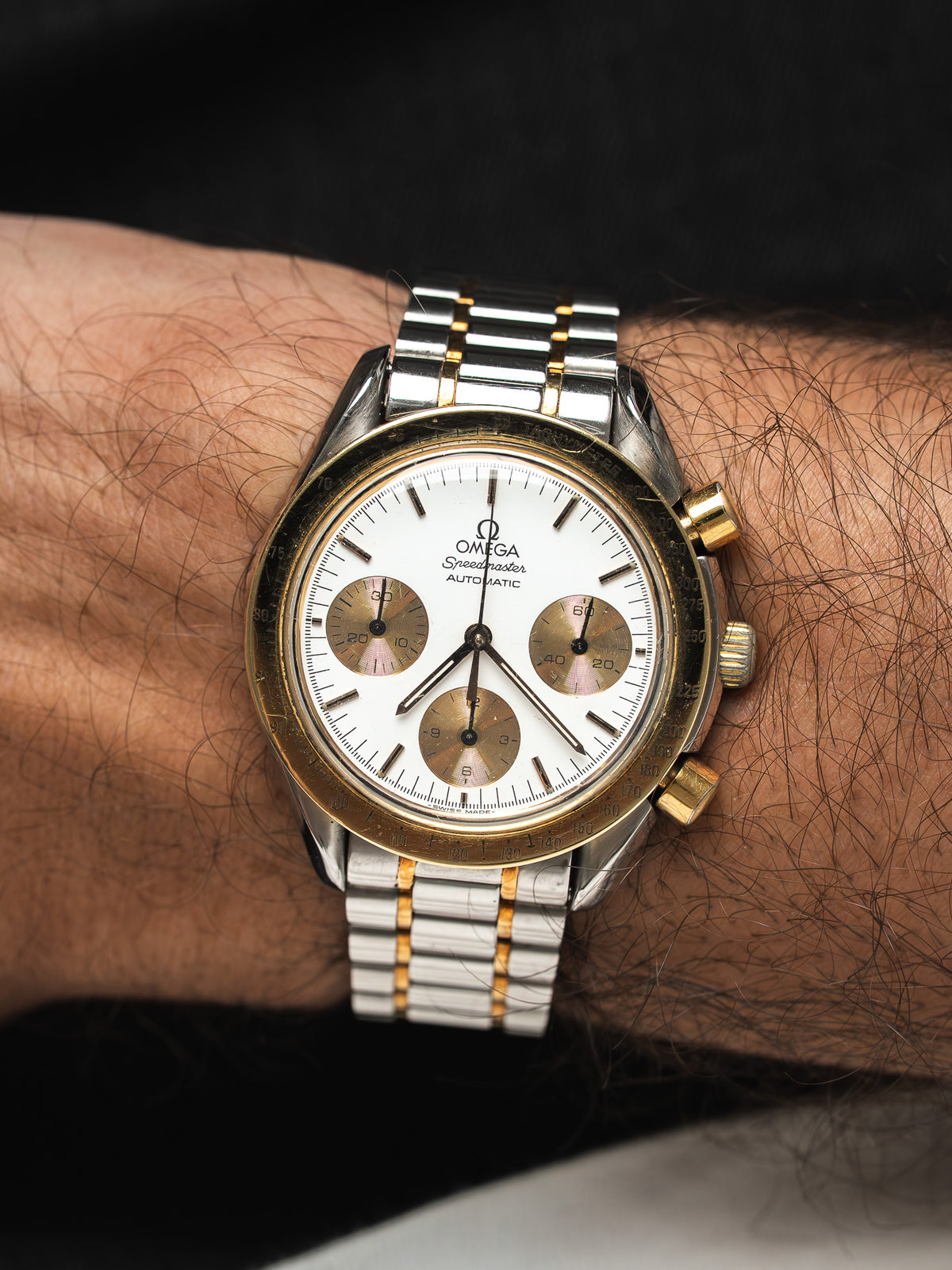
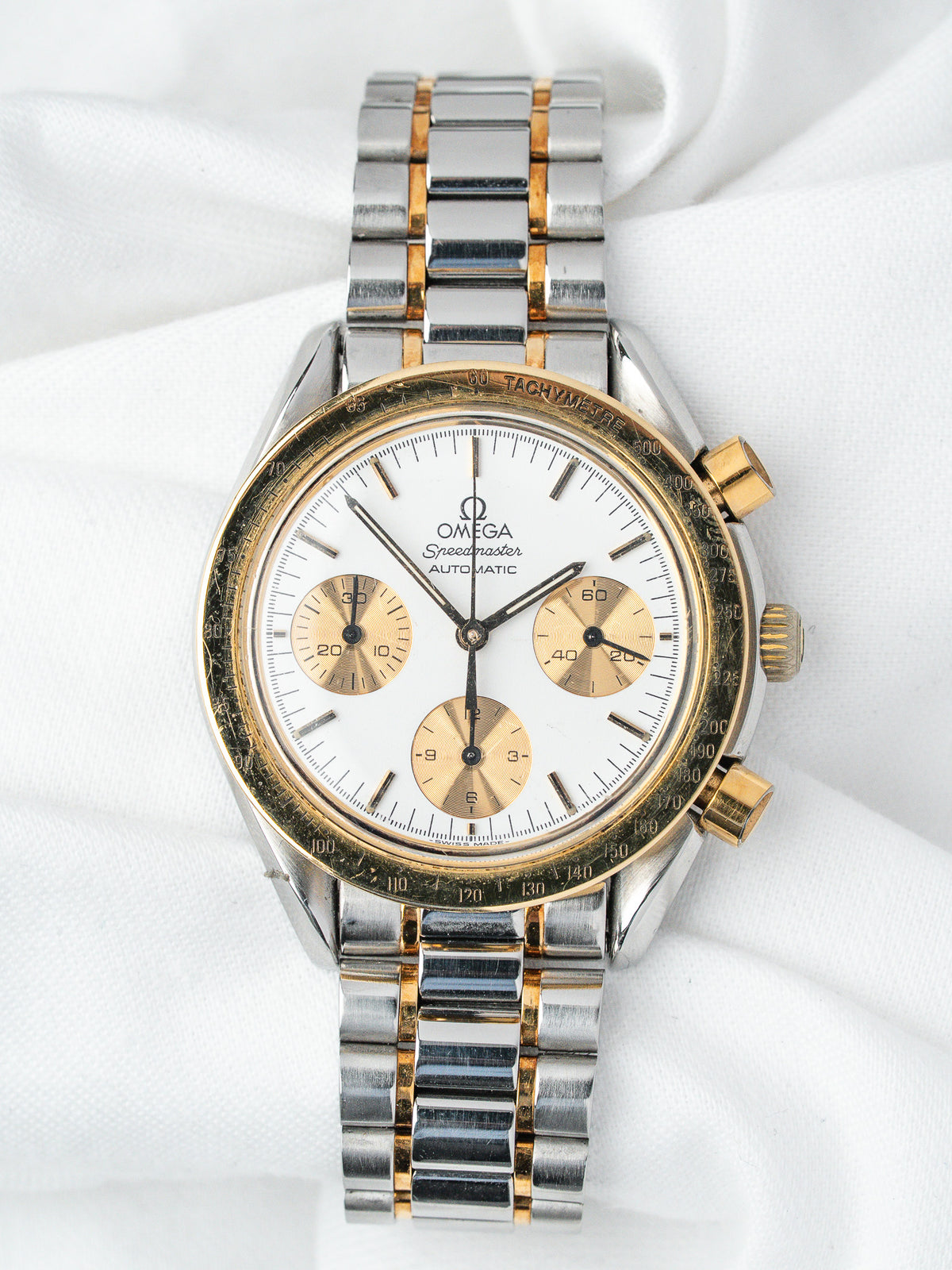
The Speedmaster is the most documented chronograph in the world. Initially intended for motor sports, it was certified by NASA in 1965 and accompanied the Apollo 11 mission in 1969. In vintage, the Speedmaster pre-moon models (ref. CK2915, 2998) with calibre 321 (column wheel) are highly prized historic pieces. The Speedmaster Professional models from the 1970s-80s with calibre 861 (cam-switched) make for solid entry points. The Speedmaster Mark II (cushion case, 1969) and the Speedmaster Reduced (ref. 3510.50, calibre 3220, 39mm, automatic) offer excellent aesthetic variations.
Breitling Navitimer: The Flight Instrument
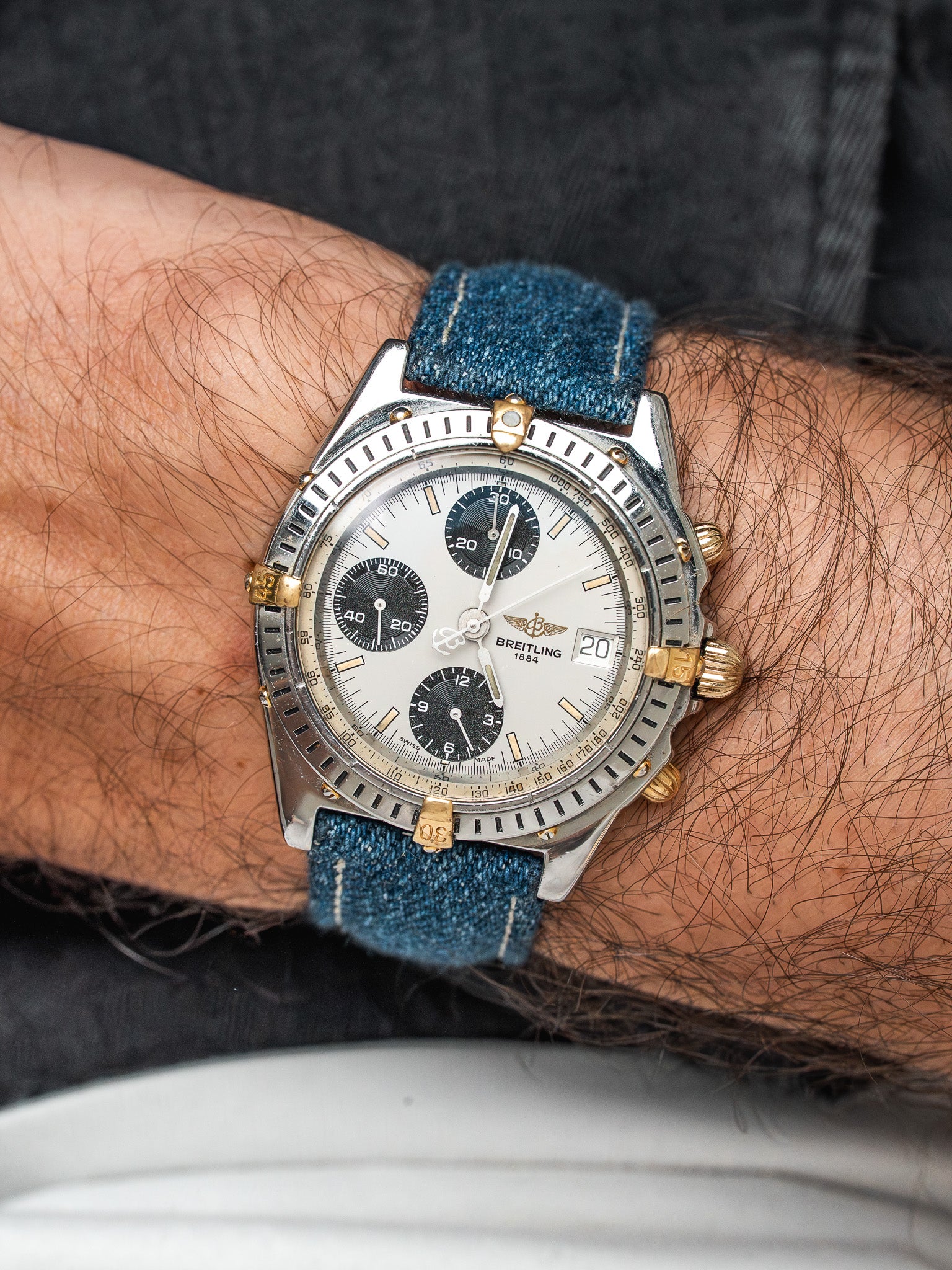
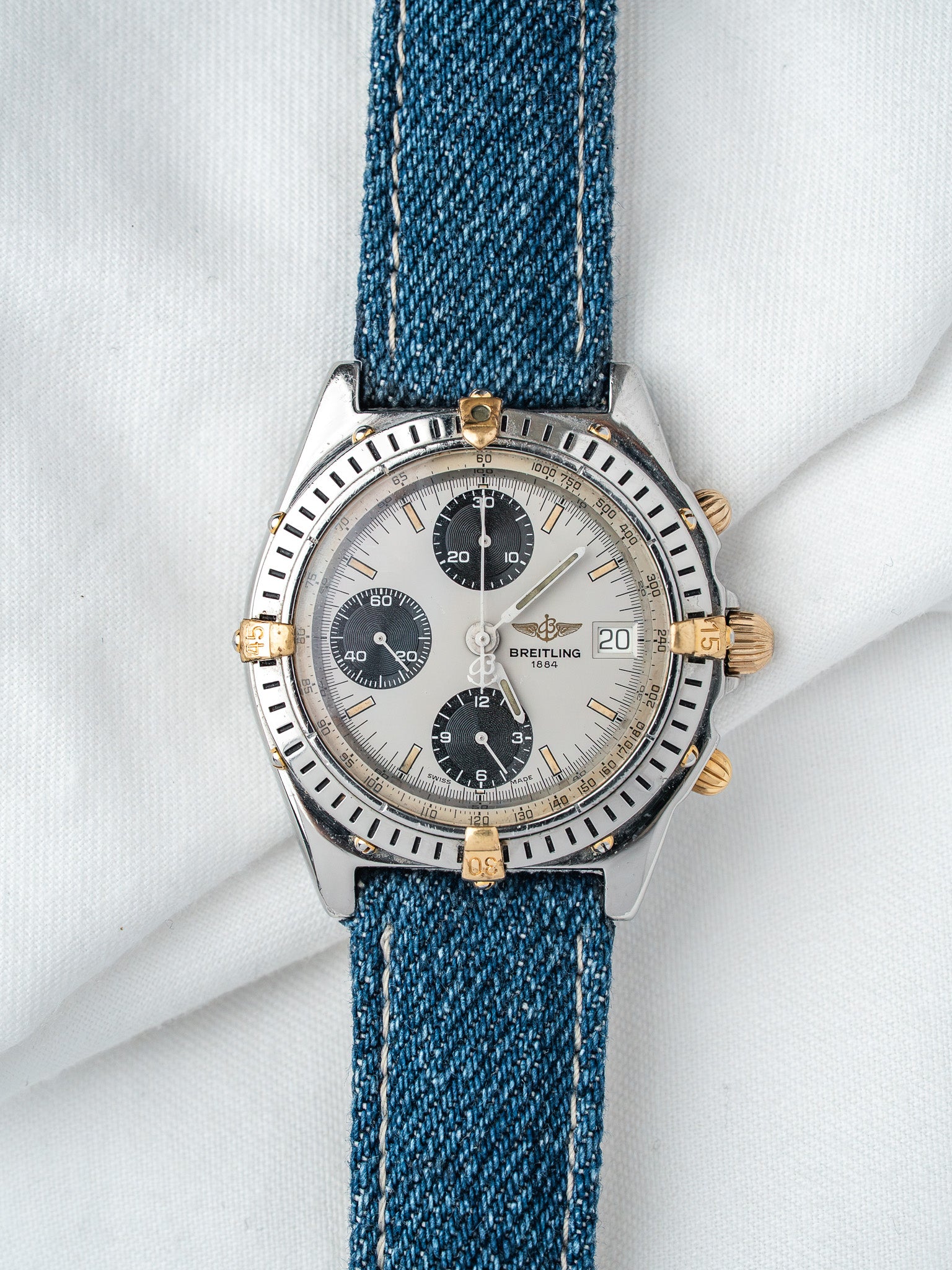
The Navitimer has been aviators' instrument of choice since 1952. Its circular slide rule (allowing the estimation of speed, distance and fuel consumption) gives it a unique visual identity. The earliest iterations housed the Venus 178, later succeeded by the Valjoux 7740 and then the calibre 11 automatic in the 1970s. The Chrono-Matic variants (left-side crown) and the "reverse panda" versions are among the most sought-after.
TAG Heuer (Heuer): Racing DNA
The Heuer chronographs of the 1960s-70s defined the codes of the racing driver's watch. The Carrera (1963, Valjoux 72 calibre) stands out for its legible, minimalist dial. The Autavia (1962, rotating bezel) is the benchmark tool of the paddocks. The Monaco (1969, square case, calibre 11 automatic) earned its iconic status on Steve McQueen's wrist. As the "TAG" prefix did not appear until 1985, pieces bearing only the "Heuer" signature are the true witnesses of this era.
Zenith El Primero: High Frequency
The Zenith El Primero, introduced in early 1969, is an engineering tour de force. Its frequency of 36,000 vibrations per hour (5 Hz) gives it display precision to one-tenth of a second. Saved from destruction by watchmaker Charles Vermot during the quartz crisis, vintage El Primero models from the 1970s — such as the A384 or A386 references with their famous tricolour dials — are now highly sought-after. This calibre also powered the Rolex Daytona (under the designation calibre 4030) from 1988 to 2000.
Universal Genève Compax & Tri-Compax
The Universal Genève chronographs are positioned within high-end collectible watchmaking. The Compax (two sub-dials) and the Tri-Compax (including full calendar and moonphases) are powered by Valjoux calibres (72, 72C). They stand out for a level of case and dial finishing that rivals the greatest Swiss manufactures of the period.
Seiko Chronographs: Japanese Expertise
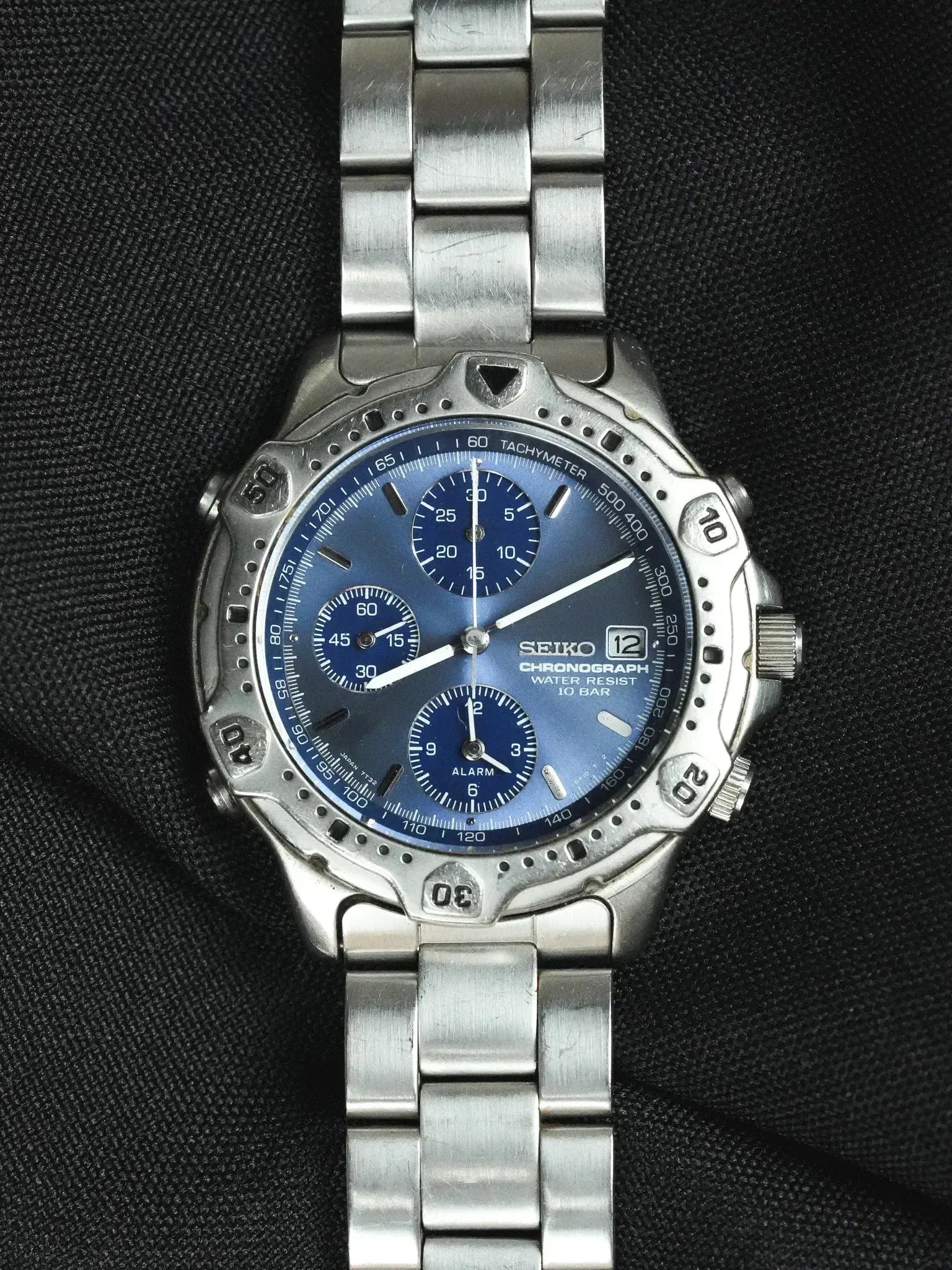
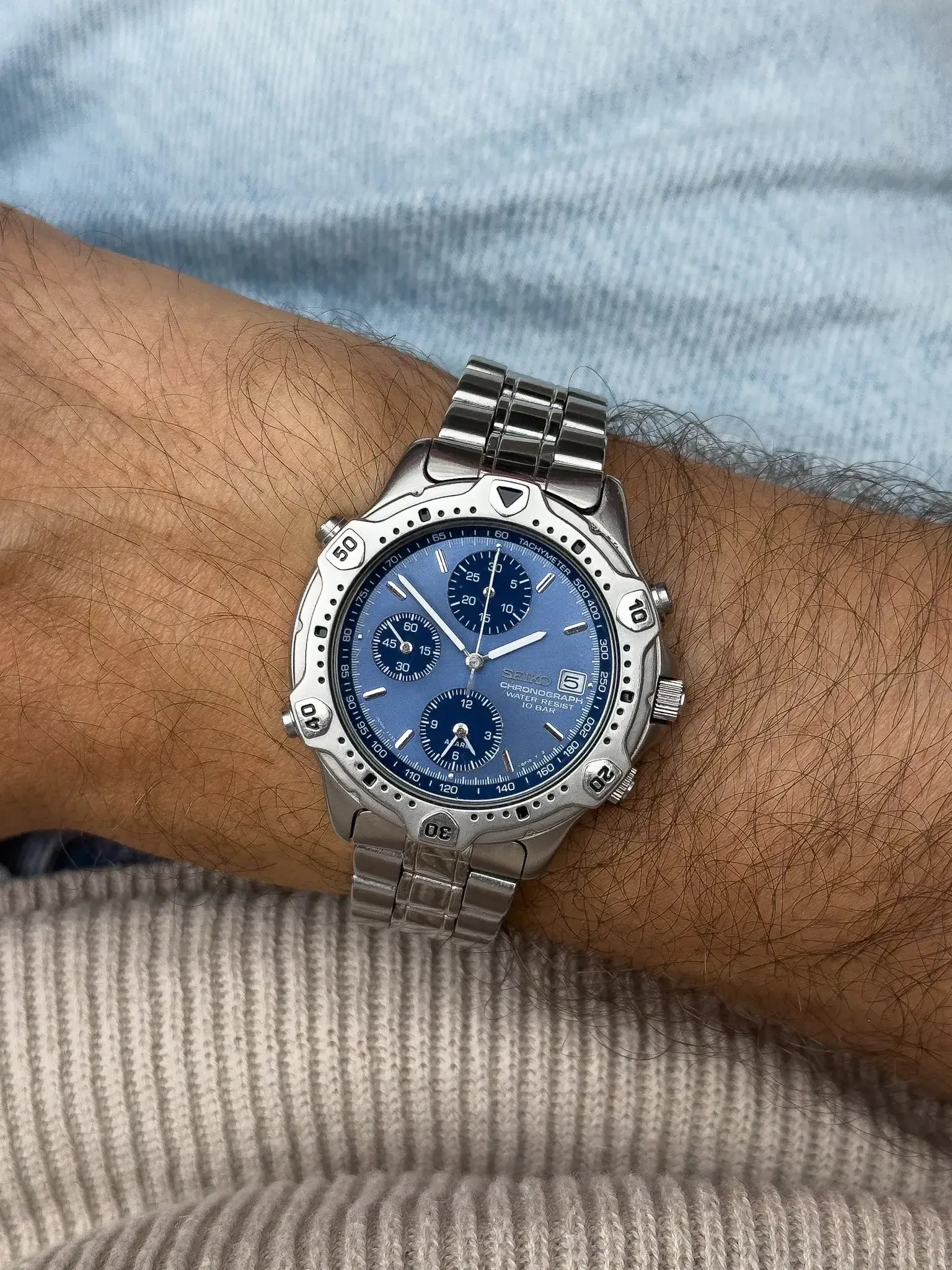
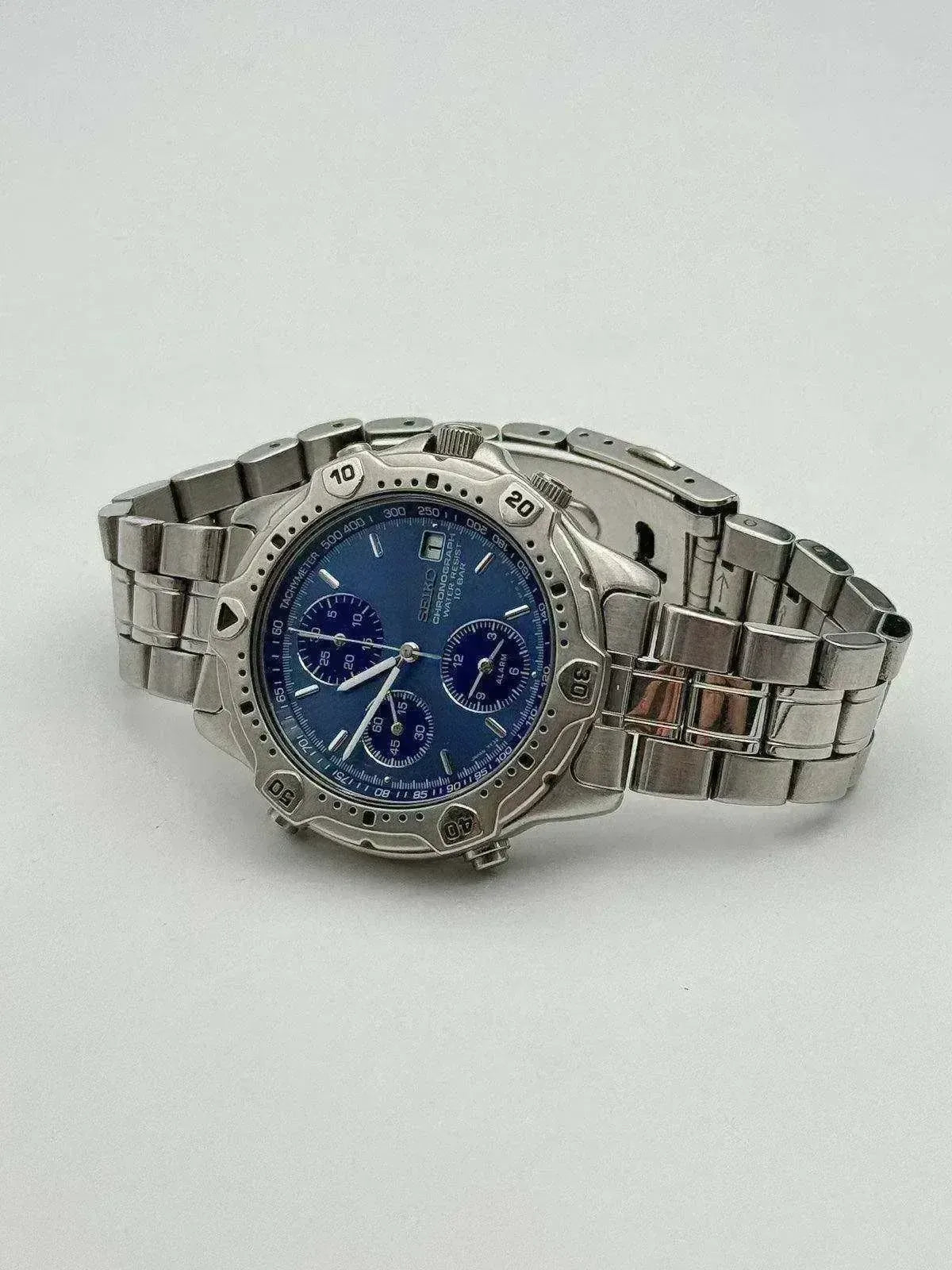
Seiko chronographs from the 1970s feature highly advanced mechanical architectures. The calibre 6139 was one of the first automatic chronographs brought to market. The Seiko Pogue (worn in space in 1973), the Seiko Bullhead (pushers positioned at 12 o'clock), and the Seiko Panda illustrate a stylistic boldness unique to the Japanese manufacture, offering manufacture calibres of formidable robustness.
Yema & LIP: French Craftsmanship
French manufactures also produced models with strong character. The Yema Yachtingraf (dedicated to regattas) and Rallygraf often house reliable Valjoux 7733/7736 calibres. The LIP Mach 2000, designed by industrial designer Roger Tallon, challenge conventions with their asymmetrical case and colorful spherical pushers.
The Four Families of Chronograph Calibres
Period watchmaking is structured around four major movement makers. Identifying these calibres is essential to evaluating a piece.
Landeron: The Proven Standard
A hand-wound cam-operated movement, Landeron was the most widespread calibre between 1940 and 1970. The Landeron 48 and its derivatives (51, 148, 248) equipped countless Swiss chronographs. Its rational design made it one of the most produced chronographs of its time. It is the perfect mechanics for starting a collection with confidence.
Venus: Fine Craftsmanship
A direct competitor to Landeron, Venus produced calibres with generally more refined finishing. The Venus 175 powered many aviation chronographs, while the Venus 178 is inseparable from the first Breitling Navitimer models. These movements are prized for their reliability and the smoothness of their controls.
Lémania: Prestige Mechanics
Lémania supplied some of the most sought-after calibres on the market. The Lémania 2310 (which became the Omega calibre 321 with column wheel) and the Lémania 1873 (Omega calibre 861) built the legend of the Speedmaster. The Lémania 5100, a robust military automatic chronograph, equipped NATO armies. Watches powered by Lémania calibres maintain particularly high market values.
Valjoux (ETA): The Universal Reference
Valjoux supplied the majority of the industry. The Valjoux 72 (column wheel) is the heart of period Rolex Daytona and Heuer Carrera models. The Valjoux 7733 (and its cam-operated variants) equipped the entire Swiss production of the 1970s. Introduced in 1973, the automatic Valjoux 7750 became the standard of the contemporary industry, appreciated for its universal serviceability.
Understanding Dial Configurations
The aesthetics of chronograph dials constitute a vocabulary of their own:
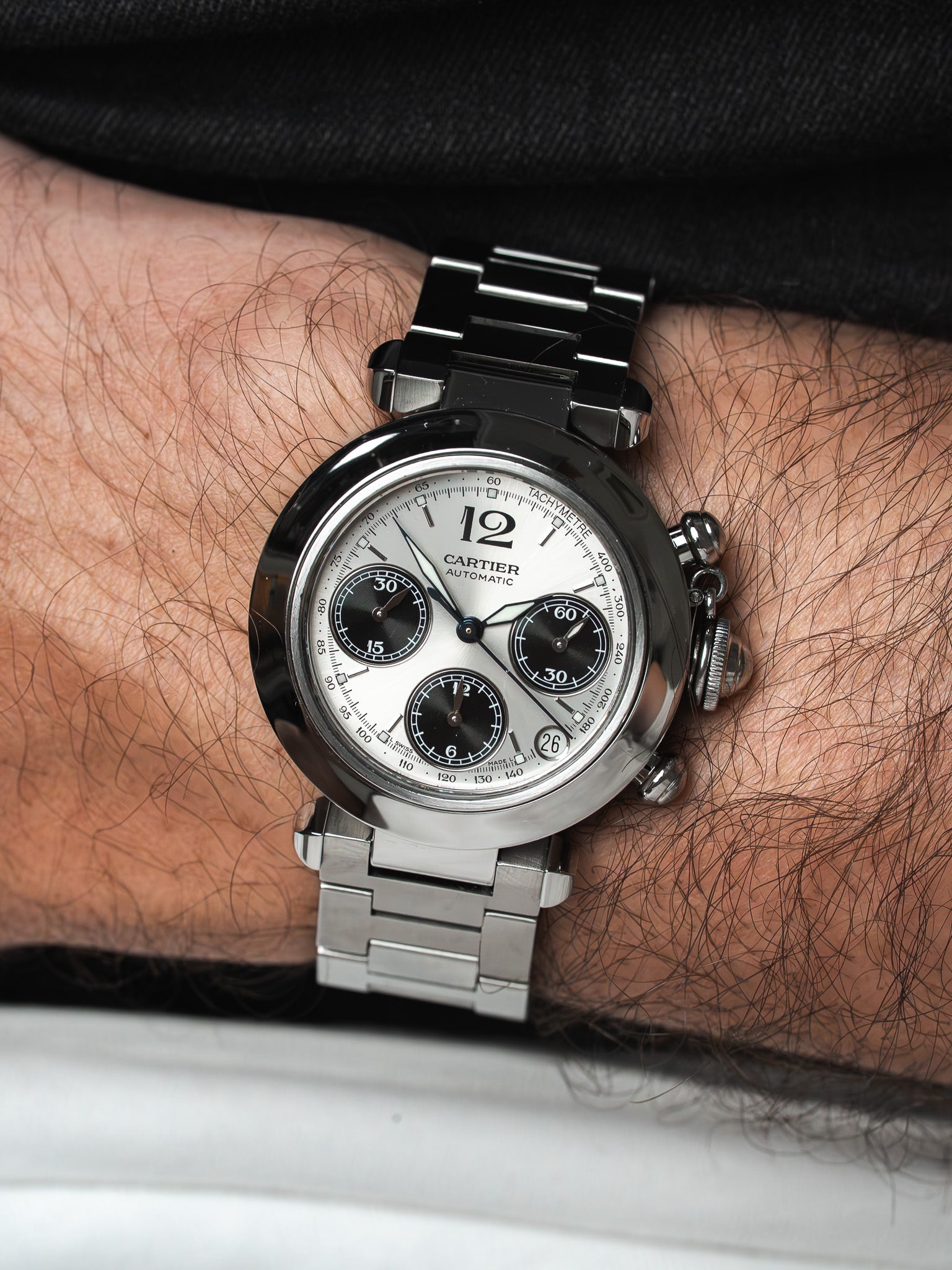
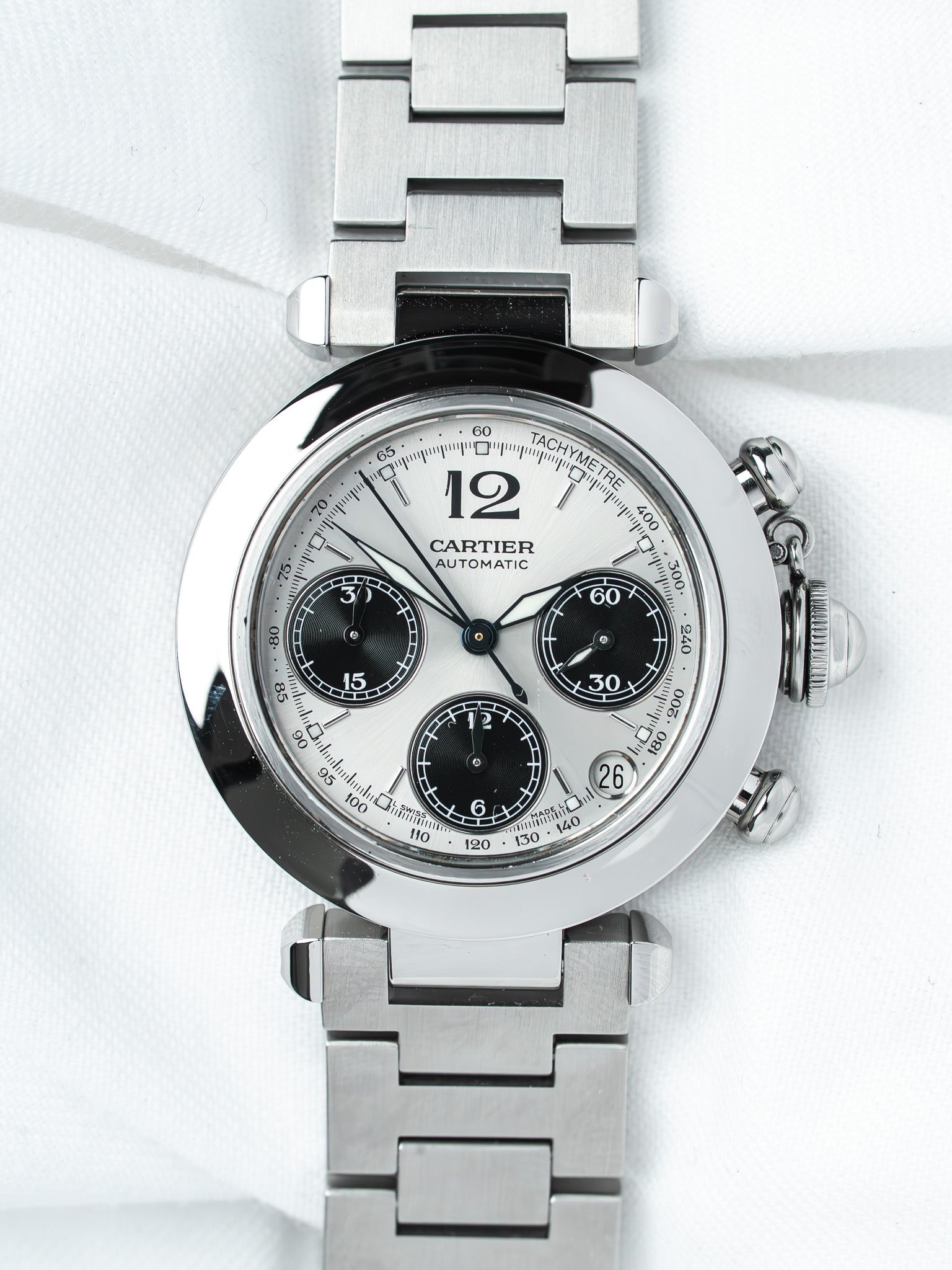
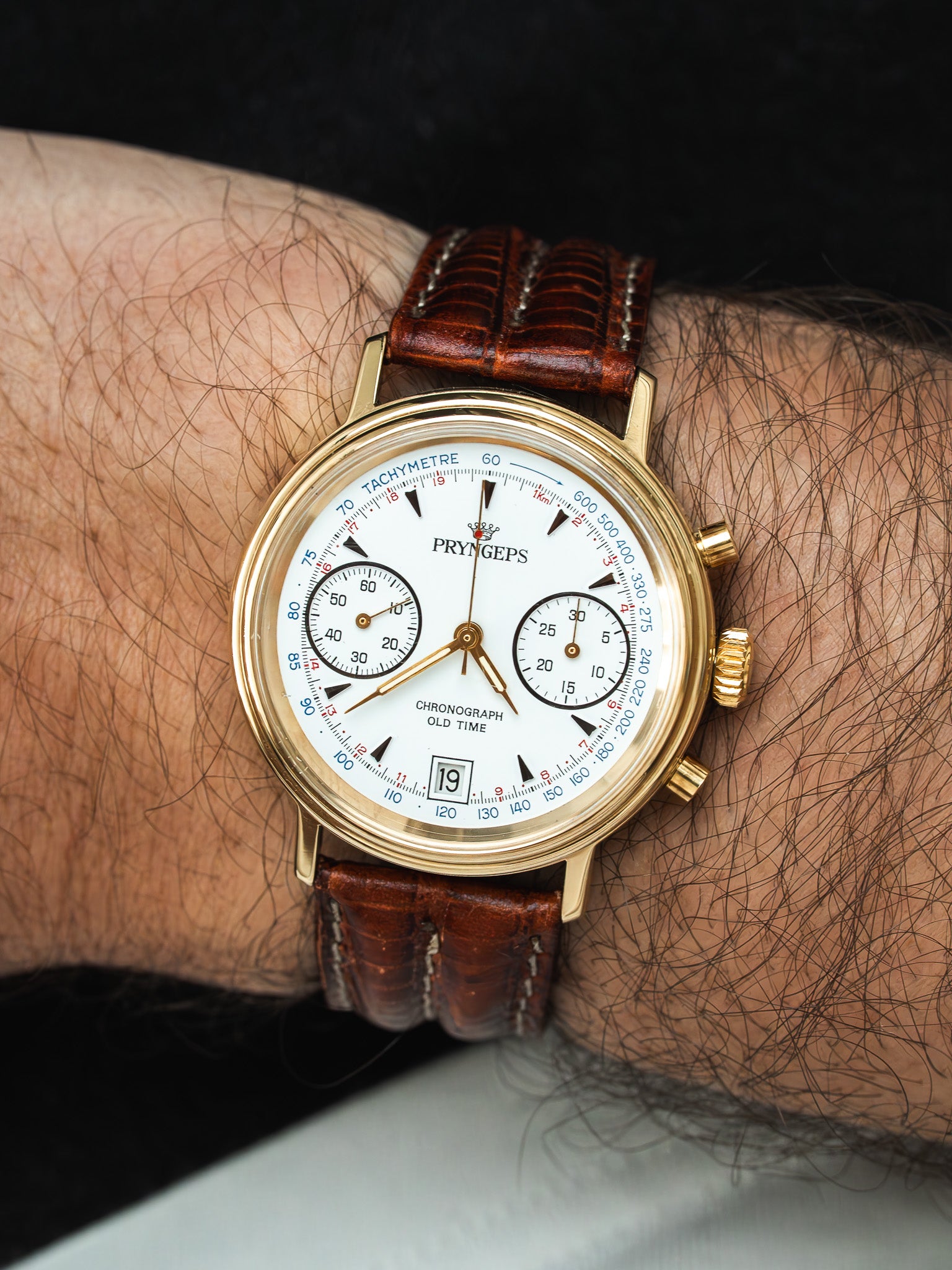
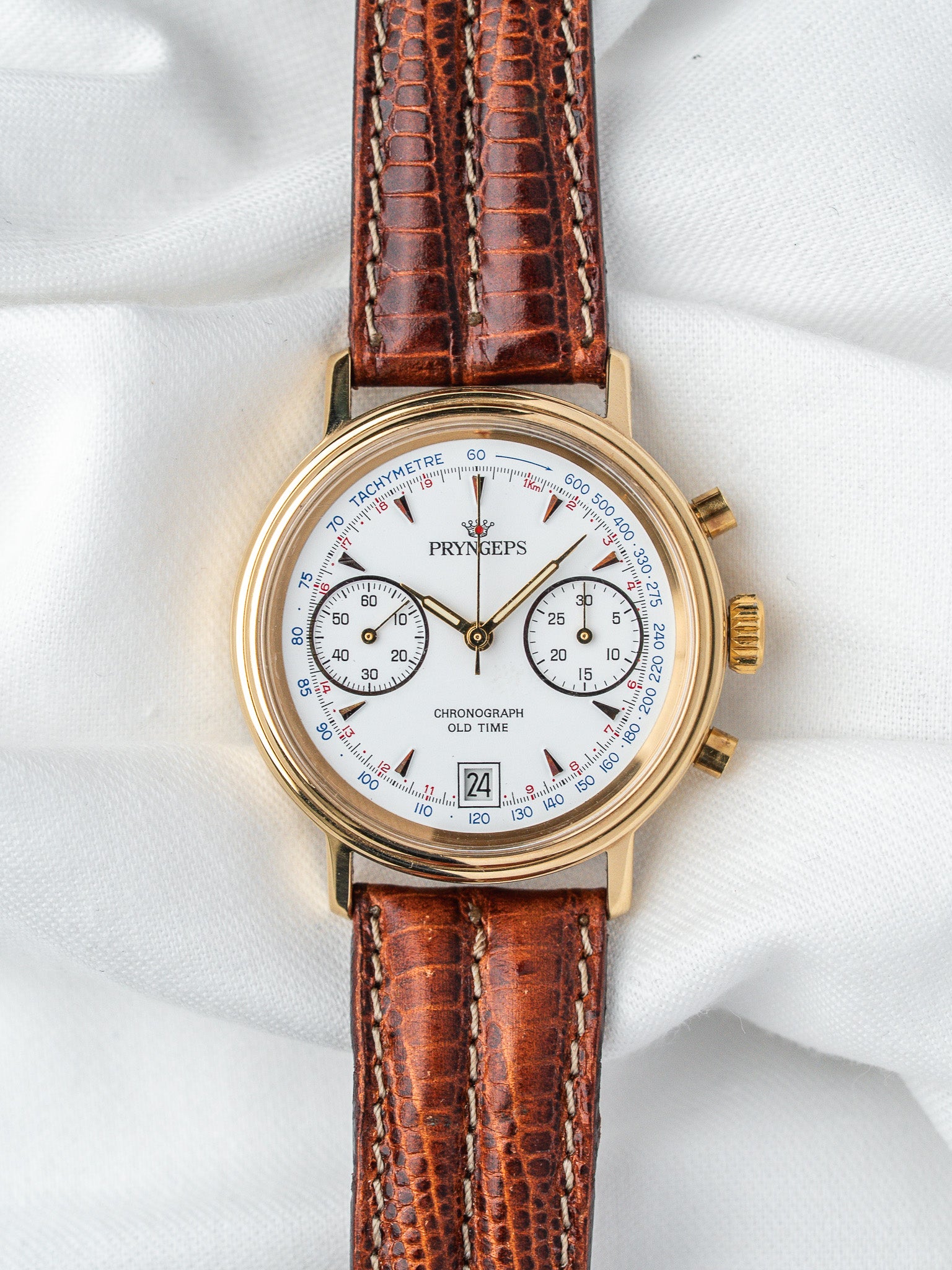
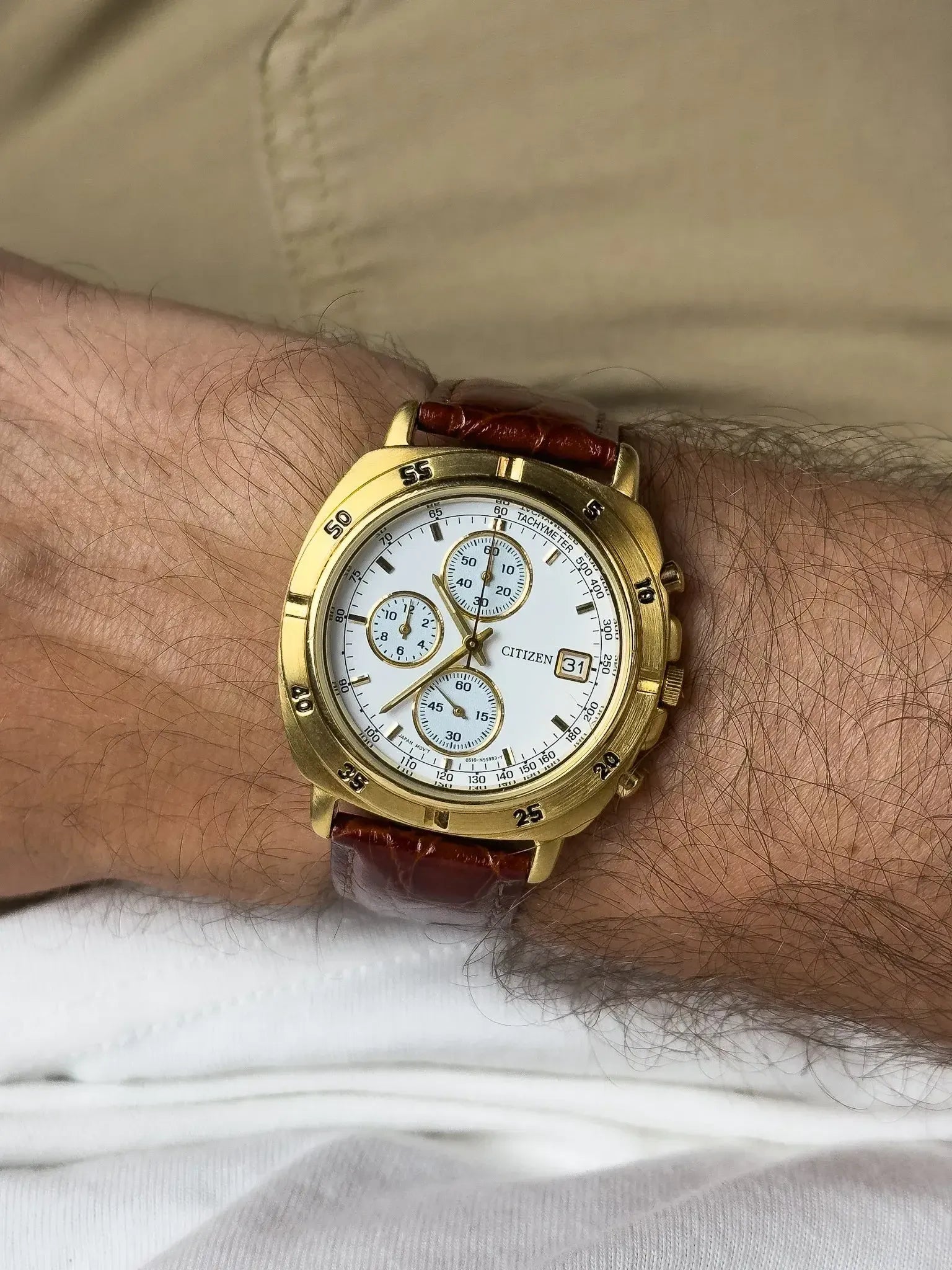
- Panda Dial — light background (white/silver) contrasted by black subdials, optimizing legibility (e.g. Heuer Carrera).
- Reverse Panda Dial — black background with light subdials, with a very sporty look (e.g. Breitling Navitimer).
- Tricolor Dial — subdials in different shades, the visual signature of the Zenith El Primero A384/A386.
- Racing Dial — checkerboard minute track or orange/red accents evoking asphalt and rev counters (e.g. Autavia Viceroy).
- Tropical Dial — natural patina in which black gradually and evenly turns brown/chocolate over the decades, making the watch unique.
Tachymeter Scale: What Is It Used For?
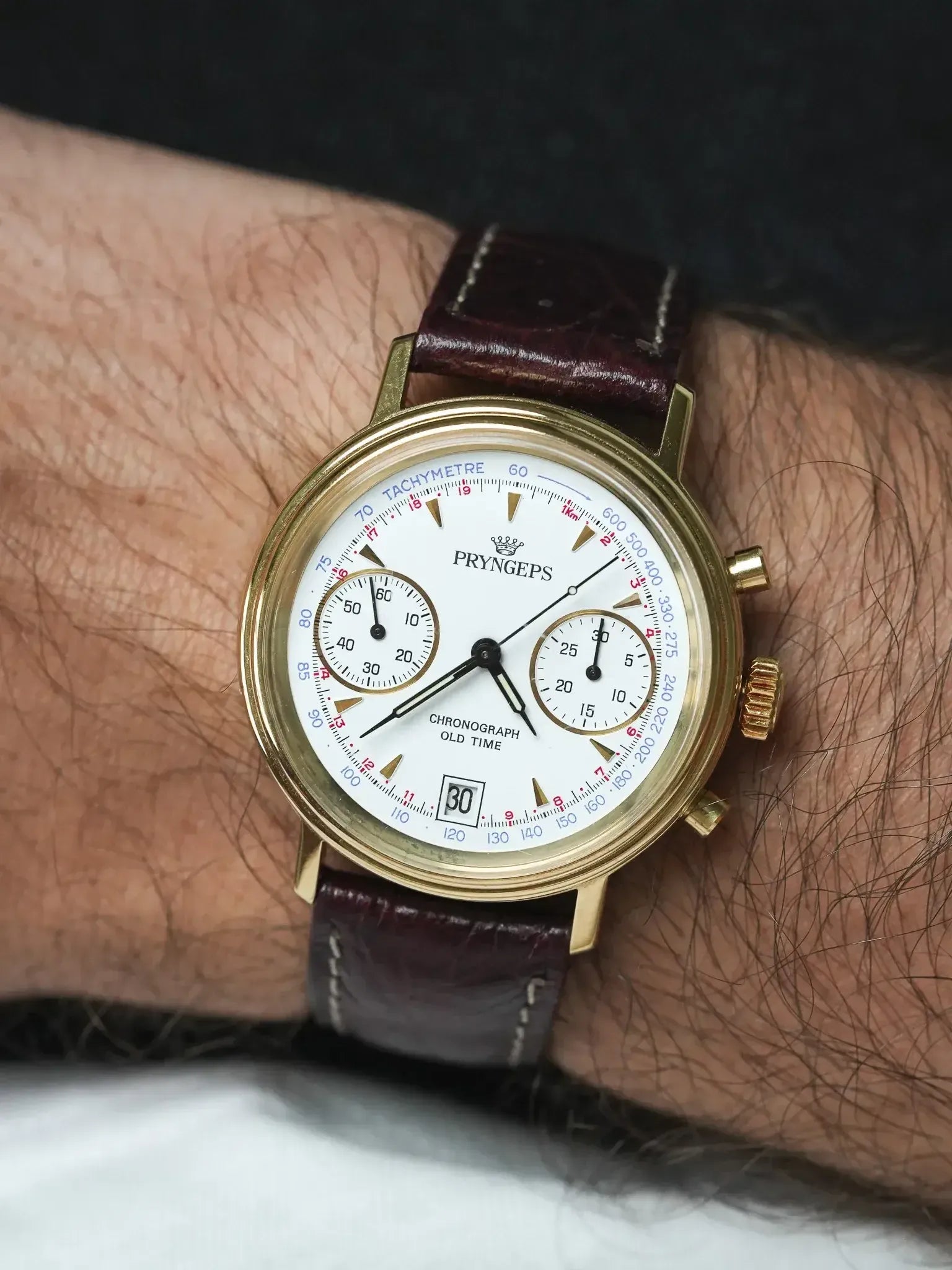
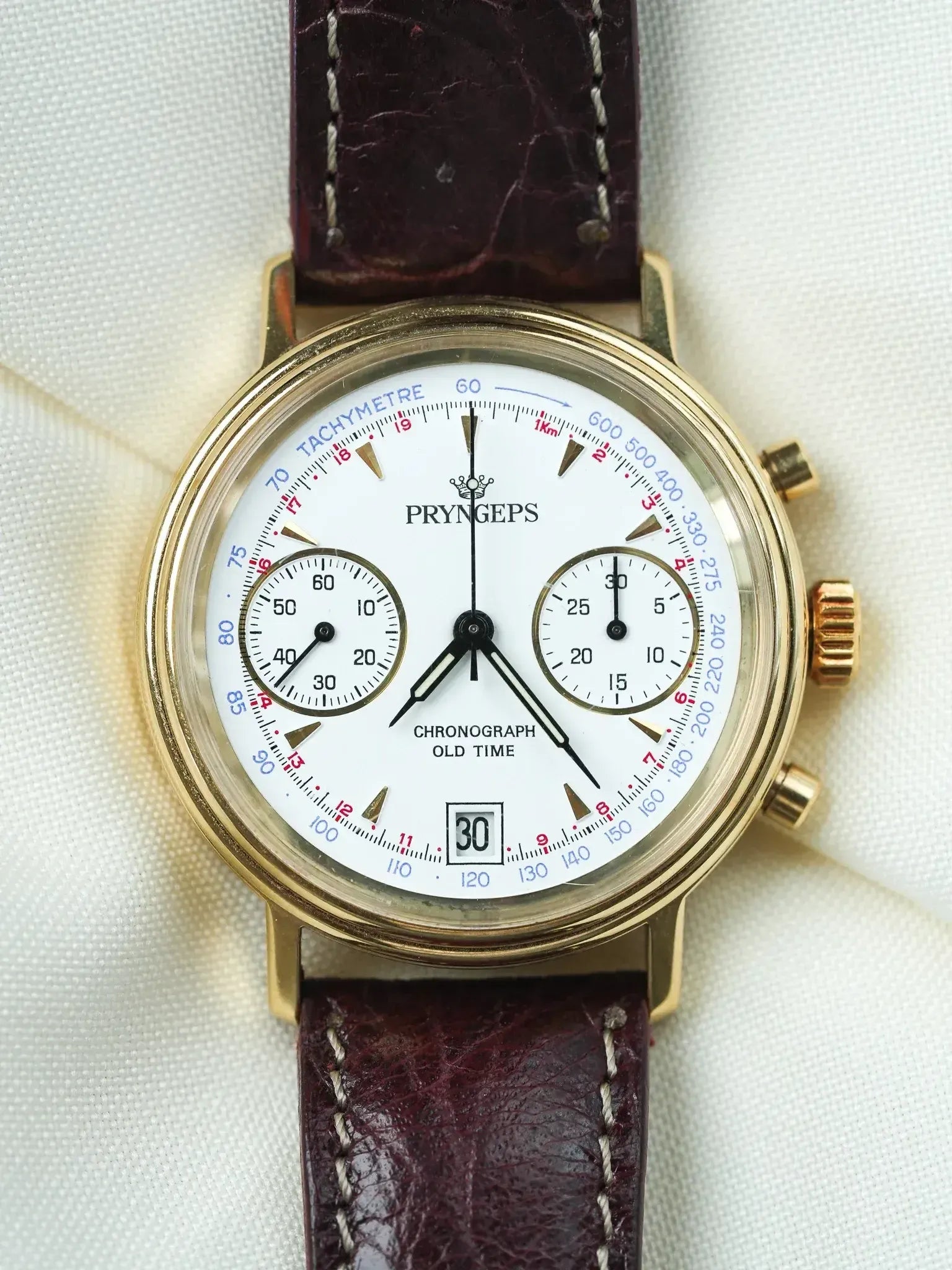
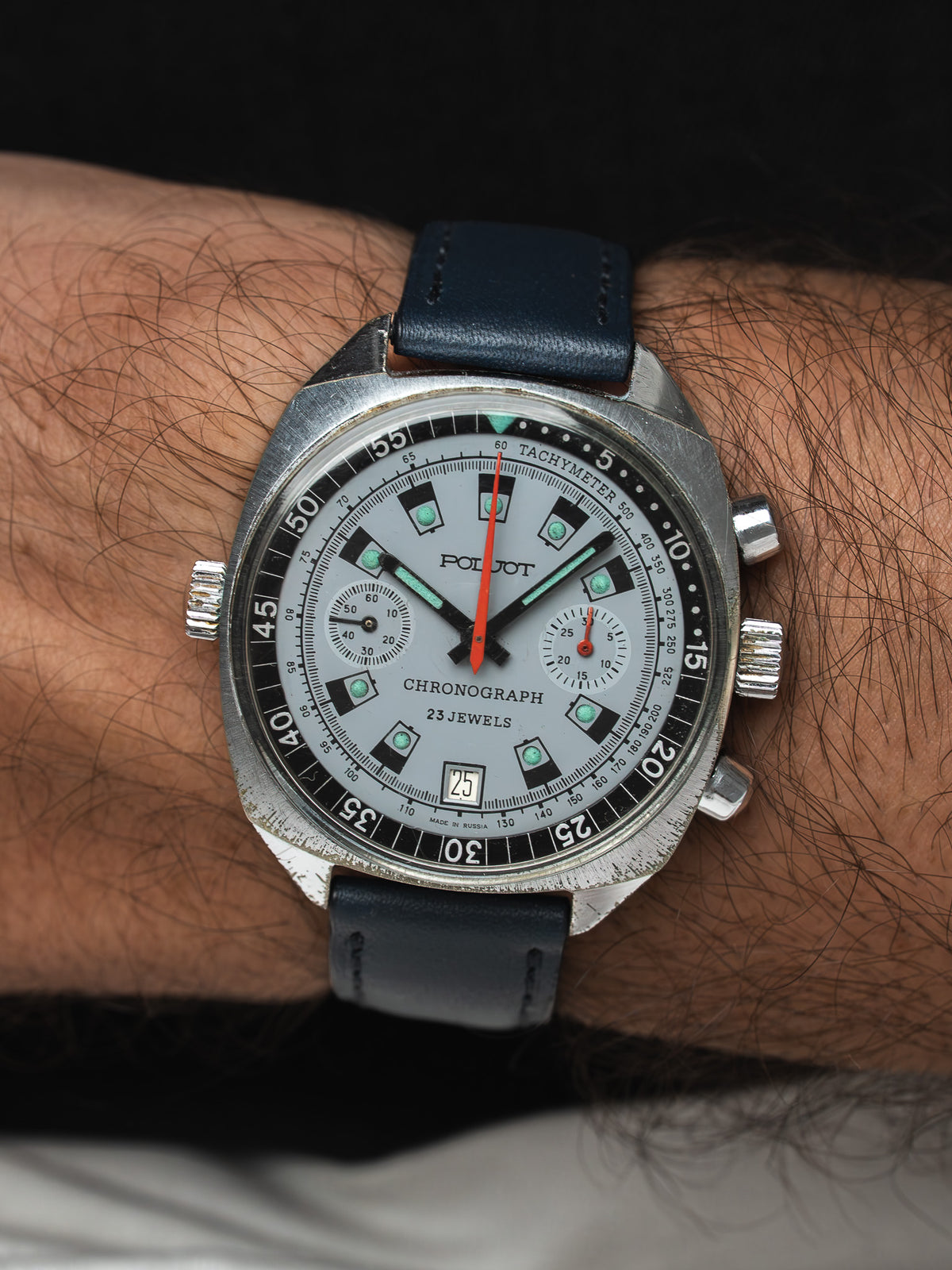
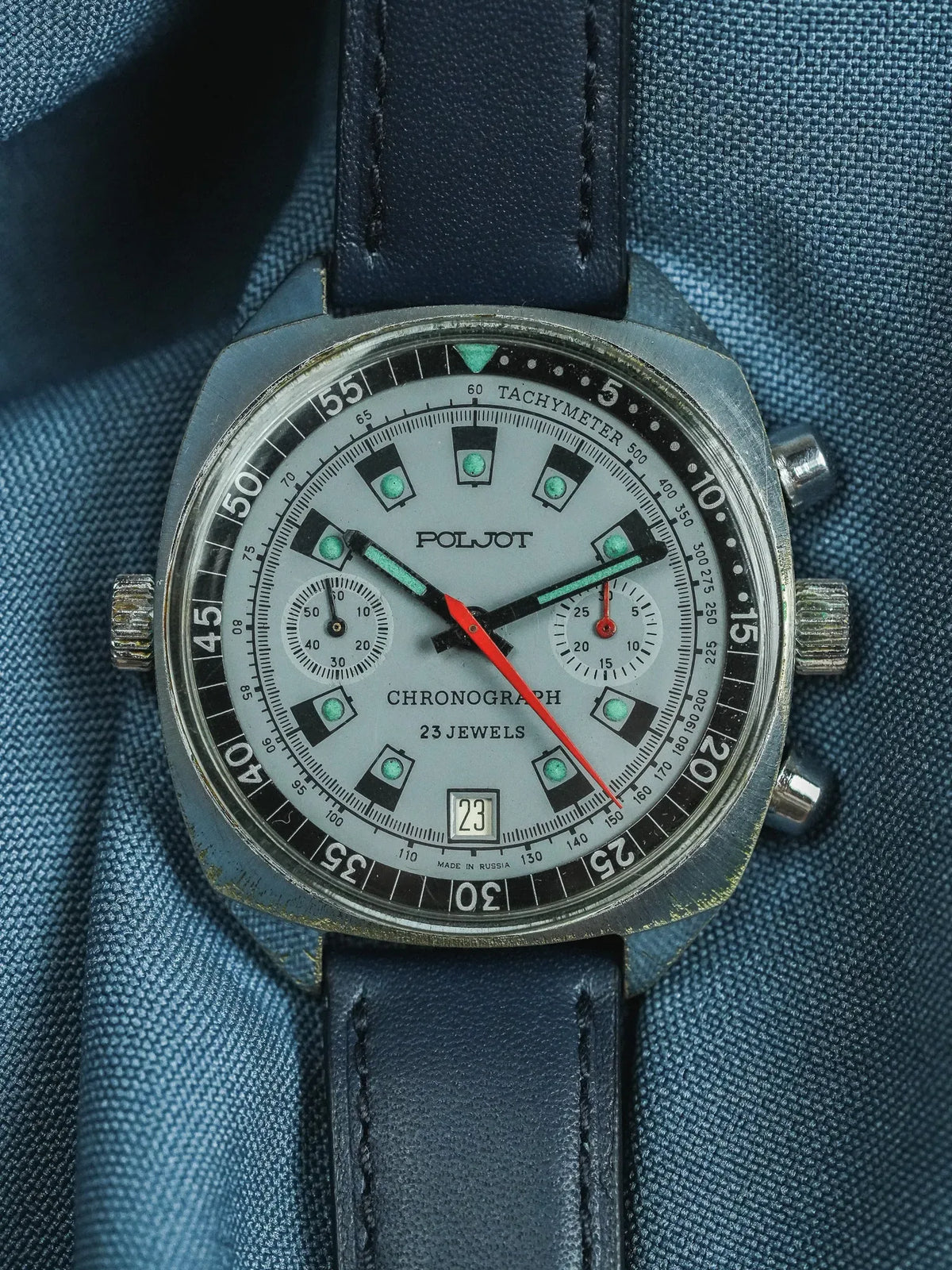
The tachymeter scale printed on the bezel or dial is used to calculate an average speed over a distance of one kilometer (or one mile). By starting the chronograph at point A and stopping it at point B, the central hand directly indicates the speed on the scale. A legacy of motor racing, it is located on the external bezel (Speedmaster), on the rehaut (Carrera) or directly on the dial.
Column Wheel vs Cam: What Is the Difference?
The operation of a chronograph is based on two architectures:
- The Column Wheel — a notched cylindrical component coordinating the levers. Historically more complex to machine, this system offers a very smooth and fluid actuation feel under the finger (e.g. Valjoux 72, Lémania 321).
- The Cam (or shuttle) — a system of stepped levers, optimized for more industrial production. The actuation is slightly firmer, but reliability is just as excellent (e.g. Valjoux 7733, Landeron 48, Lémania 1873).
How to Recognize an Authentic Chronograph
Vintage chronographs require great vigilance (risk of "Frankenwatches"). Our watchmakers systematically check:
- The timekeeping mechanism — actuation must be crisp, and the reset must align perfectly at 12 o’clock.
- The pushers — their machining and their type (pump or screw-down) must correspond to the specifications of the period.
- The dial — the typography, the spacing of the subdials and the condition of the luminescent material are checked to rule out repainted dials ("redial").
- The caliber — the movement inside must correspond strictly to the reference engraved in the caseback.
At Atelier Victor, each piece is delivered with a invoice serving as a lifetime certificate of authenticity.
Chronographs on the Pre-Owned Market
The chronograph remains the most sought-after complication among collectors. Historic pieces such as the Speedmaster pre-moon (321), the Carrera and Autavia with Valjoux 72 or the Zenith El Primero retain strong appeal. Column-wheel movements are generally valued above their cam-operated counterparts. The presence of a period steel bracelet or a "Full Set" constitutes a major value-enhancing asset.
Frequently Asked Questions — Vintage Chronographs
How does reading the measured time work?
The central hand indicates the chronograph seconds. The 2 o'clock pusher controls start/stop. The 4 o'clock pusher handles the reset to zero. The sub-dials total the minutes (often 30 or 45 min) and sometimes the hours (up to 12h). The current running sub-seconds, for its part, rotates independently in its own sub-dial.
What is the mechanical difference between a column wheel and a cam?
The column wheel is the traditional design, renowned for its mechanical nobility and the smooth action of its pushers (calibres 321, Valjoux 72). The cam is a more modern engineering solution, extremely robust, but with a crisper actuation (calibres 861, Valjoux 7750, Landeron).
Why is the Lemania 321 calibre so famous?
The 321 calibre powered the Omega Speedmaster approved by NASA for the Apollo missions. As its production ceased in 1968 in favour of the 861 calibre (with shuttle cam), period models fitted with this column-wheel movement combine mechanical prestige with historical rarity.
Is the Zenith El Primero really the first automatic?
Presented in January 1969, the El Primero is the first integrated automatic chronograph movement (designed as a single unit) and a high-frequency one. The rival consortium (Heuer/Breitling) released that same year the calibre 11, which was a modular movement (a chronograph module added to an automatic base). Both approaches marked watchmaking history.
Why do some Heuer watches not bear the TAG name?
The TAG group (Techniques d'Avant-Garde) acquired Heuer in 1985. Consequently, the Carrera, Autavia and Monaco signed only "Heuer" guarantee production prior to that date. These are the pieces most sought after by the brand's purists.
Is the Valjoux 7750 a quality calibre?
Launched in 1973, the Valjoux 7750 is the workhorse of the Swiss watch industry. It is a cam-operated automatic movement of formidable reliability, with the tremendous advantage of being serviceable by any qualified watchmaker in the world. It equips both mass-market models and high watchmaking timepieces.
Does a chronograph require special maintenance?
Yes. As the mechanics of a chronograph involve more parts and friction than a classic watch, a complete service is recommended every 4 to 5 years (3–4 years for high-frequency movements). All watches sold by Atelier Victor are checked before shipment and covered by a 1-year mechanical warranty.
Are period chronographs good investments?
At Atelier Victor, passion and wearability come first. Although references equipped with renowned calibres (Valjoux 72, Lémania 321) have demonstrated strong resilience in the market, we guide our clients toward pieces that inspire aesthetic emotion rather than making purely speculative recommendations.
Where can I find a strap for my chronograph?
Chronographs pair perfectly with type "Racing" straps (perforated), smooth leathers, or NATOs. We offer compatible straps in standard lug widths (19mm, 20mm, 22mm). Advice available via WhatsApp.
Explore our selection by manufacture: Omega Speedmaster, Breitling Navitimer, TAG Heuer, Zenith El Primero, Seiko, Yema. Or browse our general vintage watch catalogue.
A technical question? Contact our experts via WhatsApp or by email.
Need advice or have a hesitation? Our experts are here to assist you.