






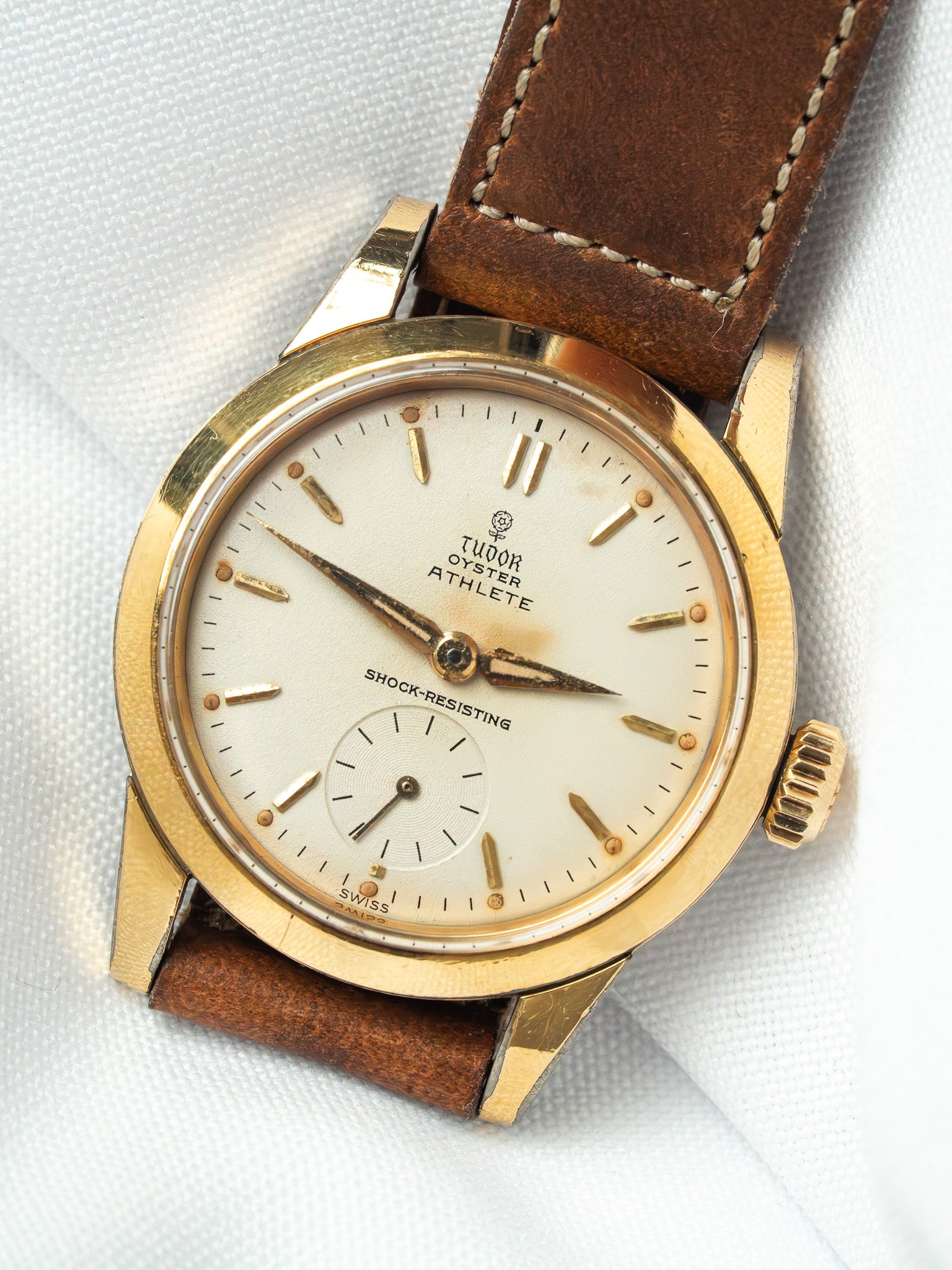
Vintage Rolex Watch Guide
Founded in 1905 by Hans Wilsdorf, Rolex is the most recognized watch brand in the world. From the Datejust to the Submariner, from the Daytona to the GMT-Master — discover the history, collections, manufacture calibres, dial types and expert advice for choosing your vintage Rolex watch.
Read the guide
Rolex: The Design of the Modern Watch
The history of Rolex begins in 1905, when Hans Wilsdorf and Alfred Davis founded the company Wilsdorf & Davis in London. Rolex's major contribution to watchmaking lies not only in mechanical complications, but in the invention of functional standards: the waterproof watch (Oyster case, 1926), reliable automatic winding (Perpetual rotor, 1931), instant date change (Datejust, 1945) and the famous Cyclops magnifying lens. Rolex defined the codes of the contemporary wristwatch.
In 1926, the brand introduced the Oyster case — the first truly waterproof case fitted with a screw-down crown and caseback. In 1931, the patent for the Perpetual rotor established the automatic winding system with a 360° rotating rotor. The following decades saw the birth of references that still dominate the pre-owned market: the Submariner (1953) for professional diving, the Explorer (1953) after the conquest of Everest, and the Cosmograph Daytona (1963) dedicated to automotive timekeeping.
Rolex Vintage Collections in Detail
Datejust: The Standard of the de Ville Watch
The Rolex Datejust, launched in 1945, is the manufacture's cornerstone model. It introduced the date window at 3 o'clock, topped by the Cyclops magnifying lens. In vintage, the most studied references are the ref. 1601 (white gold fluted bezel, Rolesor), the ref. 1603 (steel engine-turned bezel) and the ref. 1600 (smooth bezel). Its historic 36mm diameter is now widely appreciated for its classic balance. Early series often feature a highly sought-after "Pie Pan" dial (sloped edge), fitted on a Jubilee or Oyster bracelet.
Submariner: Underwater Heritage
The Rolex Submariner is the most influential diving watch in history. It established the standards: rotating bezel, screw-down crown and high legibility. Major vintage references include the ref. 5513 (no date, produced from 1962 to 1989), the ref. 1680 (first Submariner with date) and the ref. 5512 (chronometer-certified). The "Red Sub" variant (red lettering on the dial of the 1680) is a particularly prized collector's piece.
Daytona: The Benchmark Chronograph
The Rolex Cosmograph Daytona is one of the most sought-after chronographs in the world. Designed for racing drivers, it features a tachymeter scale on the bezel. The first generations (ref. 6239, 6263) use hand-wound Valjoux 72 calibres. The "Paul Newman" dial configuration (exotic Art Deco markers) represents the pinnacle of the vintage collection. From 1988 onward, the Daytona adopted an automatic movement based on the Zenith El Primero (calibre 4030).
GMT-Master & Explorer
The Rolex GMT-Master, created in 1955 for Pan Am pilots, allows the simultaneous reading of two time zones via a 24-hour hand and a bi-color bezel. The ref. 1675 is the most sought-after vintage reference, famous for its "Pepsi" (blue/red) or "Coke" (black/red) bezels. The Explorer, for its part, favors extreme restraint: black dial, 3-6-9 numerals, and 36mm case. The ref. 1016 is the benchmark vintage Explorer for purists.
Air-King & Oysterdate: Entry into Vintage
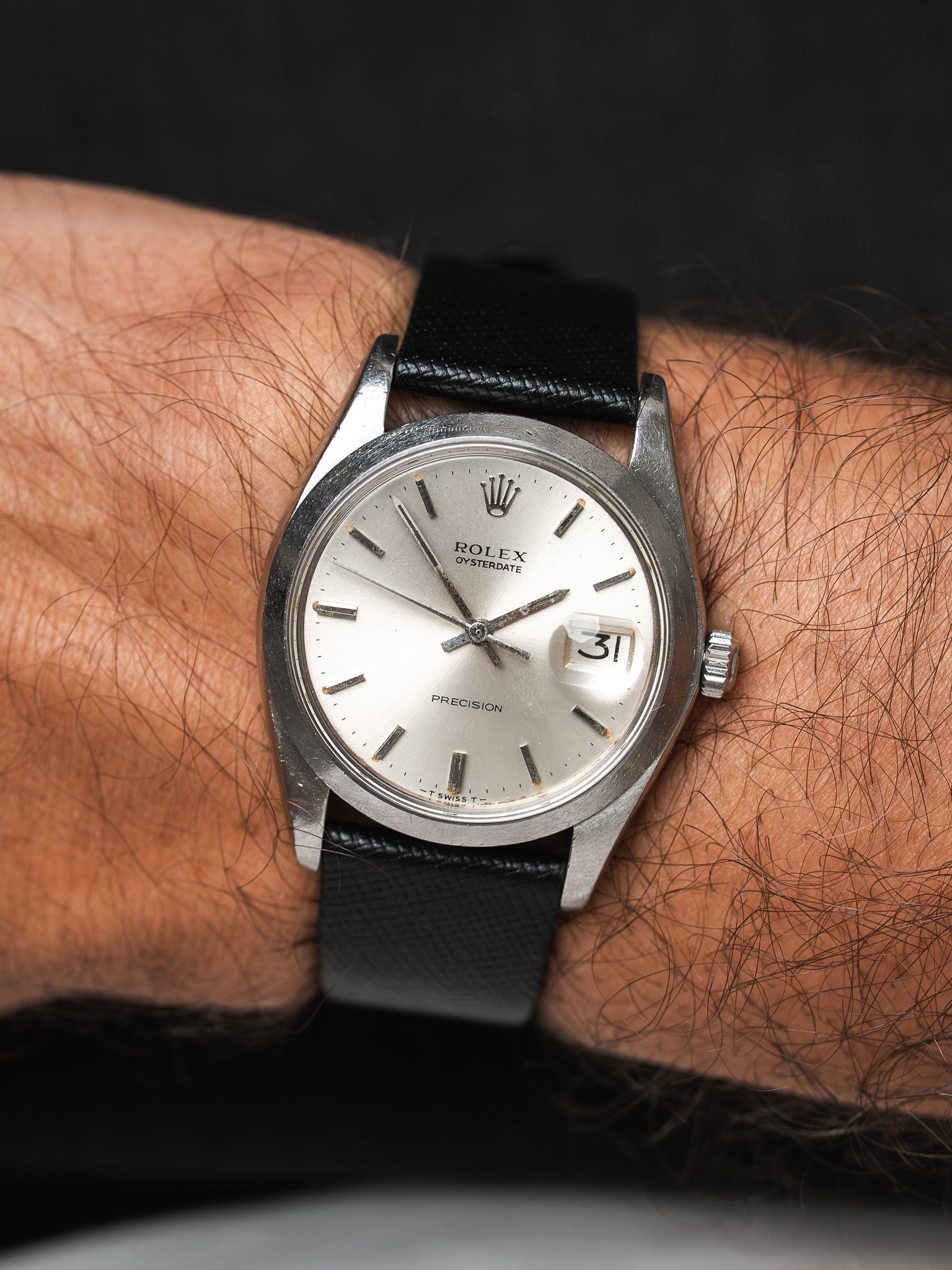
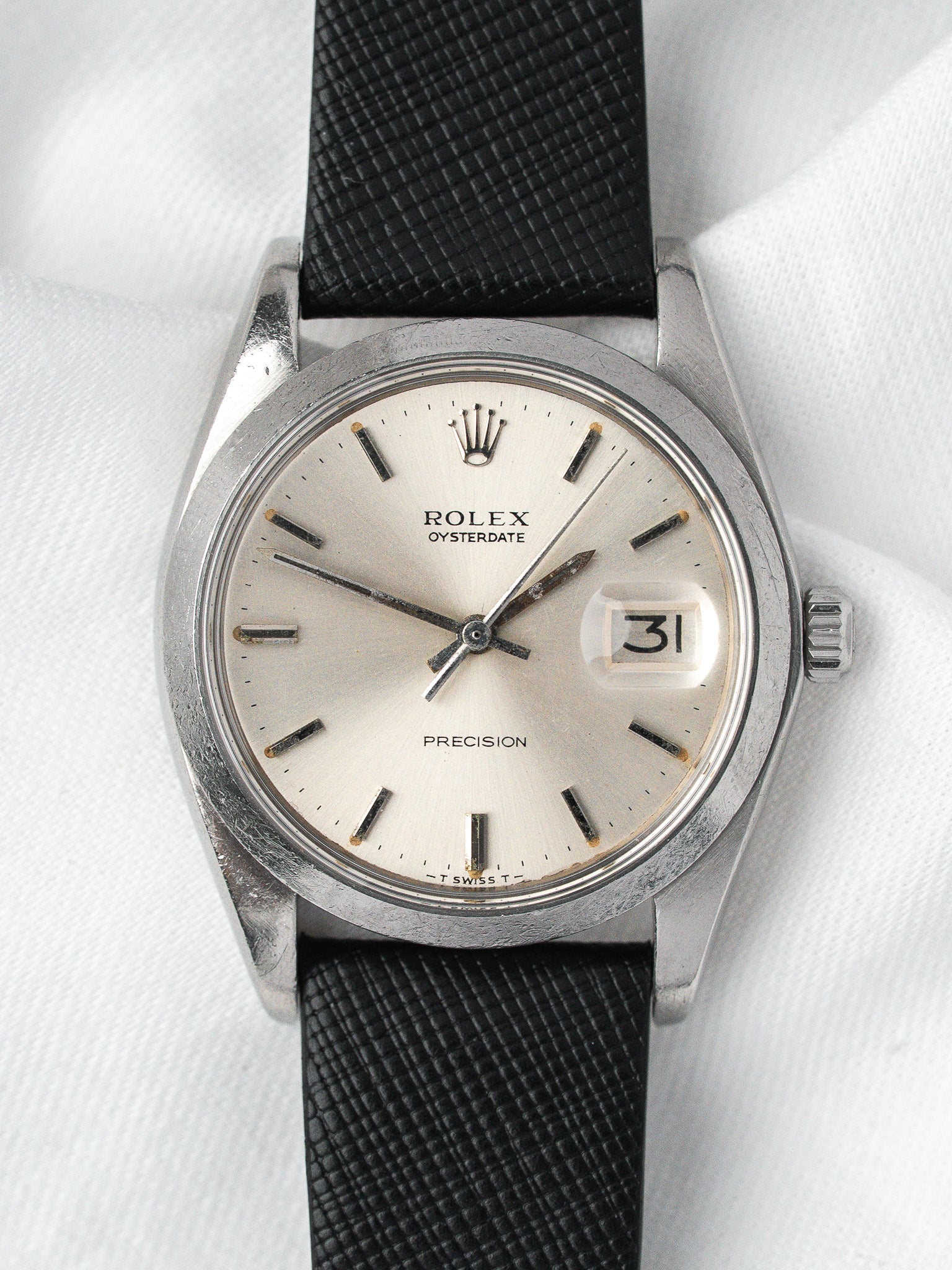
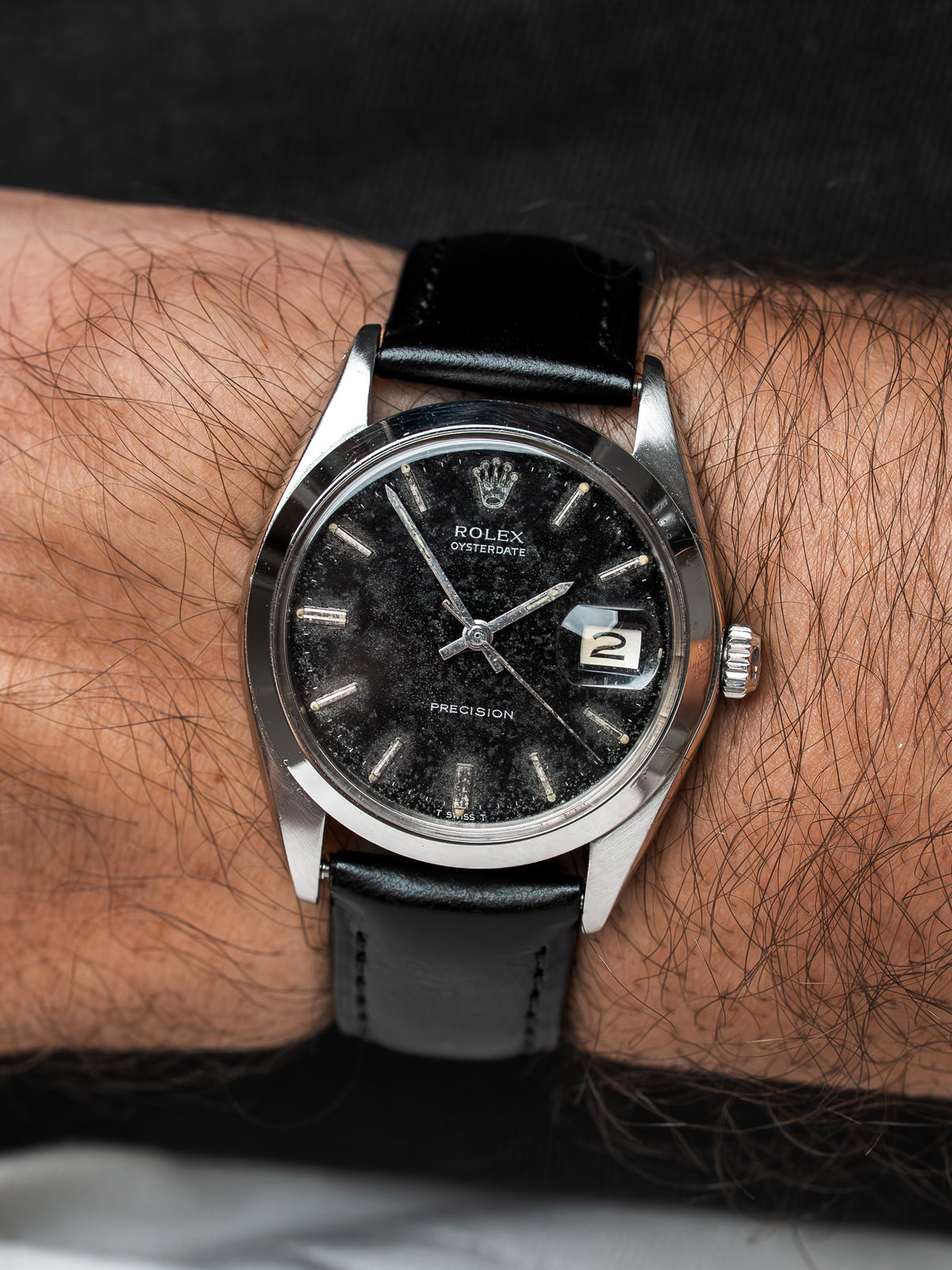
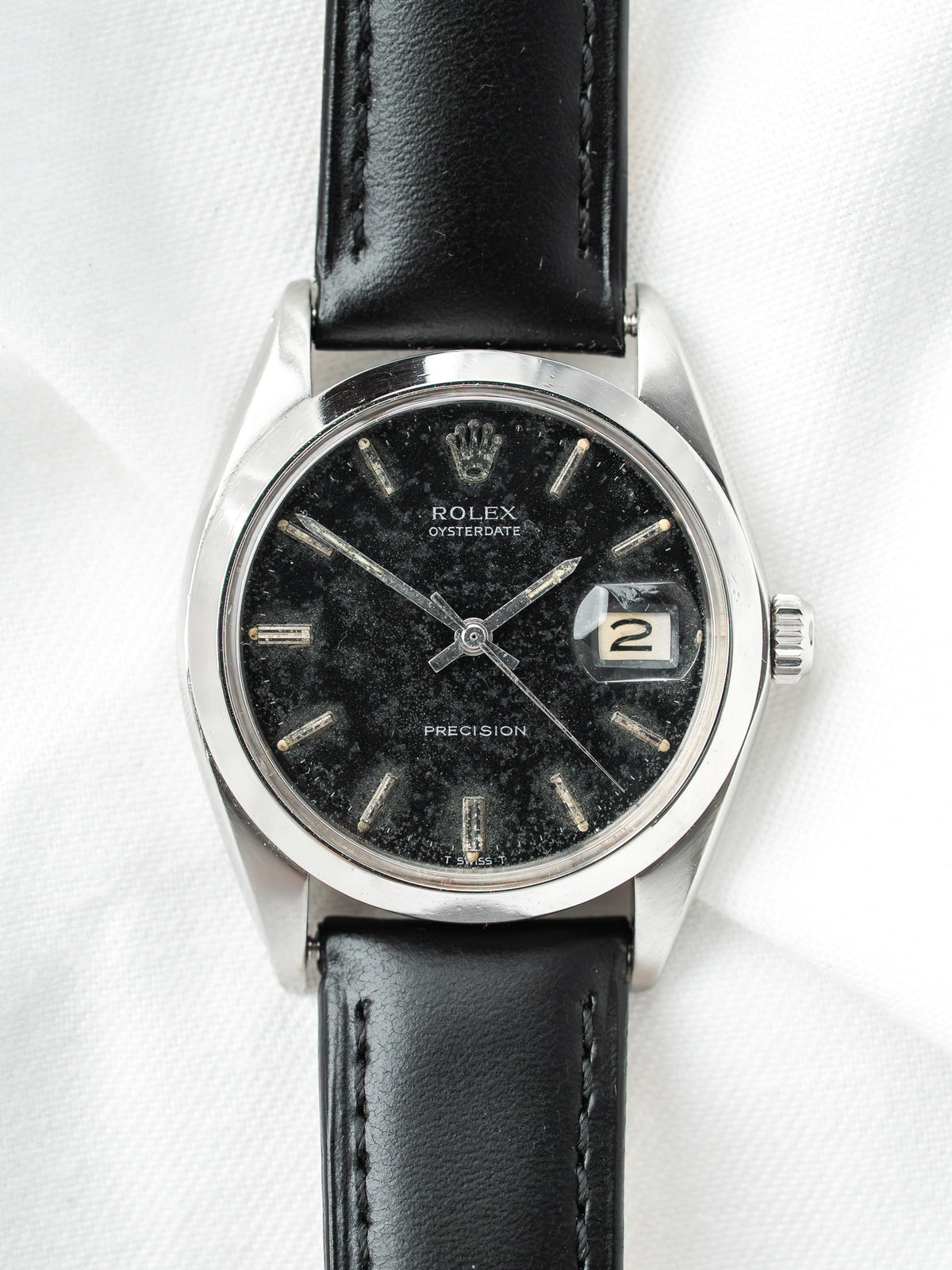
The Rolex Air-King ref. 5500 and the Rolex Oysterdate Precision ref. 6694 (34mm, hand-wound) are ideal entry points into the world of period Rolex watches. They offer the robustness of the Oyster case and the brand's aesthetic at more moderate pre-owned prices.
Rolex Calibres: Understanding Period Mechanics
The 15xx generation of calibres represents the golden age of Rolex in-house movements:
- Calibre 1570 / 1575 — Automatic, 19,800 A/h, COSC-certified. It is the benchmark movement of the 1960s-70s (Submariner 5512, Datejust 1601, GMT 1675). It is renowned for its proven reliability.
- Calibre 1225 — Manual winding, 21,600 A/h. Used in the Oysterdate 6694, it allows for a slimmer case.
- Calibre 3035 / 3135 — Introduced from 1977 and 1988 onward, they mark the transition to high frequency (28,800 A/h) and quick date change.
Components and Patina: The Criteria of Value
The Case Oyster Case
Patented in 1926, the Oyster case ensures water resistance thanks to its screw-down crown and caseback. On vintage models, the crystals are made of plexiglass (acrylic), offering a unique visual warmth, before being replaced by sapphire at the end of the 1980s.
Original Rolex Bracelets
The type of bracelet influences the style and value:
- Jubilee — 5 rows of links, elegant and supple.
- Oyster — 3 rows of links, sporty profile.
- President — Exclusively in precious metals (gold/platinum).
It is normal to find some "play" (stretch) on vintage bracelets with hollow links (folded links) from before 1975.
Dial Types and Patina
- Tropical Dial — The dial has naturally changed from black to brown under the effect of time and UV exposure.
- Gilt Dial — Glossy finish with golden-colored text and minute track, typical of the 1950s-60s.
- Tritium (T Swiss T) — Indicates the use of tritium for luminescence (1960s to 1990s), often developing a cream or honey patina.
Authentication and Expertise Atelier Victor
As Rolex is the most counterfeited brand, our expert watchmakers validate each piece according to strict checkpoints:
- Verification of the consistency between the serial number (engraved at 6 o’clock) and the reference number (engraved at 12 o’clock).
- Inspection of the movement to ensure that it matches the production period.
- Analysis of the originality of the components (hands, dial, bezel insert).
Each Rolex sold by Atelier Victor is accompanied by an invoice serving as a lifetime certificate of authenticity and a one-year mechanical warranty.
Frequently Asked Questions — Vintage Rolex Watches
Which vintage Rolex should you choose for a first purchase?
The Oysterdate 6694 (manual) or the Air-King 5500 (automatic) are excellent choices for their reliability and accessible price point. For an iconic automatic classic, the Datejust 1601 in 36mm remains the benchmark.
Why choose plexiglass on an older Rolex?
Plexiglass (acrylic) is characteristic of Rolex watches produced up to the 1980s. It gives the dial a depth and warmth that modern sapphire does not offer. In addition, light scratches on plexiglass can be polished easily.
What is the difference between "Swiss", "T Swiss T" and "Swiss Made"?
These markings indicate the luminescent material: Radium (Swiss), Tritium (T Swiss T) used from the 1960s to the 1990s, then Luminova (Swiss Made) from 1998 onward. The even patina of tritium is a major criterion for collectors.
Can you wear a vintage Submariner in the water?
We advise against immersion for any vintage watch. Although originally designed to be water-resistant, gaskets and components age. “City” use (rain, hand washing), however, poses no problem.
Are Rolesor models (steel and gold) sought after?
Yes, Rolesor is a highly appreciated Rolex signature, particularly on Datejust and GMT-Master models. It offers a balance between the robustness of steel and the prestige of 18-carat gold.
How should you care for your vintage Rolex?
A complete service is recommended every 4 to 5 years to ensure proper lubrication of the movement. Avoid heavy shocks and sources of intense magnetism. Clean the case and bracelet with a soft cloth after wearing.
Where can you find a period Rolex bracelet?
We offer a selection of vintage Rolex accessories and high-quality compatible bracelets. Contact us via WhatsApp for any specific request.
Discover our other selections: Omega, Cartier , Longines, Tudor. Discover our entire selection in the general collection.
A technical question? Contact our experts via WhatsApp or by email.
Need advice or have a hesitation? Our experts are here to assist you.