





Vintage Watches Guide Cartier
Founded in Paris in 1847, Cartier has become the most elegant watchmaking house in the world. From the Santos in 1904 — the first men's wristwatch — to the Tank in 1917, including the Panthère, the Pasha and the Must line in vermeil, discover the history, models, materials, and expert advice to choose your vintage Cartier watch.
Read the guide
Cartier: From the Jeweler of Kings to the King of Watchmakers
The history of Cartier begins in 1847, when Louis-François Cartier took over the atelier from his master jeweler Adolphe Picard in Paris. Successively established on rue Montorgueil, rue Neuve-des-Petits-Champs, then boulevard des Italiens, the house moved to rue de la Paix in 1899 — an address that would become synonymous with Parisian luxury. Noticed as early as the 1850s by Princess Mathilde and Empress Eugénie, Cartier became a supplier to the royal courts of Europe. King Edward VII of England bestowed upon it the historic title of "jeweler of kings and king of jewelers" in 1902. Today owned by the Richemont group, Cartier is the world's second-largest watchmaker and one of the most recognized luxury brands worldwide.
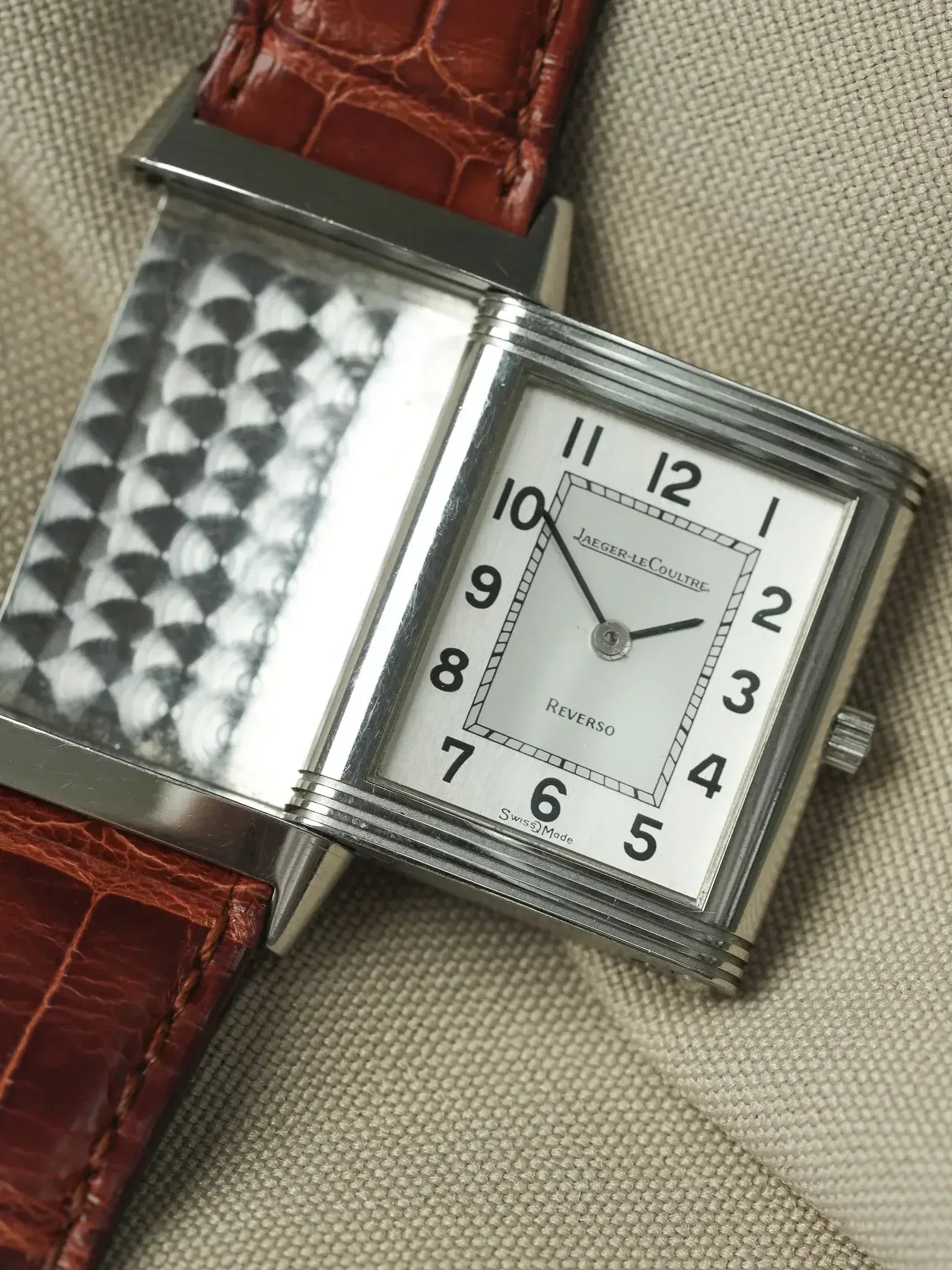
Under the leadership of Alfred Cartier and his three sons — Louis (Paris), Pierre (New York), and Jacques (London) — the house expanded internationally while forging a distinctive watchmaking style: geometric shapes inspired by the Art Deco movement, dials with painted Roman numerals, blue steel sword hands, and a stone cabochon on the crown. In 1907, Cartier signed an agreement with master watchmaker Edmond Jaeger, who would supply the movements for its watches — a founding partnership that immediately elevated Cartier to the rank of a full-fledged watchmaking house.
1904-1917: The Years that Changed Watchmaking
In 1904, Brazilian aviator Alberto Santos-Dumont complained to his friend Louis Cartier about not being able to check his pocket watch while piloting. Louis Cartier designed a watch to be worn on the wrist — the Santos — featuring a square case with exposed screws on the bezel. It was the first men's wristwatch in history — a design at a time when watchmaking knew only round shapes and pocket watches.
In 1917, fascinated by the Renault FT-17 tanks seen from the sky, Louis Cartier created the Tank — two parallel brancards framing a rectangular dial. General Pershing received one of the first examples. The Tank introduced a founding principle: the case lugs extend into the bracelet without a break in the line. Andy Warhol, Jackie Kennedy, Princess Diana, Muhammad Ali, Catherine Deneuve, Yves Saint Laurent, Alain Delon — the Tank has accompanied personalities from all walks of life for over a century.
The 1970s-2000s: The Golden Age of Cartier Vintage
It was in the 1970s that Cartier entered its most interesting period for collectors. Facing the quartz crisis and the surge in gold prices, the house launched the Must by Cartier — a line in vermeil (sterling silver 925 covered with gold, swan hallmark) that broadened access to Cartier luxury. The colored lacquered dials became the signature of an entire era: burgundy dial, midnight blue dial (known as "lapis"), black dial (known as "onyx"), ivory dial, champagne dial, tricolor dial (or "three golds" — yellow gold, rose gold, white gold). Some lacquered dials develop over time a patina called "spider" — fine natural cracks sought after by collectors.
In 1983, the Panthère appeared with its articulated bracelet in rectangular links evoking the feline's coat — emblem of the house since 1914. In 1985, the Pasha imposed a round and sporty format — screw-down crown, protective grid, chain cap. In 1996, the Tank Française was launched for the 150th anniversary, with its integrated link bracelet in contemporary Art Deco style. These four decades constitute the period that collectors seek out as a priority.
The Cartier Vintage Collections in Detail
The Tank: Anatomy of an Icon
The Cartier Tank is one of the most reproduced watches in history. The principle lies in the brancards: two vertical bars that extend the case into the bracelet, without a break in the line. A design introduced in 1917 and remaining relevant ever since.
The Tank Must in vermeil is the most representative Cartier vintage watch. Case rectangular in sterling silver 925 covered with 20 microns of gold (swan hallmark), dimensions 23 x 30 mm in small model (PM) and 25 x 34 mm in large model (GM). Dial with painted Roman numerals and blued steel sword hands. Crown adorned with a blue synthetic sapphire cabochon. Quartz movement caliber ETA 2512 (or mechanical caliber 78-1 on early series late 70s). Screw-down or snap-on back depending on the references. Leather strap with Buckle pin buckle gold-plated engraved Cartier (in a stylized C shape) or Buckle folding clasp. Most common references: ref. 590005, ref. 681006, ref. 5057001. The most sought-after dials: burgundy, tricolor (three golds), lapis (blue), onyx (black). The marking "Cartier Paris" at 6 o'clock and "must de Cartier" on period dials distinguish vintage pieces from recent productions.
The Tank Louis Cartier in 18-carat gold is the most prestigious version of the collection — rounded brancards, guilloché dial, hand-wound mechanical movement, alligator leather strap. The Tank Française, with its integrated link bracelet in steel or steel and gold, is the most contemporary Tank — worn by both men and women. The Tank Américaine with its elongated and curved form, the Tank Cintrée with imposing dimensions (44.7 mm in length), and the Tank Solo in steel complete a family where each version has its collectors.
The Santos: The First Wristwatch in History
The Santos de Cartier introduced the concept of a wristwatch worn by a man. Its square case with visible screws, 7-sided crown, and sword hands are immediately recognizable. In vintage, the Santos Galbée is the most sought-after model: medium format (about 29 mm), integrated bracelet in steel or bicolor steel and gold version, ETA 2671 automatic or quartz movement — a versatile watch for both men and women. The Santos-Dumont, thinner with its alligator leather strap, is the dressed version. The Santos Octogonale from the 70s-80s is a rare piece with an avant-garde octagonal case. The Santos 100 in large format attracts those who prefer a more imposing diameter.
The Pasha: The Sporty Format of Cartier
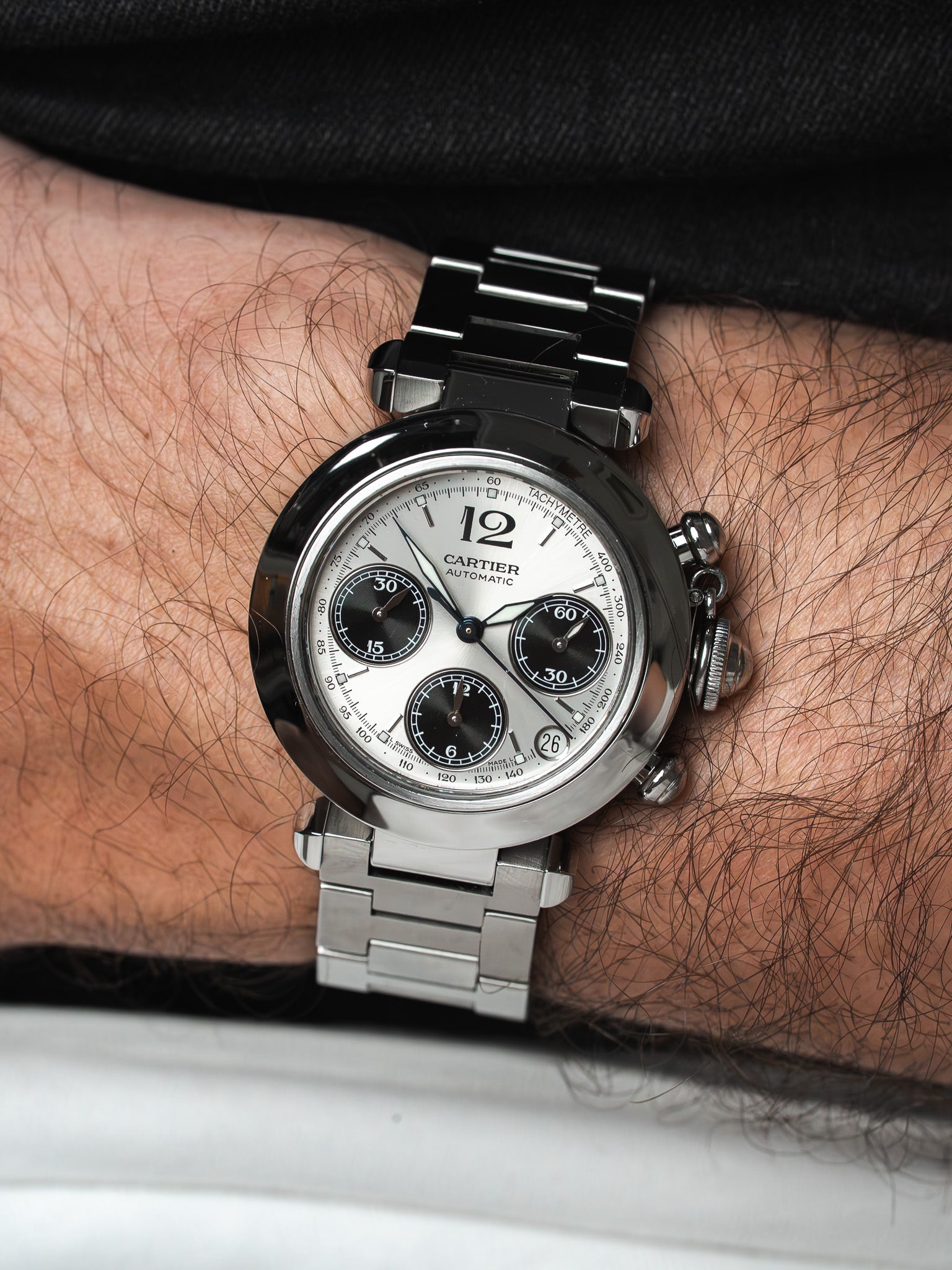
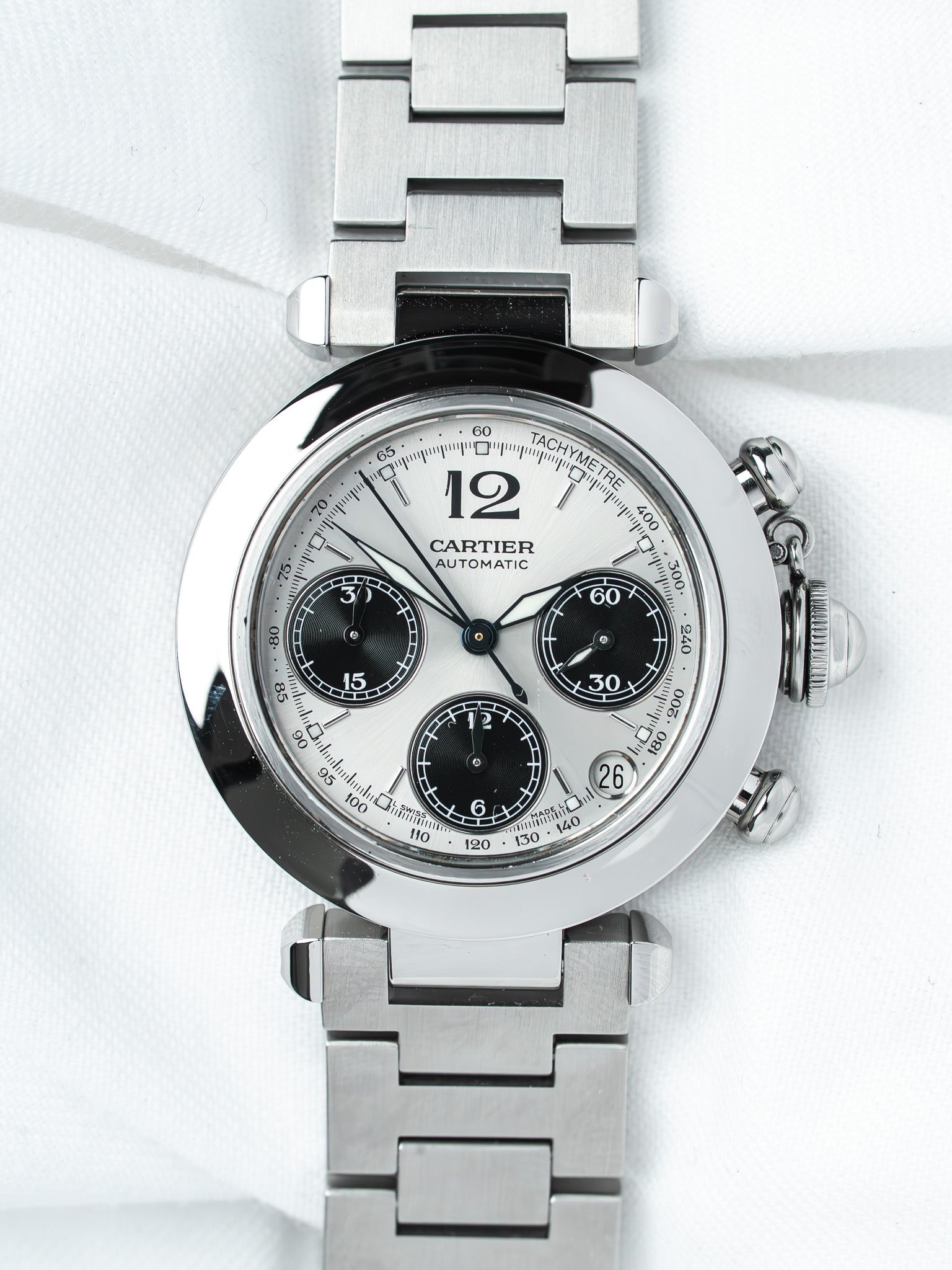
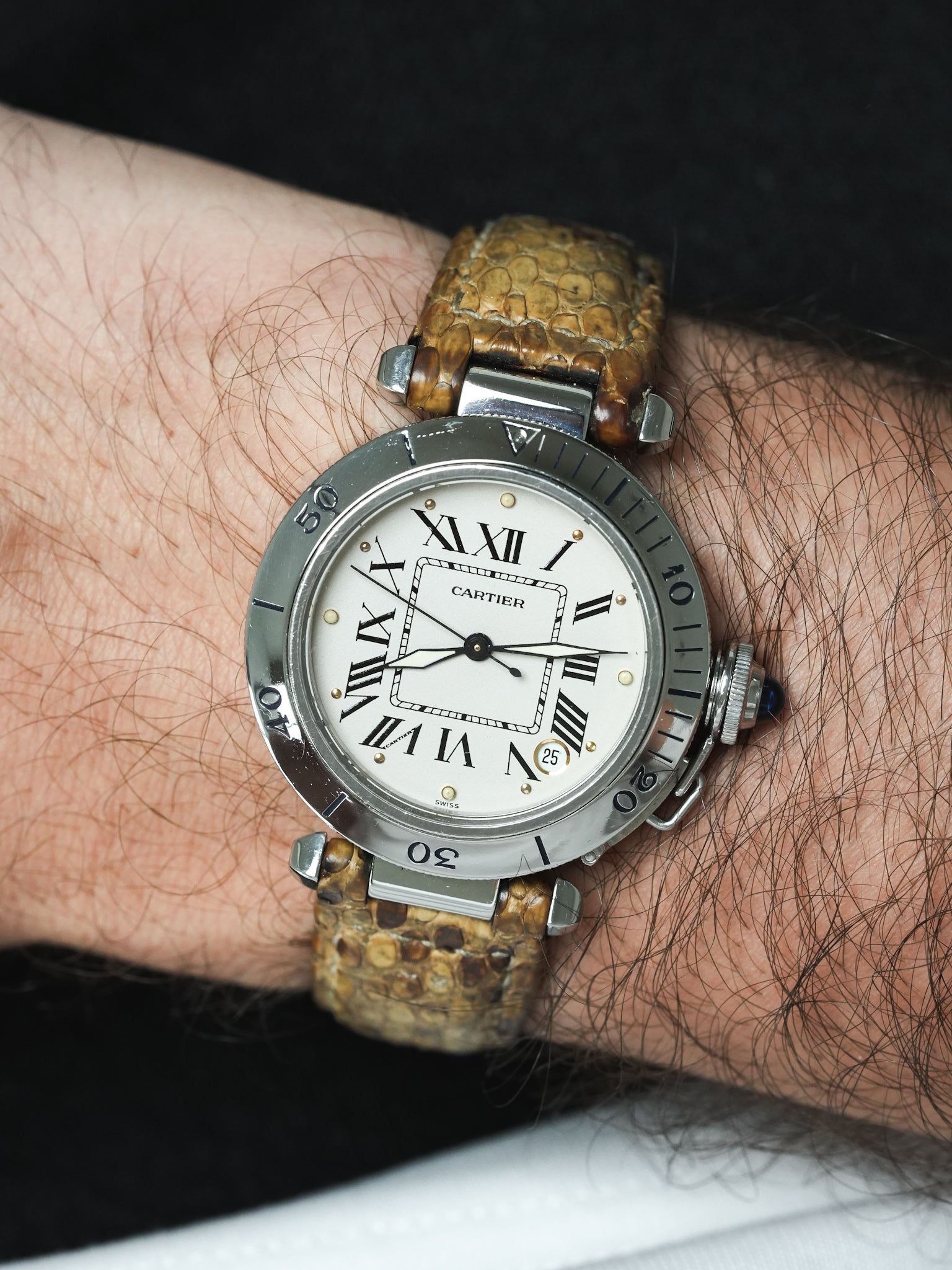
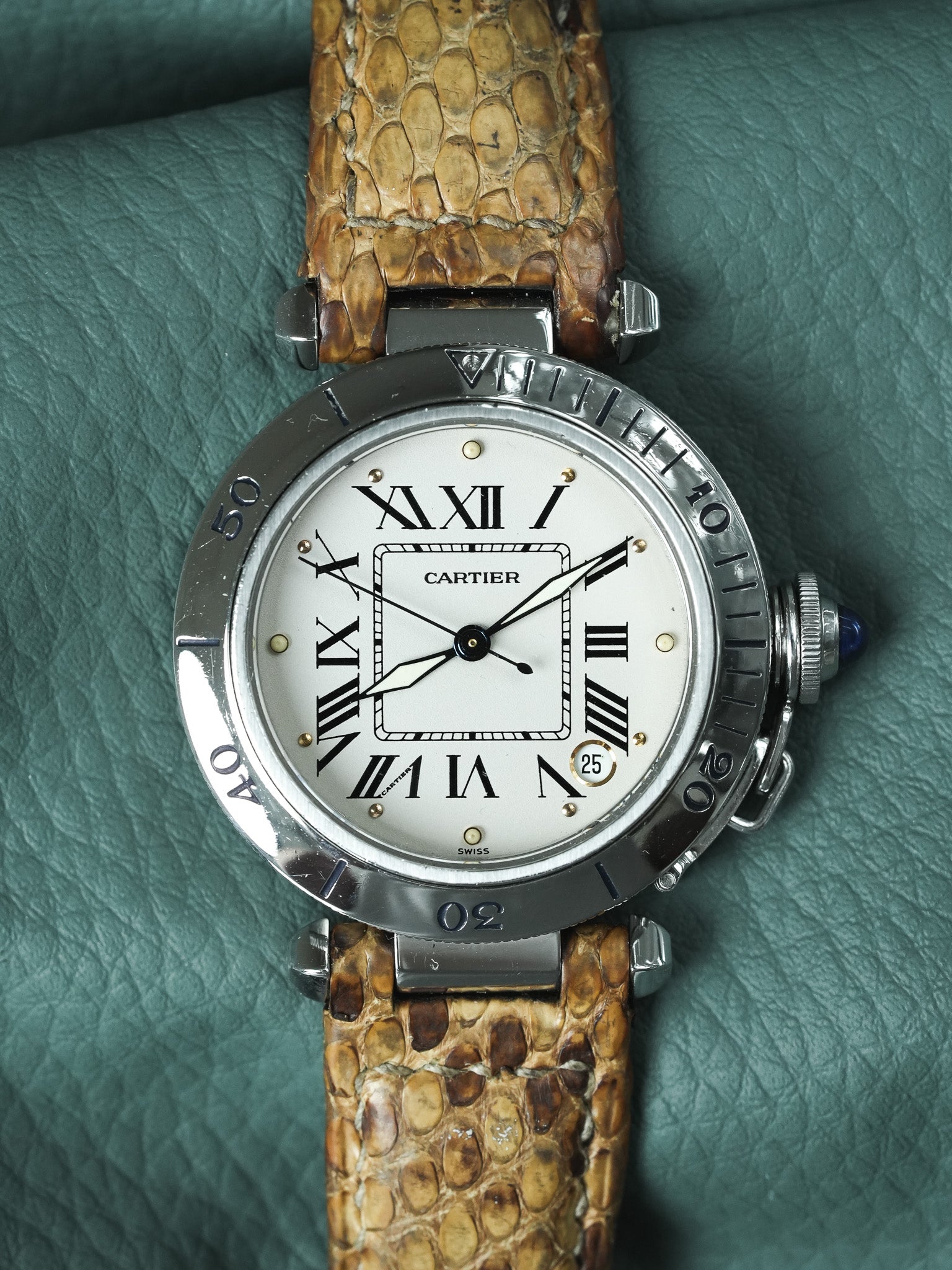
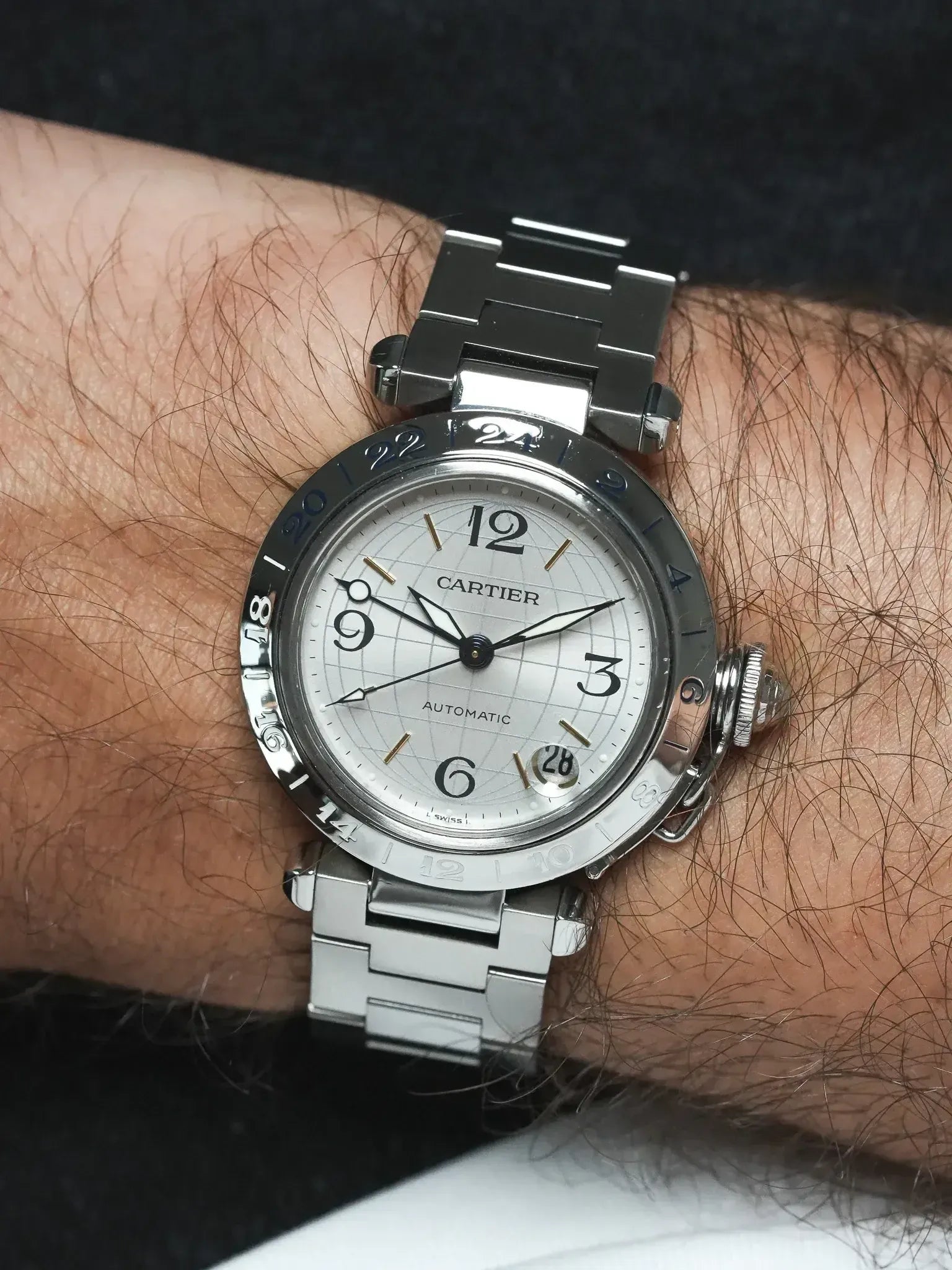
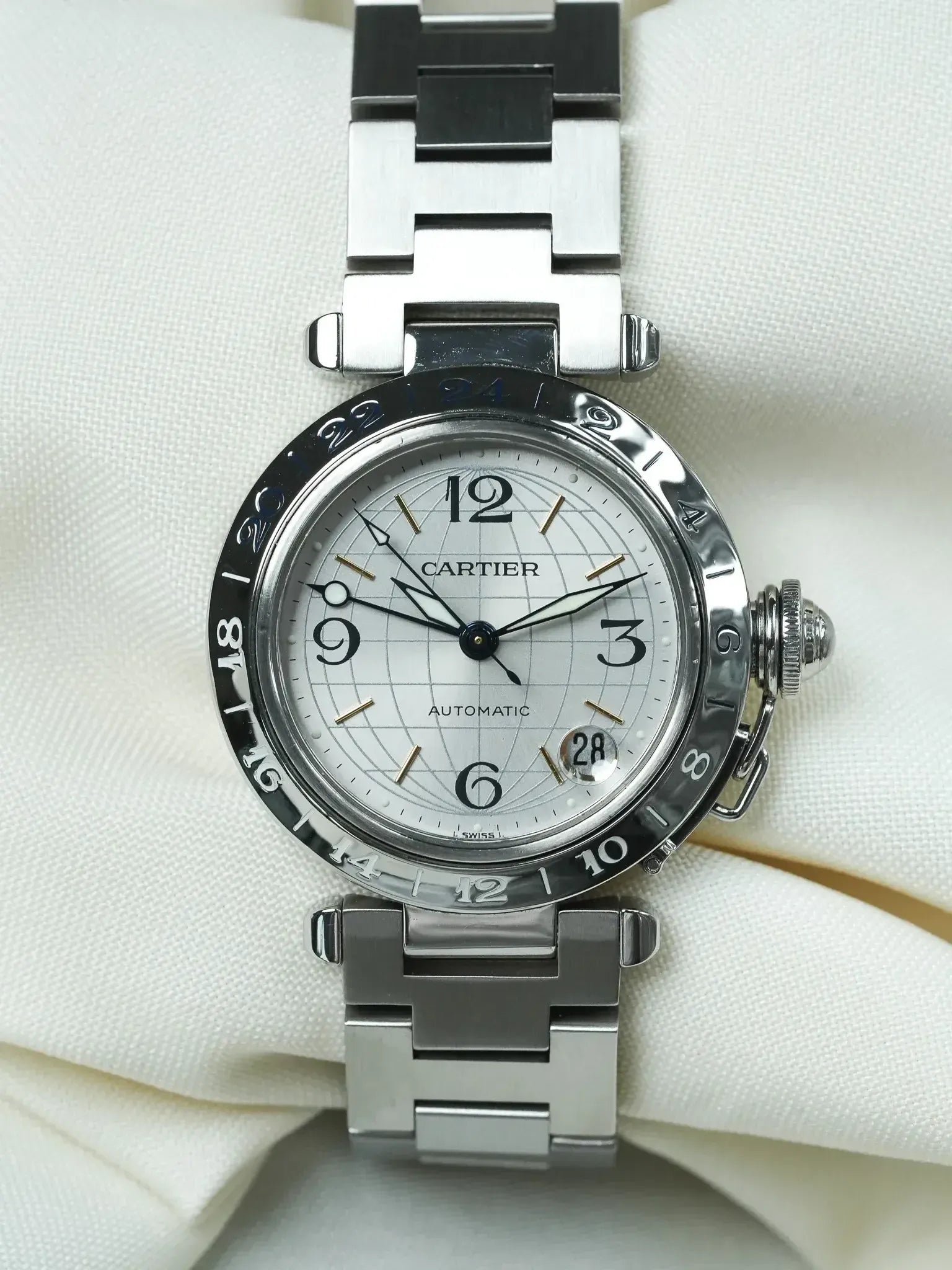
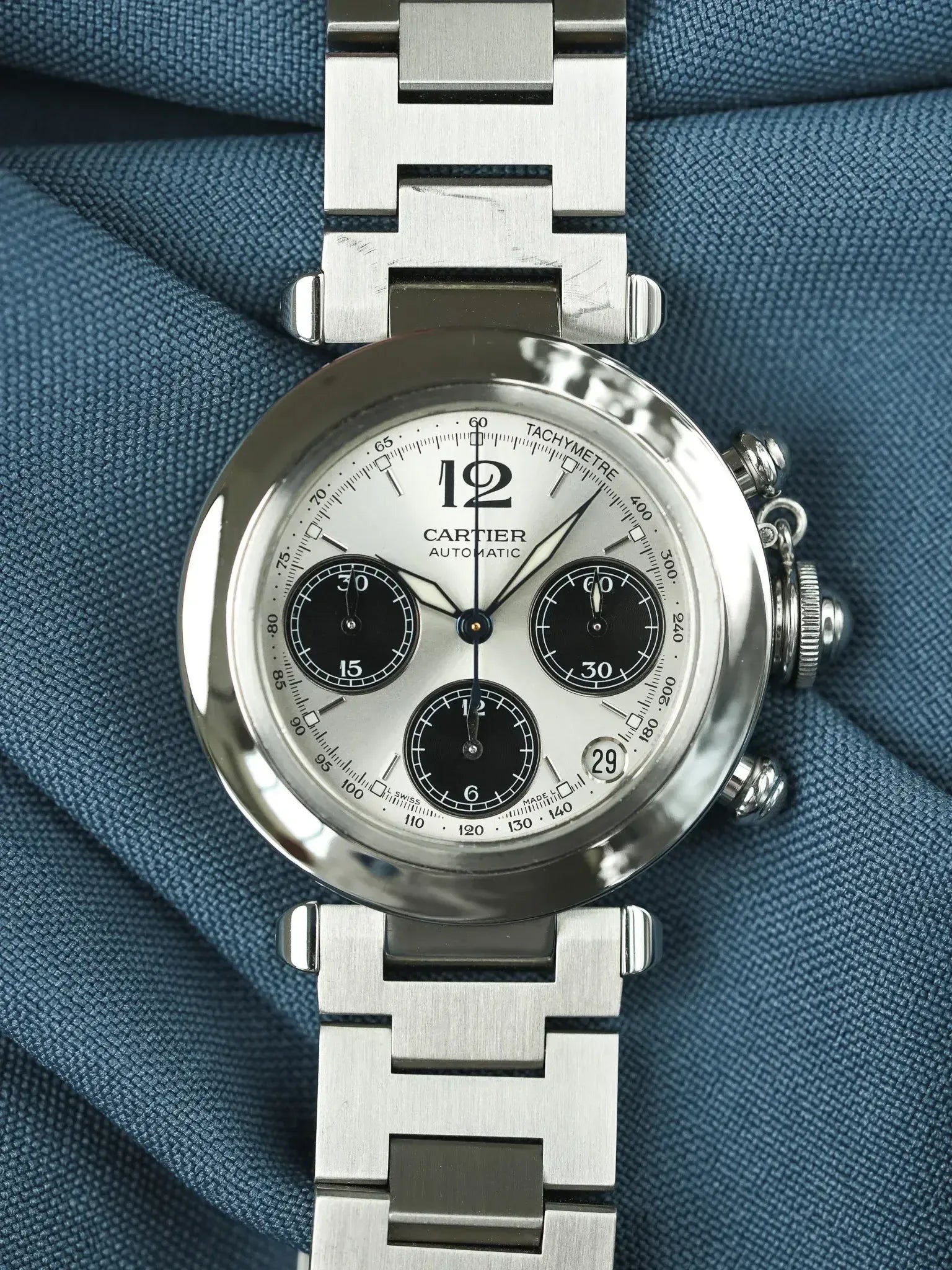
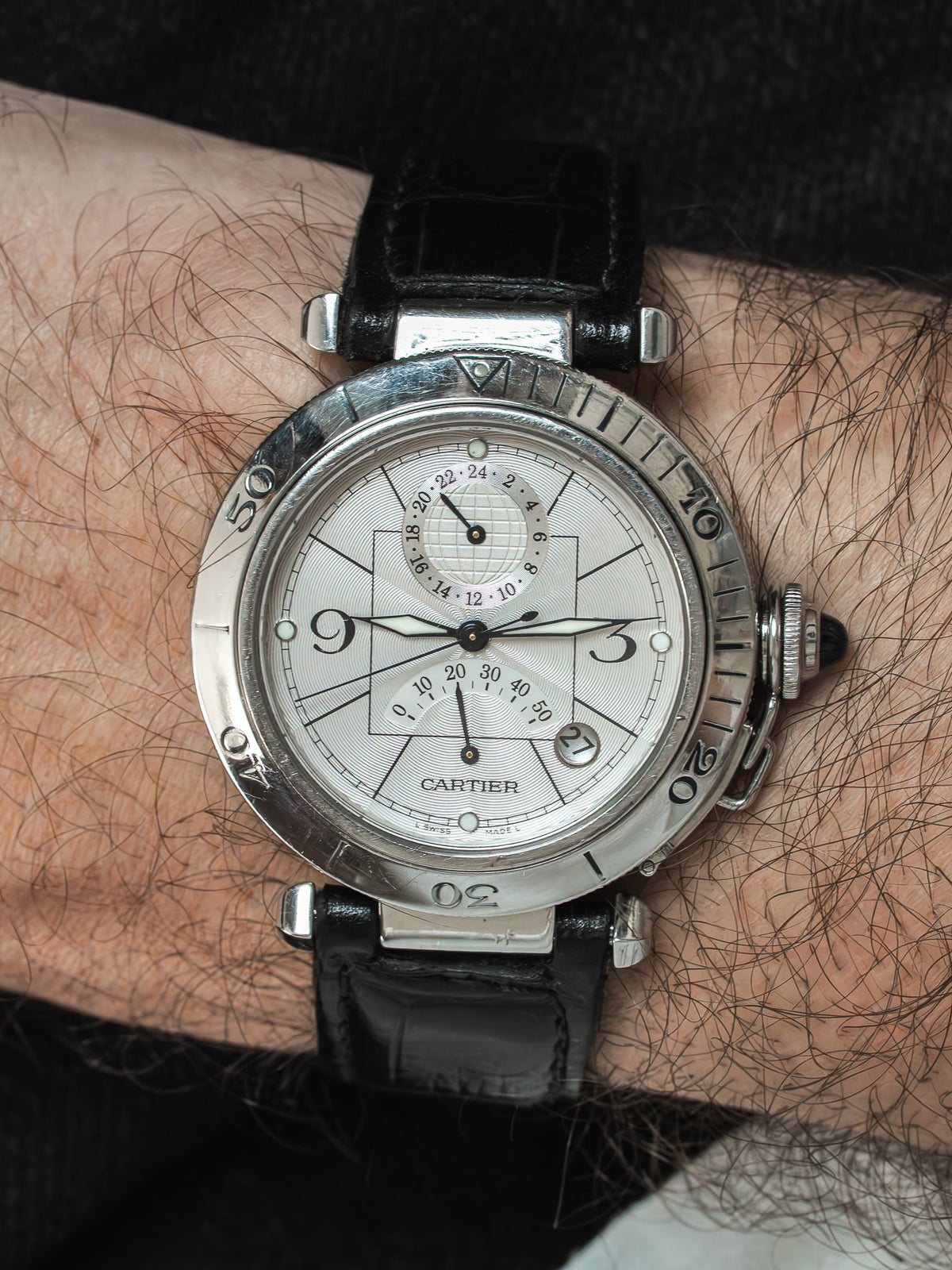
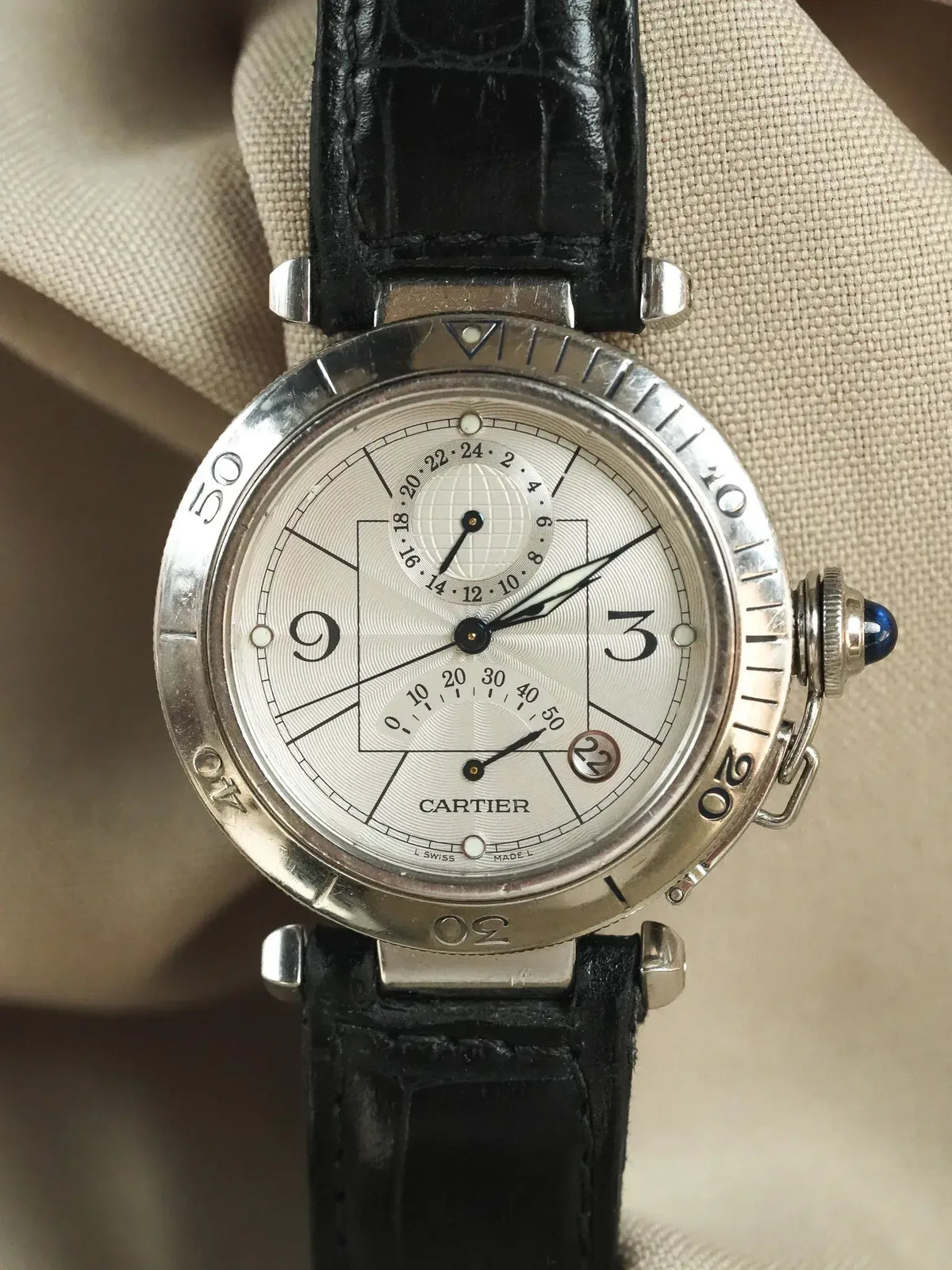
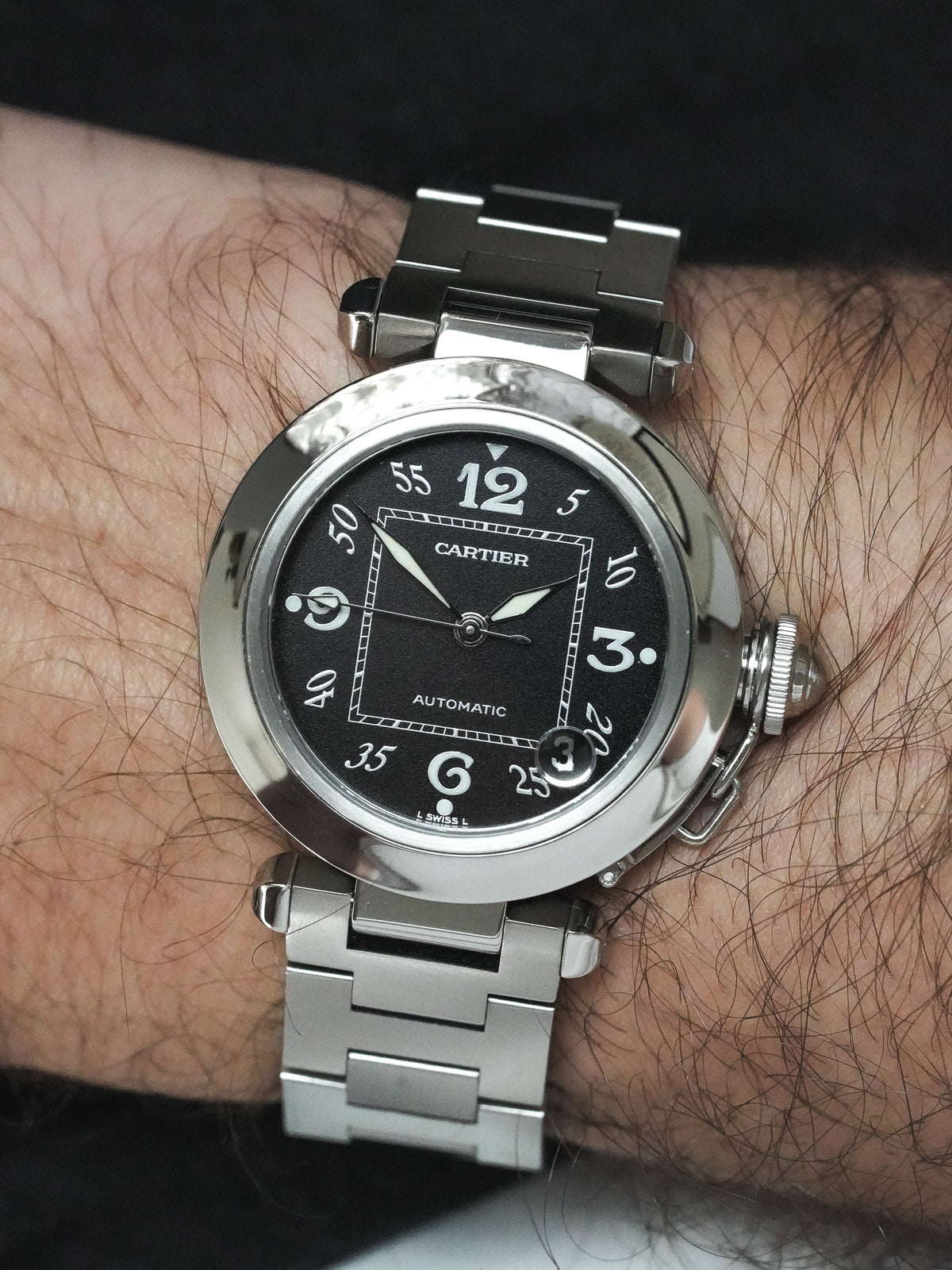
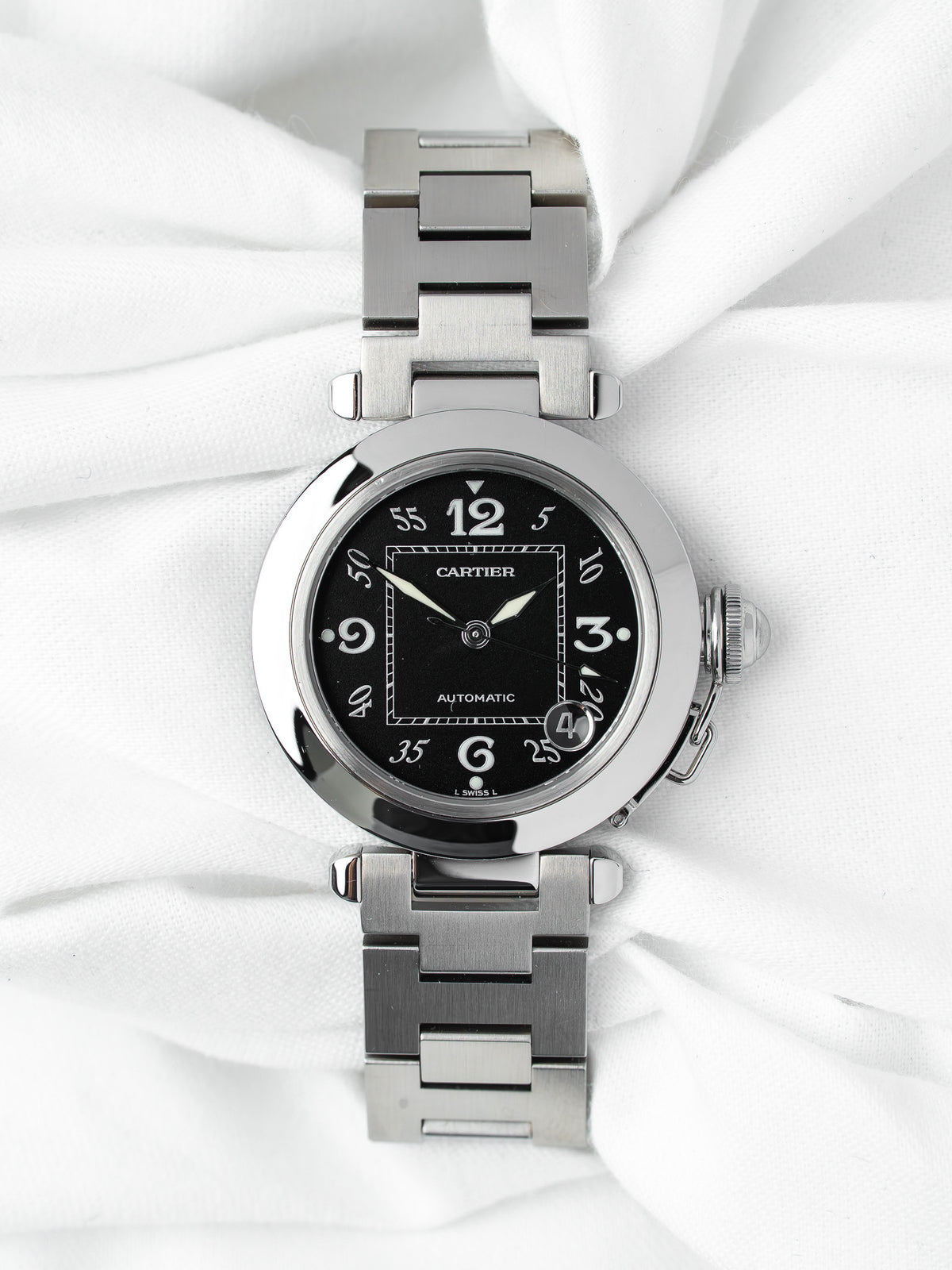
The Pasha de Cartier was born in the early 1930s when the Pasha of Marrakech ordered a waterproof watch from Louis Cartier for his pool. The model was relaunched in 1985: round case (35 mm to 42 mm), screw-down crown protected by a cap with a chain, protective grid, Arabic numerals. The Pasha C (35 mm, automatic, steel) is the most worn vintage reference — a watch that suits both men and women. The Pasha Chronograph, the Pasha GMT (dual time zone), and the Pasha with power reserve are sought-after complications. The versions in 18-carat yellow gold and editions with guilloché dials are particularly valued.
The Panthère: The Jewel Watch
The Panthère de Cartier, launched in 1983, is more a piece of jewelry than a watch. Its articulated bracelet made of rectangular links is a piece of haute joaillerie — it embraces the wrist with distinctive fluidity. Case square with softened corners, quartz movement, elegance on the wrist. The Panthère is the most worn Cartier watch by women, although the large model versions are also adopted by men. It is available in gold-plated, stainless steel, steel and gold (bicolor, "two-tone"), or solid 18-carat gold. Vintage models from the 80s-90s in good condition, with box and papers ("full set") are increasingly sought after.
The Cougar: A Confidential Model
The Cougar by Cartier, produced from the 1980s to the 2000s, is a confidential model sought after by collectors. Case round with balanced proportions, smooth and wide bezel, integrated link bracelet — the Cougar offers the Cartier design at pre-owned prices often more accessible than the Panthère or the Santos. Available in steel, steel and gold, or solid gold, with quartz or automatic movement. The small model of the Cougar is an elegant watch for women; the large model suits men's wrists.
Must Vendôme, Colisée & Must 21
Beyond the Tank Must, the Must line by Cartier includes round models to know. The Must Vendôme — round case in vermeil or gold-plated, champagne or ivory dial with Roman numerals — is a classic Cartier watch in round format. The Must Colisée offers a round silhouette with integrated lugs. The Must 21 (or Autoscaph) combines sportiness and elegance with its bezel featuring Roman numerals and its two-tone steel and gold finish — often compared to the Santos for its everyday versatility. The Must 21 is available in quartz and automatic versions, in small model for women and large model for men.
Materials & Movements: Understanding Cartier Vintage
Vermeil: The Signature Material
The vermeil Cartier is sterling silver 925 (identifiable by the swan hallmark) covered with a layer of gold of 20 microns (the legal minimum for vermeil is 3 microns). More noble than gold-plated — which has a brass base — more accessible than 18-carat solid gold, vermeil develops a warm patina over time that gold-plated cannot reproduce. Light wear on the edges is part of the vintage character. To preserve the gilding: avoid prolonged contact with water, perfumes, and chemicals.
Stainless Steel, 18-Carat Gold & Two-Tone
Stainless steel equips the most robust models: Santos Galbée, Pasha, Must 21, Tank Française, Tank Solo. 18-carat gold (or 750‰) — yellow, rose, or white — is found on Tank Louis Cartier, gold Pasha, and high-end Panthère. The versions Two-tone steel and gold ("two-tone") offer a compromise between robustness and refinement — sought after on the Santos, Panthère, Cougar, and Must 21. The bracelets are available in steel (links), alligator leather, lizard leather, or crocodile leather depending on the model.
The Cartier Vintage Movements
The majority of Cartier vintage watches are equipped with Swiss ETA quartz calibers — a deliberate choice by the house, which has always favored design over mechanical complication. The most common calibers: ETA 2512 (quartz), caliber 90 (quartz, 90s series). The automatic models use ETA 2671 calibers (small format) or ETA 2892 (Santos Galbée, Pasha C, Cougar). The hand-wound mechanical movements — caliber 78-1 (ETA derived) — are found on the Tank Must from the first series (late 70s) and the Tank Louis Cartier in gold. These are the most sought-after references by collectors. At Atelier Victor, each movement is serviced and adjusted by our watchmakers before sale.
How to Recognize an Authentic Cartier Vintage
The Cartier pre-owned watches are among the most counterfeited in the world. Here are the checkpoints our watchmakers verify:
- Hidden signature — the microscopic word "Cartier" in the V of the Roman numeral VII on the dial (present on most models post-1970)
- Dial marking — "Cartier Paris" or "must de Cartier" with typography specific to each era
- Back hallmarks — serial number, reference, swan hallmark (sterling silver 925) for vermeil, eagle head hallmark for 18-carat gold
- Crown cabochon — synthetic sapphire blue or spinel depending on models and eras
- Original Buckle — Buckle ardillon in stylized C or Buckle deployant Cartier on the leather strap
- Movement — ETA caliber corresponding to the reference (e.g., ETA 2512 for Must quartz, 78-1 for Must mechanical)
- Hands — blued steel sword hands, characteristic of the house
At Atelier Victor, each Cartier watch is authenticated by our experts — you do not have to perform these checks yourself. Each piece comes with an Atelier Victor invoice and a lifetime authenticity guarantee.
Cartier Vintage on the Pre-Owned Market
Market observers consider Cartier second-hand watches as still undervalued compared to Rolex or Patek Philippe. Factors driving this trend include the return of small-sized watches, the visibility of Cartier on the wrists of celebrities, and the quality of pieces from the 70s-90s. The Tank Must in vermeil with burgundy dial or tricolor, the Panthère in solid gold, the Pasha Chronograph and the Santos of early references are part of the models whose value is regularly increasing. The presence of the original box and papers (full set) significantly increases the value of a Cartier watch on the pre-owned market.
Frequently Asked Questions — Cartier Vintage Watches
How to verify the authenticity of a Cartier vintage watch?
Checkpoints: the microscopic "Cartier" signature in the V of VII on the dial, the "Cartier Paris" marking, the hallmarks on the back (serial number, swan hallmark for vermeil), the Buckle C-shaped buckle, the blued steel sword hands, and the ETA movement corresponding to the reference. At Atelier Victor, each pre-owned Cartier watch is authenticated by our experts — lifetime authenticity guarantee.
What is the difference between Tank Must, Tank Française and Tank Louis Cartier?
The Tank Must is in vermeil (925 silver gold-plated, swan hallmark) with a quartz movement — it's the most accessible vintage Cartier watch, available in small model (PM, 23x30 mm) or large model (GM, 25x34 mm). The Tank Française is in steel or bicolor version with an integrated link bracelet — more robust for daily wear. The Tank Louis Cartier is in 18-carat gold with a hand-wound mechanical movement — the most prestigious version of the collection.
What are the most sought-after dials on a Tank Must Vermeil?
The burgundy dial is the most iconic and sought-after. It is followed by the tricolor dial (three golds — yellow gold, rose gold, white gold), the lapis dial (deep blue), the onyx dial (black), and the ivory dial with Roman numerals. Dials that have developed a natural spider patina are particularly valued by discerning collectors.
What is the difference between the Santos Galbée and the Santos-Dumont?
The Santos Galbée features an integrated bracelet in steel or bicolor version, a slightly domed case (about 29 mm), and an automatic or quartz movement. The Santos-Dumont is thinner, flatter, with an alligator leather strap — the dress version faithful to the 1904 design.
Is the Pasha by Cartier a men's or women's watch?
Both. The Pasha C in 35 mm is worn by both women and men — a size that works on all wrists. The 38 mm and 42 mm versions are more suited to male wrists. The Pasha is available in Date, Chronograph, GMT, and with power reserve versions.
How to maintain the vermeil of a Cartier watch?
Vermeil (925 silver gold-plated 20 microns, hallmark swan) requires minimal care: avoid contact with water, perfumes, and chemicals. Wipe with a soft cloth after each wear. Store in a case or a soft Pouch. Slight wear at the corners is completely normal on a vintage piece — it's the natural patina of vermeil.
What movements equip the vintage Cartier watches?
The most common calibers: ETA 2512 and caliber 90 (quartz), caliber 78-1 (hand-wound mechanical, early series Must and Tank Louis Cartier), ETA 2671 and ETA 2892 (automatic, Santos Galbée, Pasha C, Cougar). At Atelier Victor, each movement is serviced and adjusted before sale — one-year mechanical warranty.
What is the "spider" patina on a Cartier dial?
The "spider" patina refers to fine natural cracks that appear on the lacquered dials of Cartier Must Vermeil — notably the burgundy and onyx dials. It is not a defect: this patina makes each dial unique and attests to the age of the watch. A spider dial in good condition can even increase the value of a piece among discerning enthusiasts.
Why do some Cartier have "Cartier Paris" and others simply "Cartier"?
The marking "Cartier Paris" is characteristic of watches produced before around the 2000s. More recent productions simply bear "Cartier". For collectors, "Cartier Paris" is a sought-after era indicator that visually distinguishes a vintage piece.
Does the vintage Panthère from Cartier appreciate in value?
The Panthère has seen a notable resurgence in interest with the return of small-sized watches. Vintage models from the 80s-90s in good condition — particularly in solid gold or two-tone versions, with box and papers — are increasingly sought after. At Atelier Victor, we primarily consider a watch as a pleasure purchase.
What is a "full set" for a Cartier watch?
A full set refers to a watch sold with its original box (red Cartier case), its papers (warranty certificate, manual), and ideally its purchase invoice. A full set significantly increases the value of a Cartier watch on the pre-owned market — collectors are willing to pay a premium for a complete set.
Can you wear a vintage Cartier watch underwater?
We recommend avoiding immersion for any vintage watch — even the Pasha, whose original water resistance (100 m) is no longer guaranteed after decades. The seals degrade over time. For steel models, rain and handwashing pose no daily problem. For vermeil models, avoid any contact with water.
Where to find a replacement strap for a vintage Cartier watch?
Atelier Victor offers watch straps compatible straps — in alligator leather, lizard leather, or calf leather, with suitable lug widths (14 mm for Tank PM, 16 mm for Tank GM, 18 mm for Santos and Pasha). Contact us via WhatsApp.
Discover our collections Cartier by model: Cartier Tank vintage, Cartier Santos vintage, Cartier Pasha vintage . And our other collections: Vintage Rolex, Vintage Omega, Vintage Longines, Vintage Piaget.
A question about a Cartier vintage watch? Contact us via WhatsApp or email.
Need advice or have a hesitation? Our experts are here to assist you.