

















Vintage Gucci Guide
Founded in 1921 in Florence by Guccio Gucci, the Gucci house is the one that invented the Bamboo, the Horsebit, the Jackie, and the GG canvas — some of the most recognizable visual codes of global luxury. From the Jackie bags of the 60s to the GG belts, watches to wallets — discover our complete guide to the Gucci vintage universe.
Read the guide
Gucci: The Florentine Artisan Who Became a Symbol of Global Luxury
The story of Gucci begins in 1921 when Guccio Gucci — the son of a Florentine leather craftsman — opened a leather goods and saddlery shop in Florence, Via della Vigna Nuova. Before founding his house, Guccio worked as a luggage porter at the Savoy Hotel in London — an experience that gave him an intimate understanding of luxury and the expectations of wealthy clientele. He observed the suitcases, bags, and accessories of the Savoy's international clientele — and decided to create leather goods that combined Florentine craftsmanship with international elegance.
The 1930s-40s are marked by innovations that would become the house's signatures. During World War II, leather restrictions imposed by Mussolini's regime pushed Gucci to experiment with alternative materials. It is from this constraint that the Bamboo bag (1947) was born — a bag with a handle made of heated and hand-bent bamboo, a technique borrowed from Japanese artisans. Bamboo became the first visual signature of Gucci. It was also at this time that Gucci developed its coated canvas with diamond pattern — the ancestor of the future GG canvas.
In the 1950s, Guccio's sons — Aldo, Vasco, Ugo, and Rodolfo Gucci — developed the codes that would define the house: the Horsebit (double ring and bar horse bit — a tribute to Florence's equestrian origins), the Web stripe (red and green stripe inspired by a horse saddle strap), and the GG canvas (interlaced double G monogram — the initials of Guccio Gucci). Aldo Gucci opened the first international boutiques: New York (1953), London, Paris, Tokyo. Gucci became a global brand.
The 1960s marked the peak of Gucci glamour. Jackie Kennedy was photographed multiple times with a Gucci bag — the soft hobo bag with a piston clasp would be renamed "Jackie" in her honor. Grace Kelly, Elizabeth Taylor, and Audrey Hepburn wore Gucci. Princess Diana was associated with the Bamboo. The Flora — a floral-patterned scarf designed in 1966 for Grace Kelly — became a signature motif. In 1994, Tom Ford takes the artistic direction and transforms Gucci into a contemporary fashion brand — velvet, satin, hypersexuality — a repositioning that propels Gucci to the top of the luxury industry. Gucci is now part of the Kering group (since 1999).
The Visual Codes of Gucci: What to Recognize
The GG Canvas (Double G)
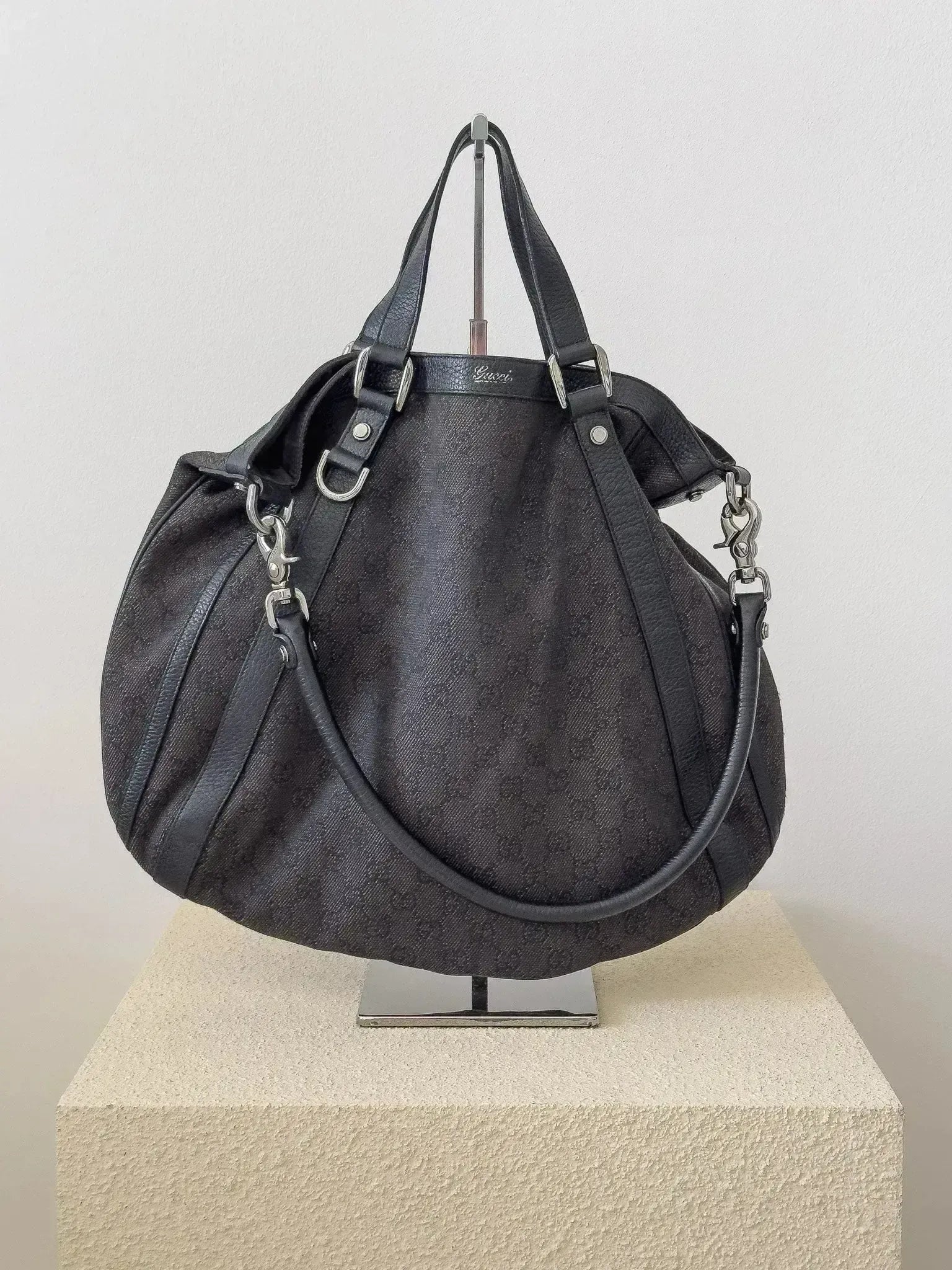
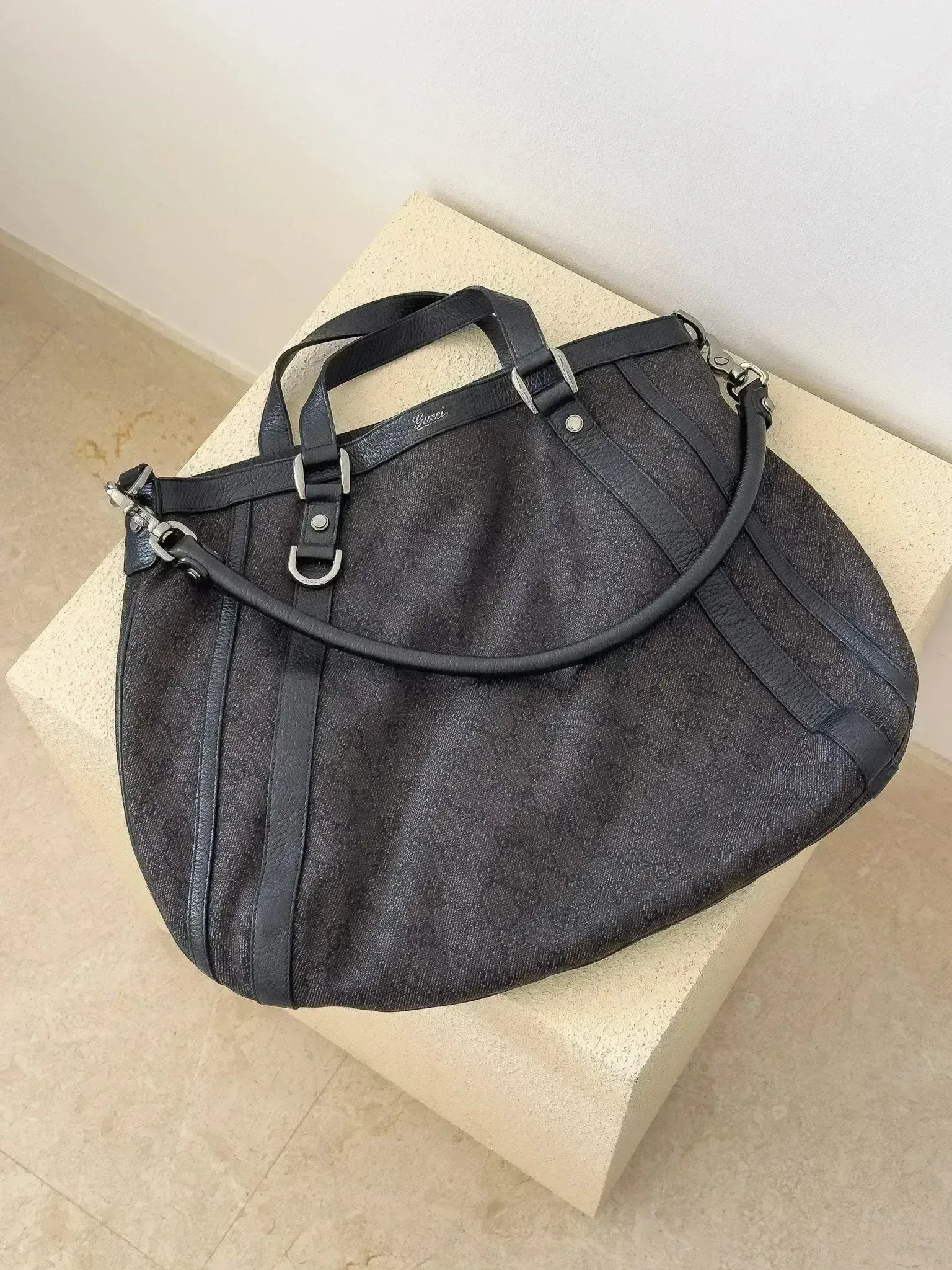
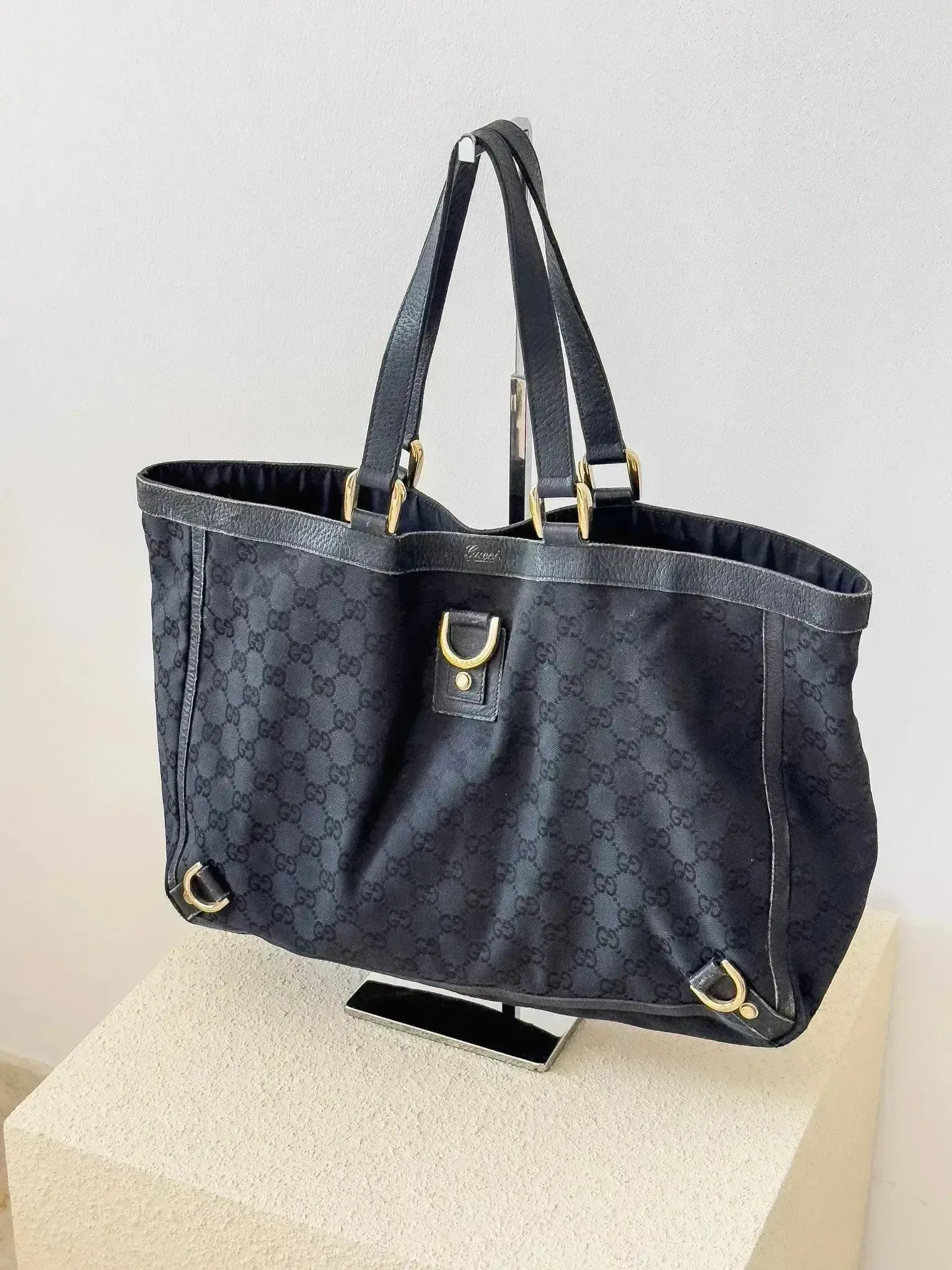
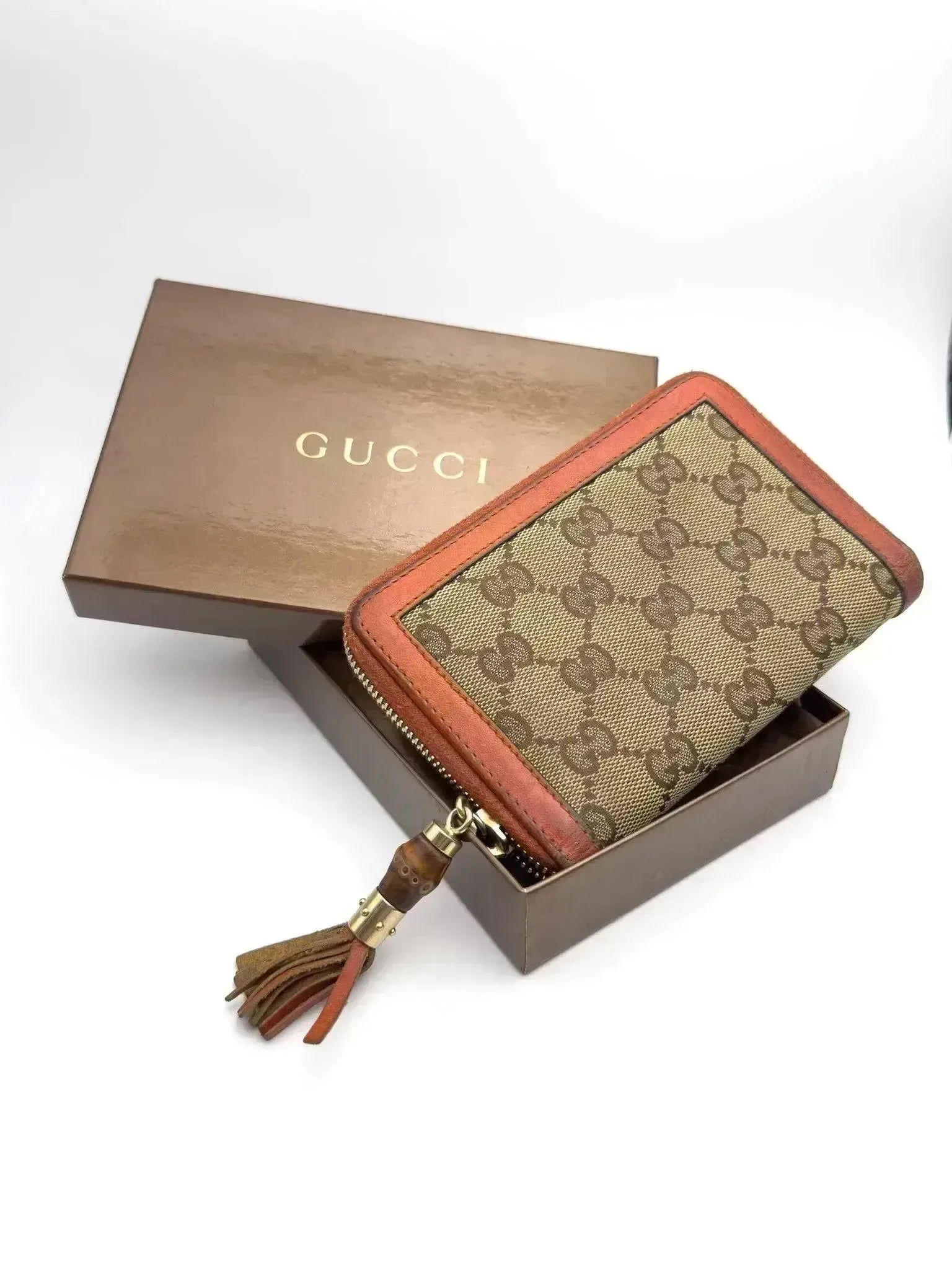
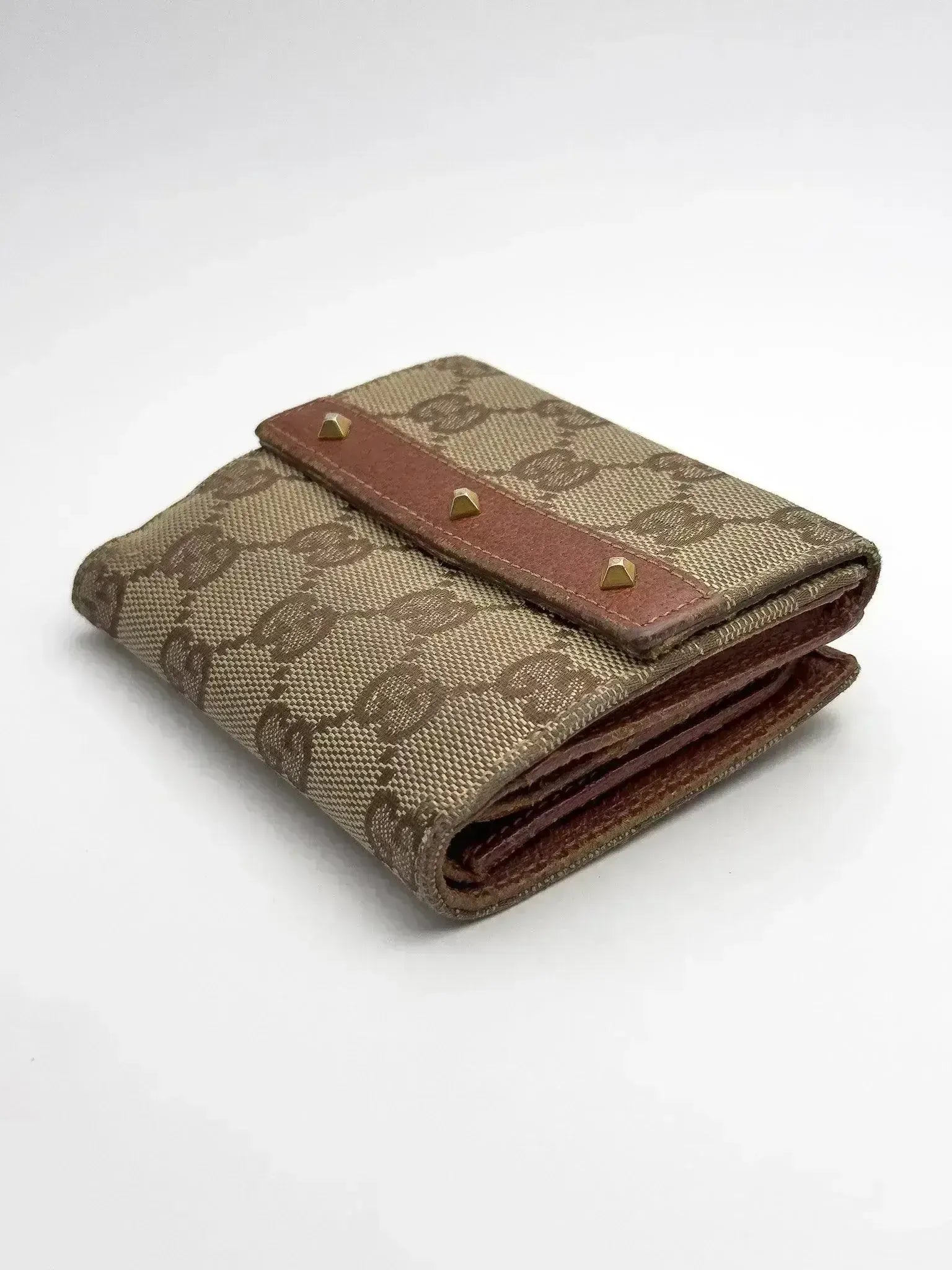
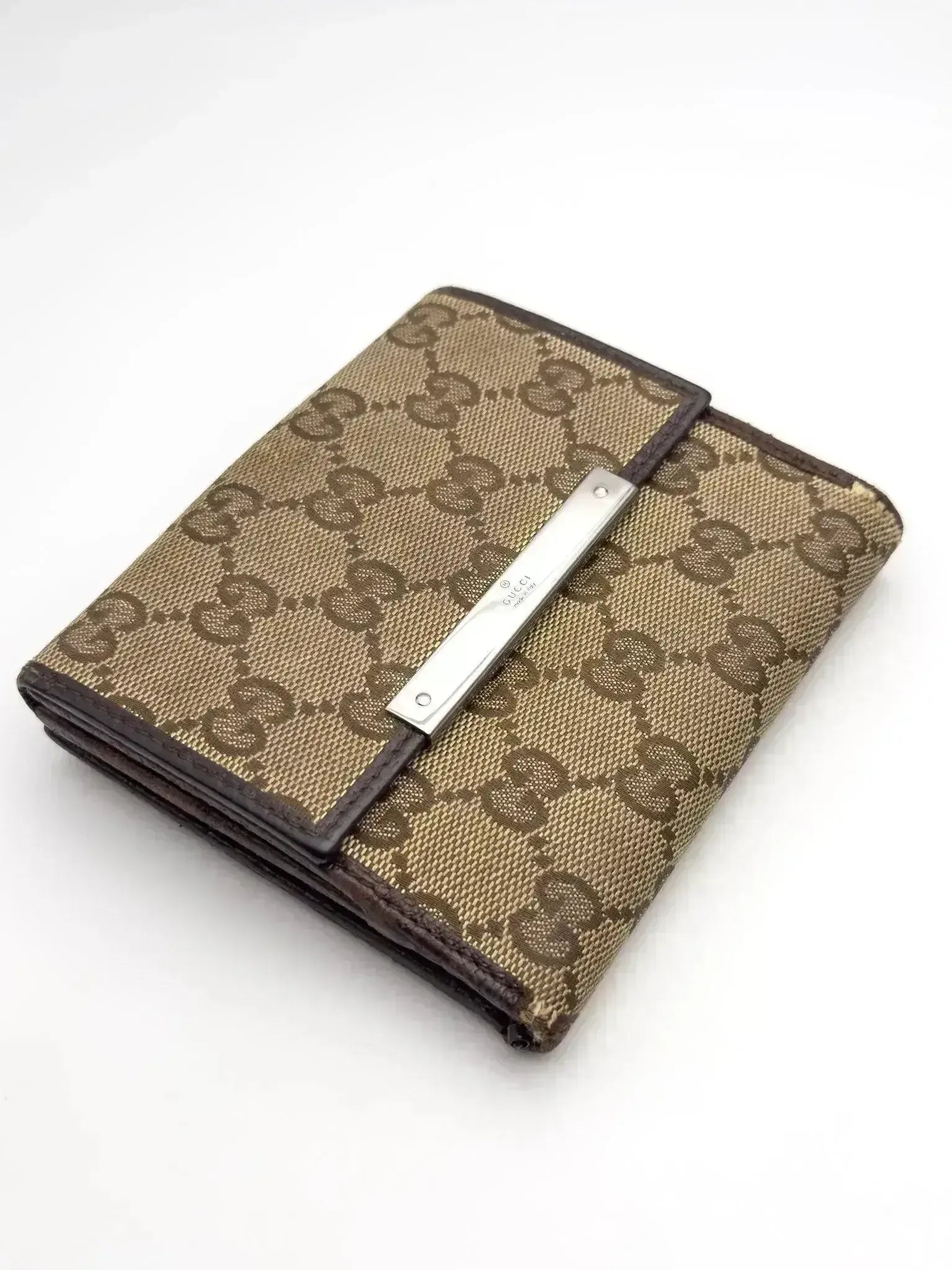
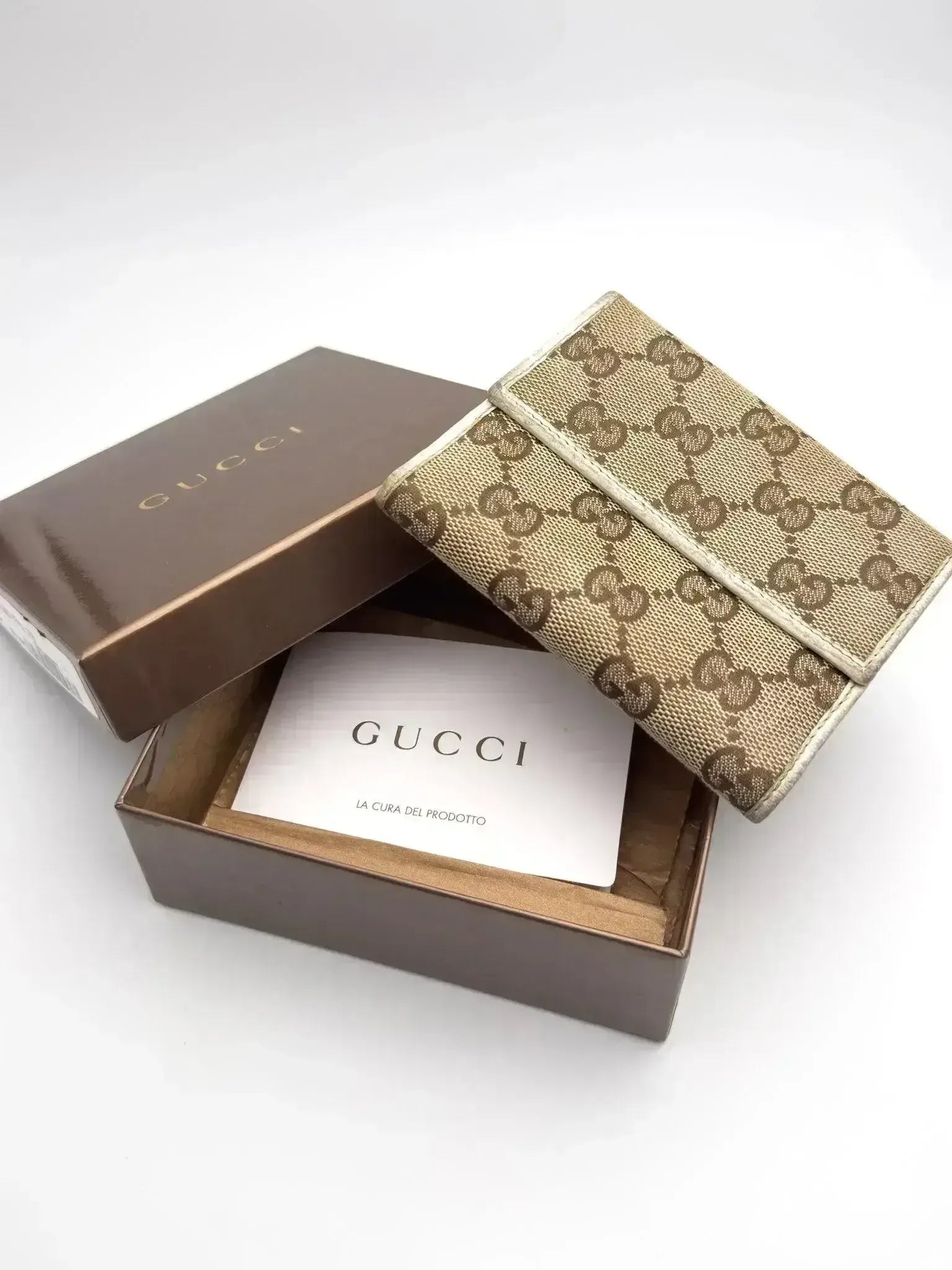
The GG monogram — two interlocking Gs, the initials of Guccio Gucci — is the most recognizable visual code of the house. It appears on the GG canvas (coated canvas printed with the monogram pattern) and the GG Supreme canvas (a more refined version with the pattern embossed). The GG canvas comes in several colors: beige/ebony (the classic), black/gray, blue. It is the most common material on vintage Gucci bags — durable, recognizable, and easy to maintain.
The Horsebit
The Horsebit — a double ring connected by a metal bar, replicating a horse's bit — is the Gucci code that references the equestrian origins of Florence. Used as a clasp on bags (Horsebit 1955), as an ornament on loafers (the famous Gucci Horsebit loafers), and as a detail on belts and accessories. The Horsebit is the most distinctive sign of Gucci after the GG monogram — immediately recognizable by insiders.
The Web Stripe (Red and Green)
The Web stripe — a woven red and green stripe (sometimes with a navy blue center) — is inspired by the equestrian saddle girth. It appears on bags, belts, shoulder straps, shoes, and Gucci watches. It is the house's color code — the two stripes are enough to identify a Gucci item without seeing the logo. Historical variations include the Sherry stripe (red/green with blue center) and the simple green/red stripe.
The Bamboo
The bamboo handle — heated and bent by hand — is the first signature of Gucci (1947). Natural bamboo acquires a golden patina over time — vintage Bamboo handles have a warmer and darker tone than new handles. Each handle is unique — natural bamboo features knots, textures, and color variations unique to each piece.
Vintage Gucci Bags in Detail
Gucci Jackie: The Icon of the 60s
The Gucci Jackie is the most famous vintage Gucci bag — named after Jackie Kennedy Onassis, who was frequently photographed with this model in the 60s-70s. The design: a hobo silhouette (a soft crescent-shaped bag), a distinctive piston clasp, curved and flowing lines. The Jackie comes in smooth leather, GG canvas, suede, and exotic leather.
The story of the name: the bag was not created for Jackie Kennedy — it is a standard catalog model that Jackie adopted and wore regularly. Gucci officially renamed it "Jackie" only in 1999, when Tom Ford reissued it. Vintage Jackies from the 60s-70s (before the official renaming) are the most sought after — supple patina leather, original piston clasp, suede interior.
Gucci Bamboo: The Craftsmanship of War
The Gucci Bamboo (1947) was born out of necessity — restrictions on leather during the war forced Gucci to seek alternative materials for handles. Bamboo, heated with a flame and then hand-bent over wooden molds, provides rigid handles with an organic feel. The body of the bag is made of structured leather (often varnished or grained). The Bamboo is a structured bag — it stands upright, retains its shape, and can be carried by hand or on the arm.
The Bamboo has been carried by Princess Diana, Vanessa Redgrave, and Ingrid Bergman. Vintage Bamboo bags from the 50s-70s with naturally patinated bamboo handles and original leather are the most sought after. Recent versions (reissues) use the same artisanal manufacturing process — each handle is still heated and hand-bent.
Gucci Horsebit 1955: Equestrian Elegance
The Horsebit 1955 is a structured bag with a horsebit clasp Gucci — double ring + bar. Launched in the 50s, redesigned in 2019 under the name "Horsebit 1955" by Alessandro Michele. In vintage, Horsebit clasp bags from the 60s-80s are found in smooth leather, GG canvas, and exotic leather (crocodile, lizard). It is a dress bag — structured, understated, with the Horsebit as the only ornament.
Shoulder Bags, Camera Bags & Clutches
The vintage shoulder bags Gucci — in GG Supreme canvas with red-green Web stripe, grained leather, or coated canvas — are the most worn Gucci vintage pieces for everyday use. Compact format, adjustable shoulder strap, zip closure. The Camera Bags (compact square format with shoulder strap) and clutches (evening format, GG canvas or leather) complete the catalog. These formats are the most accessible in Gucci vintage — often between €200 and €600.
Small Leather Goods Gucci Vintage
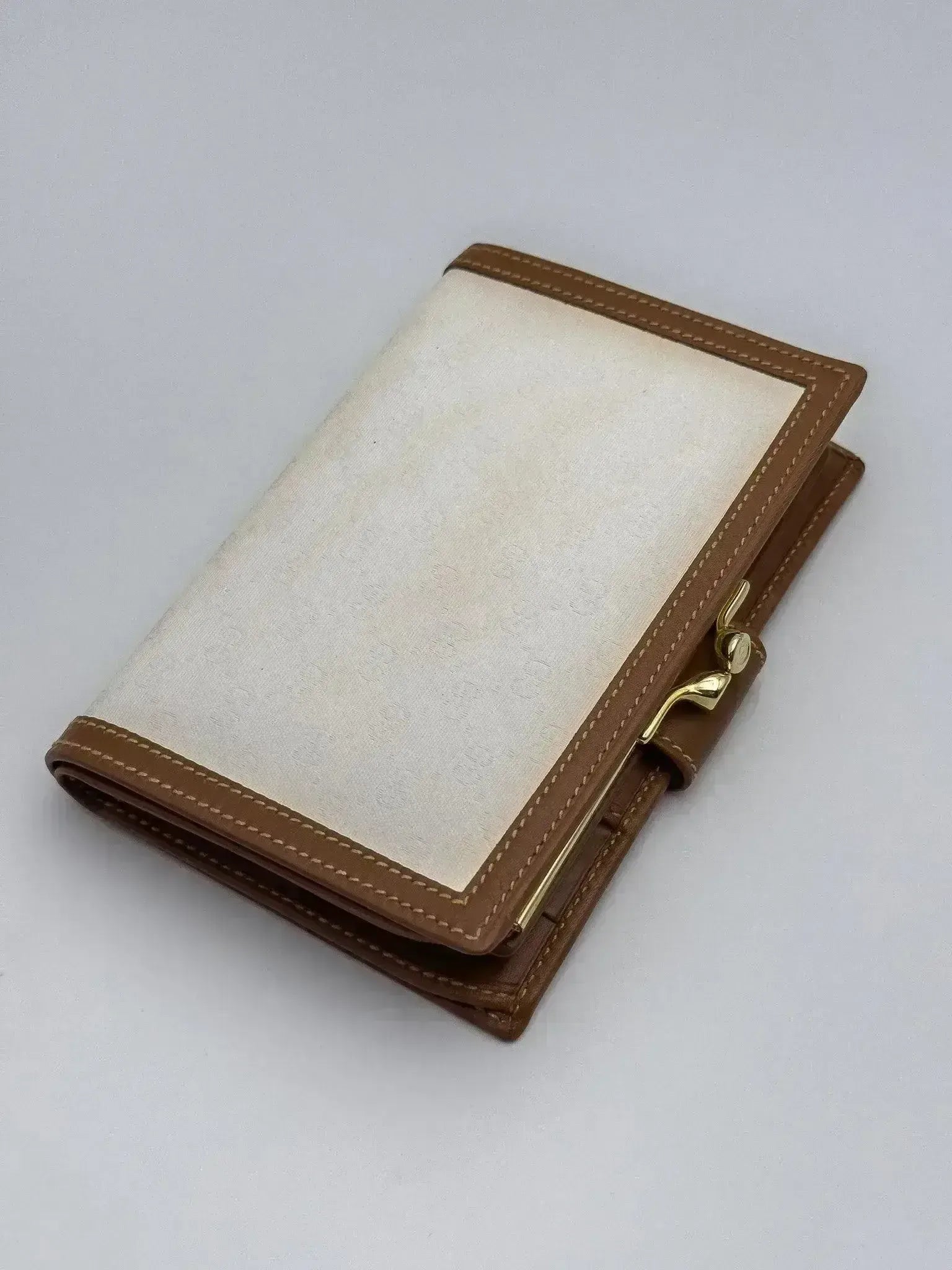
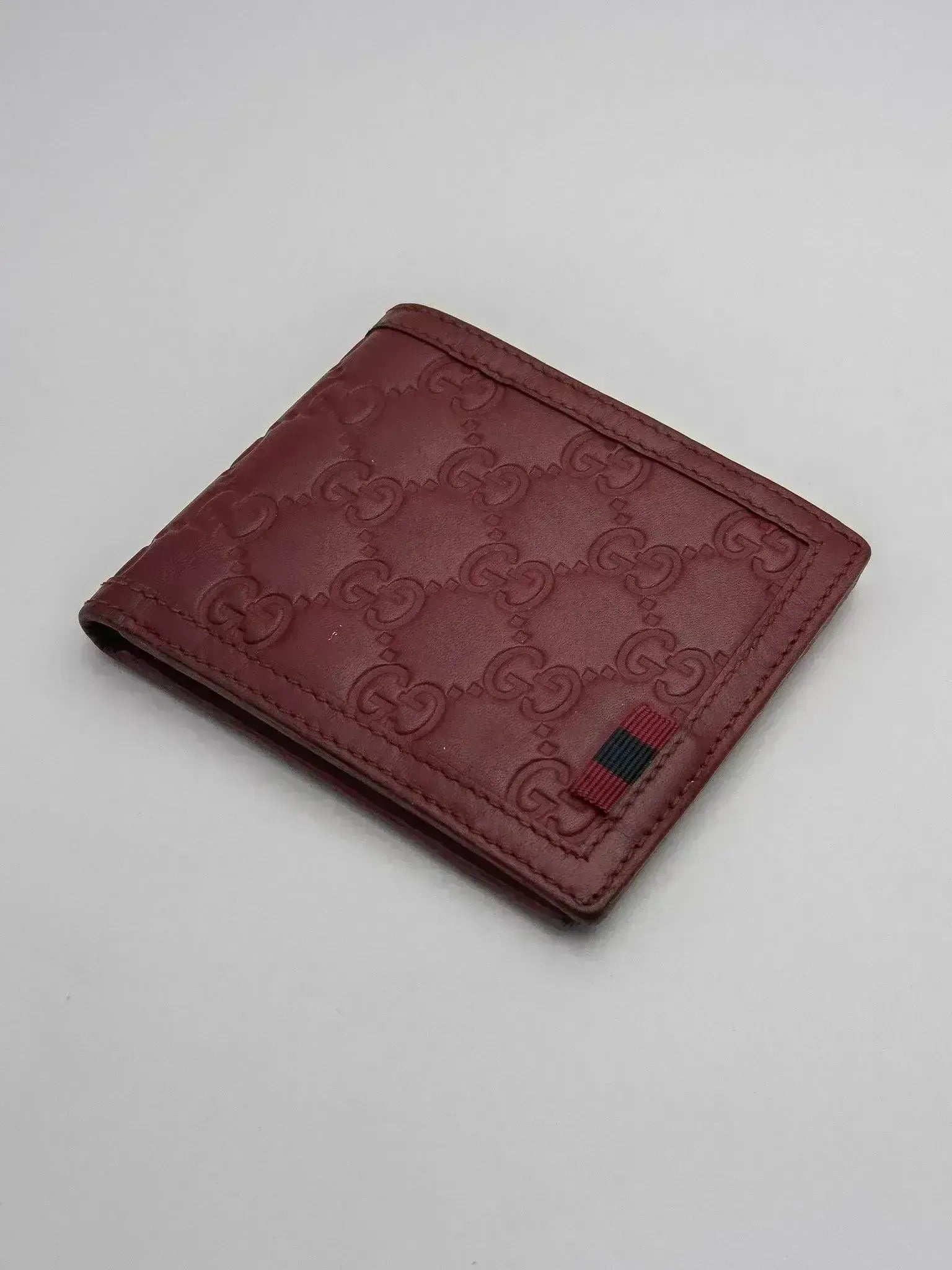
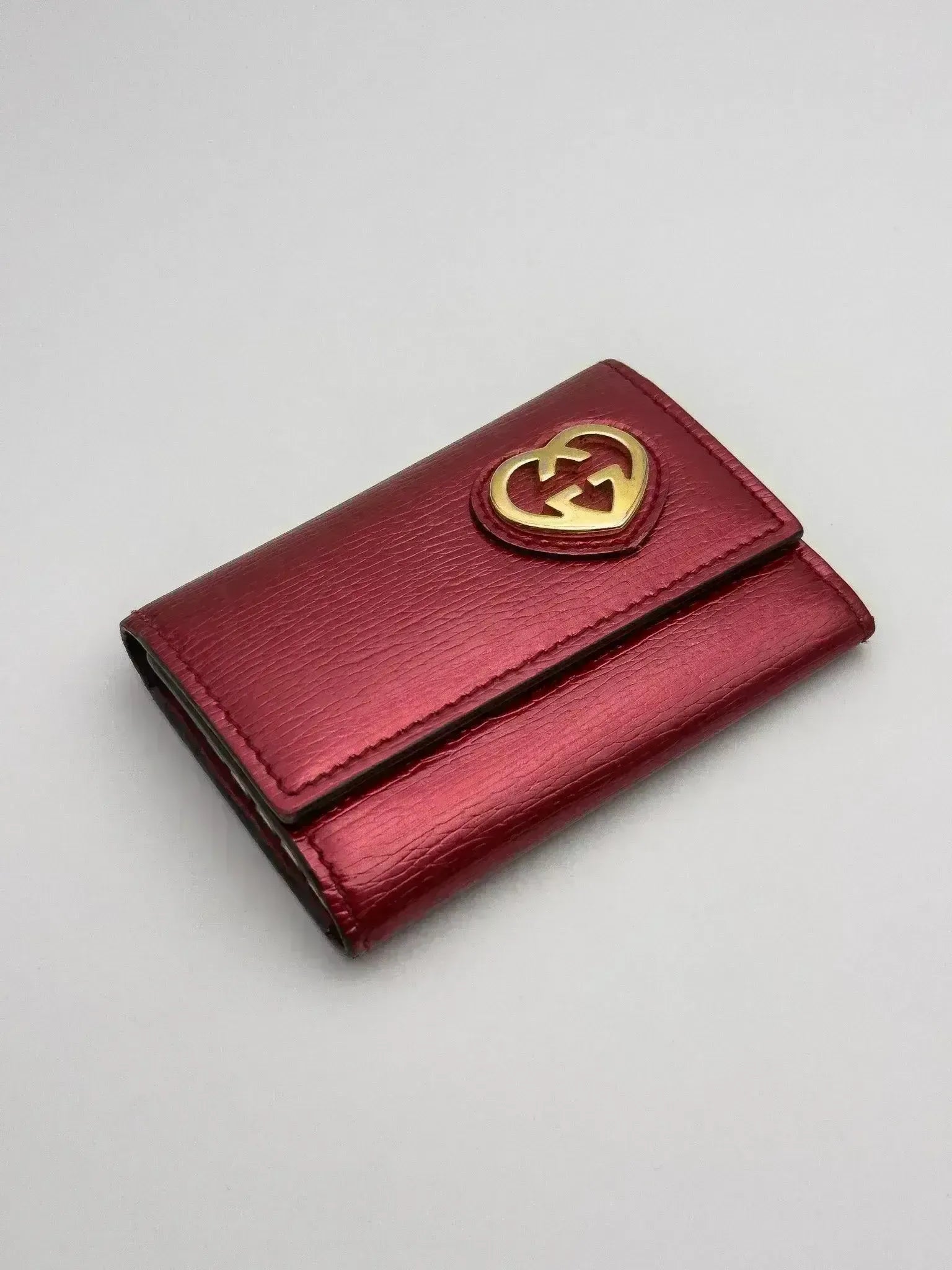
The vintage small leather goods Gucci — wallets, cardholders, Coin purse, flat pouches — are the most accessible entry point into the brand's universe. GG canvas wallets with Web stripe, leather cardholders with metallic Horsebit, and zippered pouches offer Gucci codes (monogram, stripe, bit) in functional everyday formats. Vintage prices often between €80 and €250.
Vintage Gucci Belts
The vintage Gucci belts are among the most recognizable fashion accessories. The Buckle GG (interlocking double G in gold or silver metal) is an immediately identifiable status symbol. Vintage Gucci belts come in smooth leather, grained leather, GG canvas, and exotic leather. The Horsebit buckles (horsebit) offer a more discreet alternative to the Buckle GG. Widths vary by era: thin belts (2-3 cm) from the 70s-80s are the most sought after for retro style, wide belts (3.5-4 cm) are the most versatile.
Vintage Gucci Watches
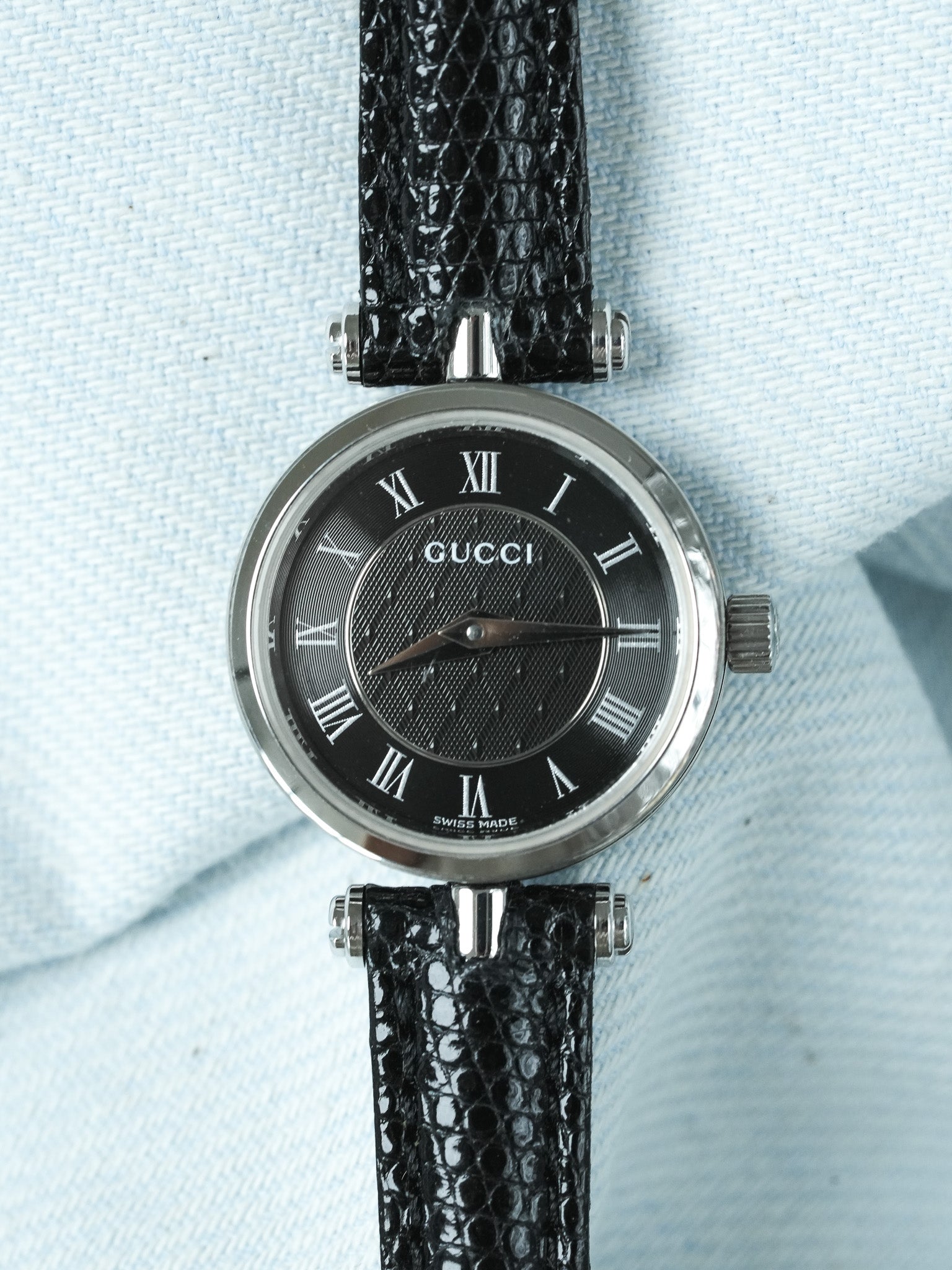
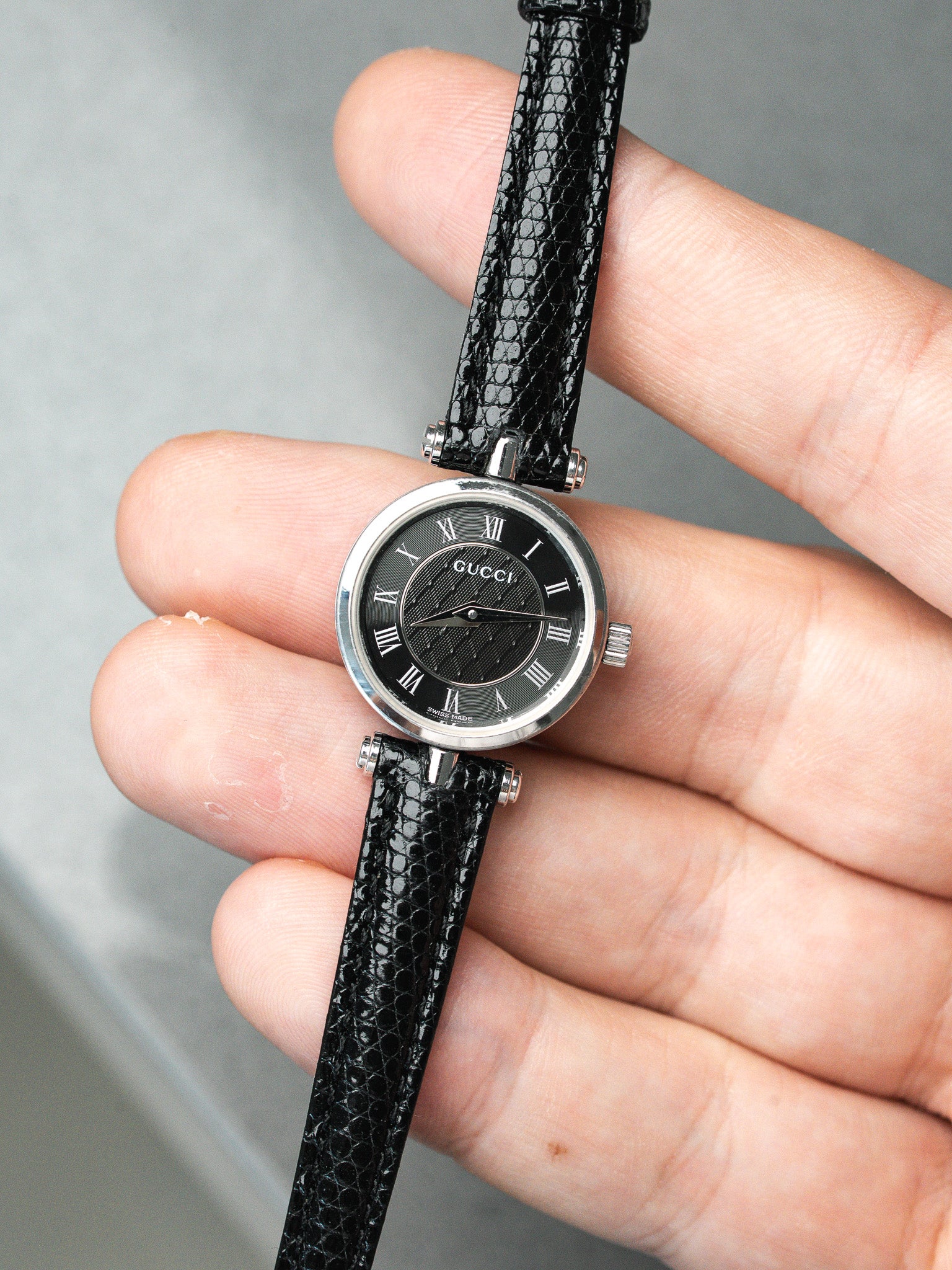
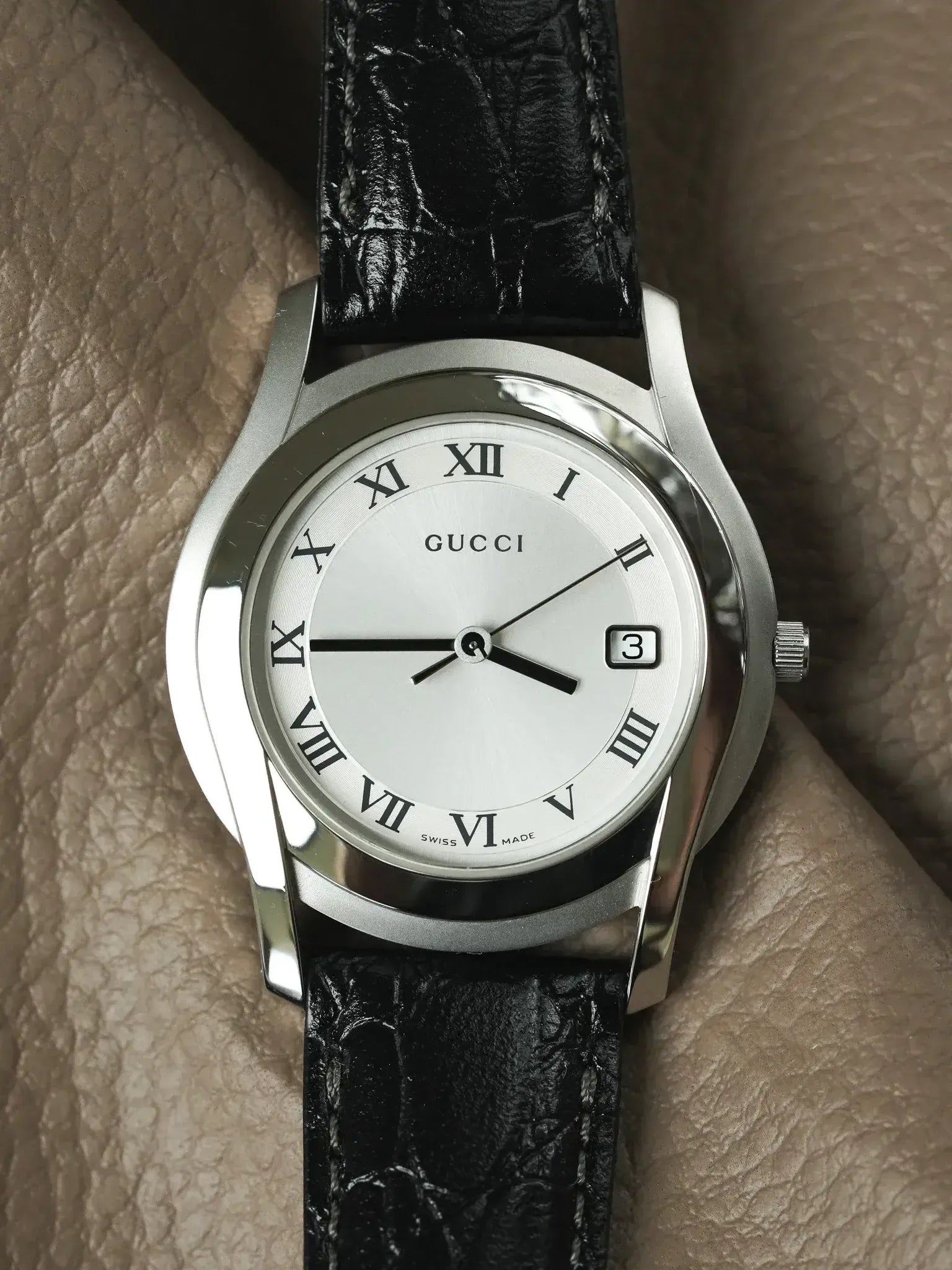
The vintage Gucci watches are fashion accessories for the wrist — watches designed by a fashion house, not a watchmaking manufacture. What distinguishes them: the interchangeable bezels (model emblematic with different colored clip-on bezels on the case), the dials integrating the Web stripe red-green, the GG canvas straps, the dials with Horsebit. Swiss quartz movements (ETA, Ronda). At Atelier Victor, each watch Gucci is verified by our watchmakers and covered by a one-year mechanical warranty.
How to Recognize an Authentic Gucci Vintage Piece
The authentication of a Gucci vintage piece is based on several criteria that our experts systematically verify:
- Serial number — the vast majority of Gucci bags produced after the 80s have an interior leather tag with the Gucci logo stamped on the front and a serial number on the back (often two lines of numbers: the first line identifies the model, the second identifies the supplier). The absence of a serial number on a supposedly 90s+ bag is a red flag.
- GG canvas — the Gucci coated canvas has a specific grain, thickness, and suppleness that vary with the times. Counterfeits often show a poorly aligned GG pattern, canvas that is too stiff or too shiny, incorrect colors (beige/ebony is very difficult to reproduce exactly).
- Stitching — authentic Gucci stitching is regular, neat, with a consistent thread color. The number of stitches per centimeter is constant. Irregular stitching, protruding threads, or uneven stitches are indicators of counterfeiting.
- Hardware — the metal of the buckles, clasps, and ornaments Gucci has a specific weight, color, and finish. The "Gucci" engravings on the hardware must be sharp and deep. Counterfeits often use lighter metal with superficial engravings.
- Zippers — authentic Gucci closures use quality zips (often Lampo, Riri, or YKK on vintage pieces). The pull tab is often engraved "Gucci" or bears the logo of the zipper brand.
- Interior marking — the "Gucci" stamp inside the bag has typography specific to each period. The "Made in Italy" mention is standard on authentic pieces. The quality of the stamp (depth, sharpness, positioning) is a key criterion.
At Atelier Victor, each Gucci piece is expertly assessed — leather, canvas, stitching, hardware, serial number, markings. Lifetime authenticity guarantee.
Maintaining Gucci Vintage Pieces
- GG Supreme / Coated GG Canvas — clean with a slightly damp cloth. Dry immediately. Avoid chemicals, solvents, and prolonged exposure to water. Store in the original dustbag away from direct light and humidity.
- Smooth leather — apply a suitable nourishing balm once or twice a year. Avoid water and chemicals. Light scratches are part of the vintage character.
- Bamboo — natural bamboo develops a patina over time (becomes more golden/dark). Do not wet. Avoid direct heat. Bamboo may crack if stored in an overly dry environment.
- Gilded hardware — wipe with a soft, dry cloth. Gold plating naturally wears over time — edges and friction areas are the first to be affected. This wear is part of the vintage character.
Gucci Vintage on the Second-Hand Market
Gucci vintage is experiencing a significant resurgence in interest — driven by several factors: the trend of sustainable vintage luxury (buying vintage instead of new), the nostalgia for the 90s (logos, canvas, GG buckles), and the reissues of historical models by the house (Jackie 1961, Bamboo 1947, Horsebit 1955) that bring the originals back into the spotlight. The Jackie vintage from the 60s-70s, the Bamboo from the 50s-60s, and the Tom Ford pieces from the 90s are the most sought-after segments.
The financial advantage is clear: a Gucci vintage bag in good condition often sells for 40 to 60% below the current boutique price of an equivalent model — for an item that has already developed its patina and possesses the character that only time can confer.
Frequently Asked Questions — Gucci Vintage Collection
Who was Guccio Gucci and how was the brand founded?
Guccio Gucci (1881-1953) was the son of a Florentine leather craftsman. He worked as a porter at the Savoy Hotel in London, where he observed the tastes and accessories of the international clientele. In 1921, he opened a leather goods and saddlery shop in Florence. The equestrian codes of Gucci (Horsebit, Web band) refer to the equestrian origins of Tuscany and the Florentine artisanal saddlery.
Why is the Jackie bag named so?
The bag was not created for Jackie Kennedy — it is a catalog model that Jackie Kennedy Onassis adopted and regularly carried in the 60s-70s, giving the bag global visibility. Gucci only officially renamed it "Jackie" in 1999, during the reissue by Tom Ford. The Jackie vintage from the 60s-70s (before the renaming) are the most sought-after.
How was the Bamboo bag invented?
The Bamboo was born in 1947 due to the leather shortage imposed by wartime restrictions. Gucci experimented with bamboo as an alternative material for handles — heated over a flame then bent by hand on wooden molds, a technique borrowed from Japanese artisans. The result: a rigid handle with an organic touch that became the first visual signature of the house. Each handle is still made using this artisanal process today.
What is the Horsebit?
The Horsebit is a metal ornament replicating a horse's bit — a double ring connected by a bar. It is a tribute to the equestrian origins of Florence and the saddlery tradition of Gucci. The Horsebit is used as a clasp on bags, as an ornament on loafers (the famous loafers Gucci), and as a detail on belts. It is the most discreet and elegant Gucci code — recognizable by insiders without a visible logo.
What is GG canvas and GG Supreme canvas?
The GG canvas is a coated canvas printed with the double G monogram (initials of Guccio Gucci). The GG Supreme is a more refined version with the embossed pattern on a softer base. Both are coated canvases — not leather — making them water-resistant and easy to maintain. The classic combination is beige/ebony (beige background, dark brown GG pattern). Counterfeits often mimic the GG canvas — the quality of the pattern (alignment, sharpness, exact color) is a key authentication criterion.
What does the red and green Web stripe mean?
The Web stripe — red and green — is inspired by the equestrian saddle strap. It references the origins of Gucci in saddlery and equestrian activities. It's the house's color code — the two stripes are enough to identify a Gucci item without a logo. It appears on bags, belts, straps, shoes, watches, and clothing.
How to verify the authenticity of a vintage Gucci bag?
Checkpoints: the serial number (interior leather tag, two lines of numbers on post-80s models), the GG canvas (pattern alignment, coating quality, exact color), the stitching (regular, neat, consistent thread), the hardware (weight, clear and deep "Gucci" engraving), the zippers (Lampo, Riri or YKK) and the interior marking ("Gucci" + "Made in Italy", correct typography). At Atelier Victor, each piece is appraised by our specialists.
Are all vintage Gucci pieces "Made in Italy"?
The vast majority of vintage Gucci bags bear the "Made in Italy" label — Gucci has historically produced in Italy (Tuscany). Some small leather goods or accessories may have other markings depending on the period. The absence of "Made in Italy" on a vintage Gucci bag that should have it is a red flag.
What is the most accessible vintage Gucci bag?
The GG canvas crossbody bags with Web stripe are the most accessible — often between €200 and €500. The clutches and Camera Bags in GG canvas range from €150 to €400. The small leather goods (wallets, cardholders) range from €80 to €250. The vintage Jackie and Bamboo in good condition are more valued (€500-1,500 depending on condition and period).
What role did Tom Ford play at Gucci?
Tom Ford took over as creative director of Gucci in 1994 — at a time when the brand was financially struggling and suffering from a diluted brand image due to excessive licensing. Ford repositioned Gucci as a contemporary, hypersexual, and glamorous fashion brand — the fashion shows became media events, velvet and satin replaced canvas, and the advertising campaigns were scandalous. Ford transformed Gucci and left the brand in 2004. Pieces from the Tom Ford era (1994-2004) are now sought after as vintage fashion collector's pieces.
How to care for a vintage Bamboo bag?
The natural bamboo develops a patina over time (it becomes more golden and darker — this is normal and desirable). Do not wet the bamboo. Avoid direct heat and overly dry environments (bamboo can crack). For the leather body of the bag: apply a nourishing balm once or twice a year. Store in the dustbag away from light and humidity.
Do Gucci vintage pieces appreciate in value?
At Atelier Victor, we approach vintage luxury from the perspective of purchasing pleasure. While the Jackie from the 60s-70s, the Bamboo from the 50s-60s, Tom Ford pieces, and exotic leather models have seen their demand evolve favorably — driven by the trend of vintage luxury and the house's reissues (Jackie 1961, Bamboo 1947, Horsebit 1955) — we guide our clients towards pieces that match their aesthetic and practical criteria, without making financial recommendations.
Discover our other collections of vintage leather goods: Chanel vintage, Louis Vuitton vintage, Dior vintage, Fendi vintage, Céline vintage, YSL vintage. And our vintage small leather goods.
Have a question about a Gucci vintage piece? Contact us via WhatsApp or email.
Need advice or have a hesitation? Our experts are here to assist you.