





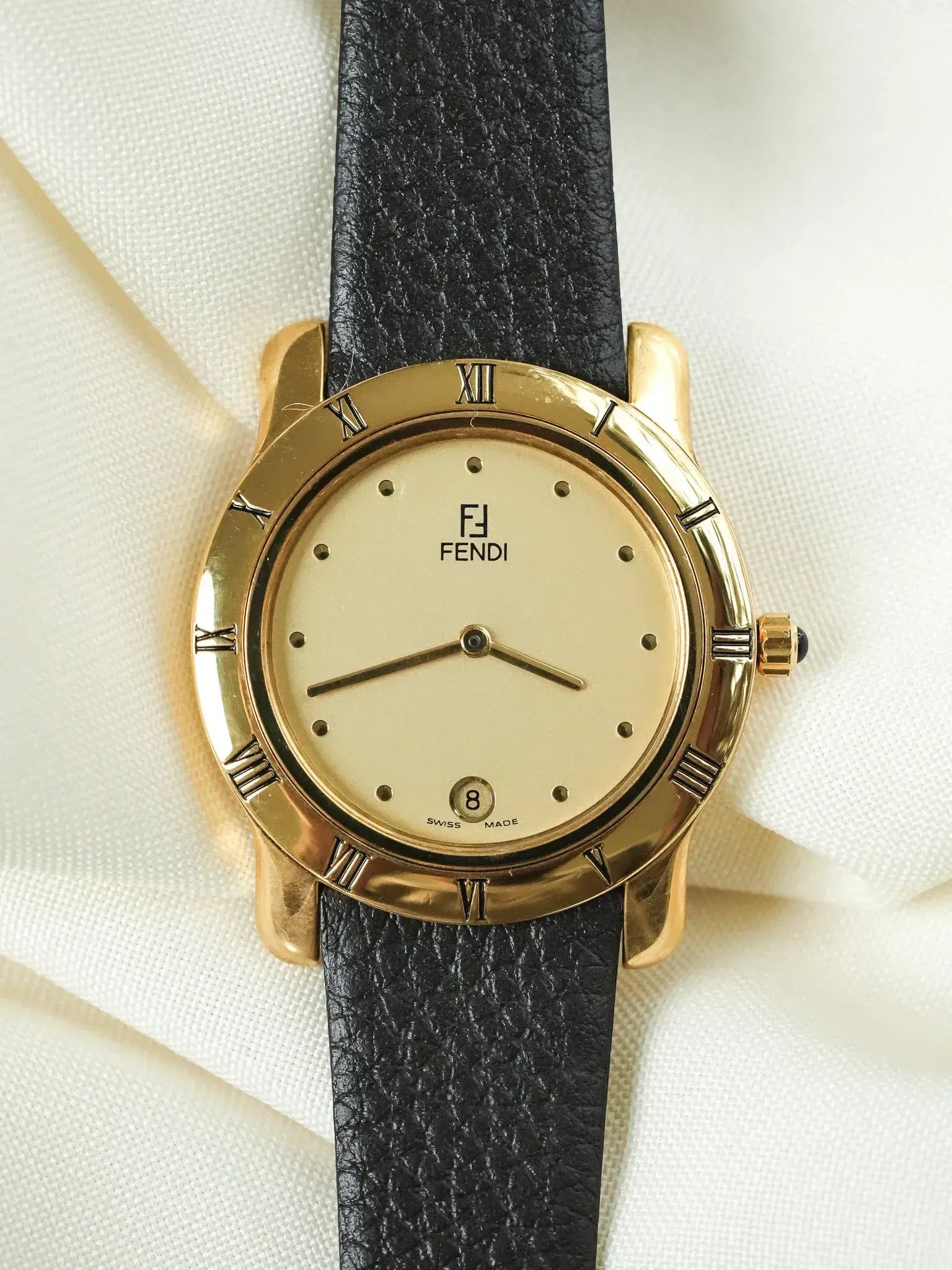


Vintage Fendi Guide
Founded in Rome in 1925 by Adele and Edoardo Fendi, transformed by Karl Lagerfeld over 54 years, and entered into history with Silvia Venturini Fendi's Baguette in 1997 — the very first "it bag." From Zucca canvas to the Spy, from the Mama Baguette to FF pouches — discover our complete expert guide.
Read the guide
Fendi: The Roman House of Fur and Leather
The history of Fendi began in 1925, when Adele Casagrande opened a fur and leather goods boutique on Via del Plebiscito, in the heart of Rome. Following her marriage to Edoardo Fendi the same year, the establishment adopted the name Fendi. The couple built the house's renown around two pillars: fur and fine leather goods. Upon Edoardo's death in 1954, Adele and her five daughters — Paola, Anna, Franca, Carla and Alda — jointly took up the torch. This matriarchy of the "five Fendi sisters" remains a rare case in fashion history.
The year 1965 marked a turning point: the Fendi sisters hired a young 27-year-old German designer to modernize their lines. This visionary creator was none other than Karl Lagerfeld. Thus began a collaboration that would last 54 years (until the couturier's death in 2019), a record for longevity in the luxury industry. Lagerfeld immediately designed the double F logo (for "Fun Fur"), which would become the famous monogram of Zucca canvas.
In 1997, Silvia Venturini Fendi (Adele's granddaughter) upended the codes by designing a small bag meant to be worn under the arm: the Baguette. Propelled to icon status by the character Carrie Bradshaw in Sex and the City, it became the world's very first "it bag". Part of the LVMH group since 2001, the Roman house continues to shine today, with Silvia Venturini Fendi still at the helm of leather goods.
The Signature Visual Codes of Fendi
The Double F Motif (Zucca)
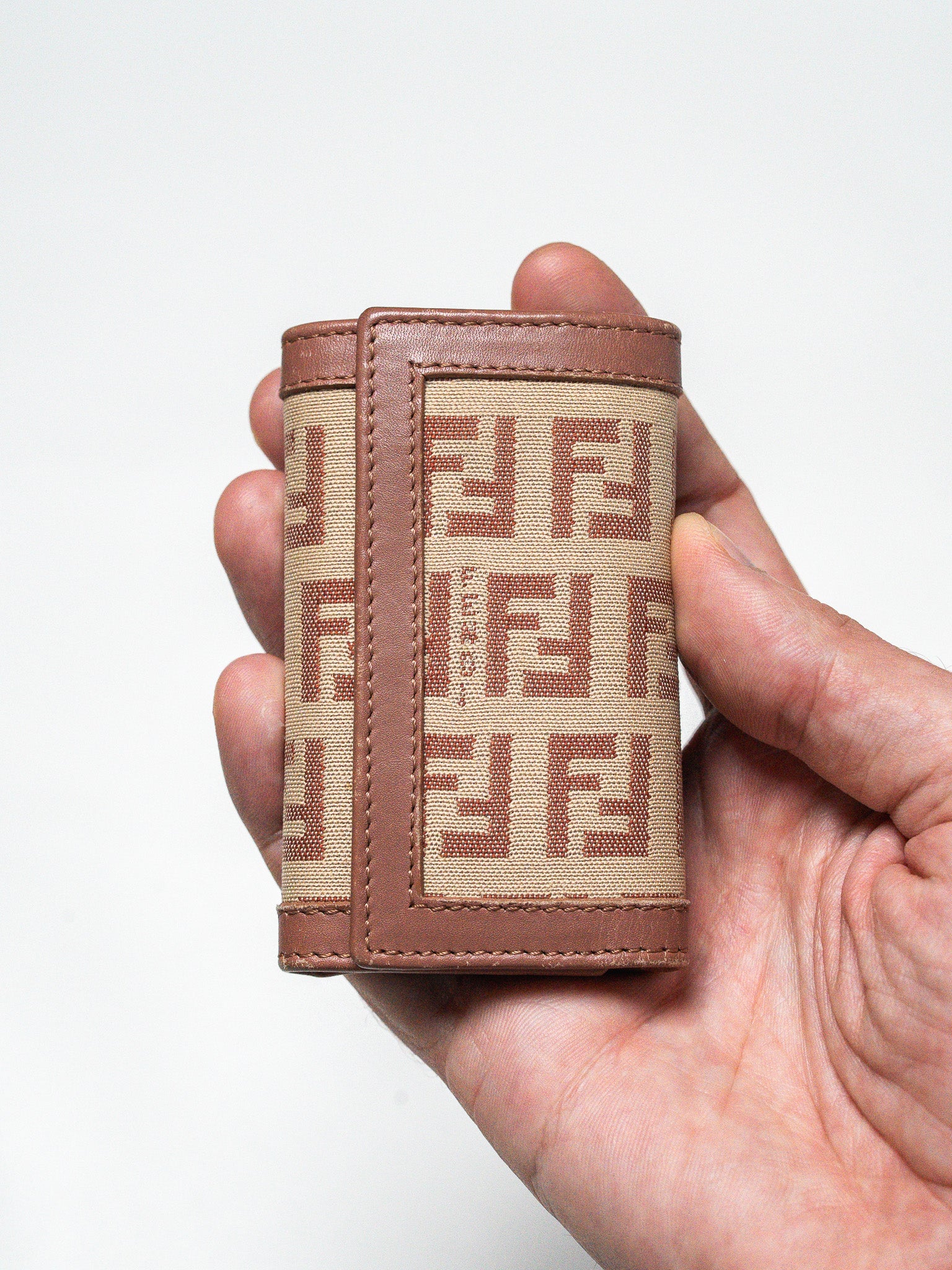
The double F — two mirrored interlocking letters — was conceived by Karl Lagerfeld. Having become the motif of Zucca canvas (from the Italian word meaning "pumpkin," a nod to its tobacco/brown hue), this monogram appears in both classic and inverted versions. It is the Roman equivalent of the Monogram of Louis Vuitton or the GG of Gucci.
Selleria Craftsmanship
Selleria represents the pinnacle of the house's craftsmanship. These creations in grained Roman leather are assembled by hand using a saddle stitch (two needles, waxed thread, slanted stitch), a technique inherited from the master saddlers. Each Selleria piece, a guarantee of leather of rare thickness and sturdiness, bears a unique identification number engraved on an interior plaque.
Pequin Stripes
Pequin is a pattern of alternating stripes (often dark brown and tobacco bands) highly prized on luggage and accessories from the 1980s and 1990s. A subtle visual code, much sought-after by admirers of the Fendi style of that era, who seek an alternative to a visible logo.
Iconic Vintage Fendi Bags
The Baguette: The First "It Bag"
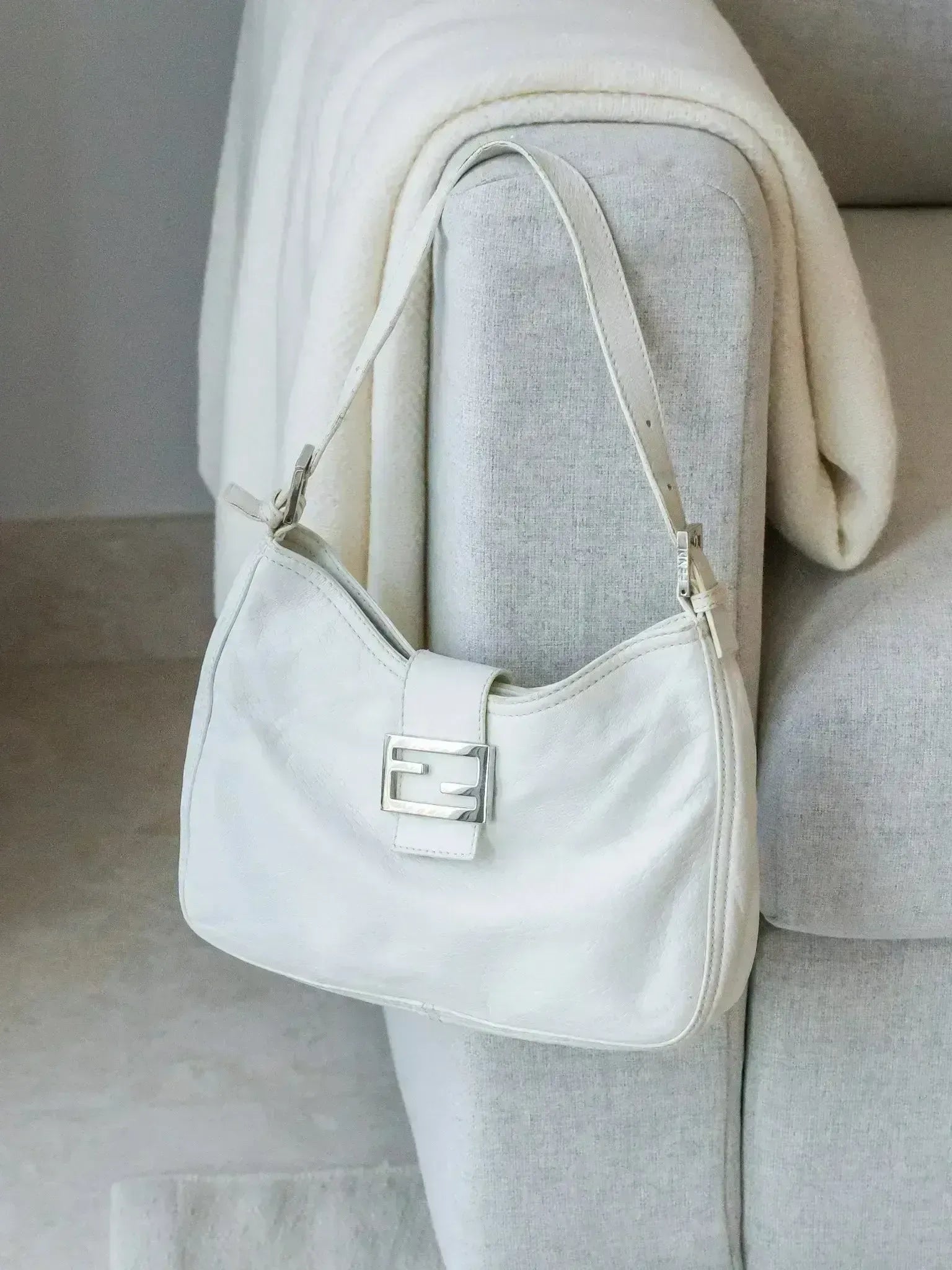
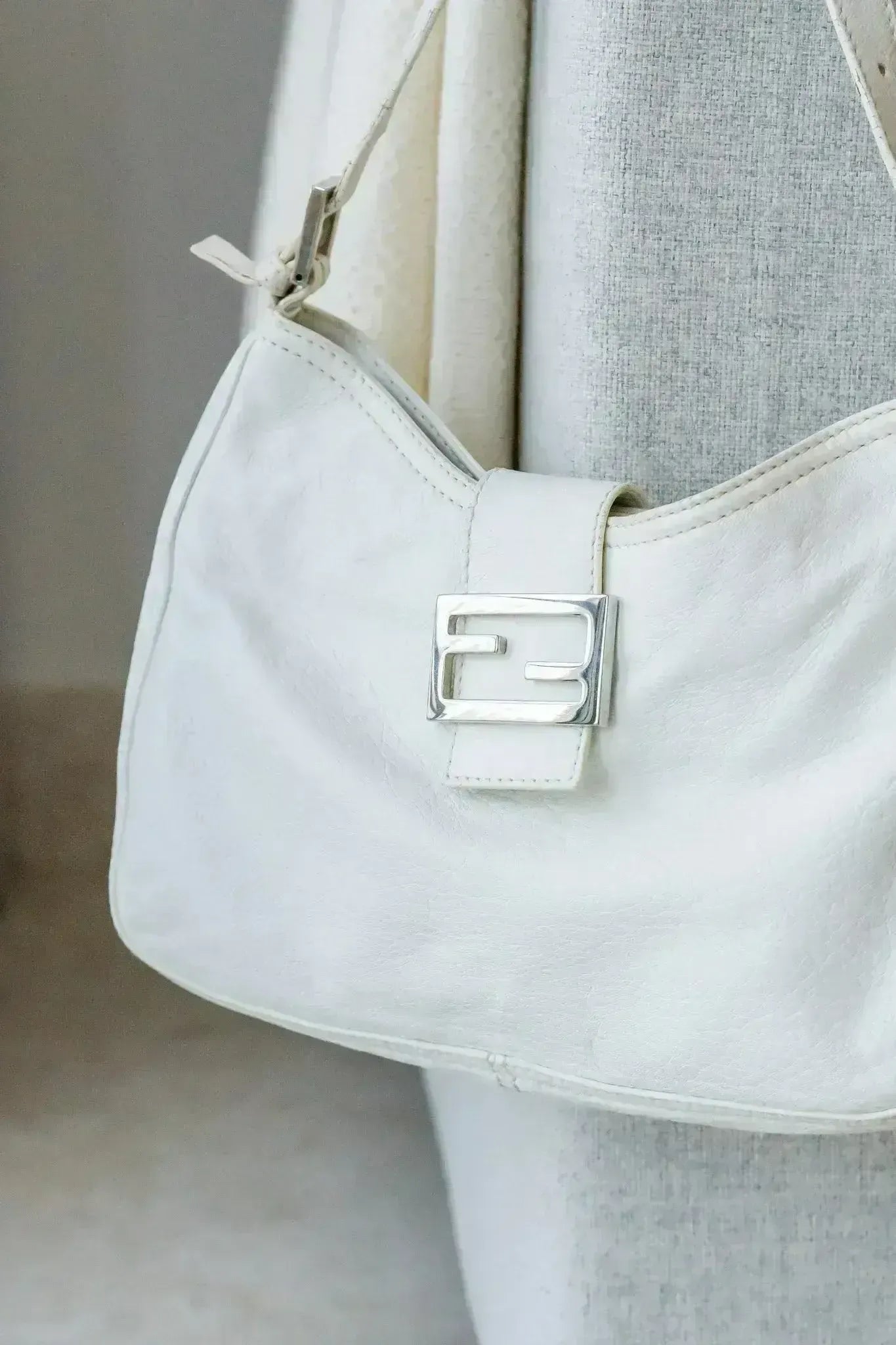
Launched in 1997, the Fendi Baguette defined an era. Its compact format (26cm) and short shoulder strap are adorned with the famous metal FF clasp. Fendi's strength lay in offering it in more than 1,000 versions: Zucca canvas, smooth leathers, velvet, hand-embroidered beads, sequins, or denim. The scene from Sex and the City ("It's not a bag, it's a Baguette!") sealed its cultural destiny. Vintage canvas pieces now trade between €200 and €800, while rare or embroidered editions rise from €300 to €1,500 and beyond.
The Mama Baguette
A practical response to the success of its little sister, the Mama Baguette offers generous volume while preserving the model's DNA (FF clasp, flap). Worn comfortably on the shoulder, this versatile everyday piece generally trades between €250 and €700 on the second-hand market.
The Spy Bag
Designed in 2005, the Fendi Spy embodies the voluminous hobo bag of the 2000s. Its exceptionally supple leather, twisted handles, and famous hidden clasp (the "wand") made it the favorite bag of the decade's celebrities. Vintage models in cognac or black leather remain highly desirable (€200 to €600).
Models in Zucca Canvas
Period Zucca canvas dresses totes, shoulder bags, and vanity cases. This vintage coated canvas, which often develops a deep patina over the years, is an excellent entry point for acquiring a classic from the house (between €150 and €500).
Archive Small Leather Goods
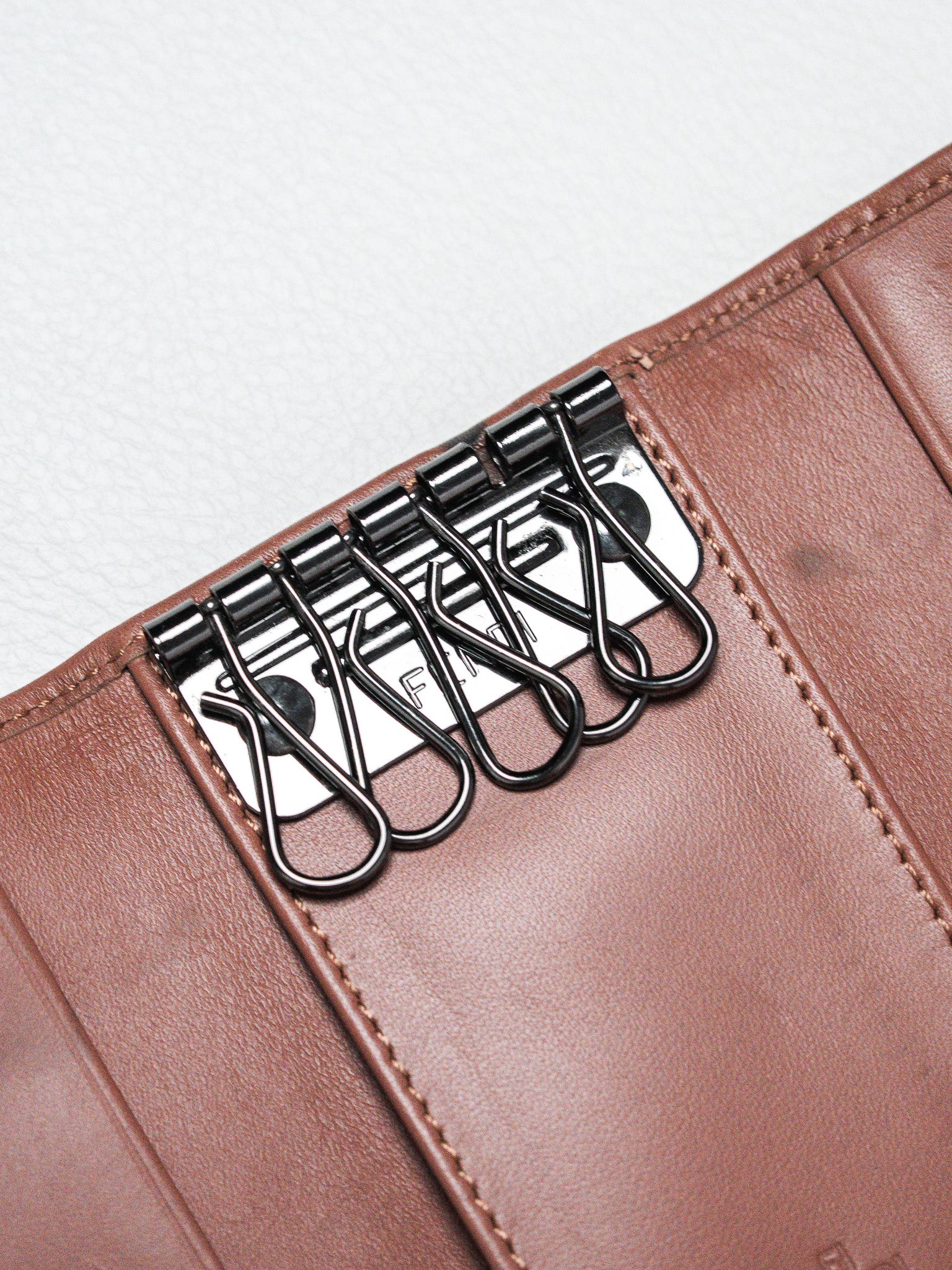
Vintage Fendi small leather goods make it possible to embrace the assertive style of the Roman house:
- Zucca wallets: In long or compact format, the FF canvas stands up admirably well to daily use (€80 to €200).
- FF belts: The iconic Buckle in solid metal on black or brown leather instantly structures a silhouette (€100 to €300).
- Card holders and Coin purse: The perfect format to slip into a Baguette (€50 to €150).
Expertise and Authentication by Our Specialists
Authenticating a period Fendi piece requires meticulous attention:
- The Zucca pattern: The double F must be geometrically perfect, without any bleeding. Authentic canvas has a subtle grain that counterfeits fail to replicate.
- The Baguette clasp: The Buckle FF in heavy metal must display perfect symmetry and high-quality gold or silver plating.
- Holograms and tags: While post-2000 bags often include a hologram (and later an RFID tag), its absence is entirely normal on a piece from the 1980s or 1990s. Our experts then rely on the printed serial number, the quality of the zips, and the "Fendi Made in Italy" stamps.
At Atelier Victor, this rigor in inspection allows us to provide you with authenticity guaranteed for life for every creation from the Roman house.
Caring for Your Vintage Fendi Pieces
- Zucca canvas: Clean with a very slightly damp cloth and dry immediately. Avoid all contact with solvents.
- Smooth and grained leathers: A light nourishing balm applied annually will preserve the beauty of the leather.
- Embroidered Baguette editions: Extremely delicate, they must be handled with care, kept away from water, and carefully stored in their dustbag, generously padded with tissue paper.
Frequently Asked Questions — Vintage Fendi Collection
The creation of the famous double F logo
It was Karl Lagerfeld who, upon his arrival as artistic director in 1965, sketched this monogram in a playful wink to the brand's DNA. The two interlocking "F"s stand for "Fun Fur", an approach that refreshed the very classic image of the Roman house.
The Baguette as the first "it bag" in history
Before the Baguette (1997), a handbag was mainly a functional or status object. By multiplying limited editions and eccentric materials, and propelled by the global phenomenon of the series Sex and the City, Silvia Venturini Fendi created the first bag to spark a true frenzy of anticipation and collecting around the world.
The countless variations of the Baguette
A true canvas of expression for the house's artisans, the Baguette has been reinvented in more than 1,000 different versions since its creation. From denim to velvet, including embroideries of rare complexity, this diversity now delights collectors on the vintage market.
The artisanal craftsmanship of the Selleria line
The Selleria line is Fendi's tribute to the expertise of Rome's master saddlers. Each piece is hand-stitched with thick thread and features an interior silver plaque bearing a unique serial number, attesting to its exclusively artisanal manufacture.
The historic collective leadership of the five Fendi sisters
Upon the founder's passing in 1954, his five daughters — Paola, Anna, Franca, Carla and Alda — took over the management of the family empire. Each oversaw a specific area (design, leather, public relations, etc.). This feminine synergy led the brand to international success and had the brilliance to recruit Karl Lagerfeld.
The accessibility of different period Fendi collections
Small leather goods (€50 to €150) and Zucca canvas pouches (€100 to €300 ) are wonderful opportunities to treat yourself to a piece of history Fendi. The classic canvas Baguette is often valued between €200 and €800, offering a rare history-to-price ratio compared with the prices of new reissues in boutiques.
The evolution of the heritage value of archive pieces
Our commitment is to guide you toward a stylistic favorite. However, we have observed that the Baguette has been enjoying a golden age on the second-hand market for several years, prompting many enthusiasts to actively seek out the first editions from the 1990s, especially the richly embroidered variations.
Continue your journey into the heart of historic fine leather goods: Chanel vintage, Gucci vintage, Louis Vuitton pre-owned, Dior vintage, Céline vintage, and Prada archive pieces.
An authentication request for a Fendi Baguette or advice on Zucca canvas? Our experts will be delighted to assist you via WhatsApp or by email.
Need advice or have a hesitation? Our experts are here to assist you.